Prussian Tunic for a Non-Commissioned Officer in the Grenadier Regiment Carl von Preußen (2nd Brandenburg) No. 12
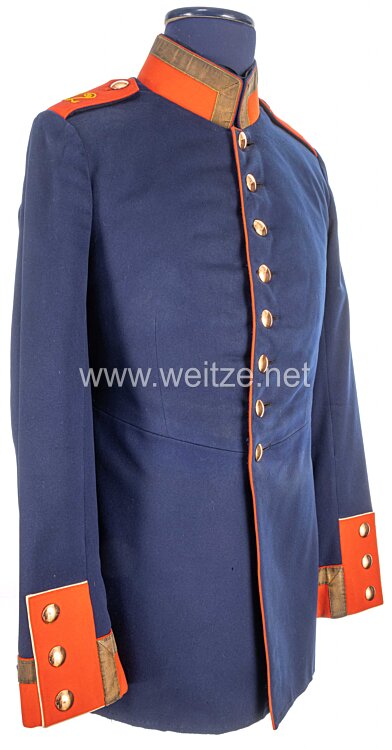
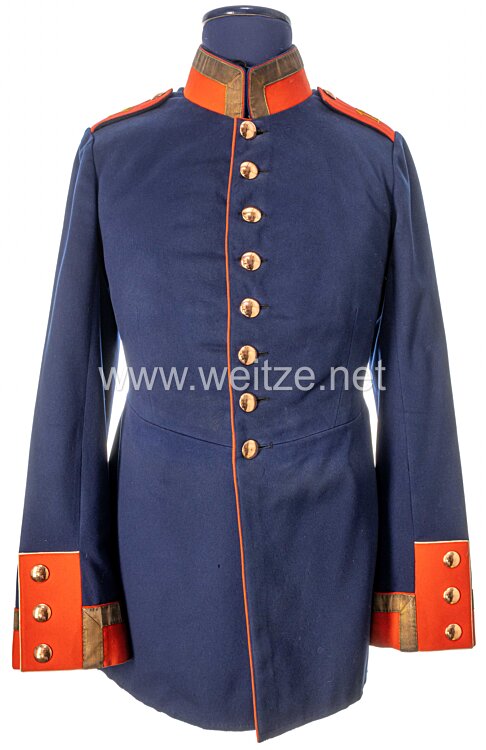
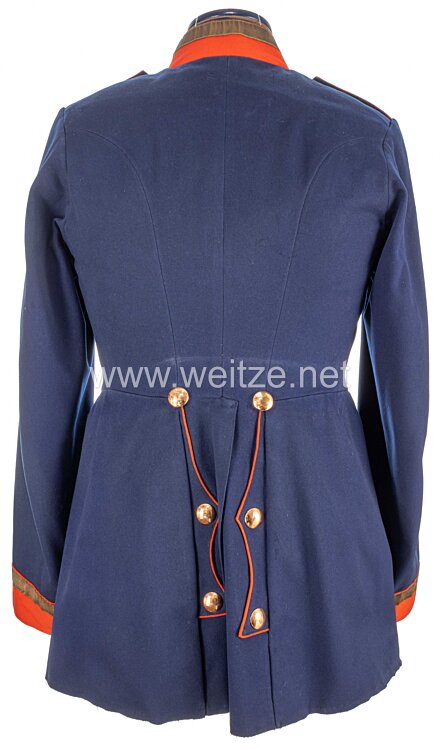
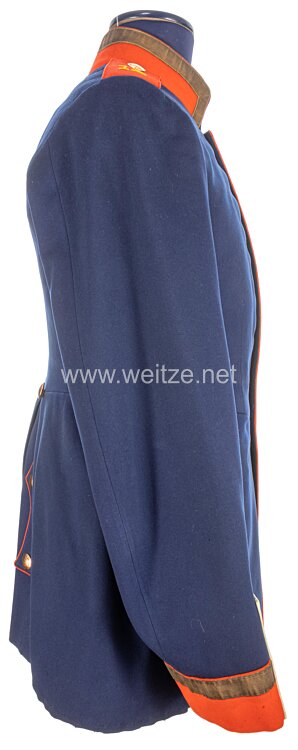
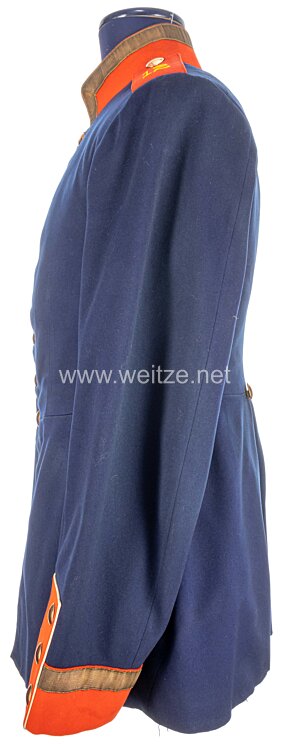
This Waffenrock (tunic) of the Grenadier Regiment Carl von Preußen (2nd Brandenburg) Nr. 12 represents an outstanding example of Prussian military dress from the late Imperial period. Manufactured around 1910, this NCO's uniform tunic embodies both the centuries-old Prussian military tradition and the standardized uniform regulations of the German Empire.
The Grenadier Regiment Nr. 12 was among the most traditional units of the Prussian Army. Stationed in Frankfurt an der Oder, an important garrison town on the border with Poland, the regiment was named after Prussian Prince Carl von Preußen (1801-1883), a younger brother of Emperor Wilhelm I. The designation “2nd Brandenburg” indicates its regional affiliation with the Province of Brandenburg, one of Prussia's historic core regions.
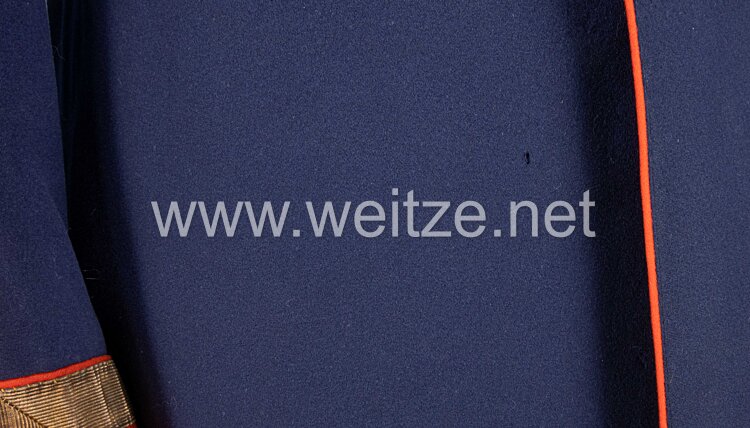
The uniform precisely follows the Allerhöchste Kabinetts-Order (AKO) of February 1, 1843, and its subsequent modifications. The dark blue fabric was characteristic of Prussian infantry since the reforms of the 18th century and symbolized continuity with the Frederician army. The high red standing collar identified Brandenburg regiments and distinguished them from other provincial units. The so-called “Brandenburg cuff slashes” – a specific form with curved patches – were a distinctive feature dating back to historic uniform traditions of the 18th century.
The brass buttons conformed to Prussian standards and typically bore the regimental number or the monogram of the regiment's namesake. The white piping on the patches stood out clearly against the dark blue base fabric and formed a design element typical of Brandenburg regiments.
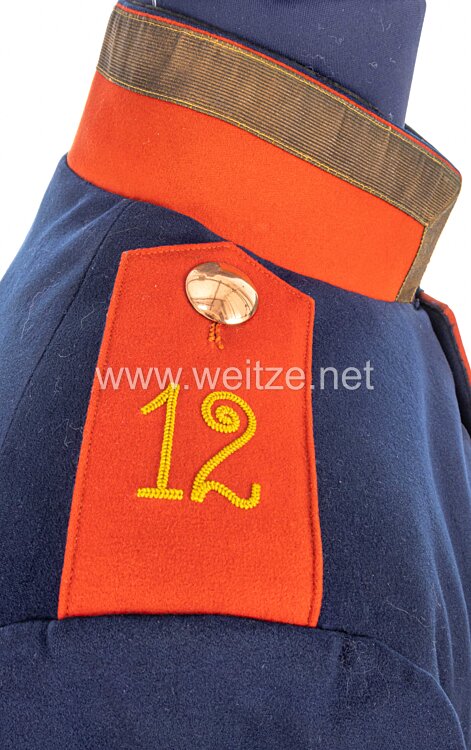
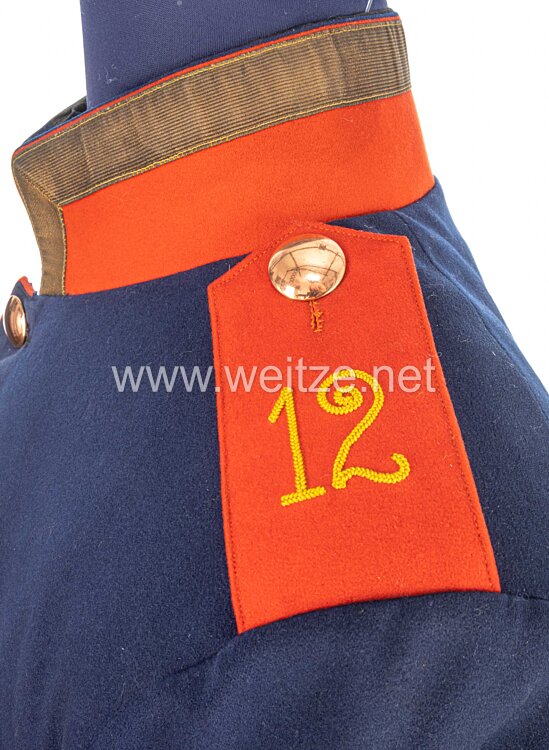
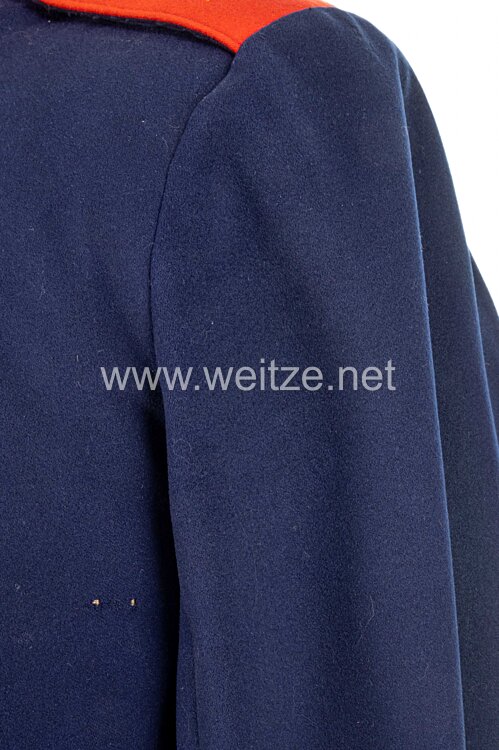
Particularly significant are the red shoulder straps with the number “12” embroidered in yellow. The red identified the Waffenfarbe (branch color) of Brandenburg infantry regiments. Shoulder straps had been standardized since the uniform reform of 1842/43 and served for rapid identification of unit affiliation in the field. The embroidered regimental number became mandatory from the 1860s onward and enabled unambiguous assignment.
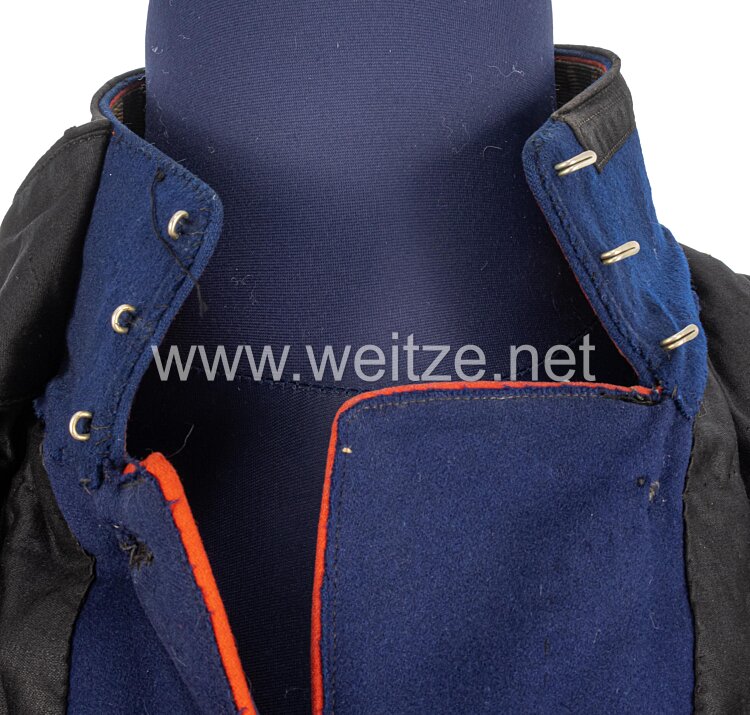
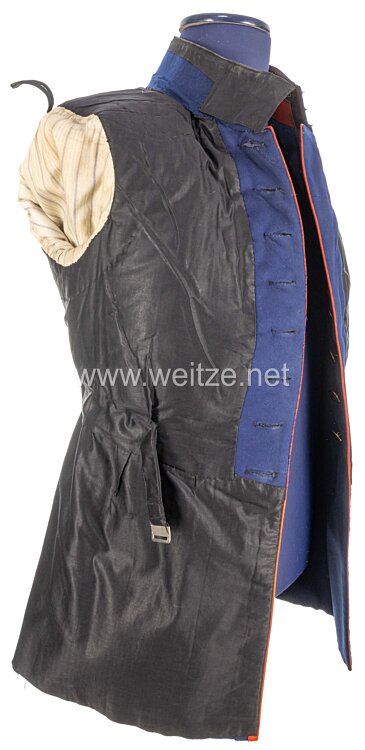
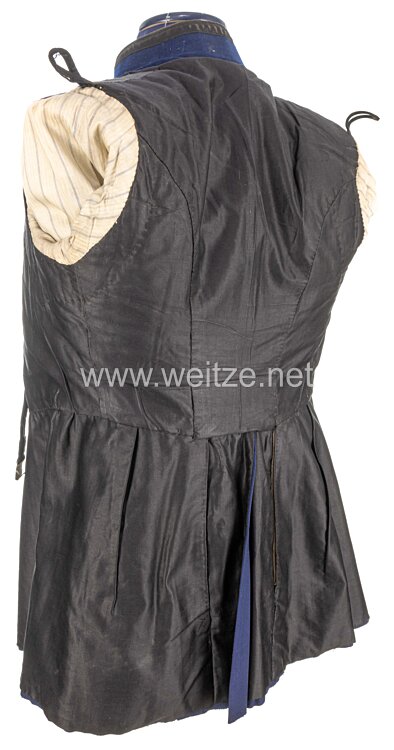
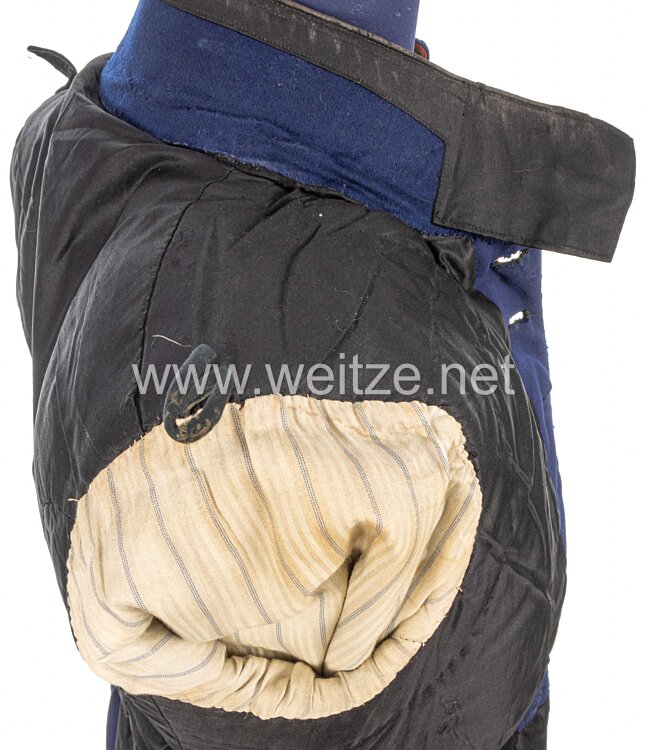
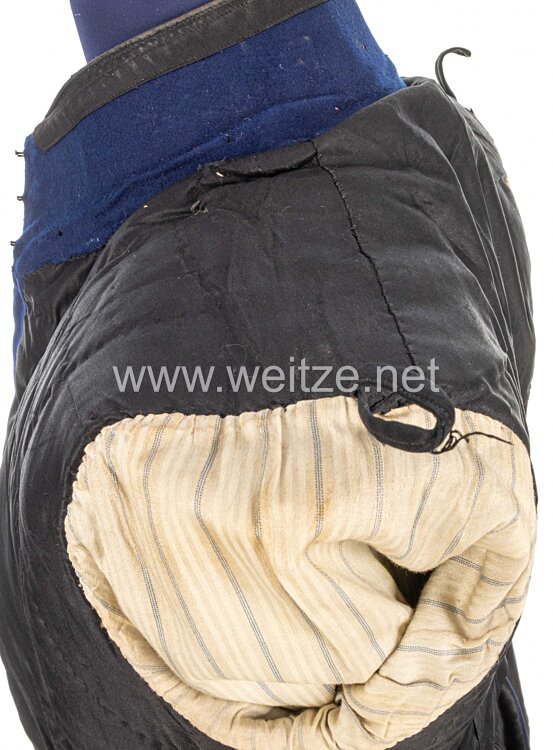
The wearer's NCO rank is manifested in the gold lace on collar and cuff slashes. This Tressierung (braiding) had been the characteristic rank insignia for non-commissioned officers without Portepee (sergeants, vice-sergeant majors, sergeant majors) since 1843. The gold-colored execution differed from the silver lace used in other branches. The black silk lining inside corresponds to the quality prescribed for NCO uniforms – ordinary enlisted men received only cotton lining.
Around 1910, the production period of this tunic, the German Empire was at the height of its military power. The army had been modernized following French models but deliberately retained traditional uniform elements. At this time, the Waffenrock was still worn as dress uniform and for garrison duty, while field-gray uniforms already existed for field service. Development was already pointing toward World War I, in which colorful parade uniforms would be replaced by field-gray service dress.
The Grenadier Regiment Nr. 12 had a glorious history dating back to the 17th century. It participated in all of Prussia's major wars, from the Silesian Wars of Frederick the Great through the Wars of Liberation against Napoleon to the Wars of Unification in 1864, 1866, and 1870/71. In World War I, the regiment fought on both fronts and suffered heavy casualties.
The excellent state of preservation of this tunic is remarkable. Most uniforms from this era were worn out during the war years 1914-1918 or later discarded. That this piece survived with only minimal damage (two small holes on the left breast) makes it a valuable historical testimony. Such uniform pieces were often kept as personal mementos or passed into private collections.
Today, this Waffenrock offers an authentic insight into the uniform culture of Wilhelmine Germany, in which military distinction and tradition played a central social role. It documents not only military organization and hierarchy but also the craftsmanship of military tailors and the aesthetic concepts of the era.