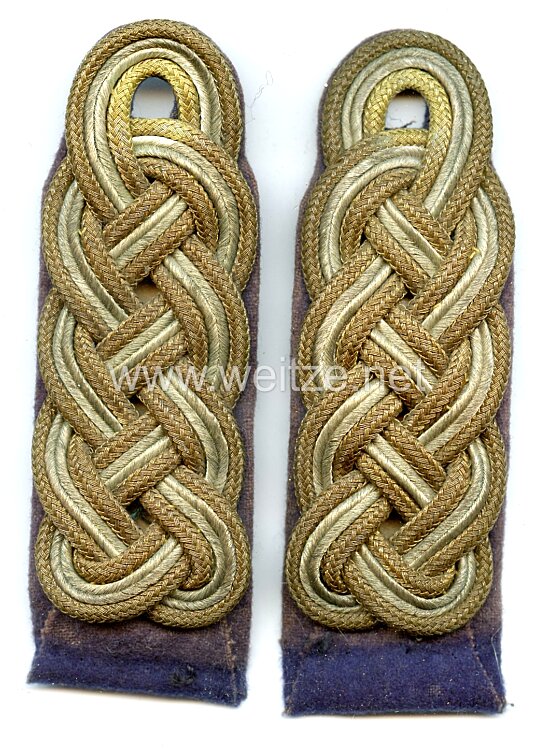
Kriegsmarine Pair of Shoulder Boards for a Rear Admiral

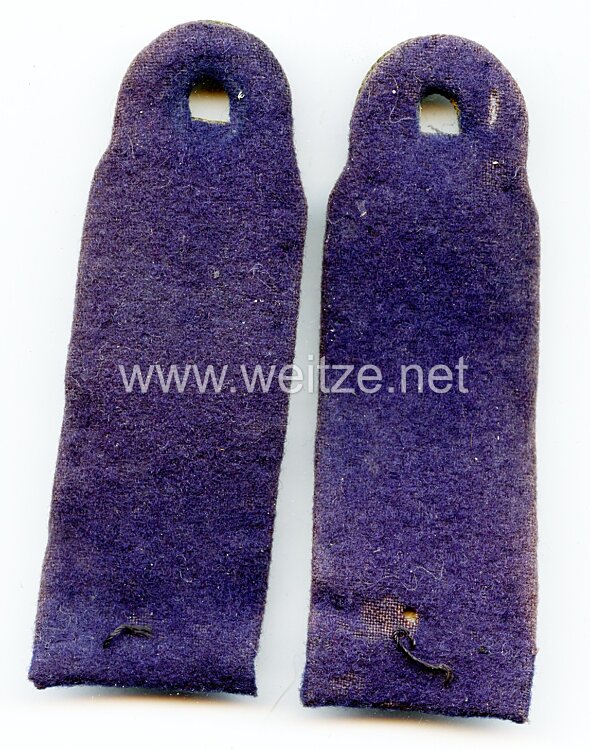
Sew-in version for overcoat or field-gray uniform for an Admiral of Coastal Artillery, circa 1942. Heavy gold/silver braid on dark blue cloth backing, heavily worn, condition 2-3.
455783
950,00

Kriegsmarine Pair of Shoulder Boards for a Rear Admiral

These shoulder boards for a Rear Admiral of the Kriegsmarine represent a significant example of military rank insignia from the German Navy during World War II. This sewn-in version was designed for the coat or field-gray uniform of an Admiral of the Coastal Artillery and dates to approximately 1942, a period of intense maritime operations.

The Kriegsmarine, the official designation of the German Navy from 1935 to 1945, maintained a complex system of rank insignia and uniform regulations that were established in various service regulations and clothing directives. Shoulder boards, also called shoulder straps or epaulettes, served to immediately identify an officer's rank.

The rank structure of the Kriegsmarine followed traditional maritime hierarchies. The rank of Konteradmiral (Rear Admiral) represented the lowest flag officer rank and corresponded to a Major General in the Wehrmacht. In the hierarchy, a Rear Admiral stood above a Captain at Sea and below a Vice Admiral. This rank was typically awarded to experienced naval officers who assumed significant commands, such as leading flotilla formations or important coastal defense sectors.

The Coastal Artillery of the Kriegsmarine held particular importance in German defensive strategy. It was responsible for protecting strategically important coastal sectors, ports, and naval bases. The Naval Coastal Artillery possessed heavy guns and was organizationally subordinate to the Kriegsmarine, but differed in equipment and mission from the naval forces. Officers of the Coastal Artillery wore special uniform variations that marked their particular function.

The material execution of these shoulder boards demonstrates the high quality of admiral insignia. The heavy gold and silver braid on dark blue cloth backing corresponded to regulations for flag officers. The gold symbolized the admiral rank, while the combination with silver and the specific braiding pattern indicated the precise rank within the admiralty. The dark blue backing was characteristic of the Kriegsmarine and distinctly different from the colors of other Wehrmacht branches.

The “sewn-in” execution indicates use with various uniform types. While ship officers typically wore the dark blue naval parade uniform, Coastal Artillery officers also required rank insignia for field-gray uniforms more adapted to land warfare. The coat, for which these shoulder boards were also intended, was an essential component of the winter uniform and the walking-out uniform of higher officers.

The year 1942 marks a significant point in World War II. At this time, the Kriegsmarine was actively engaged in all theaters of war – from submarine warfare in the Atlantic to securing the Norwegian coast to defending the French Atlantic coast. Coastal defense gained increasing importance as the Allies intensified their air attacks and could prepare landing operations.

The condition of these shoulder boards, described as “heavily worn,” tells its own story. The wear marks testify to actual service use and underscore the authentic employment by an admiral staff officer during the war. Such signs of use often give military-historical objects a special documentary value, as they prove actual use and do not represent merely parade pieces.

The manufacture of such high-quality rank insignia was conducted by specialized makers who often also produced civilian embroidery and accoutrements. The elaborate processing with genuine or gilded metal thread required artisanal skill and was correspondingly expensive. This reflected the importance attached to military rank and its visible representation.

After the war's end in 1945 and the dissolution of the Kriegsmarine, such rank insignia became meaningless for their original purpose. Many were destroyed, dismantled, or disappeared into private collections. Today they are important witnesses to military history and are preserved by museums, historians, and collectors as objects of study to document and research the organizational structure and material culture of the Kriegsmarine.