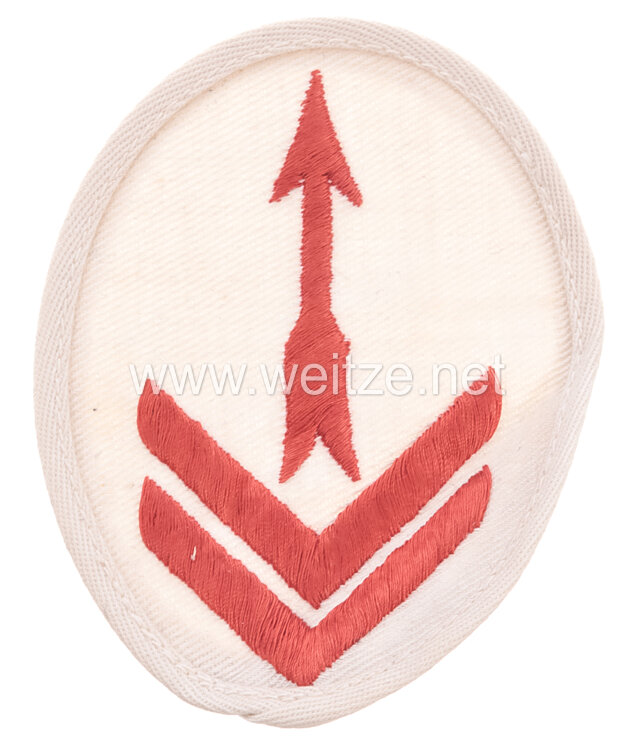
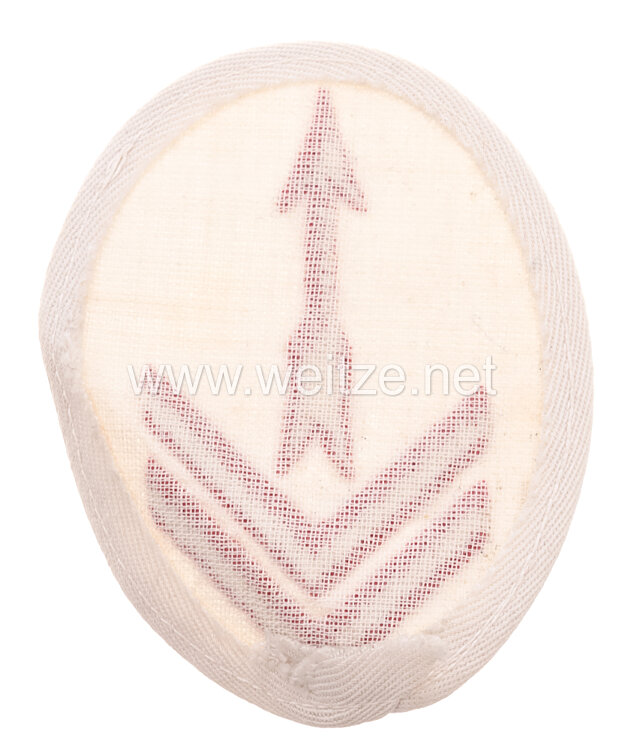
Kriegsmarine Sleeve Insignia Special Training Flak Searchlight Director
The Kriegsmarine Sleeve Badge for Special Training as Flak Searchlight Operator represents an important aspect of German naval training during World War II. These special badges were introduced to distinguish naval personnel who had acquired particular technical qualifications and specialized knowledge.
The Kriegsmarine, the official designation of the German Navy from 1935 to 1945, developed an extensive system of training badges and proficiency insignia. These served not only to identify special skills but also to boost morale and encourage training ambitions among enlisted men and non-commissioned officers.
This badge is manufactured in machine-embroidered execution, which was typical for Kriegsmarine insignia. The embroidery was done on dark base material that was sewn onto the white blouse. The white blouse was part of the Kriegsmarine's summer uniform and was worn during the warmer months.
Training as a Flak Searchlight Operator was a highly specialized technical course. Flak searchlights were essential components of air defense both on warships and in coastal fortifications. These powerful searchlights served to locate and illuminate enemy aircraft at night so that anti-aircraft guns could engage them. Operating them required special knowledge in optics, electrical engineering, and tactical application.
Wearers of such badges had to complete multi-stage training. This included theoretical instruction on the functioning of searchlight equipment, practical exercises on the equipment, and tactical training for coordinated cooperation with anti-aircraft gun crews. Training typically lasted several weeks and concluded with an examination.
During the war, air defense gained increasing importance. Allied air attacks on German naval bases, shipyards, and vessels made well-trained anti-aircraft crews indispensable. Searchlight operators played a key role, especially during night attacks. The coordination between searchlights, radar equipment, and anti-aircraft guns was complex and required highly qualified personnel.
The Kriegsmarine's wearing system prescribed that special training badges be worn on the left upper arm. The position and type of badge were precisely defined in the Kriegsmarine's uniform regulations. Machine embroidery on fabric base was the common manufacturing method during the war years, as it was faster and more cost-effective than hand embroidery while ensuring a uniform and professional appearance.
The design of such badges followed certain heraldic and symbolic principles. Typically, they displayed stylized representations of the respective equipment or weapons for which the training was conducted. For Flak searchlight operator badges, searchlight beams were often depicted, sometimes in combination with anti-aircraft symbols or other maritime elements.
The awarding of such specialist badges was part of a larger system of performance recognition in the Wehrmacht. They differed from combat awards in that they were purely qualification-based and not awarded for bravery or combat operations. Nevertheless, they were of considerable value to the wearers as they documented their professional competence and were often associated with better employment opportunities and greater responsibility.
From a collector's perspective, such sleeve badges are important historical documents today. They provide insights into the highly differentiated organizational structure of the Kriegsmarine and the variety of technical specializations required in a modern navy. The preservation of such badges in good condition is rare today, as textiles are particularly susceptible to wear and damage.
The historical evaluation of such objects must always occur in the context of their time. They are testimonies to military history and technical development, but also document a regime responsible for war and crimes against humanity. Their preservation and study serve historical understanding, not glorification.