Prussian Pickelhaube Spiked Helmet for a Mounted Official in the Simple Service of the Rural Gendarmerie

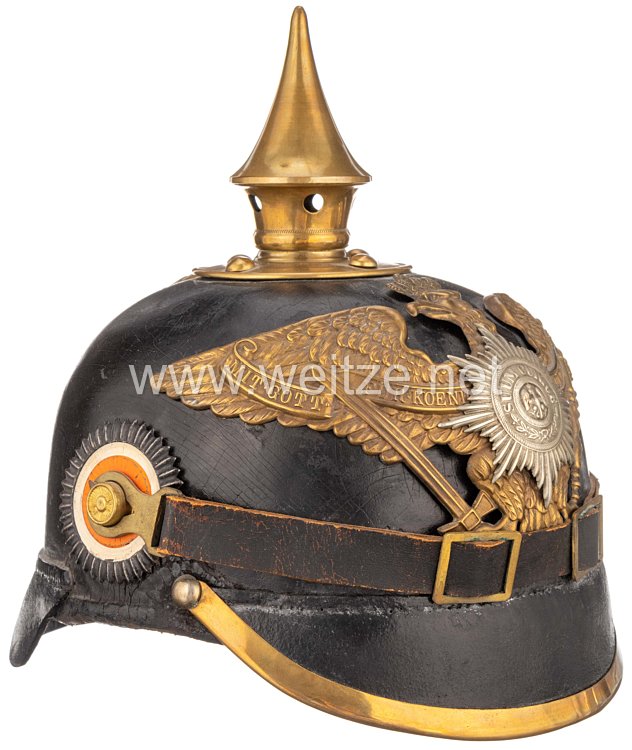
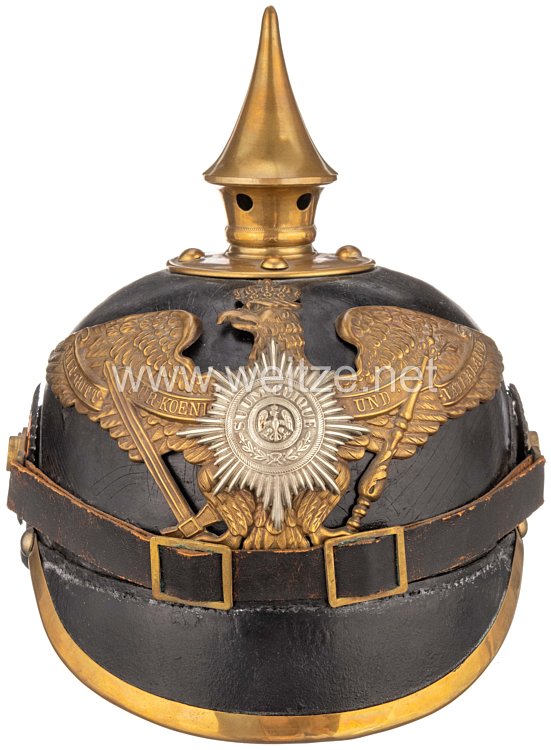
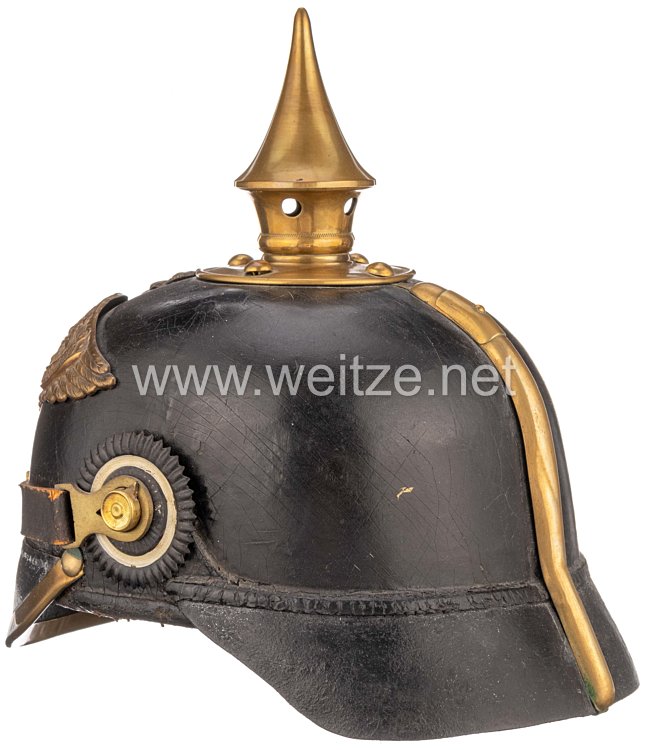
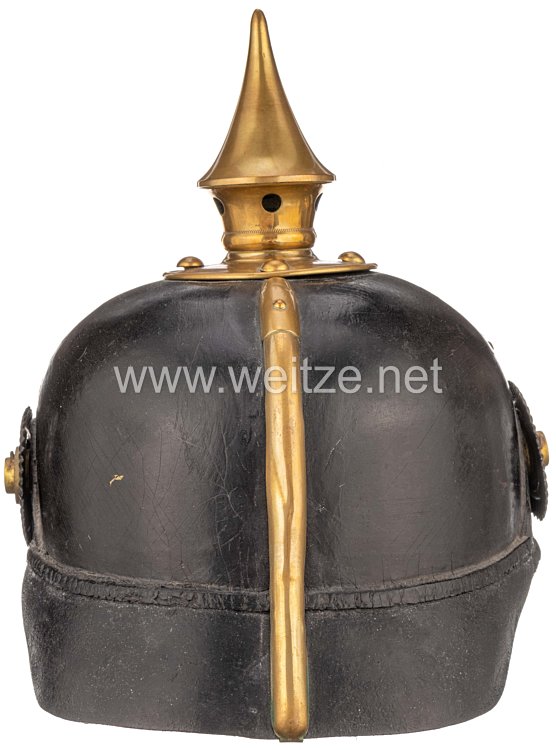
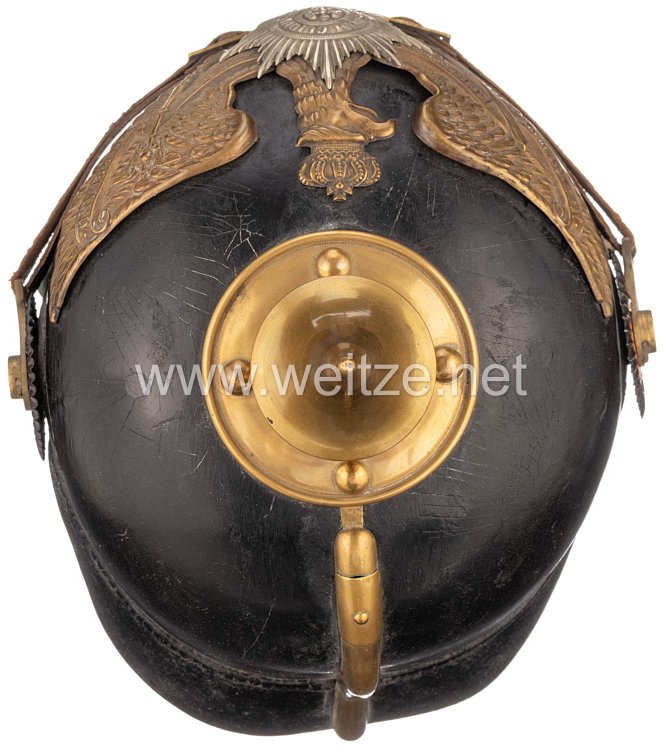
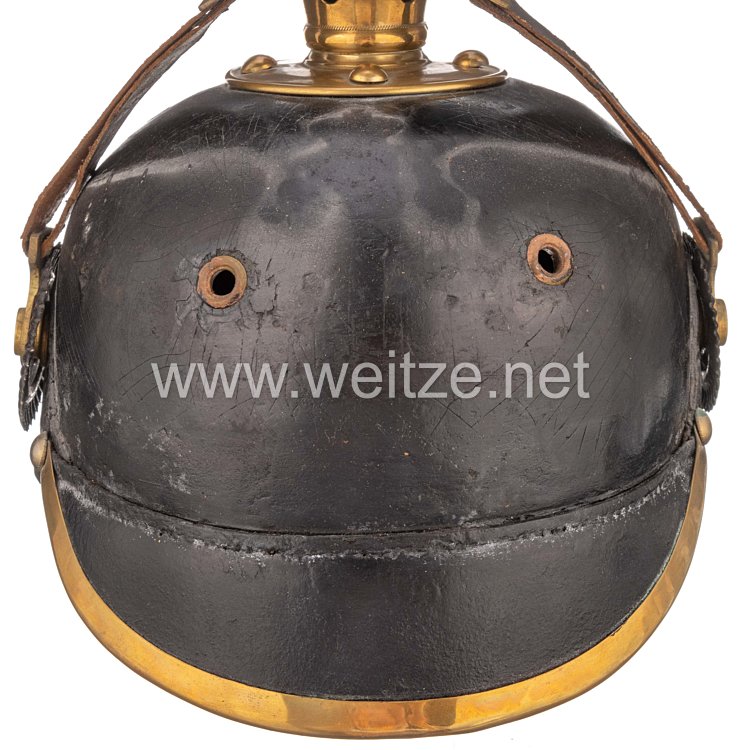
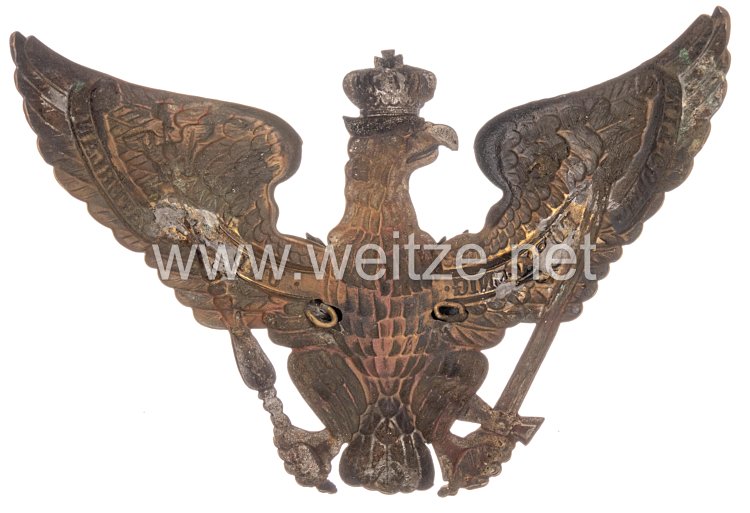
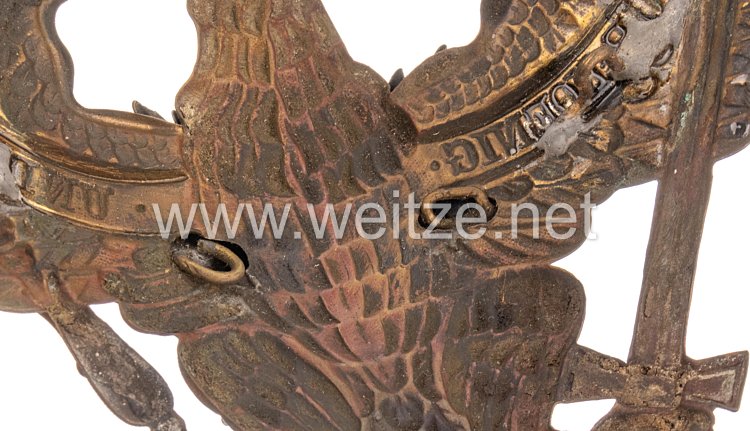
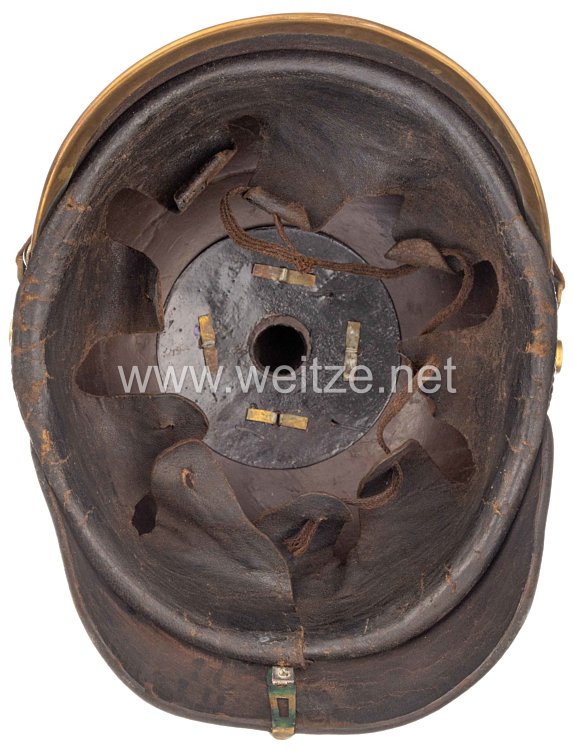
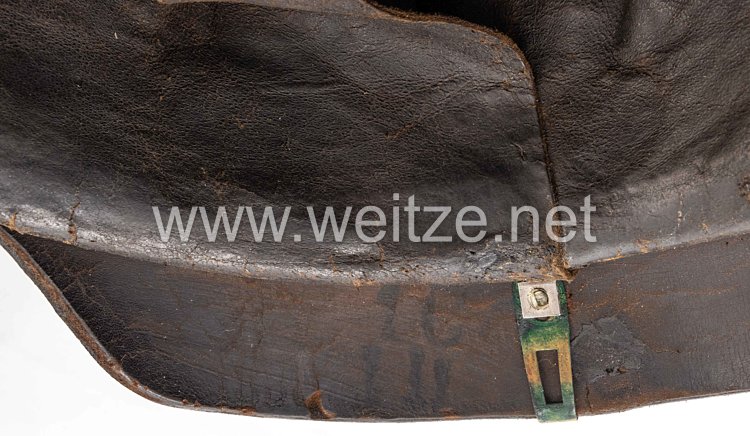
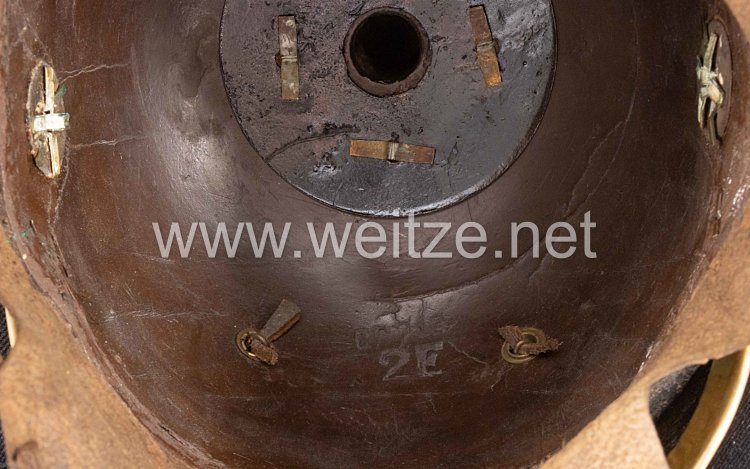
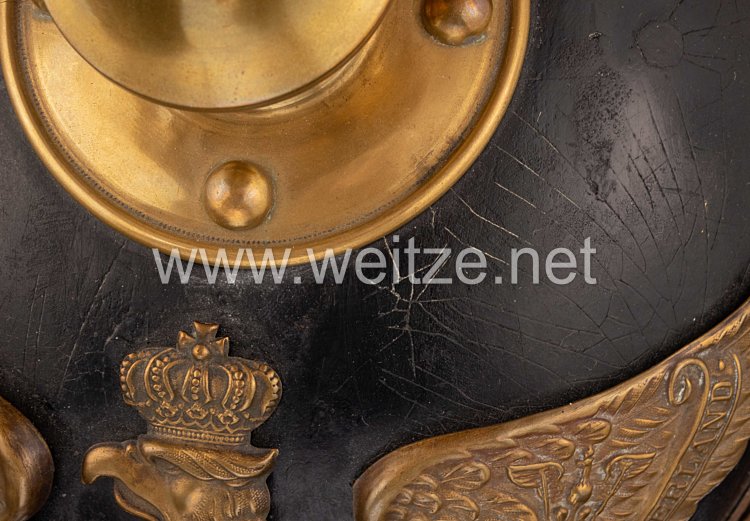
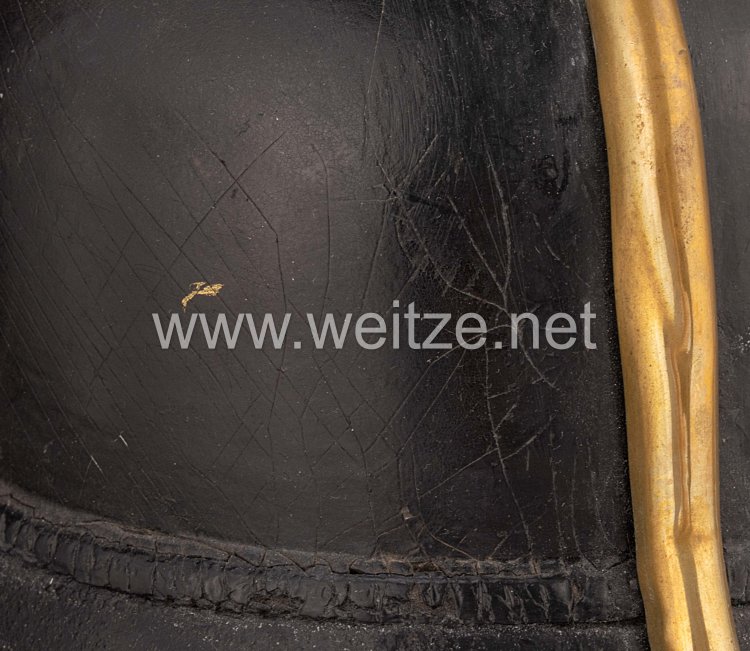
Cabinet piece circa 1900. Heavy leather helmet in execution similar to those for the Guard Infantry Regiments, complete with all fittings in brass. Front features the Guard eagle with applied silver Guard star. Leather chin strap on button 91, complete with both cockades. Plate with service spike. Interior with lacquered leather lining. Stamped “2E” in the bell, with illegible stamp above. Size 54. Condition 2.

439982
1.750,00

Prussian Pickelhaube Spiked Helmet for a Mounted Official in the Simple Service of the Rural Gendarmerie

The Prussian Pickelhaube for mounted officials of the Rural Gendarmerie represents a fascinating aspect of Prussian military and police history at the turn of the 20th century. This characteristic headgear combines military tradition with the special position of the gendarmerie in the Prussian state system.

The Prussian Gendarmerie was established in 1812 as a militarily organized police force and developed into an indispensable institution for maintaining public order in rural areas. The Rural Gendarmerie was hierarchically structured and distinguished between senior and simple service ranks. Mounted officials in simple service formed the backbone of rural police work and were responsible for extensive districts.

The construction of this helmet follows the model of the Guard Infantry Regiments, reflecting the special esteem accorded to these officials. The heavy leather helmet was manufactured from several layers of pressed leather, providing both stability and a certain degree of protection. The production of such helmets was a specialized craft mastered by only a few manufacturers.

Particularly noteworthy is the Guard Eagle with applied silver Guard Star on the front. This combination was characteristic of units with special royal recognition. The Guard Star, an eight-pointed star with the Order of the Black Eagle at its center, symbolized the direct connection to the Prussian royal house. The fact that an official of the Rural Gendarmerie was permitted to wear this distinction underscores the military character and high social standing of this institution.

The brass fittings were not merely decorative but also functional. They reinforced the critical points of the helmet and gave it its characteristic luster. The brass fittings had to be polished regularly, which was part of the officials' daily routine and demonstrated the wearer's discipline and orderliness.

The leather chin strap with button 91 is an important detail for dating and identification. The Model 1891 was a standardized component of Prussian helmets of this period. The chin strap served to secure the helmet during rides or operational situations. The two cockades – the Prussian black-and-white cockade and the Reich cockade in black-white-red – displayed dual loyalty to the Prussian state and the German Empire.

The plate with service spike is characteristic of mounted units. Unlike the ceremonial parade helmets with ball finials or eagles, service helmets bore a simpler spike. This was more practical for daily use and reduced the weight of the already heavy helmet.

The laced leather lining inside was an elaborate construction that significantly improved wearing comfort. Through the lacing – a type of stringing or bracing – a cushion was created between helmet and head that absorbed shocks and enabled air circulation. This was particularly important for mounted officials who had to wear the helmet for many hours.

The stamp “2E” in the bell refers to military administrative practices. Such stamps served for inventory and assignment to specific units or depots. The fact that another stamp is illegible complicates exact attribution, which is not uncommon for objects of this age.

Size 54 corresponds to a head circumference of approximately 54 centimeters and was a common size in the Prussian Army and Gendarmerie. Helmets were manufactured in various sizes to ensure the best possible fit.

The period around 1900 marks a heyday of Prussian militarism, but also the beginning of profound changes. The Rural Gendarmerie was in a phase of professionalization and modernization. At the same time, traditional uniform elements were retained that symbolized the authority and continuity of the institution.

The Pickelhaube itself became an international symbol of Prussian military power and Prussian virtues such as discipline, order, and sense of duty. Its characteristic shape – presumably inspired by Russian and Baltic models – became an export success and was adopted by numerous other states.

After World War I, the Pickelhaube disappeared from military use. It was replaced by more practical steel helmets that offered better protection. The Prussian Gendarmerie was also reformed after 1918 and lost its strictly military character. Today, such helmets are sought-after collector's items and important testimonies to a bygone era of Prussian-German history.