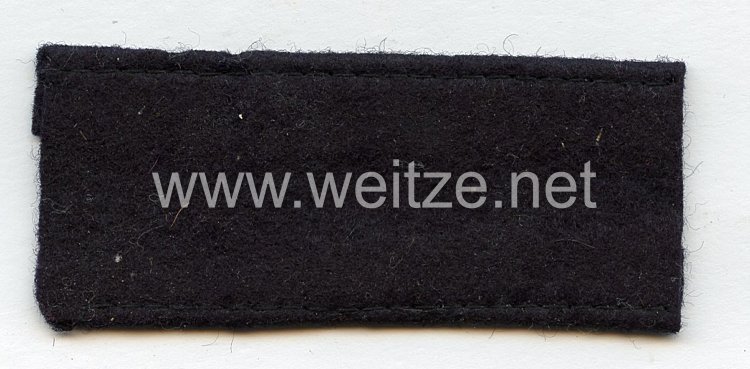
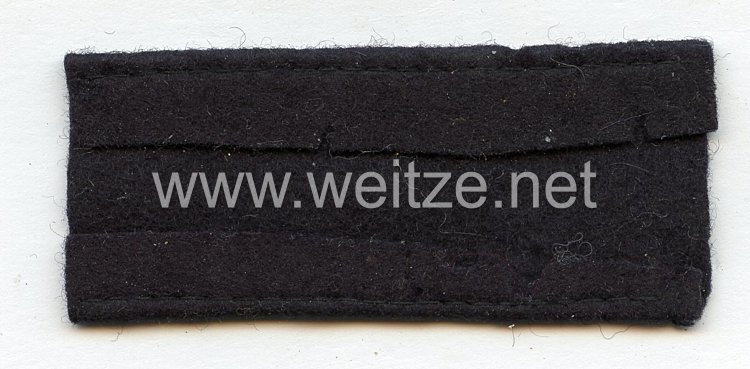
Luftwaffe Enlisted Ranks Cuff Title Fragment

7.5 cm, Condition 3
410482
20,00

Luftwaffe Enlisted Ranks Cuff Title Fragment

The Luftwaffe sleeve band for enlisted personnel represents a fascinating testament to the military clothing regulations and uniform design of the German Air Force during World War II. With a width of 7.5 cm, this piece corresponds to the standardized measurements specified in the Luftwaffe clothing regulations.

The sleeve bands (also referred to as cuff titles or Ärmelbänder) were integral components of the Luftwaffe uniform and served various purposes. They were worn on the left or right upper arm and identified affiliation with specific units, formations, or specialized branches. For enlisted personnel – meaning ranks from Flieger (airman) to Hauptfeldwebel (master sergeant) – special execution regulations applied that differed from those for officers.

The introduction of standardized sleeve bands in the Luftwaffe occurred gradually after the establishment of the Luftwaffe as an independent branch of the Wehrmacht in 1935. Reichsmarschall Hermann Göring, as Commander-in-Chief of the Luftwaffe, placed great emphasis on representative yet functional uniform design. The sleeve bands were intended not only to make military hierarchy visible but also to promote esprit de corps and identification with the respective unit.

The typical construction of a sleeve band for enlisted personnel consisted of a woven or embroidered textile strip, usually on a dark blue or black background characteristic of the Luftwaffe. The lettering was generally executed in silver-colored or white letters for enlisted ranks, while officers often wore aluminum or silver wire versions. Well-known inscriptions included unit designations such as “Jagdgeschwader” (fighter wing), “Kampfgeschwader” (bomber wing), geographical designations, or traditional names.

The manner of wearing was precisely regulated in the Army Service Regulation (H.Dv.) 104 and the corresponding Luftwaffe service regulations. The sleeve band was typically attached approximately 15 cm below the shoulder seam on the left upper arm, though it could also be worn on the right arm depending on the unit and purpose. Attachment was accomplished by sewing onto the uniform jacket or tunic.

Sleeve bands acquired particular significance among specialized units such as the Fallschirmjäger (paratroopers), Flak units (anti-aircraft), or Luftnachrichten-Truppen (air signals troops). These formations often developed their own traditions and wore correspondingly designed sleeve bands that emphasized their special role within the Luftwaffe. Combat units that had distinguished themselves in particular campaigns sometimes received honorary bands with appropriate inscriptions.

The manufacture of sleeve bands was carried out by various Army Clothing Offices and private manufacturers who held corresponding Wehrmacht contracts. Quality could vary considerably – from high-quality, machine-woven specimens to simpler, handcrafted pieces, especially in the later war years when material shortages increasingly became problematic.

The condition rating “3” indicates a piece showing visible signs of use but still displaying all essential features. Typical aging phenomena in textiles of this type include discoloration, slight fiber damage, possibly missing or loosened stitching, and wear on the edges. Such authentic signs of use are of particular interest to collectors and historians as they document the actual use of the object.

From a military-historical perspective, sleeve bands are valuable sources for uniform studies (uniformology) and the organizational history of the Luftwaffe. They enable conclusions about the structure of military formations, their deployment locations, and the development of military identification systems. The systematic recording and scientific evaluation of such objects contributes to understanding the military history of the 20th century.

Today, such sleeve bands are found in military-historical collections, museums, and among private collectors. Their authentication requires sound knowledge of the manufacturing techniques, materials, and regulations of the respective period, as the market is also characterized by reproductions and forgeries.

r