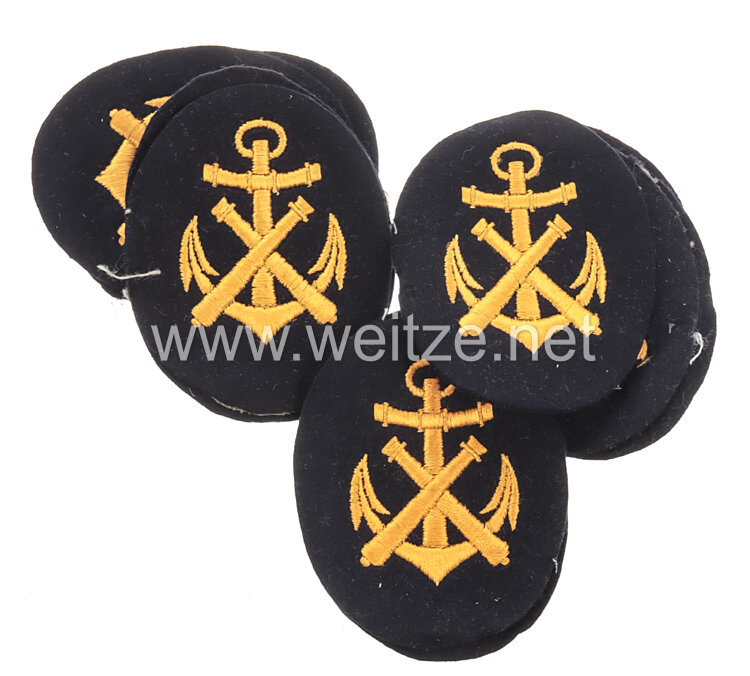
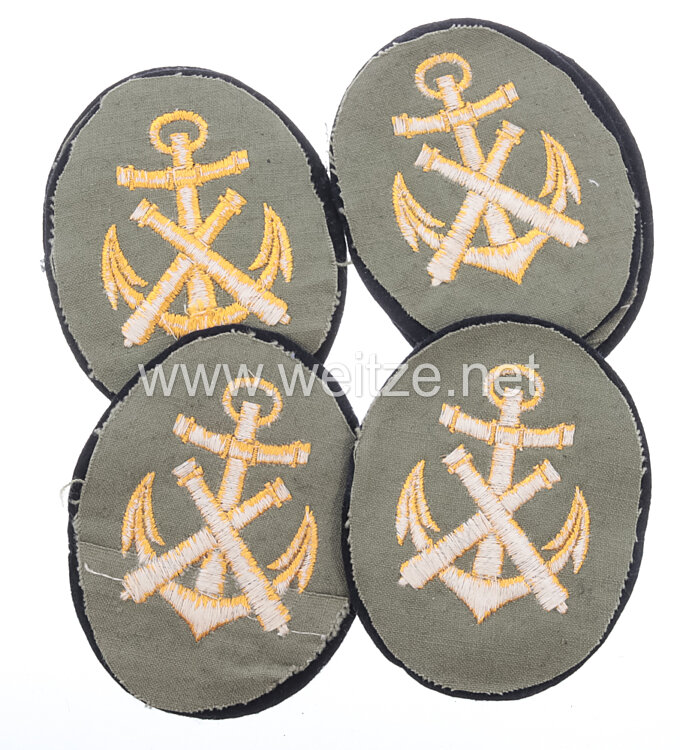
Kriegsmarine Sleeve Insignia Career Path Torpedoman's Mate
Price per piece: 12 Euro.
Condition may vary.
The Kriegsmarine sleeve badge for Feuerwerksmaat represents a fascinating example of the complex rank insignia and career designation systems used in the German Navy during World War II. These specific badges served not only to identify ranks but also to indicate specialized career paths within the maritime forces of the Third Reich.
The Kriegsmarine, the official designation of the German Navy from 1935 to 1945, developed a sophisticated system of uniform insignia based on centuries-old maritime traditions but adapted to the specific requirements of a modern navy. Following Germany's rearmament under Adolf Hitler and the official rejection of the Versailles Treaty restrictions in 1935, the Reichsmarine was renamed Kriegsmarine.
The term Feuerwerksmaat designates a petty officer in the career path of torpedo specialists and weapons mechanics. The designation “Feuerwerker” has its roots in historical military terminology and traditionally refers to specialists handling explosives, ammunition, and pyrotechnic materials. In the Kriegsmarine, Feuerwerksmaate were responsible for the maintenance, upkeep, and deployment of torpedoes, mines, depth charges, and other underwater weapons. The rank “Maat” roughly corresponds to petty officer in other military branches.
These sleeve badges were worn on the blue blouse, the working and shipboard uniform of the Kriegsmarine. The blue uniform was the standard service dress for daily duty aboard warships and differed from the black or white parade uniforms. The placement of career badges on the sleeve allowed for quick visual identification of a crew member's specialization, which was crucial in the complex and often dangerous environment of a warship.
The design of such badges followed the uniform regulations of the Kriegsmarine, which were detailed in various service regulations and instructions. The badges were typically manufactured in different quality grades: from hand-embroidered examples for officers to machine-woven versions for enlisted men and petty officers. The materials used varied depending on availability and production period, with substitute materials increasingly used as the war progressed.
Training to become a Feuerwerksmaat was demanding and lengthy. Candidates first had to complete basic seamanship training before qualifying for specialized torpedo training. The education encompassed theoretical and practical knowledge about torpedo functionality, their maintenance, handling of various fuse types, as well as knowledge of ballistics and underwater weapons systems. These specialists were highly qualified technicians whose expertise was crucial for the combat effectiveness of submarines and surface ships alike.
In the context of the U-boat arm, which played a central role in German naval warfare, Feuerwerksmaate were indispensable. They were responsible for the correct loading of torpedo tubes, setting torpedo parameters, and maintaining these complex weapons systems under the cramped and often dangerous conditions of a submarine. Their work required the highest precision, as malfunctions could have catastrophic consequences.
The collector community today values such original badges as historical documents that provide insight into the organizational structure and daily life in the Kriegsmarine. The condition of such textile badges varies considerably, as they were subject to various stresses as utilitarian objects: saltwater, sunlight, mechanical stress, and frequent washing often led to wear. Well-preserved examples with clear details and intact colors are therefore particularly sought after.
From a historical perspective, these badges document the technical complexity and specialization of modern naval warfare in the 20th century. They also commemorate the thousands of naval personnel who served in these specialized functions, many of whom lost their lives in the naval war. The high losses of the Kriegsmarine, particularly the U-boat arm with a loss rate exceeding 75% of deployed crews, make these items silent witnesses to one of the most costly phases of naval warfare history.
Understanding the role and significance of career badges like the Feuerwerksmaat insignia provides valuable insights into the organizational structure of the Kriegsmarine. The navy's emphasis on specialized training and clear identification of technical expertise reflects the increasingly technological nature of naval warfare. These badges were part of a comprehensive system that helped maintain order and efficiency in the challenging environment of naval operations during World War II.