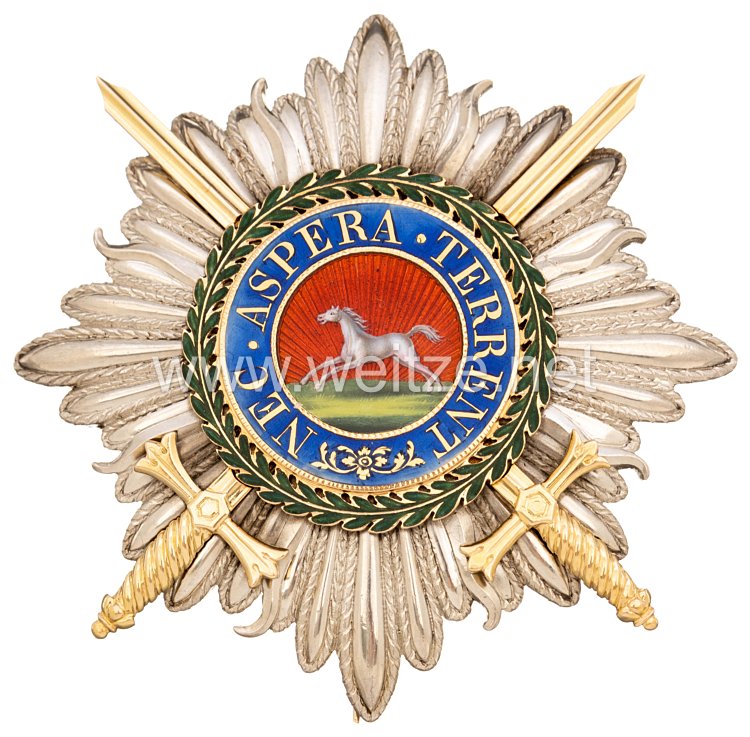
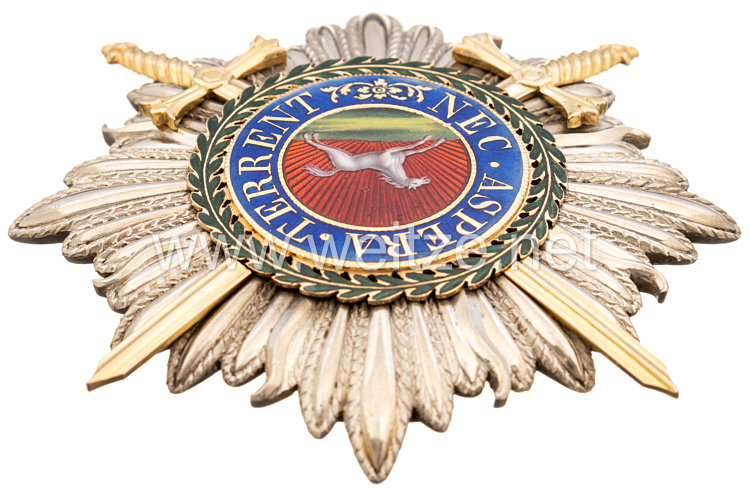
Kingdom of Hannover Guelph Order Breast Star to the Grand Cross with Swords

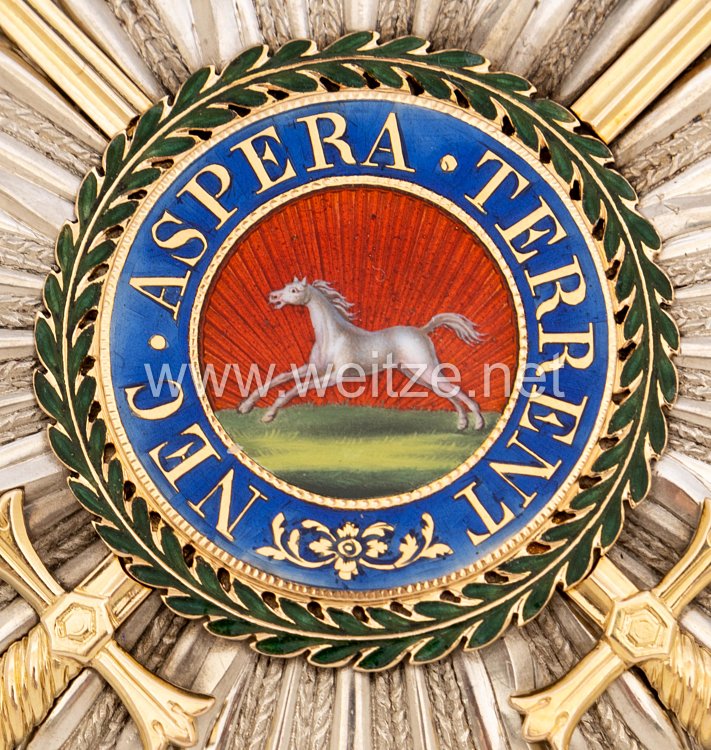
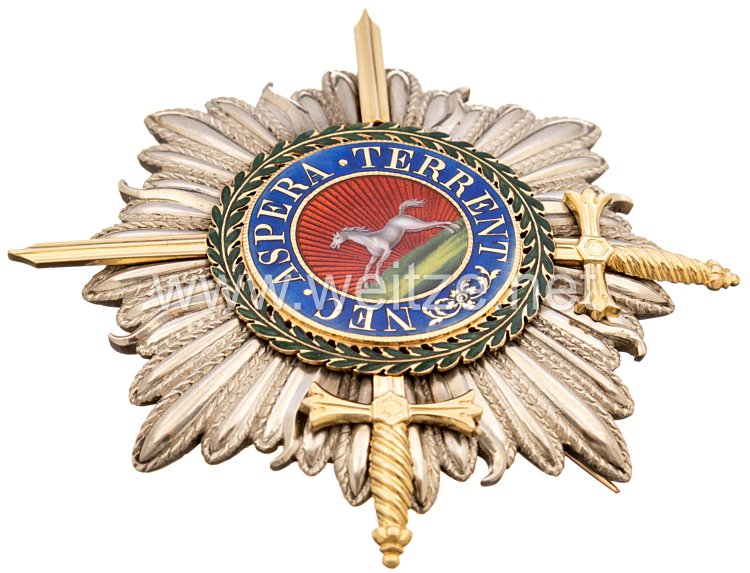
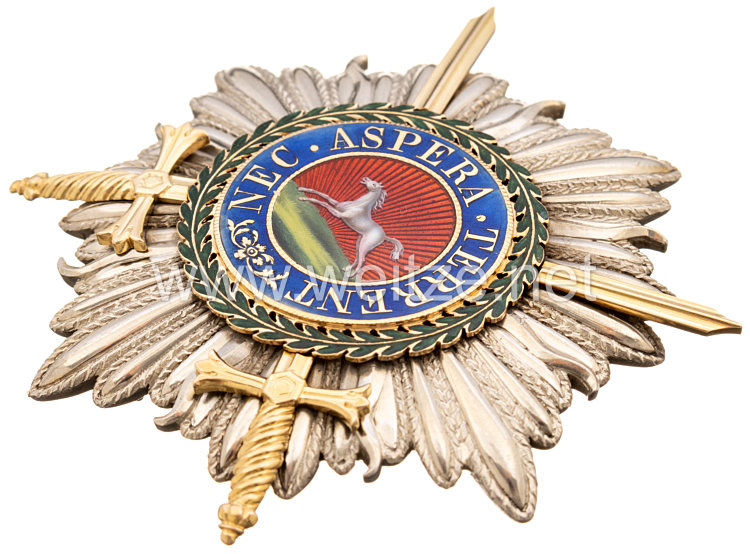
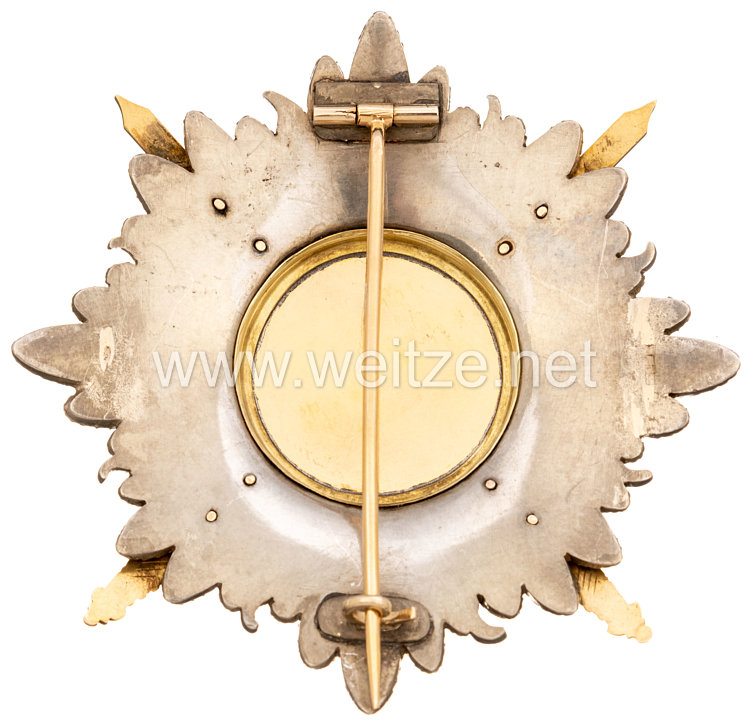
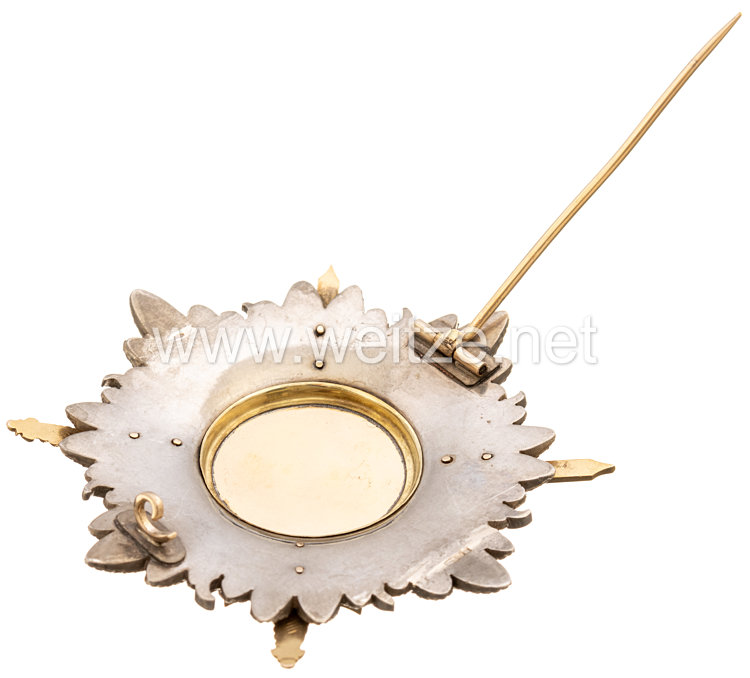
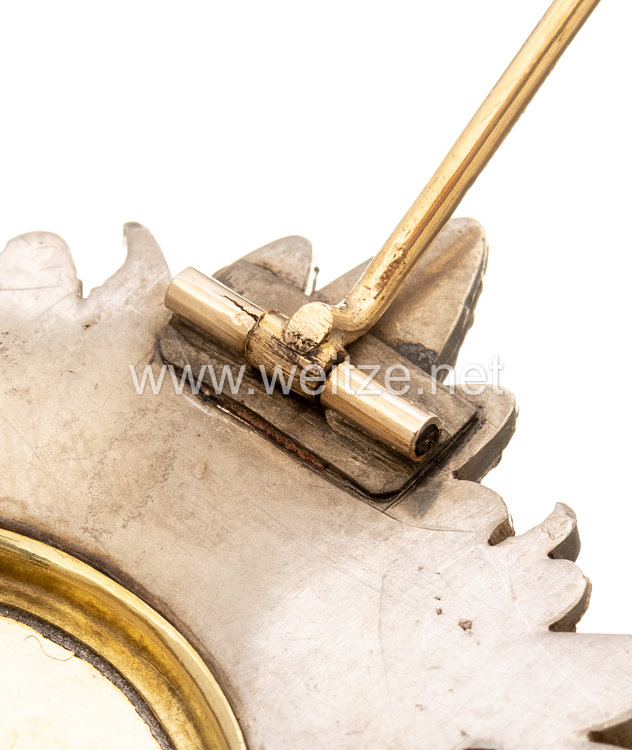
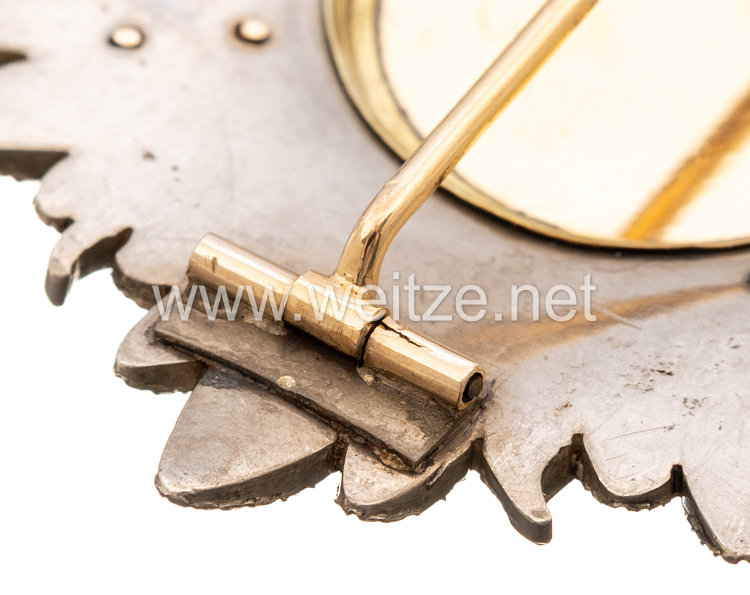
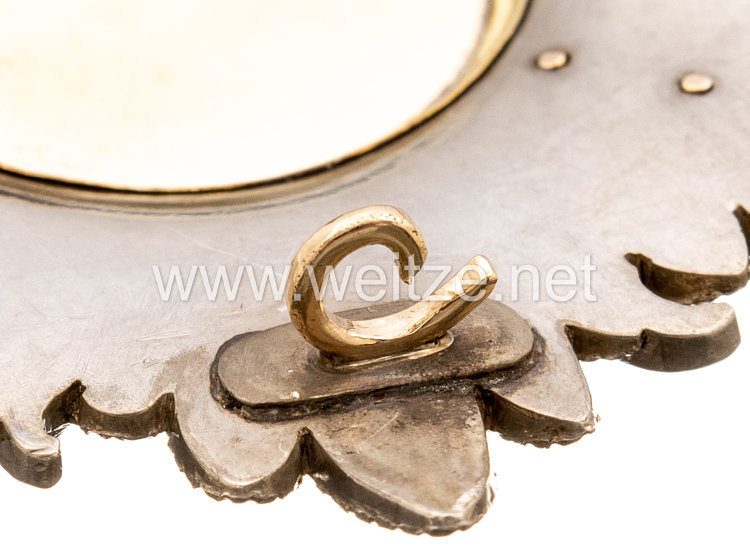
This is a piece in reduced size, circa 1830/40. The star corpus solidly crafted from silver, the medallion and applied swords of gold, the medallion itself manufactured in one piece with the motto, finest enamel painting, the motto in gold, surrounded by the laurel wreath. Reverse with thin gold pin, the swords quadruple-riveted. Overall height 60 mm. Only lightly worn in absolutely wonderful condition. A historic unique piece, no other piece in this execution is known to us.

This piece is illustrated in the reference work “Orden 1700-2000” by Karsten Klingbeil, Volume 1, page 211, No. 641.
441082
12.000,00

Kingdom of Hannover Guelph Order Breast Star to the Grand Cross with Swords

The Kingdom of Hanover Guelphic Order ranks among the most significant German orders of the 19th century and represents the complex political history of the House of Hanover. This magnificent Grand Cross Breast Star with Swords in reduced size from around 1830/40 is an extraordinary testament to courtly goldsmith artistry and military decoration tradition.

The Guelphic Order was established on April 28, 1815 by Prince Regent George, later King George IV of Great Britain and Hanover. The order's foundation occurred during a period of fundamental political reorganization of Europe following the Napoleonic Wars and the Congress of Vienna. The Kingdom of Hanover, which was connected to the British Crown through personal union, received through this decoration an important instrument for rewarding service to state and dynasty.

The name “Guelphic” refers to the ancient Italian House of Welf (Italian: Guelfi), from which the House of Hanover descended. This dynastic connection reaches back to the 12th century and symbolizes the legitimate line of succession of the Hanoverian kings. The choice of this historical name emphasized the claim to a centuries-old tradition of European princely power.

The present example displays the characteristic features of the Grand Cross with Swords, the highest military grade of the order. The swords added to the order star designated awards for military merit, while the version without swords was conferred for civil achievements. This differentiation was typical of 19th-century European order systems and enabled precise gradation of honors.

The star body of solid silver with the gold medallion and applied gold swords represents the highest craftsmanship. The central medallion bears the order's motto, executed in finest enamel and surrounded by a laurel wreath. The laurel, a symbol of victory and honor since antiquity, emphasizes the military character of this decoration. The four-fold riveting of the swords demonstrates the solid craftsmanship designed to ensure durable wearability.

Particularly noteworthy is the reduced size of this breast star with an overall height of only 60 mm. Such miniaturized versions were typically produced as so-called “guard versions” or for daily use. While official parade versions were significantly larger and worn at ceremonial occasions, the reduced versions allowed the wearing of the decoration in military daily life or at less formal occasions. This was particularly important for active officers who wished to display their orders even in field service.

The dating around 1830/40 falls within a significant period of Hanoverian history. After the death of William IV of Great Britain in 1837, the personal union between Great Britain and Hanover ended due to the Salic Law in force in the Kingdom of Hanover, which excluded female succession. Ernest Augustus I ascended the Hanoverian throne as a separate king, giving the kingdom a more independent position. During this period, orders such as the Guelphic Order were increasingly used to consolidate royal authority and bind the military and nobility to the dynasty.

The Guelphic Order was divided into several classes: The Grand Cross formed the highest grade, followed by Grand Commander, Commander, and Knight. Each class had its specific methods of wearing and insignia. The Grand Cross was worn on a broad sash, complemented by the breast star presented here, which was attached to the left breast side. The reverse thin gold pin served this attachment to the uniform.

The finest enamel painting on the medallion demonstrates the high artistry of contemporary gold and silversmiths. The enamel technique, in which colored glass is fused with metal at high temperatures, required the highest craftsmanship. Only a few workshops in Hanover and the surrounding residence cities possessed the necessary expertise for such demanding work.

The end of the Kingdom of Hanover came with annexation by Prussia in 1866 following the German War. King George V, who had fought on the Austrian side, was forced into exile. The Guelphic Order was subsequently continued by the House of Hanover in exile and exists today as a house order of the Welfs. This makes historical examples like the present one important testimonies of a vanished kingdom.

The extraordinary state of preservation of this piece and its mention in specialist literature underscore its historical and collectible significance. As a unique piece in this specific execution, it represents not only the highest craftsmanship quality but also an important chapter of German and European history.

r