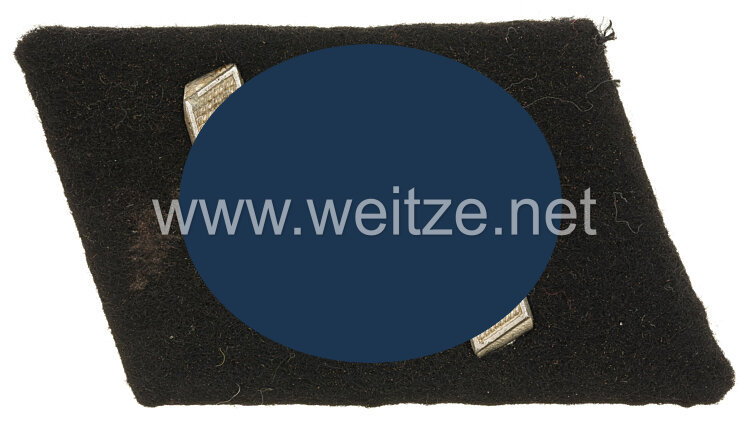
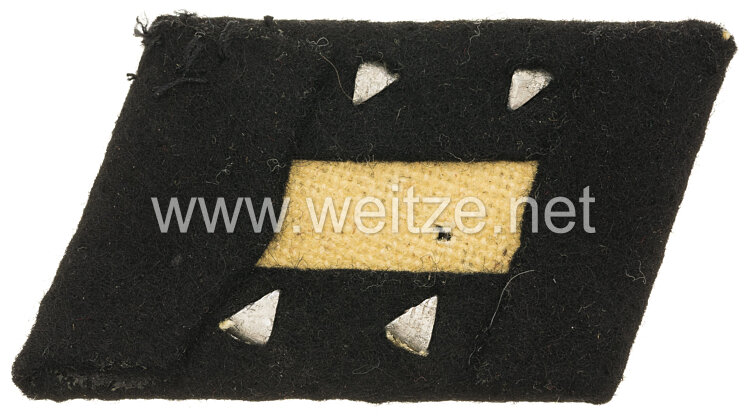
Waffen-SS Single Collar Tab of the 19. Waffen Grenadier Division der SS (Lettische Nr. 2)
Extremely rare, the first piece we have been able to offer in over 12 years.
The collar tab of the 19th Waffen-Grenadier Division of the SS (Latvian No. 2) described here represents an extremely rare piece of World War II military equipment. This unit belonged to the numerous foreign volunteer formations organized under the Waffen-SS umbrella during the final years of the war.
The 19th Waffen-Grenadier Division of the SS was established in January 1944 as the second Latvian division, following the earlier formation of the 15th Waffen-Grenadier Division of the SS (Latvian No. 1). The division was composed primarily of Latvian volunteers and conscripts recruited after the German occupation of Latvia in 1941. The division fought mainly on the Eastern Front as part of Army Group North.
The formation of Latvian SS units occurred within a complex historical context. Following the Soviet occupation of Latvia from 1940-1941 and the associated repressions, many Latvians viewed the German Wehrmacht as an opportunity to fight against the Soviet Union. The division consisted of approximately 10,000 to 15,000 men and was primarily deployed in the battles for the Baltic region during 1944-1945.
The described collar tab was manufactured in Latvia, distinguishing it from standard versions produced in Germany. This is an important feature that documents the local production of uniform items in occupied territories. The aluminum SS runes were stamped and attached to the black base with clasps—a construction method typical of field or local productions.
Waffen-SS collar tabs served to identify rank and unit. While German SS divisions often wore specific divisional insignia on the right collar tab, the Latvian units used the standard SS runes. The left collar tab typically displayed rank insignia. For enlisted ranks, both collar tabs featured the SS runes.
According to Waffen-SS uniform regulations, collar tabs were worn in pairs on the collar of the field tunic or dress uniform. The black base color was standard for all Waffen-SS units, regardless of their national origin. Latvian units often wore additional national insignia on the sleeve to indicate their origin.
The described version for enlisted personnel (non-commissioned officers and enlisted ranks without rank insignia) was the most frequently required variant, as the majority of any division consisted of these ranks. The use of aluminum for the runes was material-saving and corresponded to production conditions in the late war years when quality materials became scarce.
The extreme rarity of this object can be explained by several factors. First, the 19th Waffen-Grenadier Division was a relatively small unit with a limited lifespan. Second, much equipment was destroyed or lost at the war's end. Third, Latvian productions were manufactured in substantially smaller quantities than German standard items.
The Latvian SS divisions surrendered in May 1945. Many members were captured by the Soviets and treated as traitors. Equipment was confiscated or destroyed, which greatly reduced the survival rate of such objects.
Collar tabs from foreign Waffen-SS units are among the rarest uniform items from World War II. The local Latvian manufacture makes this piece particularly noteworthy, as it documents the decentralized production structure of the late war years. The different manufacturing methods and materials between German and Latvian productions are important authenticity features.
The indicated condition 2 (worn) confirms the authentic use of the piece. Signs of wear are to be expected on original uniform items of this type and actually increase the historical value, as they document actual use.
This collar tab represents a dark chapter of European history and today serves as material evidence of the complex political and military conditions during World War II in the Baltic region.