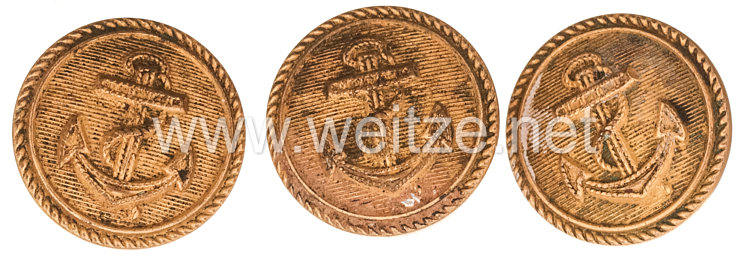
Reichsmarine 3 Uniform Buttons
These three Reichsmarine uniform buttons made of non-ferrous metal with a diameter of 19 mm represent a significant chapter in German naval history from the Weimar Republic era. These small but historically important objects embody the military tradition of a period that stretched between the end of World War I and the beginning of National Socialist rule.
The Reichsmarine was officially founded on January 1, 1921, as the successor to the Imperial Navy and existed until it was renamed the Kriegsmarine in 1935. Its creation was directly linked to the provisions of the Treaty of Versailles of June 28, 1919, which imposed drastic military restrictions on Germany. The new navy was permitted only a limited number of ships: a maximum of six battleships, six cruisers, twelve destroyers, and twelve torpedo boats. Submarines were completely forbidden, and personnel strength was limited to 15,000 men.
Reichsmarine uniform buttons followed a long tradition of military uniform design, in which even the smallest details were regulated. The non-ferrous metal used was typical for the period and usually consisted of a brass alloy characterized by its durability and distinctive golden appearance. The 19 mm size indicates that these were buttons for the uniform jacket or tunic, as opposed to larger buttons for coats or smaller ones for shirts and undergarments.
The design of Reichsmarine uniform buttons followed the uniform regulations established in various service regulations and decrees. Typically, these buttons displayed maritime symbols such as anchors, often in combination with the Reich eagle or other state emblems of the Weimar Republic. The manufacturer's marking on the back, which is identical on all three buttons, was common practice and allowed for quality control and traceability to the production facility. Various companies such as B&N (Brehmer & Neitmann), R.K. (Richard Kersten), or other metalware manufacturers supplied the Reichsmarine with uniform accessories.
The Reichsmarine uniform represented a compromise between the tradition of the Imperial Navy and the new republican circumstances. While many elements of Imperial uniforming were retained, monarchist symbols such as crowns were removed or replaced with republican state emblems. However, the rank insignia and basic uniform design remained true to maritime tradition.
The condition of these buttons is listed as “2,” which in collector nomenclature typically indicates good condition with slight signs of wear. This is remarkable for objects that are nearly a century old and were presumably actually worn. The patina and any wear marks tell the story of their use by naval personnel during a politically turbulent time.
The years of the Reichsmarine were marked by enormous challenges. The navy not only had to contend with the drastic restrictions of the Treaty of Versailles but also had to find its role in the new democratic order. Nevertheless, the Reichsmarine managed to maintain a certain level of professionalism and technical innovation despite all limitations. The development of the pocket battleships of the Deutschland class in the early 1930s demonstrated how the navy attempted to create effective units within the treaty restrictions.
Uniform buttons such as these were more than just functional fasteners. They were part of military identity and esprit de corps. Every sailor wore these standardized elements and was thus part of a larger community. Careful maintenance of the uniform, including the buttons, was part of military discipline and external appearance.
From a collection-historical perspective, such uniform buttons are important historical documents. They provide insights into the material culture of the military, into production techniques, and into the standards of military equipment during the Weimar era. The fact that all three buttons come from the same manufacturer suggests that they may have originated from a single uniform or from a closed production batch, which underscores their historical authenticity.
Today, these buttons serve as tangible connections to a specific historical period. They remind us of the thousands of young men who served in the Reichsmarine during a time of political uncertainty and economic hardship. Each button, though small and seemingly insignificant, carries within it the weight of history and the stories of those who wore them on their naval uniforms during the Weimar Republic.