Ottoman Empire Iron Crescent - Gallipoli Star 1915

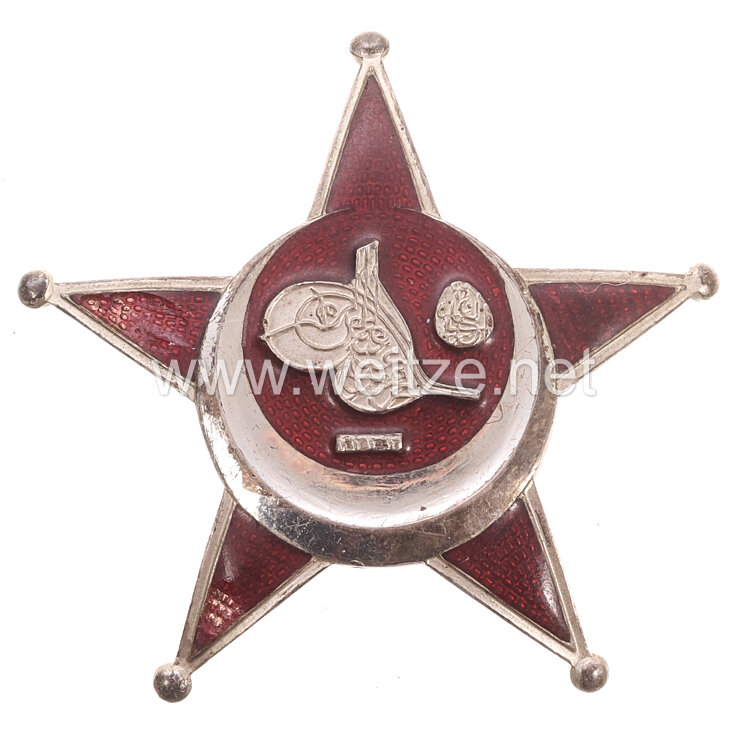
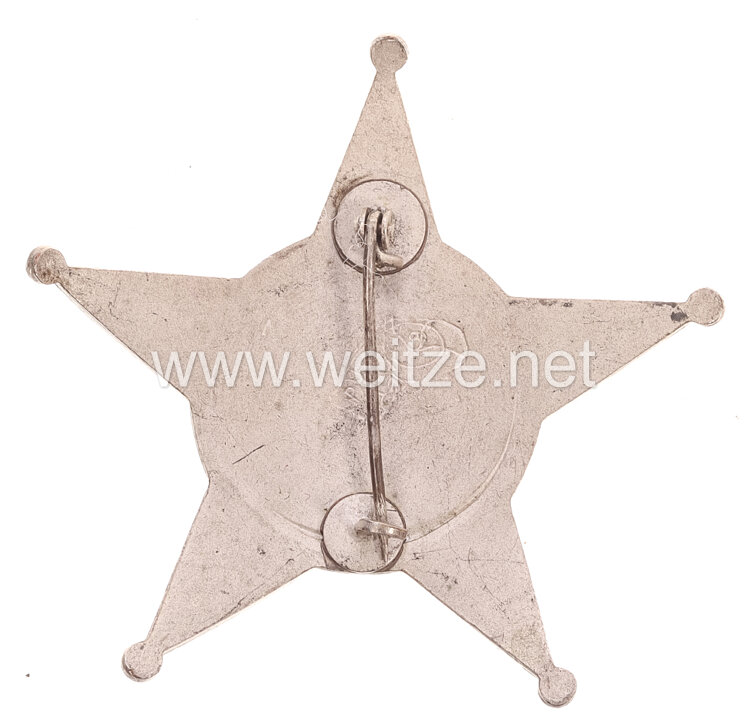
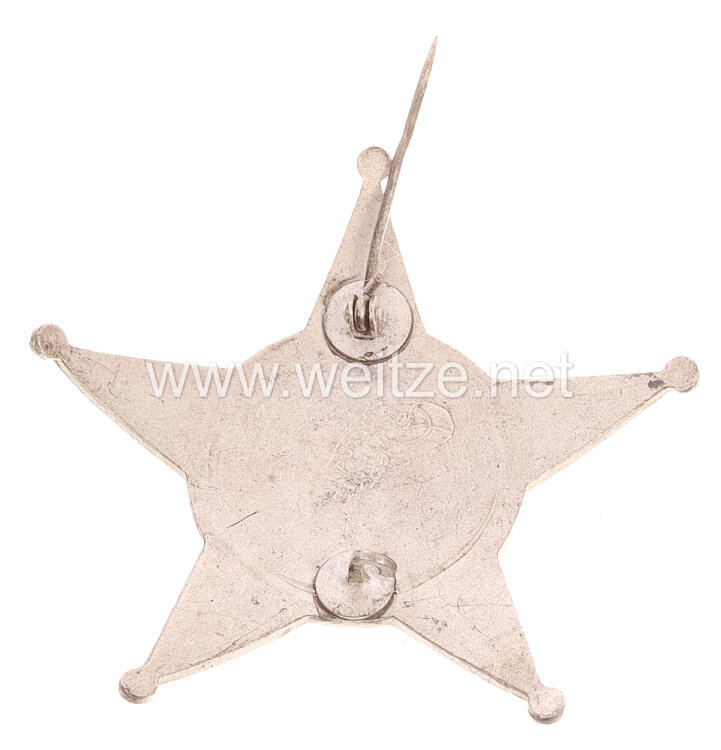
Silver-plated non-ferrous metal, with red enamel, slightly convex, reverse with struck “Tughra”, vertical pin assembly. Condition 2-.
461081
300,00

Ottoman Empire Iron Crescent - Gallipoli Star 1915

The Iron Crescent (Turkish: Demir Ay), also known as the Gallipoli Star, represents one of the most significant military decorations of the Ottoman Empire during World War I. This decoration was specifically created to recognize the extraordinary bravery and heroism of Ottoman troops during the Battle of Gallipoli in 1915.

The Gallipoli Campaign, which lasted from April 1915 to January 1916, was a decisive turning point in World War I. Allied forces, consisting mainly of British, French, Australian, and New Zealand troops (ANZAC), attempted to capture the Dardanelles and open a sea route to Russia. However, the Ottoman defenders under the command of Mustafa Kemal (later Atatürk) and German advisors such as Otto Liman von Sanders mounted fierce resistance.

The Iron Crescent was conceived as the Ottoman counterpart to the German Iron Cross. The decoration symbolizes the close military cooperation between the German Empire and the Ottoman Empire as allies of the Central Powers. The design of the medal combines traditional Ottoman symbols with the military honor traditions of European powers.

The described specimen displays the typical features of this decoration: The decoration consists of non-ferrous metal that has been silver-plated and features the characteristic form of a crescent with star – the central symbols of the Ottoman state and Islam. The red glass enamel in the center of the decoration is a special artistic element that emphasizes the significance and solemnity of the award. The slight convex shape gives the piece a three-dimensional quality.

On the reverse side is the stamped Tugra – the calligraphic monogram of the Ottoman Sultan Mehmed V (reigned 1909-1918). The Tugra served in the Ottoman Empire as the official signature and seal of the ruler and authenticates the decoration as a state award. The vertical pin system on the reverse allowed the decoration to be worn on the uniform.

The awarding criteria for the Iron Crescent were strict. The decoration was awarded to Ottoman soldiers and officers who demonstrated exceptional bravery in combat. In some cases, the award was also given to German and Austro-Hungarian officers who fought alongside Ottoman forces. The number of awards remained relatively limited, which increased their value and significance.

The Battle of Gallipoli ended with a strategic victory for the Ottoman Empire and a humiliating withdrawal of Allied troops. The battle cost hundreds of thousands of lives on both sides and became a defining event in the history of Turkey, Australia, and New Zealand. For Turkey, Gallipoli symbolizes successful resistance against European colonial powers and the beginning of the modern Turkish nation under Atatürk.

After the end of World War I and the collapse of the Ottoman Empire in 1918, the Iron Crescent lost its official significance. With the founding of the Republic of Turkey in 1923, a new awards system was introduced. Nevertheless, the Iron Crescent remains an important historical artifact that commemorates a decisive moment in Ottoman and Turkish history.

Today, original specimens of the Iron Crescent are highly sought after by collectors of military decorations. The authenticity of such pieces can be determined by various features: the quality of the silver plating, the precise execution of the Tugra, the type of glass enamel, and the construction of the pin system. The described piece in condition 2- (very good) indicates good preservation, with only minor signs of wear expected for a military artifact over a hundred years old.