Luftwaffe Steel Helmet M 38 for Paratroopers with 2 Insignia

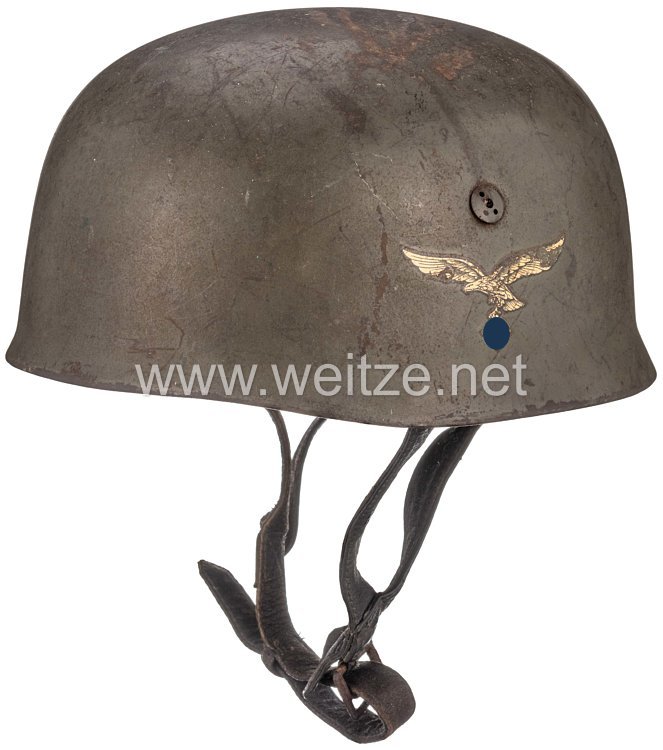
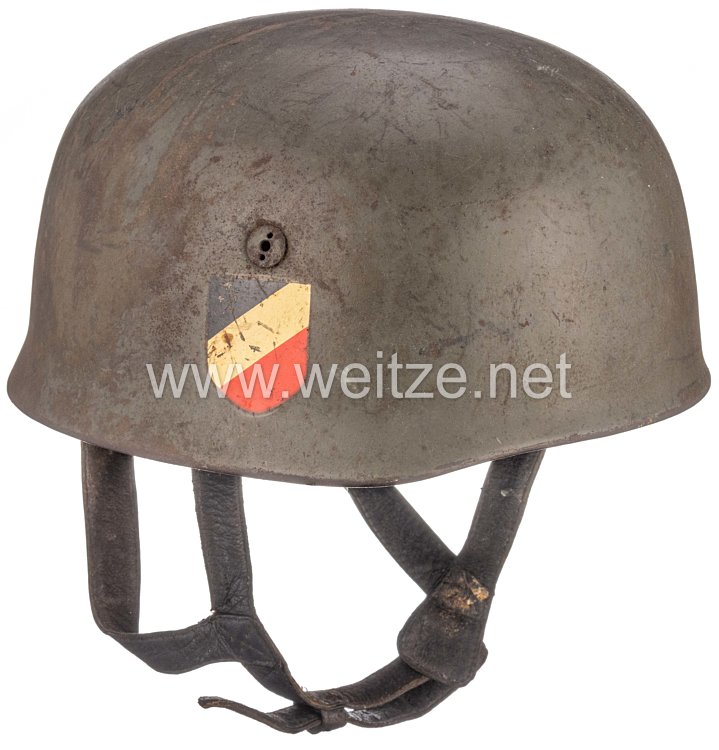
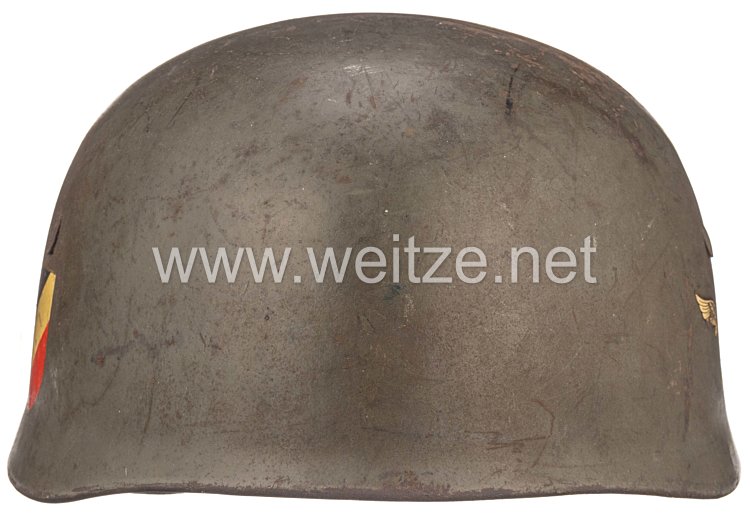
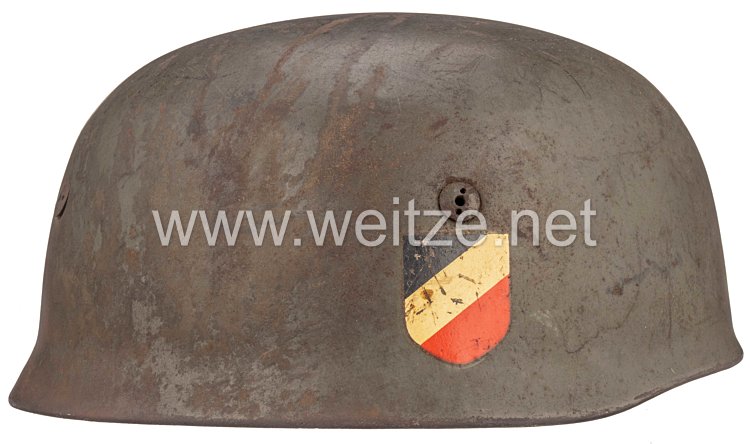
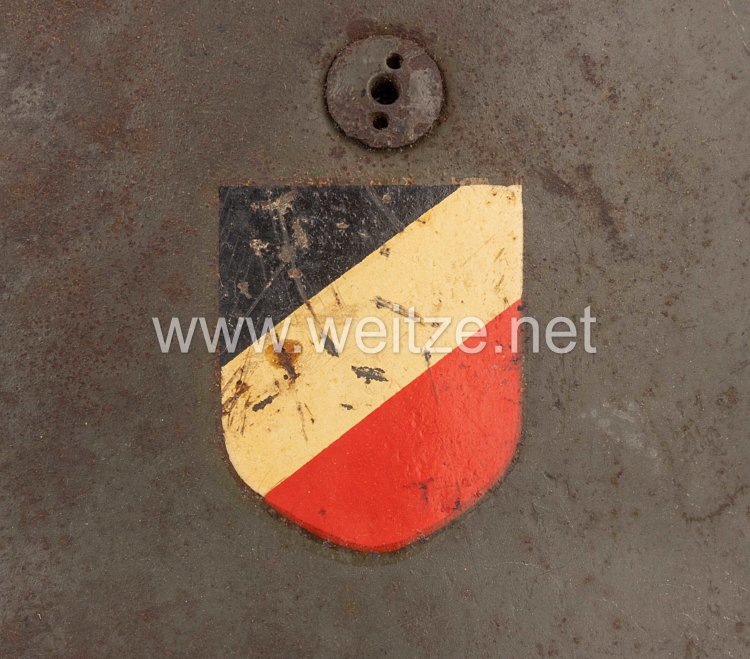
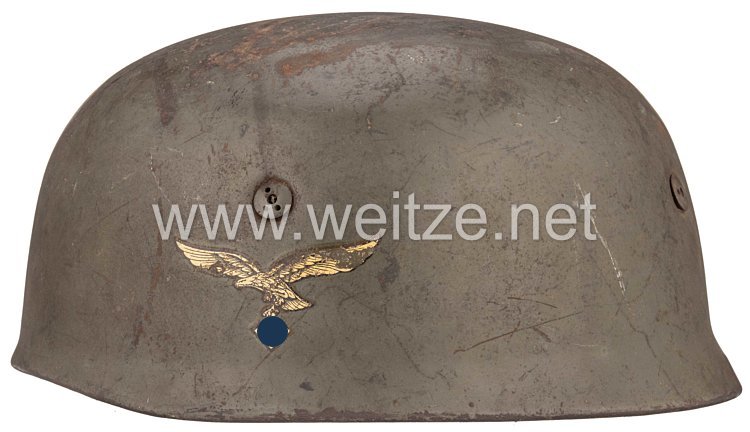
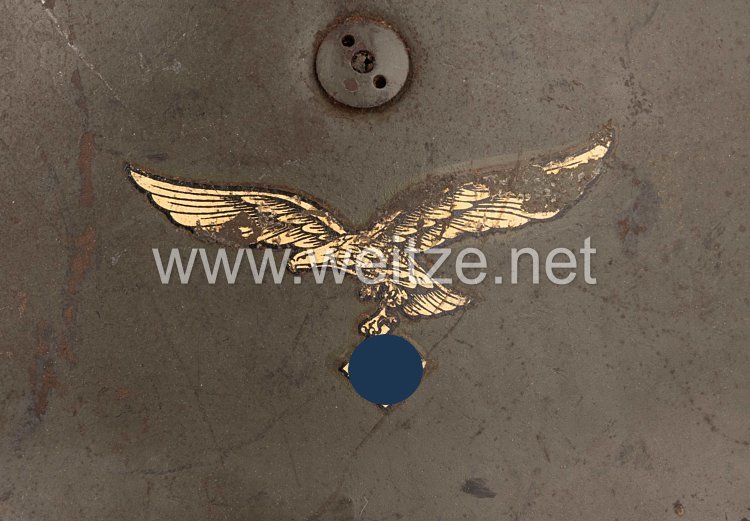
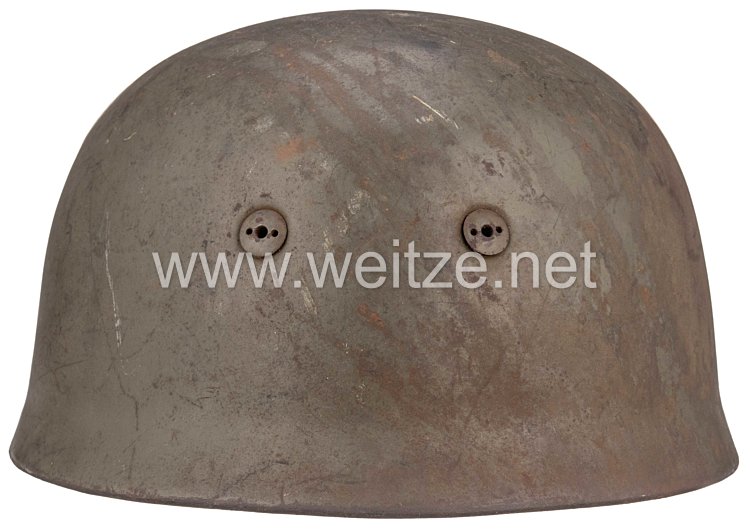
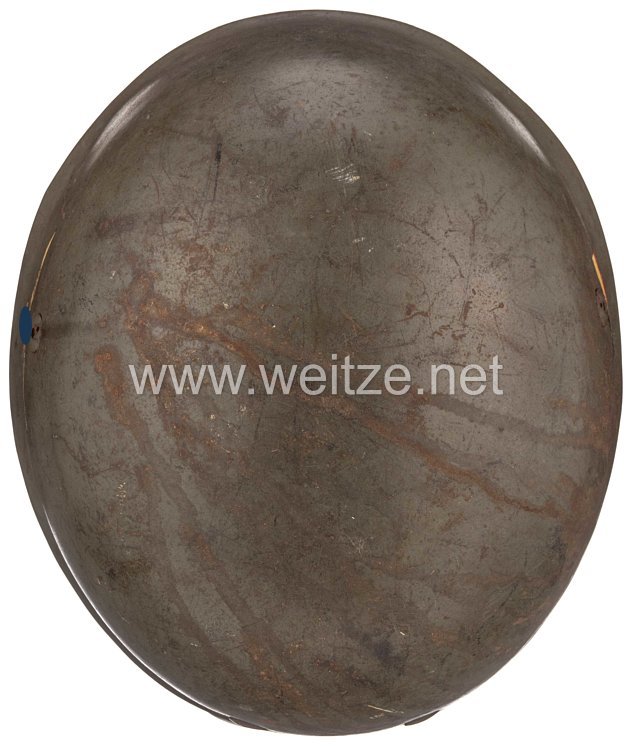
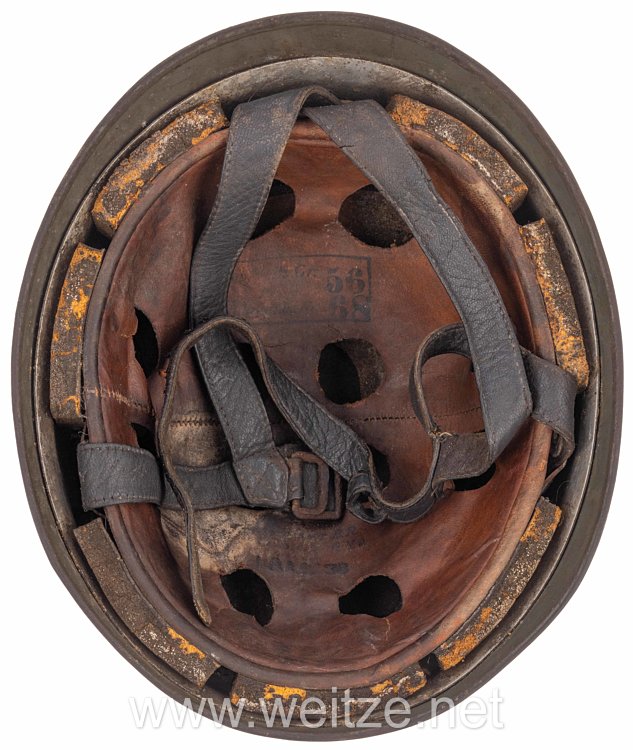
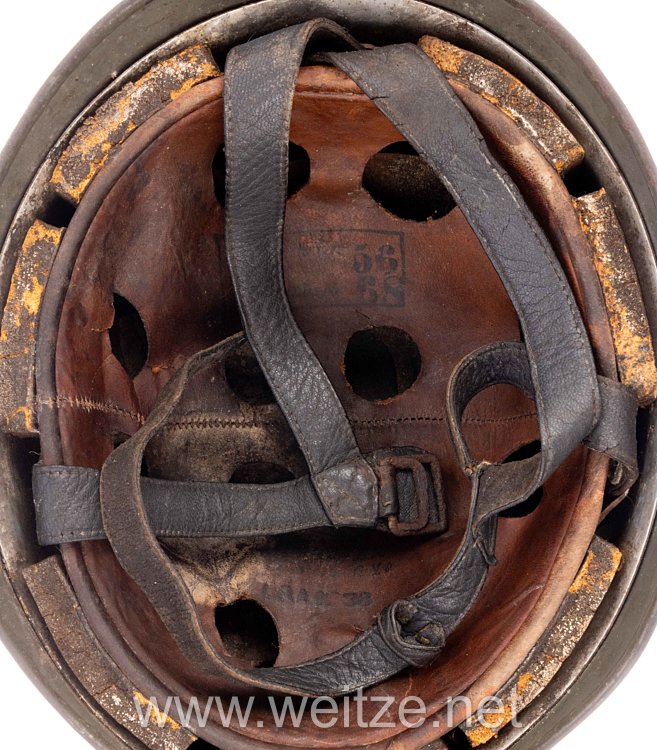
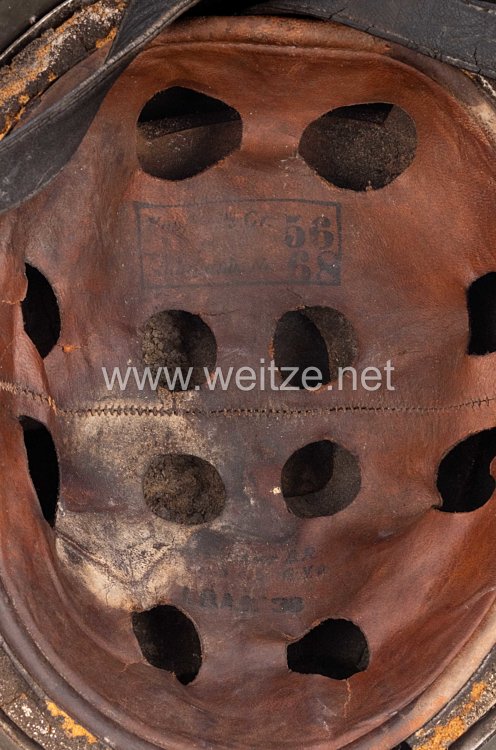
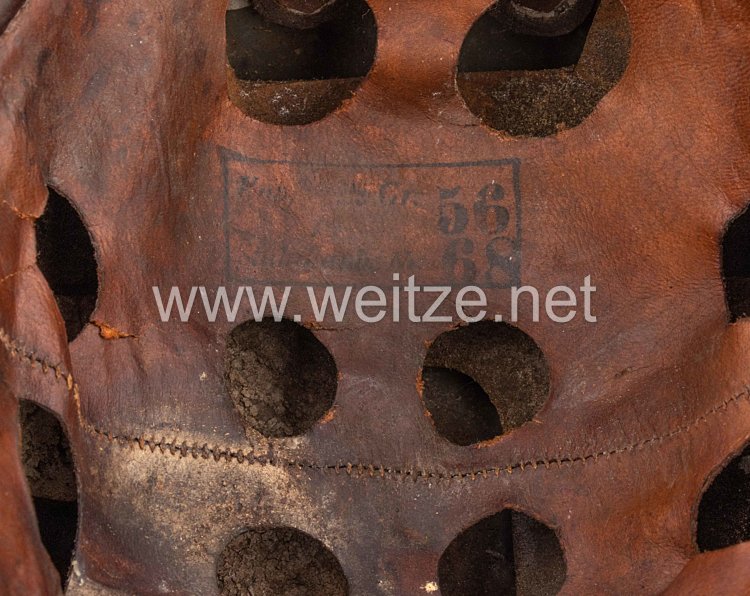
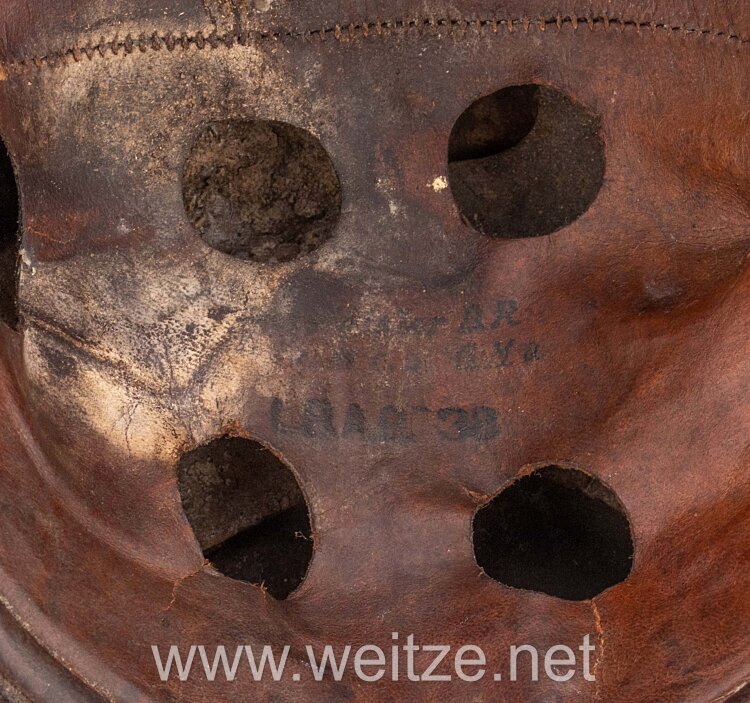
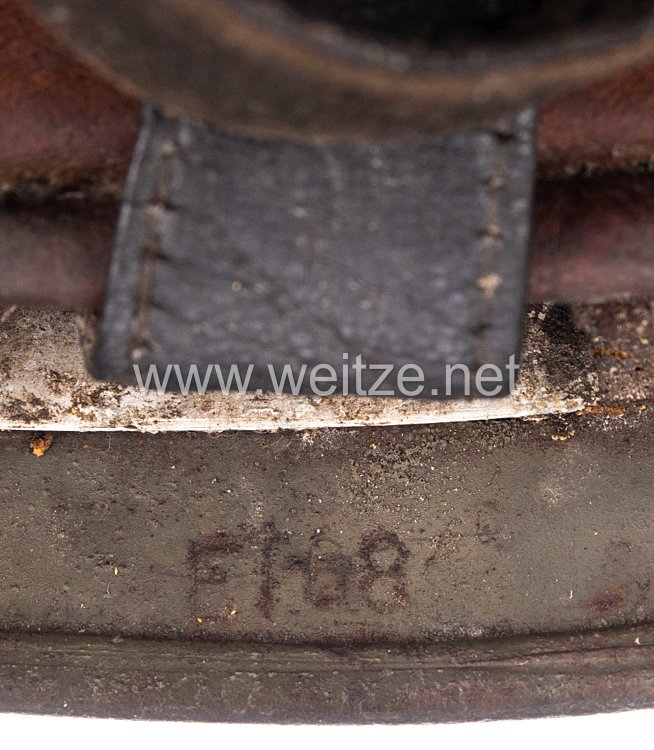
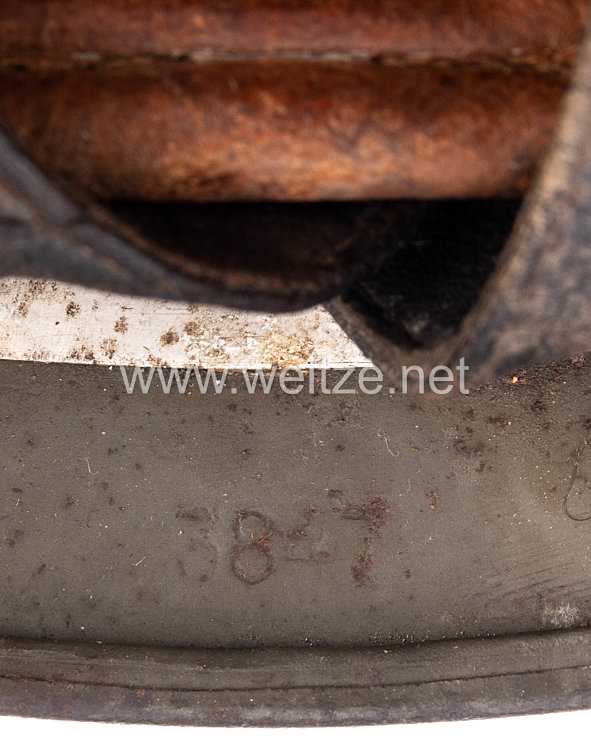
This is a pre-war production dating to circa 1939. The early apple-green original paint is still preserved to 80%, on the left side the Luftwaffe eagle 2nd pattern to 80%, on the right side the national emblem preserved to 85%. The helmet shell stamped inside “ET 68” as well as “3847”, complete with liner on aluminum ring, hardened foam pads as well as the original chin strap with corroded buckle, the stampings in the liner “Head size No. 56, steel shell size No. 68” as well as manufacturer and chamber stamp L.B.A 38”. Worn helmet in untouched original condition.
Extremely rare, one of the most impressive paratrooper helmets we have been able to offer in recent years.
443681

Luftwaffe Fallschirmjäger Helmet M38 – An Early Double-Decal Pre-War Production Example

This Model 1938 Paratrooper Helmet (Fallschirmjägerhelm M38) represents one of the most significant and sought-after pieces of German military equipment from the Second World War. Bearing its original early apple green factory paint, a double-decal configuration, and a complete interior liner assembly, this example dates to the very earliest series production of a helmet purpose-built for the demands of airborne warfare.

Origins and Development

The genesis of the M38 traces back to 1936, when the German military leadership – inspired by observations of Soviet paratrooper experiments dating from 1928 – began establishing its own airborne forces. The Luftwaffe formed its first paratrooper units on January 29, 1936, followed by an Army unit on March 31, 1937. A dedicated paratrooper training school was established at Stendal in early 1937.

It quickly became apparent that the standard Stahlhelm M35 was entirely unsuitable for parachute operations. Its excessive air resistance created dangerous drag during freefall, the risk of losing the helmet during the jump was considerable, and the tight standard chinstrap posed a genuine suffocation hazard. Engineer Karl Heisler was tasked with designing a replacement beginning in 1936. His solution was a streamlined steel helmet with a reduced visor and flared rim, substantially smaller in profile than the standard infantry helmet to minimize air resistance. The result was officially adopted for service in 1938 as the M38.

Manufacture and Construction

The steel shells of the M38 were produced exclusively by Eisenhüttenwerke AG in Thale, Harz, Germany – the sole manufacturer throughout the entire production run. The manufacturer’s mark “ET” was used until approximately 1942, after which the coded designation “CKL” was adopted for late-war production. Each shell was pressed from a single piece of 1.5mm-thick steel sheet and produced in three sizes: 66cm, 68cm, and 71cm.

The interior liner system was produced by various subcontractors including Karl Heisler (Berlin C2), Schubert-Werk Braunschweig, and F.W. Müller Jr. The liner consisted of a leather cap mounted on an aluminum ring frame (in early production), fitted with shock-absorbing foam rubber (Schaumgummi) padding cut into seven arms of 10–13mm thickness and covered with cotton cloth. The chinstrap system employed a four-point Y-shaped suspension – a critical innovation over the standard two-point chinstrap, distributing force across four attachment points secured by spanner bolts.

The present example bears the interior shell stamps “ET 68” (manufacturer Eisenhüttenwerke Thale, size 68cm) and lot number “3847”. The liner is stamped “Kopfweite Gr. 56, Stahlhaube Gr. 68” along with the manufacturer and chamber stamp “L.B.A. 38”.

Dating and Variant Identification

The double-decal configuration of this helmet – featuring the Luftwaffe eagle (second pattern) on the left side and the national tricolor shield (Nationalwappen) on the right – firmly identifies it as pre-1940 or very early 1940 production. An order was issued in 1940 to remove the national tricolor decals from helmets in the field, and subsequent production featured only a single Luftwaffe eagle decal or, later still, no decals at all.

The M38 was preceded by two earlier and considerably rarer designs: the experimental M36 (described as ultra-rare) and the M37 (rare). The M38 itself was the standard production model manufactured from 1938 through 1945, evolving through distinct phases. Early production (1938–1940) featured smooth apple green paint, double decals, and aluminum liner components. Mid-war production (1940–1942) transitioned to rough-textured feldgrau (field gray) paint, a single decal, and steel liner components. Late-war production (1942–1945) typically featured rough feldgrau paint, often no decals, slotted bolts, and the CKL manufacturer code.

Combat Service

Effective January 1, 1939, all German paratrooper units were consolidated under Luftwaffe command. Equipped with the M38, the Fallschirmjäger achieved a series of remarkable military feats that entered the annals of airborne warfare. Their assault on the Belgian fortress of Eben-Emael in May 1940, executed by a small glider-borne force, stunned the world. Operations in Poland, Norway, Belgium, and the Netherlands followed in rapid succession – some 12,000 paratroopers participated in the Netherlands campaign alone.

The largest and most costly airborne operation was the Battle of Crete (Operation Merkur, 1941), a pyrrhic victory that resulted in such heavy Fallschirmjäger casualties that Hitler effectively forbade large-scale parachute operations thereafter. The paratroopers subsequently fought as elite ground infantry in defensive operations at Monte Cassino, Italy (1943–1944), in Normandy (1944), and on the Eastern Front.

Over the course of the war, the Fallschirmjäger forces grew to approximately ten divisions, though three were never fully activated. This comparatively small force structure relative to the Wehrmacht’s overall size explains why M38 helmets are significantly rarer than standard combat helmets.

Collector Significance

Following the war, M38 Fallschirmjäger helmets became among the most prized items in the militaria collecting world, driven by both their scarcity and the legendary reputation of the units that wore them. Many examples entered private collections as war trophies brought home by Allied soldiers. The high market value has inevitably attracted significant fakery; Czech manufacturers produced museum-grade replicas and replacement liners in the post-war decades, and collectors are well-advised to exercise rigorous due diligence.

An early-production double-decal example such as this one, retaining substantial original apple green paint, its complete aluminum-ring liner system, original chinstrap, and both factory-applied decals, represents a remarkable survival in untouched original condition – precisely the kind of specimen that defines the pinnacle of Fallschirmjäger helmet collecting.

r