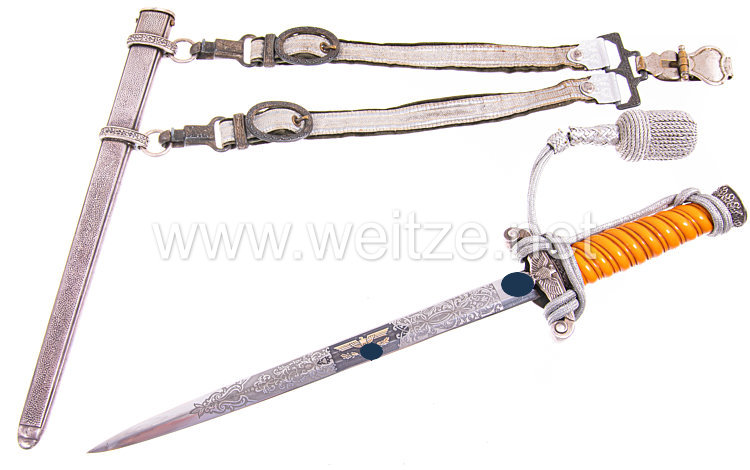
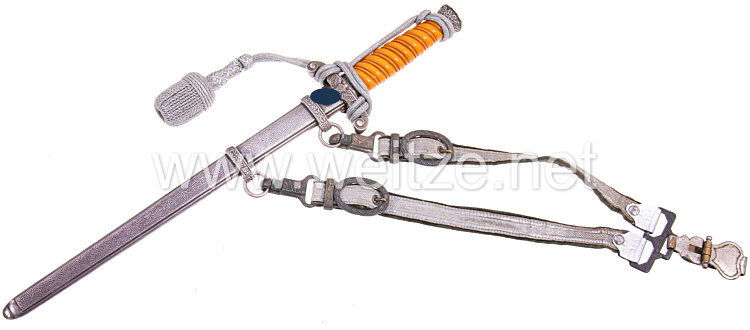
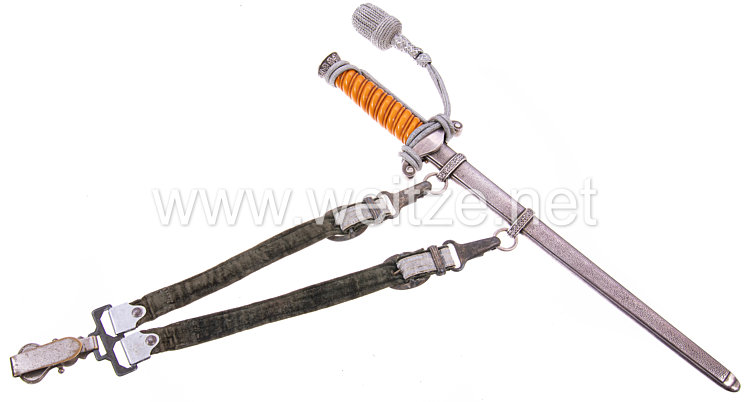
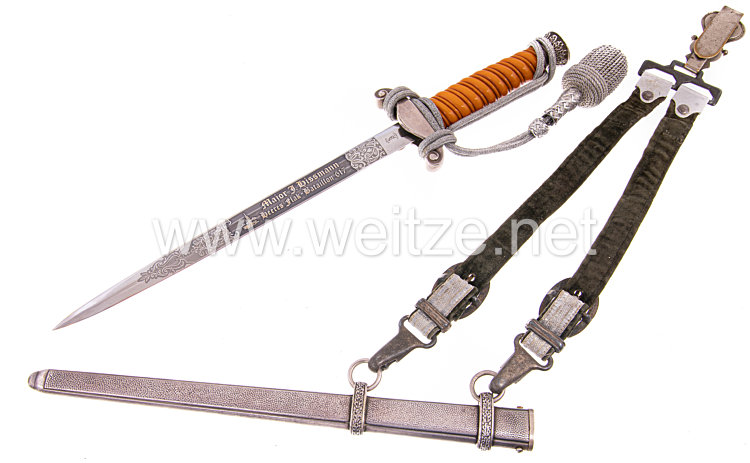
The Wehrmacht Army Officer's Dagger represents a significant example of military equipment used by German forces during World War II. This weapon served not primarily as a combat tool but as a badge of rank and component of the officer's uniform, continuing the tradition of the side arm.
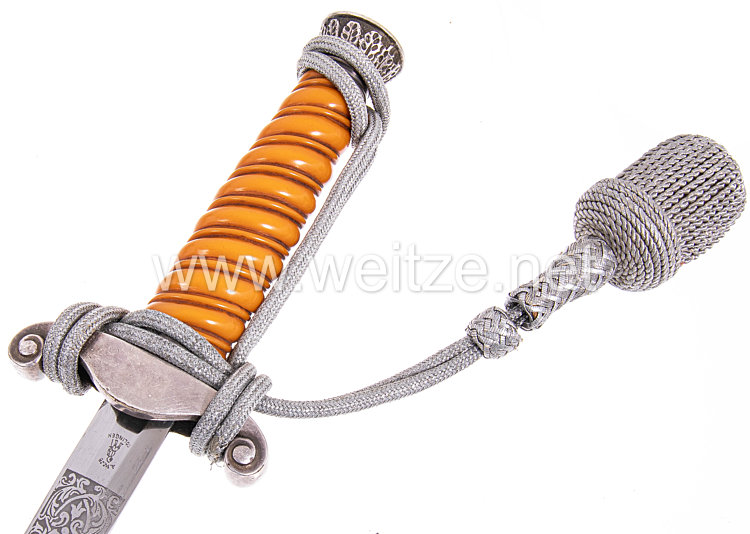
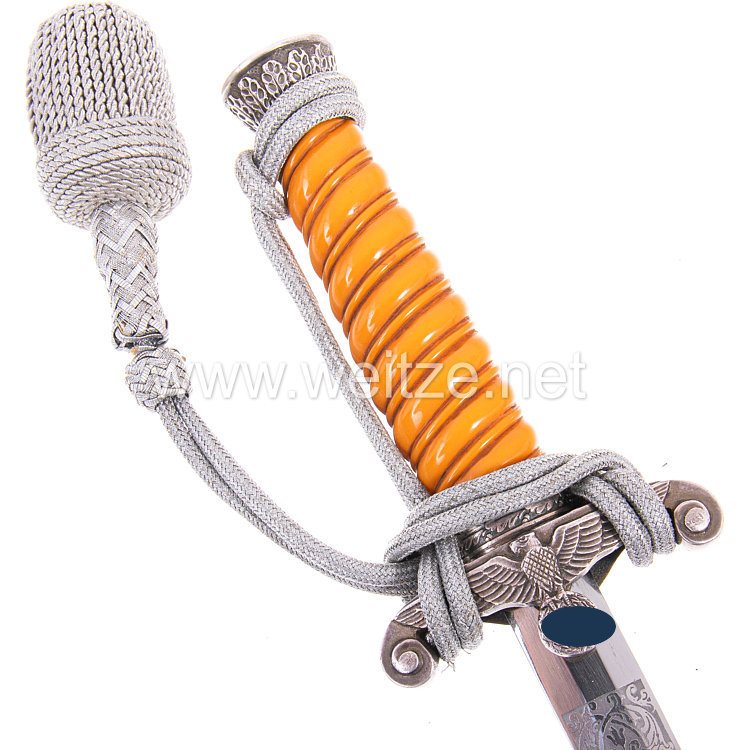
The introduction of the Army officer's dagger occurred in 1935 through corresponding military regulations. The design followed classical models and was intended to symbolize the connection to Prussian-German military tradition. The dagger was characterized by its distinctive form with a double-edged blade, ornamental nickel-silver fittings, and the typical orange grip made of Bakelite or celluloid.
Anton Wingen Junior in Solingen was among the renowned manufacturers of such officer's daggers. The Solingen blade industry had a centuries-long tradition in the production of edged weapons and had supplied military customers since the 19th century. The Wingen company, marked by the manufacturer's mark “A.W.Jr. Solingen,” produced high-quality officer's daggers with carefully etched blades.
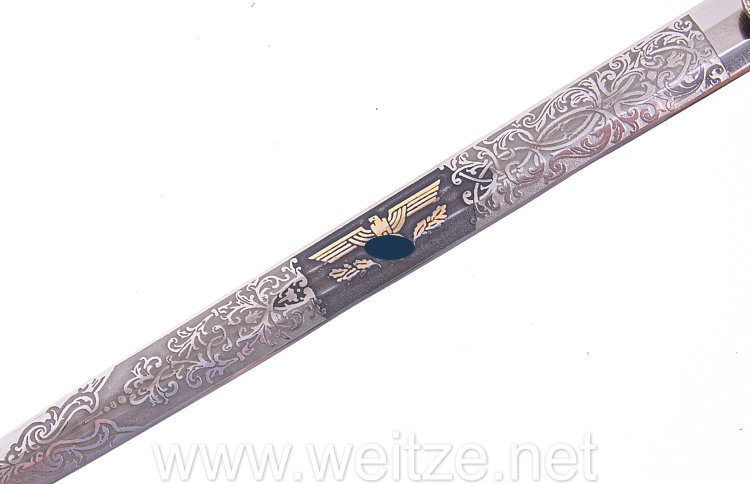
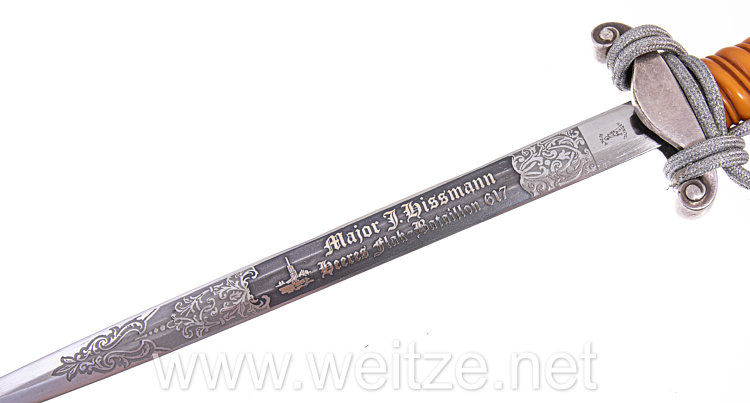
The blade etching of these daggers followed standardized patterns: the front typically featured the Army eagle in a cartouche, surrounded by floral tendrils and oak leaves. The reverse could be personalized and often bore the bearer's name and his unit. This personalization made the dagger an individual possession of the officer.
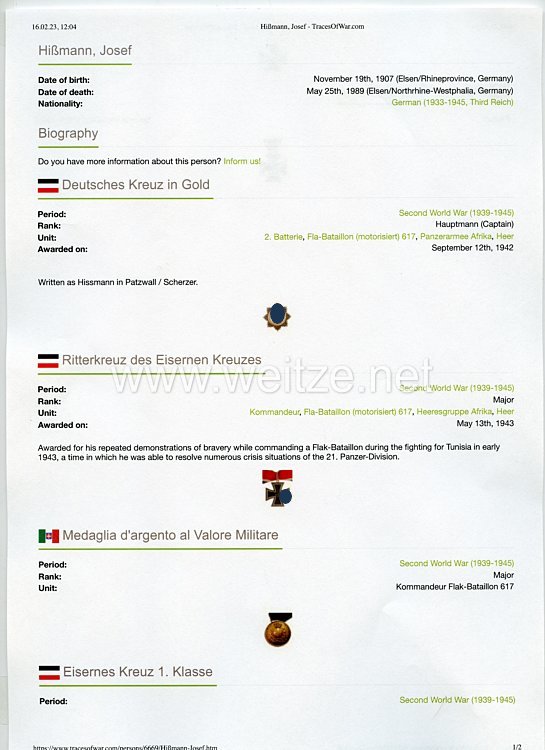
Flak-Battalion 617 represents a significant unit of the German anti-aircraft forces. As a motorized Flak battalion, it was established on October 2, 1941, with three companies. The unit was organized as an Army troop and subordinated to the German Afrika Korps, where it was deployed in the North African theater of war. The main task of such battalions consisted of protecting troops, supply lines, and strategic objects against enemy air attacks.
Deployment in North Africa placed special demands on equipment and personnel. The extreme climatic conditions, logistical challenges, and increasing Allied air superiority made the work of Flak units particularly difficult. Flak-Battalion 617 shared the fate of many German units in North Africa: in May 1943, it was destroyed during the final battles for Tunis when Army Group Africa capitulated.
The equipment of the officer's dagger included, besides the blade and grip, the scabbard made of nickel-plated or chrome-plated sheet steel, as well as the portepee and hanger. The portepee, a braided loop, served as an additional rank insignia and was attached to the grip. The hanger enabled wearing the dagger on the belt, with a carrying clip securing attachment to the uniform.
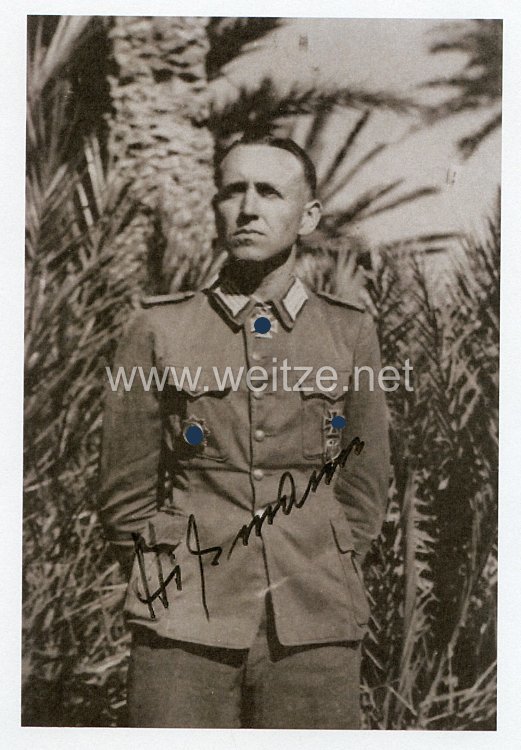
Officer's daggers with documented provenance, especially when they belonged to bearers of the Knight's Cross, are of particular historical interest. The Knight's Cross of the Iron Cross represented one of the highest German military decorations and was awarded for exceptional bravery or outstanding military leadership. Such personalized pieces document individual military careers and unit histories.
The preservation of such objects varies considerably. Factors such as storage, climatic influences, and use determine the condition. The nickel-silver fittings develop a characteristic patina that, when well preserved, serves as a sign of authenticity. The nickel plating of the blade may show traces of corrosion, while the etchings can remain well preserved with careful handling.
From a military-historical perspective, such officer's daggers document several aspects: they show the importance of tradition and ceremony in the military context, illustrate the craftsmanship of the German blade industry, and serve as material witnesses to individual and collective military history. They provide insights into organizational structures, hierarchies, and the self-representation of the officer corps.
The contemporary evaluation of such objects exists in the tension between military-historical interest, collecting, and critical examination of German military history in the 20th century. They serve in museums and collections as study objects and teaching materials for researching military culture and the everyday history of the Wehrmacht.
These artifacts remind us of the complex interplay between military tradition, individual service, and the broader historical context in which they existed. They represent both the craftsmanship of their era and the human stories behind the uniforms and decorations of a tumultuous period in history.