Swiss Model 1887 Side Arm for Medical Personnel and Musicians

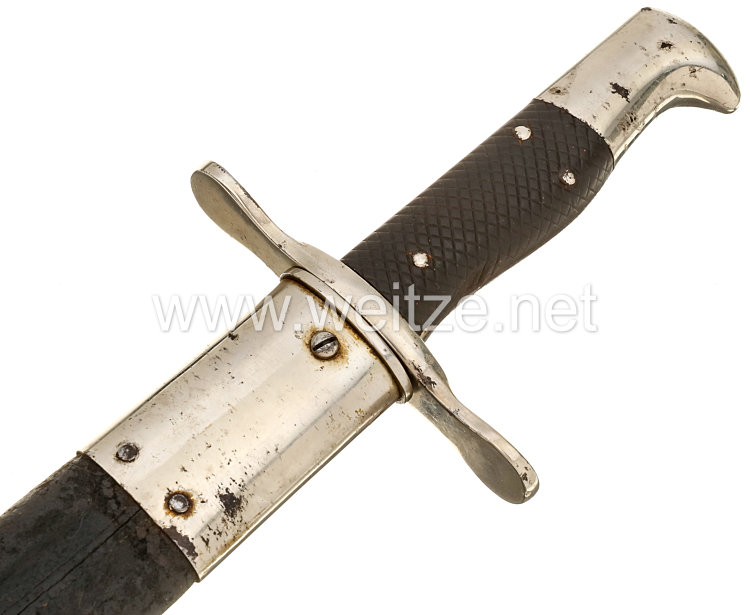
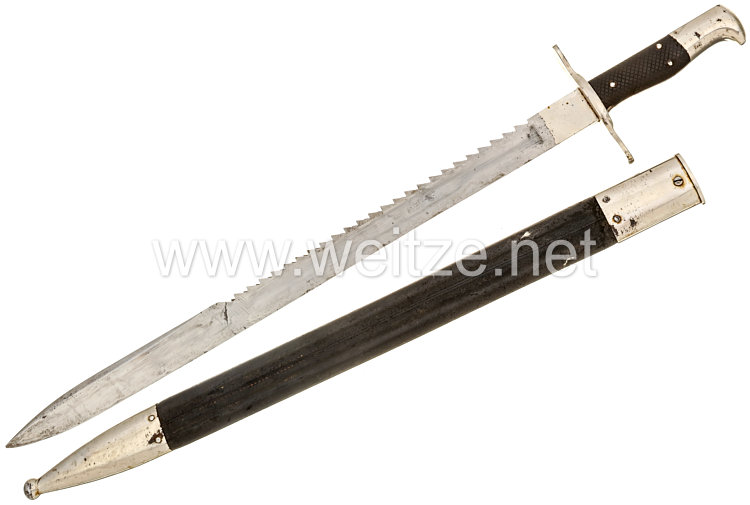
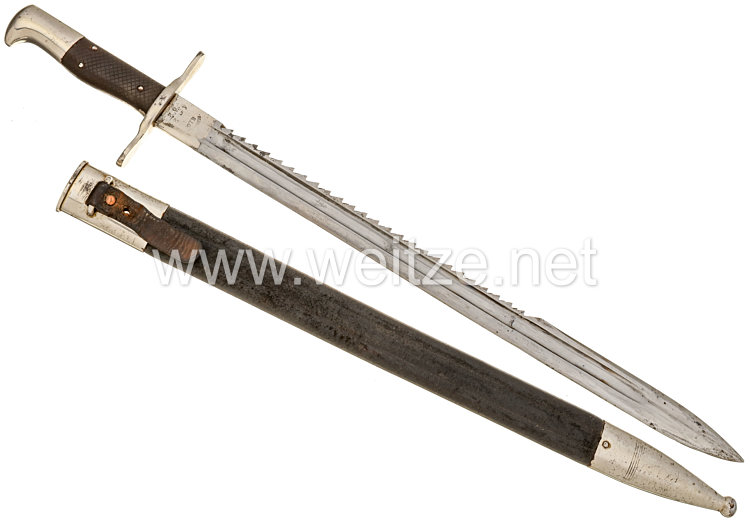
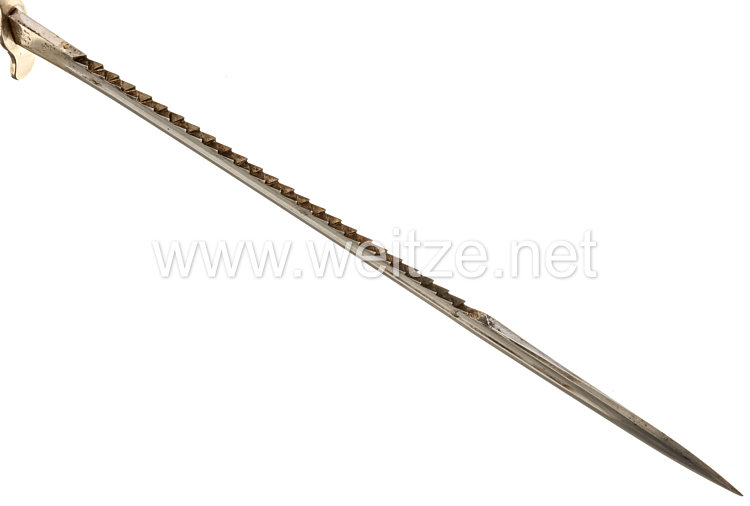
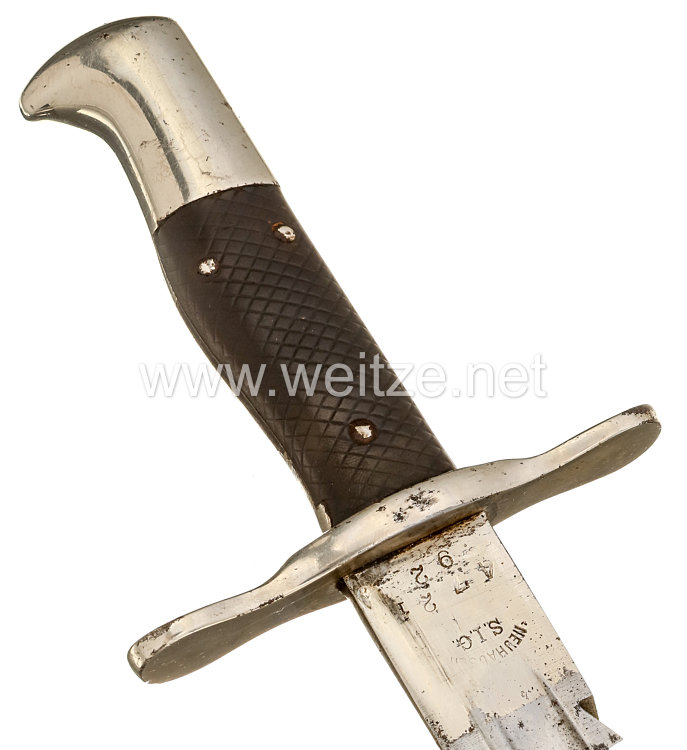
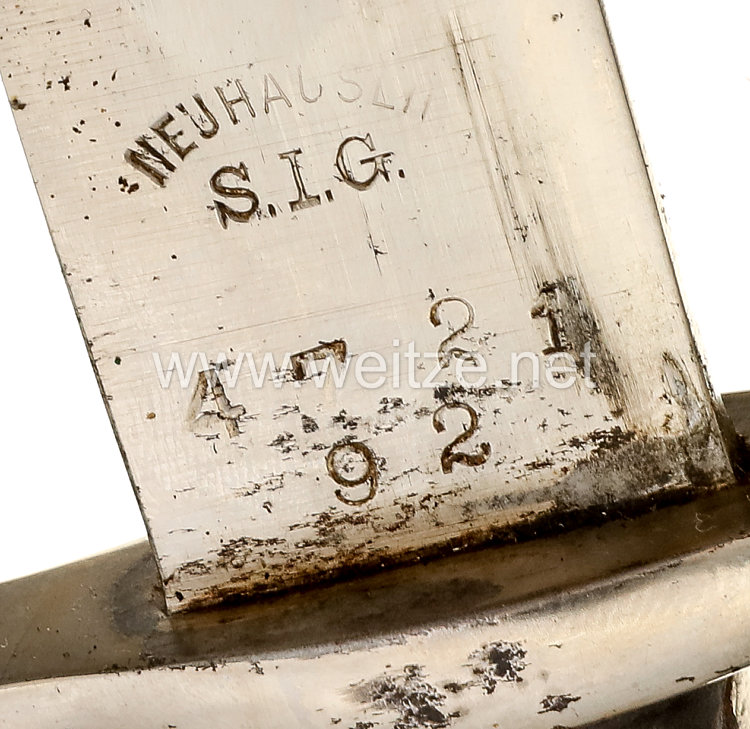
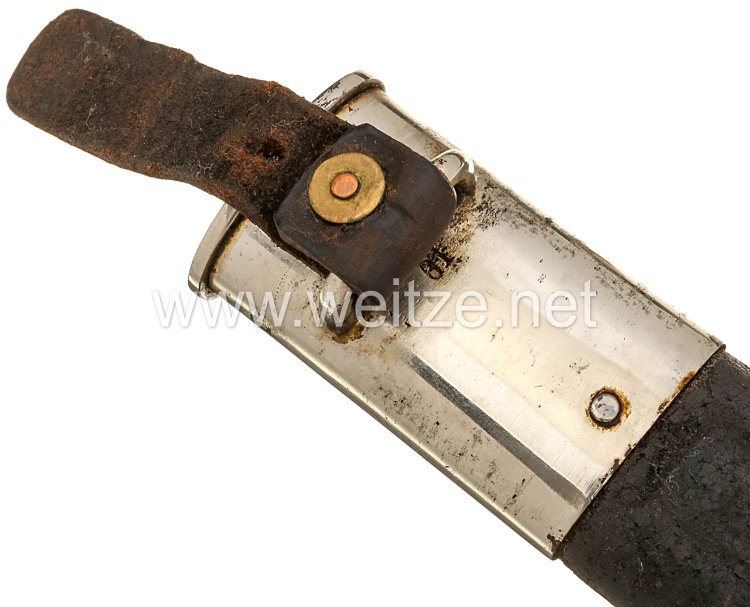
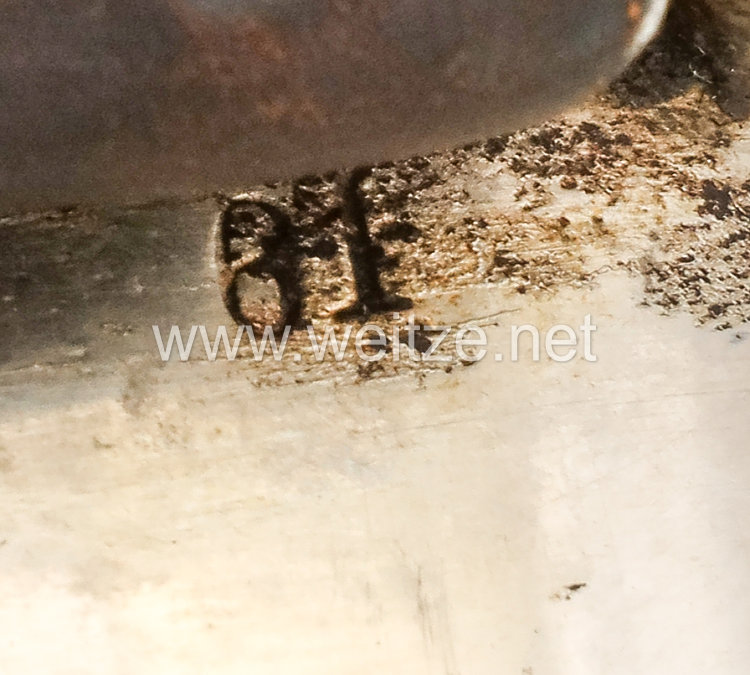
Similar to the Pioneer Bayonet M1887. Heavy blade with single fuller and saw-back, on the false edge the manufacturer “Neuhausen” and the marking “S.I.G. 4721 92”, the blade only slightly aged, possibly repaired long ago. Nickel-plated hilt with triple-riveted, checkered synthetic grip scales, the nickel plating only slightly aged. Leather scabbard with nickel-plated iron fittings, with leather strap. Condition 2.

Many of the pioneer bayonets were modified, however this one was manufactured without a mounting device, truly exceptionally rare.
341580
520,00

Swiss Model 1887 Side Arm for Medical Personnel and Musicians

The Swiss Side Arm Model 1887 for Medical Personnel and Musicians represents a remarkable specialization within Swiss military equipment of the late 19th century. While the regular Pioneer Bayonet M 1887 was designed as a multipurpose tool and weapon for pioneer units, the Swiss Army developed a special variant for non-combatants – specifically for medical personnel and military musicians.

Switzerland implemented a comprehensive reform of its military equipment in 1887, which included the introduction of new edged weapons and tools. The Model 1887 was characterized by its robust construction and dual function as both weapon and tool. The heavy blade with a single fuller served to reduce weight while maintaining stability, while the saw-back enabled practical field work.

Manufacturing was carried out by the Swiss Industrial Company (S.I.G.) in Neuhausen am Rheinfall. This company, founded in 1853, developed into one of Switzerland's most significant weapons manufacturers, producing not only firearms but also edged weapons for the Federal Army. The “S.I.G.” marking together with a serial number and production year was standard on all military equipment manufactured there.

The particular significance of this type lies in its special designation for medical personnel and musicians. These soldiers were considered non-combatants under international conventions, particularly the Geneva Convention of 1864 and its successor treaties. Medical personnel were protected by the Red Cross and were primarily not to participate in combat operations. Military musicians were similarly situated, their main tasks being signal transmission and maintaining morale.

The decisive feature of this variant is the absence of a mounting device. While regular bayonets could be mounted on rifles, this version was manufactured from the outset without this function. This clearly emphasizes its status as a pure tool and side arm, not as a primary combat weapon. This distinction was both practical and symbolic: medical personnel and musicians carried an edged weapon for self-defense and practical work, but were not to be equipped for direct bayonet combat.

The construction with nickel-plated fittings and checkered synthetic grip scales corresponded to the technical standards of the time. Nickel plating provided corrosion protection and was easier to maintain than bare steel. The triple riveting of the grip scales guaranteed stability even under intensive use. Synthetic grip scales, probably made from early phenolic resins, increasingly replaced traditional materials such as horn or wood and offered better weather resistance.

The accompanying leather scabbard with nickel-plated iron fittings was typical of Swiss military equipment of this period. The leather strap enabled carrying on the belt, with various carrying methods prescribed depending on rank and function. Medical personnel often carried their equipment in a manner that allowed quick access to medical supplies, while the edged weapon played a more subordinate role.

Historically, many pioneer bayonets were modified or converted during their service life. Some lost their mounting devices through wear or were deliberately reworked. The present specimen is of particular interest, however, as it was originally manufactured without a mounting device. This makes it an authentic example of specialized equipment for non-combatants in the Swiss Army and documents the differentiated approach of Swiss military planners to equipping various branches of service.

The Swiss Army in the late 19th century was known for its detailed organization and precise differentiation of equipment according to function and rank. The Model 1887 for medical personnel and musicians is an excellent example of this military philosophy. It demonstrates how technical solutions were developed to meet both practical requirements and international legal obligations.

Such special variants were produced in significantly smaller quantities than standard models for infantry or pioneers, which explains their current rarity. For collectors and military historians, they are of particular value as they provide insight into often overlooked aspects of military history – the equipment of those who were designated not primarily for fighting, but for healing or communication.

The marking with the production year 1892 places this piece in a period of transition for the Swiss Army, when older equipment systems were being systematically replaced and new organizational structures were being implemented. The fact that such specialized variants were being produced demonstrates the comprehensive nature of Swiss military planning and the attention paid to even seemingly minor details of equipment differentiation.

r