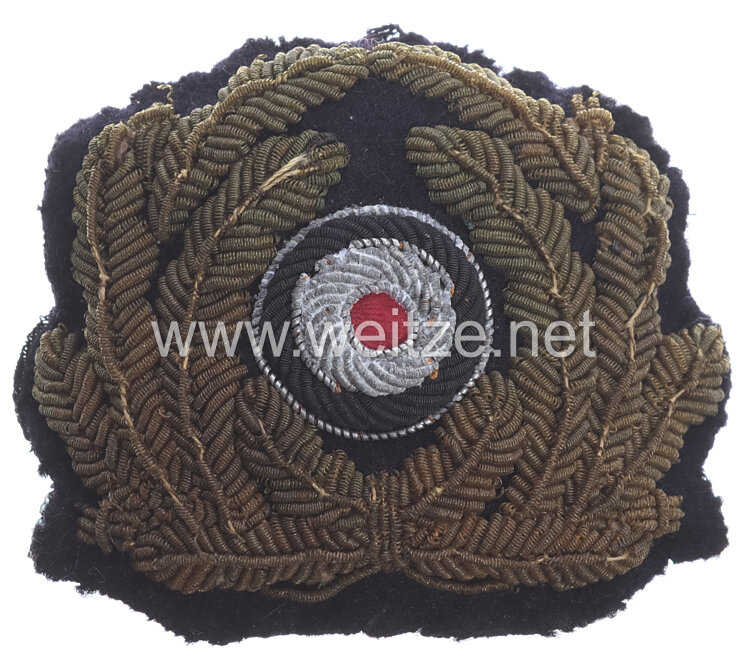
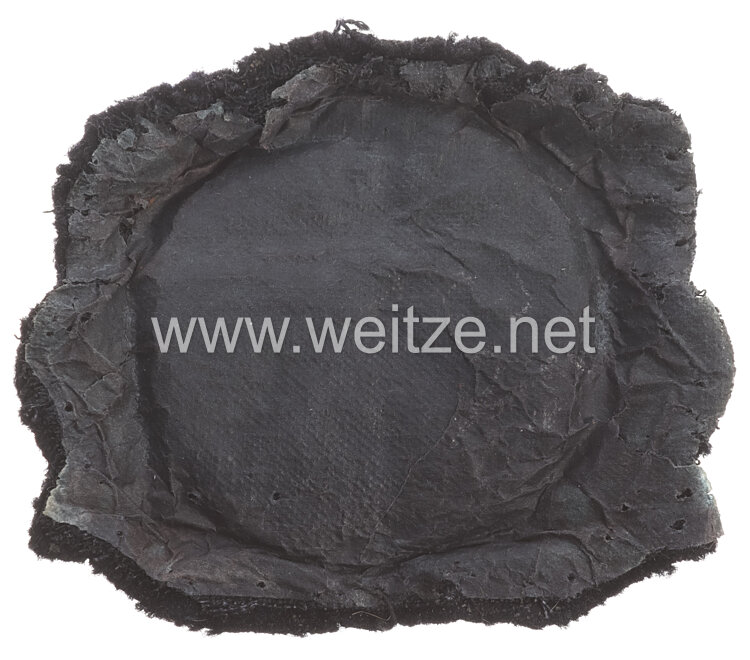
Kriegsmarine Visor Cap Oak Leaf Wreath for Naval Officers
The Kriegsmarine visor cap oak leaf wreath for naval officers represents a significant badge of the German naval uniform during the National Socialist period. This hand-embroidered example with metal-thread embroidered cockade represents the high level of craftsmanship applied to Kriegsmarine officer uniforms.
The Kriegsmarine was officially founded on May 21, 1935, when the German Reich advanced the rearmament of its armed forces and broke the provisions of the Treaty of Versailles. The oak leaf wreath on the visor cap served as a rank insignia for officers and was an essential element of uniform design. The oak leaf as a symbol had a long history in German military tradition and stood for strength, honor, and steadfastness.
The visor cap itself was the main headgear for Kriegsmarine officers in daily service and at official occasions. The oak leaf wreath was attached to the visor of the cap and framed the cockade, which was rendered in German Reich colors. In hand-embroidered versions, such as this example, particular emphasis was placed on detail and workmanship. These embroidery works were often executed by specialized craft businesses that specialized in the production of uniform effects.
The cockade in the center of the oak leaf wreath traditionally displayed the national colors black-white-red, surrounded by an outer ring in the colors of the Kriegsmarine. The metal thread used for embroidery often consisted of gilded or silvered wire applied to a backing of felt or cloth. This technique required considerable craftsmanship and made each piece unique with individual characteristics.
Kriegsmarine uniform regulations were strictly controlled and specified in various dress orders. The dress regulations distinguished between different ranks and purposes. Officers wore the oak leaf wreath regardless of their specific rank, while enlisted ranks used different insignia. The exact execution, size, and positioning of the oak leaf wreath were precisely prescribed.
Hand-embroidered versions were typically more expensive than machine-made or stamped variants and were often preferred by officers who valued high-quality uniform equipment. Officers had to procure their uniforms themselves, which led to a certain diversity in quality and execution. Established firms such as ASSMANN, Erel, or other specialized manufacturers supplied these uniform effects.
The oak leaf wreath underwent only minor changes in its design during the existence of the Kriegsmarine from 1935 to 1945. The basic form remained constant, with local variations occurring in craftsmanship. The use of metal threads was partially supplemented or replaced by substitute materials toward the end of the war due to material shortages.
Such uniform effects were integral components of military identity and hierarchy. The oak leaf wreath on the visor cap was immediately recognizable and signaled the officer rank of the wearer. In the strictly hierarchical structure of the Kriegsmarine, such visual rank insignia played an important role for discipline and command structure.
After the war ended in 1945, the Kriegsmarine was dissolved, and its uniforms and insignia lost their official function. Today, such pieces are objects of historical collection and research. The condition of such objects varies greatly, depending on storage and use over the decades. A condition grade of 2 indicates a worn but well-preserved example that shows typical signs of use.
The historical significance of such militaria lies in their evidentiary value for uniform history and the material culture of the German military in the 20th century. They provide insights into craftsmanship techniques, material use, and the symbolic meaning of rank insignia. For military historians and collectors, authentic examples are important sources for understanding the organizational structure and self-conception of the Kriegsmarine.