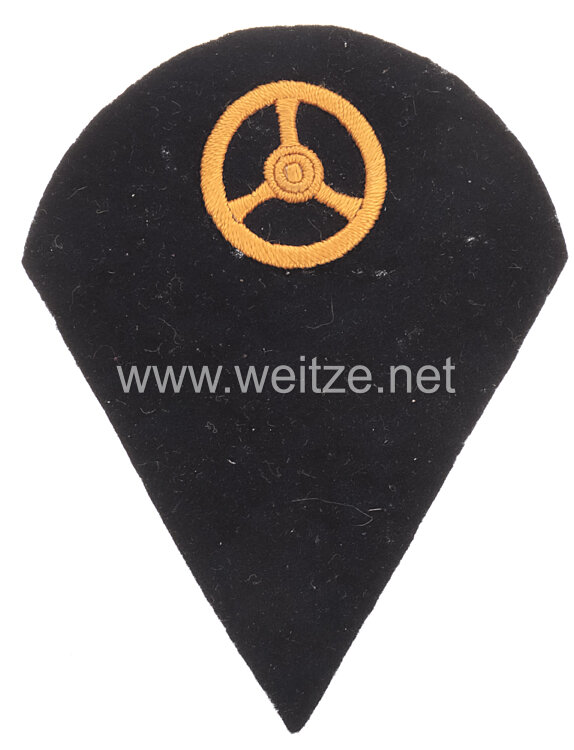
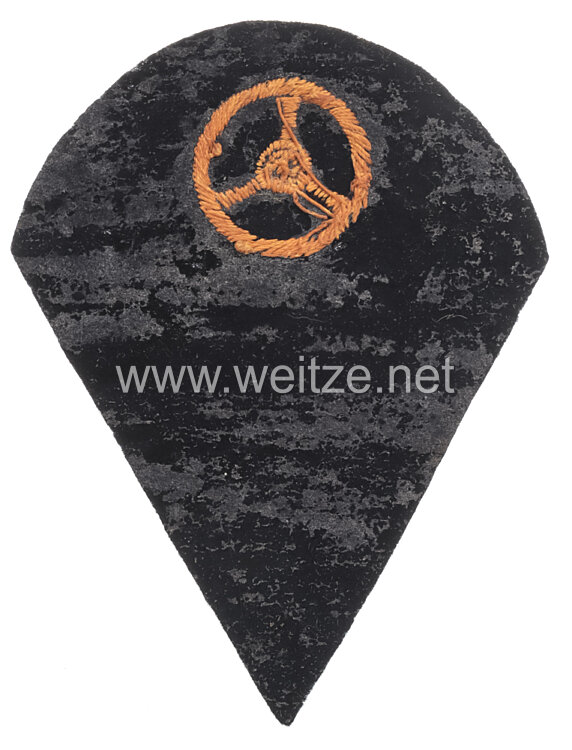
Kriegsmarine Enlisted Man's Sleeve Insignia Motor Vehicle Branch
The Kriegsmarine sleeve badge for enlisted personnel of the Motor Vehicle Career Path represents a significant aspect of the German naval uniform system during World War II. These specialized career badges were introduced to visually identify the professional qualification and specialization of enlisted ranks within the Kriegsmarine.
The Kriegsmarine, as the naval warfare branch of the German Reich from 1935 to 1945, developed a complex system of uniform insignia and identification markers. Following the official rearmament in 1935 and the breach of the Treaty of Versailles, the Kriegsmarine established comprehensive uniform regulations that were codified in the Anzugordnung für die Kriegsmarine (Uniform Regulations for the Navy).
The career path badges (Laufbahnabzeichen) were worn on the left upper arm and served to identify various specializations within the enlisted ranks. The motor vehicle career path was particularly important, as the Kriegsmarine employed not only sailors but also extensive shore-based personnel responsible for operating and maintaining motor vehicles at naval bases, shipyards, and land-based naval units.
The hand-embroidered execution on Koltani (a dark blue wool fabric) indicates high-quality manufacture. During the war, there were various production methods: hand-embroidered examples for better quality, machine-embroidered variants, and toward the end of the war, printed or simplified versions due to material shortages. Hand-embroidered versions were typically purchased personally by the soldiers themselves or produced by specialized tailors.
The sleeve badge for the motor vehicle career path typically displayed a stylized automobile steering wheel or similar symbol representing the specialization in motor vehicle operations. These badges were executed in various colors, with the embroidery usually appearing in lighter tones on the dark blue background to ensure maximum visibility.
The wearers of these badges belonged to the Motor Vehicle Department of the Kriegsmarine, responsible for operating various types of vehicles: from passenger cars for officers to trucks for material transport and specialized vehicles for technical services. Training took place in special naval motor vehicle schools, where enlisted personnel learned not only driving but also maintenance and repair.
Within the organizational structure of the Kriegsmarine, motor vehicle drivers were essential for logistics and daily operations at naval bases. They were subordinate to the Harbor Commandant's offices or directly assigned to naval facilities and units. Their importance grew with the expansion of the Kriegsmarine and the establishment of numerous bases along occupied coastal areas.
The use on Kolani, the dark blue work and service uniform, indicates that this badge was intended for daily service use. This distinguished it from badges for walking-out uniforms or parade dress. The condition rating of “2-” according to collector grading systems indicates a well-preserved example with minor signs of wear.
After the war's end in 1945, all Wehrmacht insignia were banned by the Allies. Many uniform items were destroyed or kept by soldiers as souvenirs. Today, these sleeve badges are sought-after collectibles that provide insight into the organization and structure of the Kriegsmarine. They document the diversity of duties and specialization within the German naval forces.
Research into such badges contributes to understanding military history and demonstrates that modern naval warfare also required extensive land-based support structures. The motor vehicle career path was an indispensable component of this infrastructure, highlighting the complexity of naval operations beyond purely maritime activities.