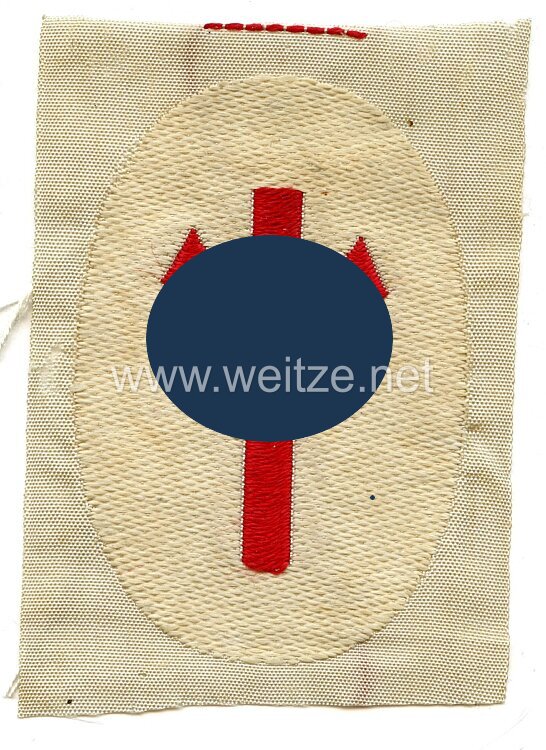
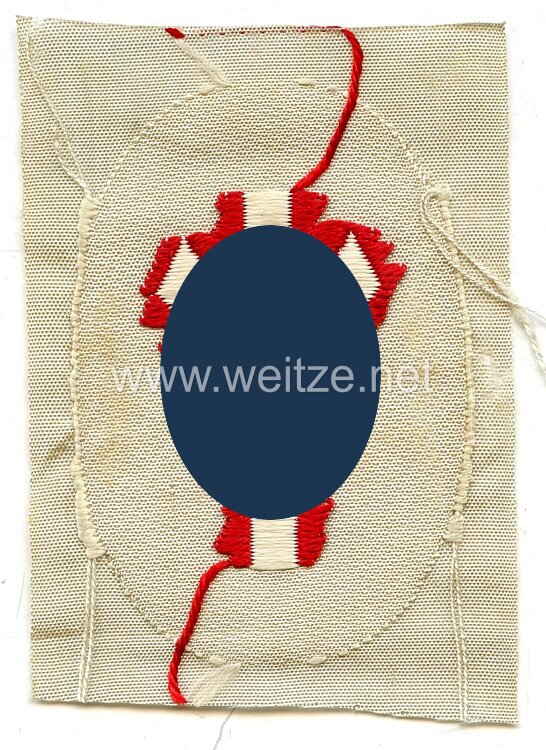
HJ - Sleeve Insignia HJ-Feldscher

Bevo-woven version, unissued condition, condition grade 2.
463377
60,00

HJ - Sleeve Insignia HJ-Feldscher

The HJ Sleeve Badge for Medical Orderlies (Feldscher) represents a significant artifact from the era of National Socialism and documents the comprehensive organization of the Hitler Youth (Hitler-Jugend or HJ), which functioned as the state youth organization of the German Reich between 1933 and 1945.

The Hitler Youth was founded in 1926 and developed into the sole state youth organization after the Nazi seizure of power in 1933. Following the Law concerning the Hitler Youth of December 1, 1936, and the Youth Service Duty of March 25, 1939, membership became effectively mandatory. The organization encompassed millions of German youths and was divided into various subdivisions with specialized functions.

The present sleeve badge identified the function of an HJ-Feldscher, a position within the medical service of the Hitler Youth. The term “Feldscher” originates from the military sphere and historically denoted a field surgeon or medical orderly. Within the HJ structure, Feldscher were responsible for medical care during camps, marches, and other activities. They received basic training in first aid and medical care.

The BeVo-woven execution refers to a specific manufacturing process. BeVo was the abbreviation for Bandfabrik Ewald Vorsteher from Wuppertal-Barmen, a company that specialized in producing woven badges. The BeVo weaving process enabled the production of detailed, colored badges of high quality through mechanical weaving. This technique was particularly durable and was used for many military and paramilitary badges in the Third Reich. BeVo badges were characterized by their distinctive woven structure, where motifs were woven directly into the textile material, as opposed to embroidered or printed variants.

The rank insignia and function badges of the Hitler Youth were strictly regulated and defined in various service regulations. The HJ service regulations detailed the wearing of uniform parts and badges. Sleeve badges were typically worn on the left upper arm of the uniform and indicated special functions or qualifications within the organization.

The medical service of the HJ was part of the comprehensive pre-military training that the organization provided. In addition to athletic and ideological content, practical skills relevant to later military service were also taught. The training of Feldscher included topics such as wound care, transport of injured persons, hygiene, and basic medical knowledge. This training often took place in cooperation with the German Red Cross or other medical organizations.

Uniforming and the badge system played a central role in the Hitler Youth for identity formation and hierarchical structure. Each badge had its designated place on the uniform and signaled function, rank, or special achievements. The strict regulation of uniform matters corresponded to the military orientation of the organization and served to discipline the youth.

The unworn condition of the present badge is noteworthy from a collecting-historical perspective. Such pieces were possibly never issued, remained as warehouse stock, or were confiscated after the war's end. Unworn specimens are rarer today than used pieces and allow for better assessment of the original manufacturing quality and coloration.

After 1945, the Hitler Youth and all its subdivisions were officially dissolved and banned by Control Council Law No. 2 of October 10, 1945. The possession and use of HJ symbols and badges are subject to German Criminal Code § 86a, which criminalizes the use of symbols of unconstitutional organizations. Exceptions apply to art, science, research, teaching, and reporting on contemporary historical events.

Today, such objects possess exclusively historical-documentary value and serve scientific examination of the Nazi era. They are preserved in museums, archives, and scholarly collections as testimonies of a dark epoch in German history and help to understand the mechanisms of totalitarian indoctrination and militarization of youth, documenting them as a warning for future generations.