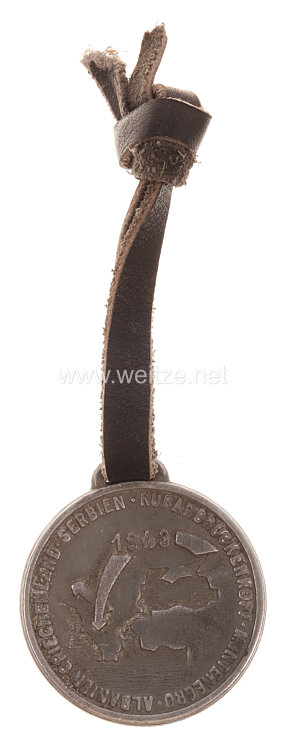
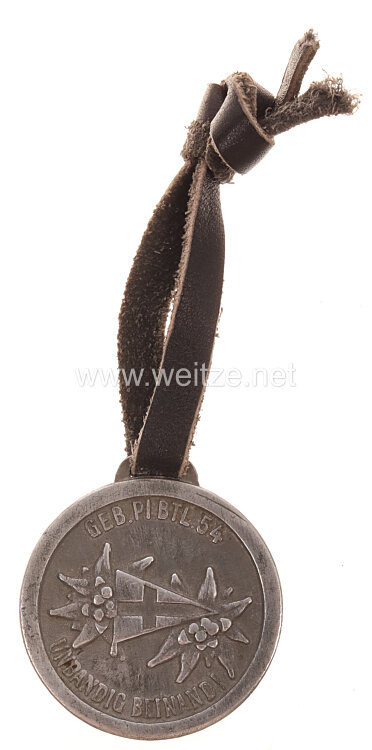
Gebirgsjäger - Portable Commemorative Badge Gebirgs-Pionier-Btl. 54 1943 Kuban Bridgehead Montenegro Albania Greece Serbia
This portable commemorative badge of the Gebirgs-Pionier-Bataillon 54 (Mountain Pioneer Battalion 54), made of zinc with a diameter of 32 mm, represents a significant piece of German military history from World War II. Such wearable badges were created by military units to honor shared combat experiences and strengthen esprit de corps.
Historical Context of Mountain Troops
The German Gebirgsjäger (mountain troops) formed an elite formation of the Wehrmacht, specially trained for combat in alpine and difficult terrain. The Gebirgs-Pionier-Bataillon 54 was one such specialized unit that performed engineering tasks under extreme conditions. These pioneer battalions were responsible for bridge construction, demolitions, mine clearance, and creating communication routes in difficult terrain.
The Kuban Bridgehead 1943
The Kuban Bridgehead refers to a significant military operation on the Eastern Front between February and October 1943. After the German withdrawal from the Caucasus in winter 1942/43, the Wehrmacht established a bridgehead on the Taman Peninsula at the Kuban River. This position was intended to serve as a springboard for future operations and protect the Crimea. Mountain troops, including pioneer units, played an important role in defending this bridgehead under difficult conditions against Soviet attacks. German forces finally evacuated the bridgehead in autumn 1943 as part of the general retreat.
Balkan Operations: Montenegro, Albania, Greece, Serbia
The mention of Montenegro, Albania, Greece, and Serbia on the badge refers to the extensive operations of German mountain troops in the Balkans. After the Balkans Campaign of 1941, German Gebirgsjäger units were intensively involved in occupation and security duties as well as anti-partisan operations in these regions. The mountainous terrain of the Balkans required specially trained troops, and the mountain troops were frequently deployed in these demanding operations. Pioneer battalions were indispensable for the construction and maintenance of supply routes in these inhospitable areas.
Commemorative Badges as Military Tradition
Portable commemorative badges had a long history in German military tradition. They were typically commissioned by units and privately manufactured to commemorate specific campaigns, battles, or shared experiences. These badges were not official orders or decorations and were not awarded within the framework of state honors. Rather, they served as personal mementos and signs of comradeship within a unit.
Material and Manufacturing
The use of zinc as a material was common during World War II, particularly from 1943 onwards, when war-essential metals such as copper and bronze became increasingly scarce. Zinc was more readily available and was therefore frequently used for unofficial military badges and commemorative items. The compact size of 32 mm made the badge practically wearable, presumably on the uniform or as a personal keepsake.
Collector Value and Historical Significance
Today, such commemorative badges are important historical artifacts that provide insight into the organizational history of military units and the lives of soldiers. They document the deployment locations and times of specific formations and thus complement official military history. For collectors and historians, these objects are valuable because they often preserve details about units and their campaigns that may not be fully recorded in official documents.
The badge of Gebirgs-Pionier-Bataillon 54 tells of the far-reaching deployments of this specialized unit – from the Caucasus to the Balkans – and represents the history of German mountain troops during World War II.