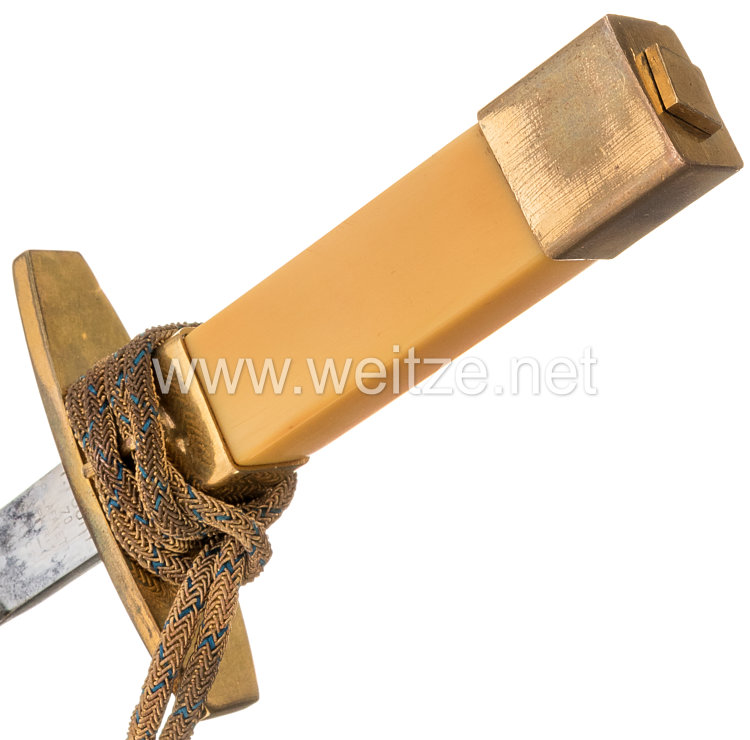
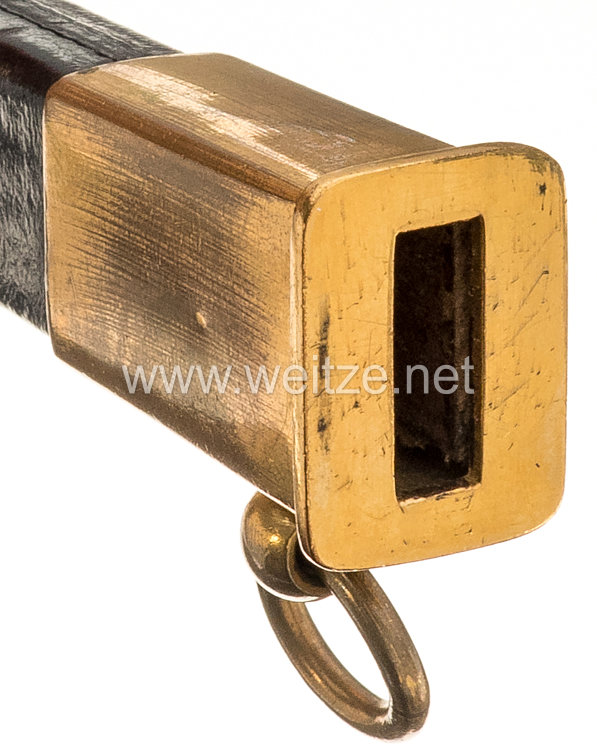
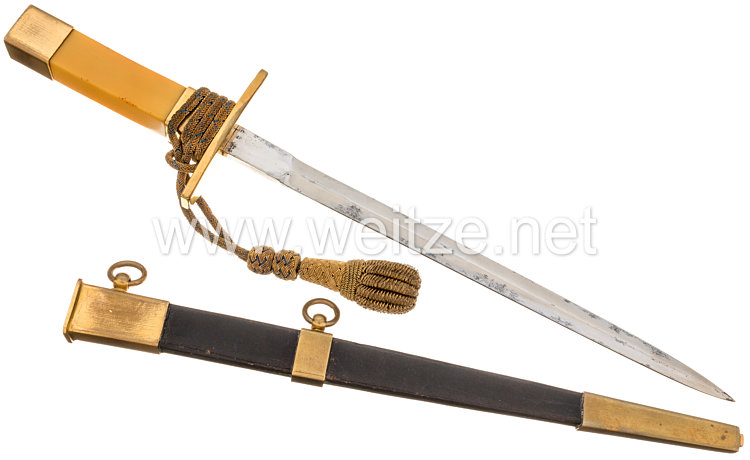
Frankreich Dolch für Offiziere der Luftwaffe M 1934 .

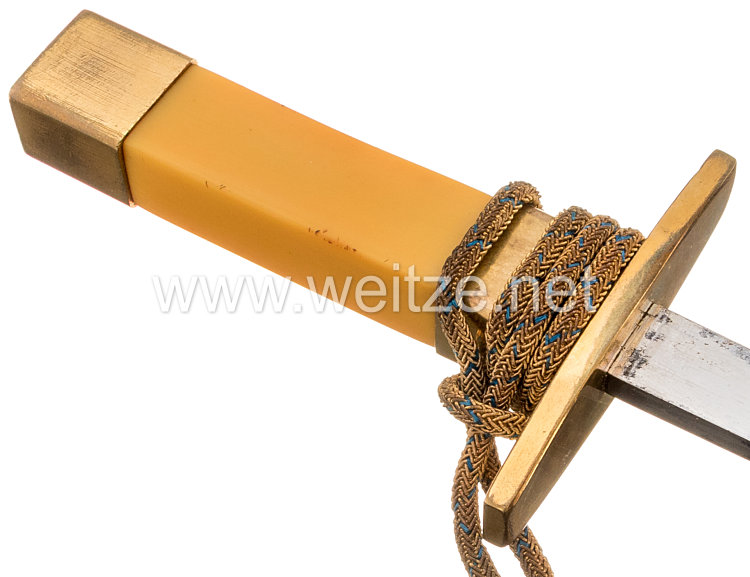
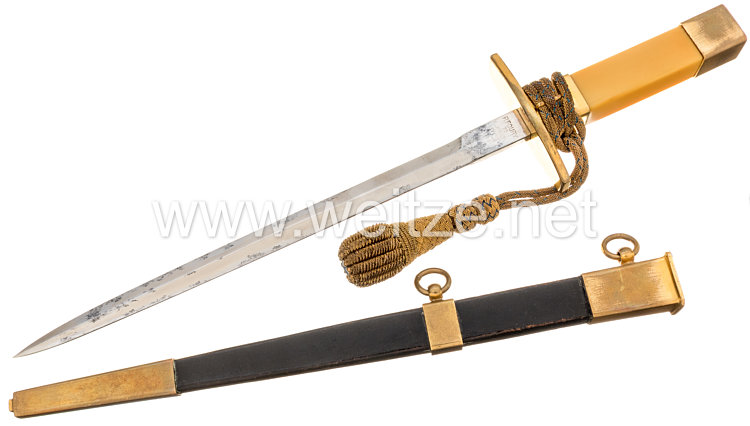
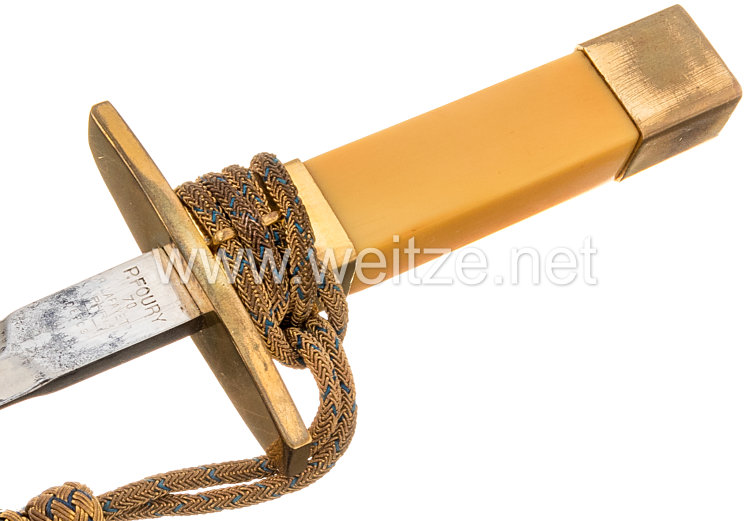
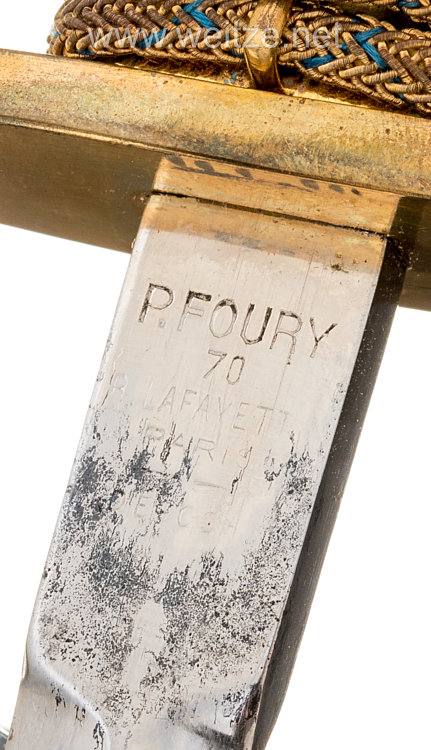
Schlanke rhombische Klinge mit leichten Rostnärbchen, auf der Fehlschärfe gestempelt, "P.Foury 70 R.LaFayette Paris Depose", hellorangener Kunststoffgriff, schwarz belederte Holzscheide, die Messingbeschläge noch mit etwa 80% der Vergoldung, mit original gebundenem Portepee aus Goldfaden mit blauen Durchzügen. Zustand 2
352777
550,00

France Air Force Officers' Dagger M 1934

The French Air Force Officer's Dagger Model 1934 (Poignard d'Officier de l'Armée de l'Air, Mle 1934) represents a significant transition in French military history, marking the period when France was modernizing its air forces and establishing them as an independent service branch. The Armée de l'Air was created as an independent military branch on April 1, 1933, though it was not until July 2, 1934 that the special arm became fully independent. After World War I, France recognized the strategic importance of air power and invested considerably in its modernization. The creation of an independent air force required its own uniforms and equipment to strengthen the identity of this new service branch. The introduction of specific daggers for Air Force officers created esprit de corps and a sense of belonging, visually distinguished Air Force officers from their colleagues in the Army and Navy, and emphasized the professional status of the wearers.

The P. Foury workshop at 70 Rue Lafayette in Paris was one of the distinguished manufacturers of military edged weapons during the interwar period. The Foury family had a long tradition in producing swords, épées, and daggers for the French armed forces with an excellent reputation for craftsmanship. The P. Foury firm's location on Rue Lafayette placed it in the heart of Paris's commercial district, where numerous military outfitters and weaponsmiths maintained their workshops, supplying not only the French military but also officers who purchased their ceremonial weapons privately, as was customary for dress daggers. Multiple other manufacturers also produced this model, including makers marked R.R.C., RAUDY-VAURE/AMBERT, F.W. Holler Solingen, and later post-war variants marked AVIATINOX.

The Model 1934 is characterized by its slender rhombic blade form, which served both functional and aesthetic purposes. The rhombic cross-section provides structural rigidity while maintaining low weight – an important quality for a ceremonial sidearm. The marking “Déposé” on the blade indicates a registered trademark or protected design, guaranteeing the authenticity and origin of the piece. The light orange synthetic grip is characteristic of the 1930s, often Bakelite or similar phenolic resins, which were not only more cost-effective but also more durable and weather-resistant. Orange or amber-colored grips were typical for French Air Force daggers of this period and distinguished them from the darker weapons of other service branches. The black leather-covered wooden scabbard with brass fittings follows French military tradition, with gilding demonstrating the ceremonial aspects of this weapon worn at official occasions, parades, and as part of dress uniforms. All metal parts of the handle, crossguard, and scabbard fittings are made of copper or brass with gilt.

The handles came in different colors and the fittings were either plated or anodized, with these characteristics together with the maker determining the time of manufacture and rank. The handle is white ivory for officers and blue for adjudants-chefs and adjudants. The original sword knot (portepee) made of gold thread with blue strands was both a carrying device and rank insignia. The portepee has a long history in European military traditions, with the color combination of gold and blue prescribed for French Air Force officers. Gold symbolized officer rank, while blue was traditionally associated with aviation.

This elegant dagger was specifically designed for officers and non-commissioned officers of the Armée de l'Air. The weapon was introduced in 1934 and remained in service through the 1960s. Such daggers were worn until the beginning of World War II and were partially continued in use during the German occupation. After 1945, uniform regulations and traditions changed, making these pre-war models historical objects that today document French military culture during the interwar period. Post-war variants designated Model 1934/1954 were produced between 1945 and 1955. The French Air Force of the 1930s was a modern, technologically advanced service, yet remained shaped by traditional military values. The Model 1934 dagger perfectly embodies this duality: a modern design with synthetic grip, but executed in traditional craftsmanship with ceremonial elements.

r