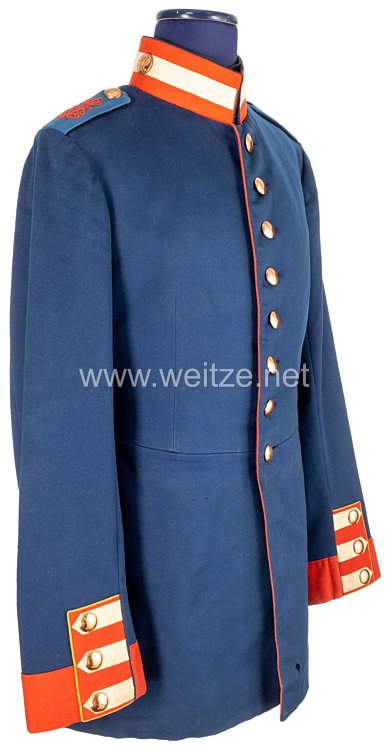
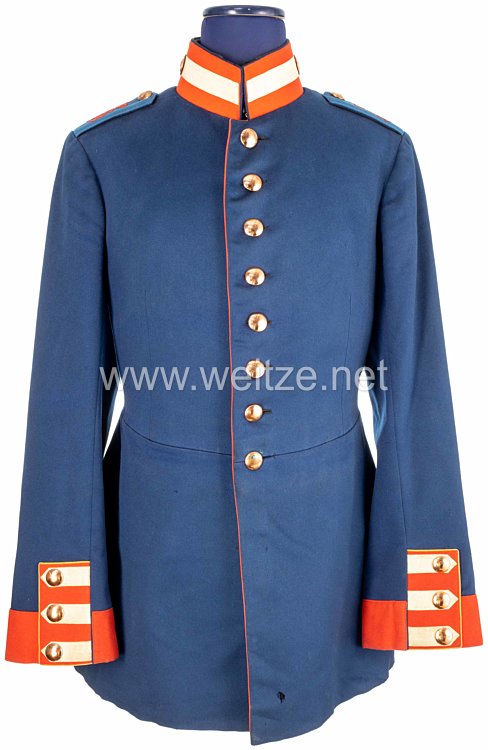
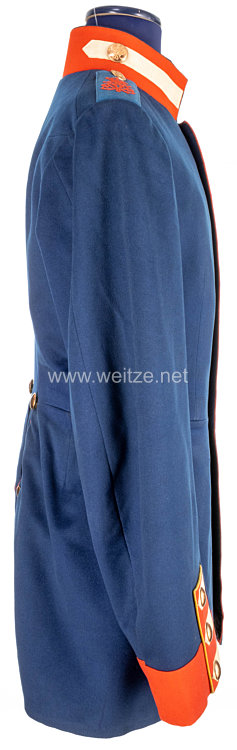
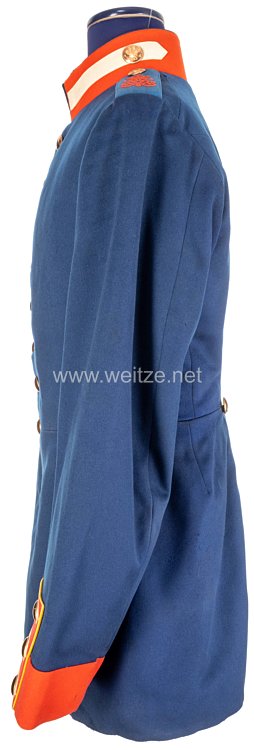
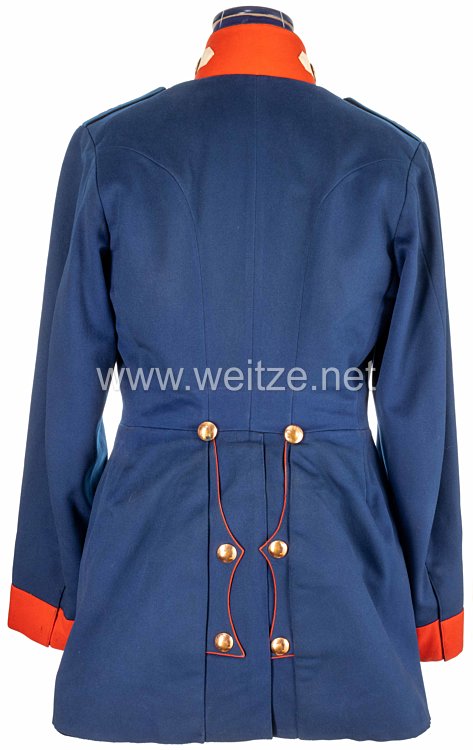
Prussian Tunic for a Gefreiter in Füsilier-Regiment von Gersdorff (Kurhessisches) Nr. 80
Very rarely found.
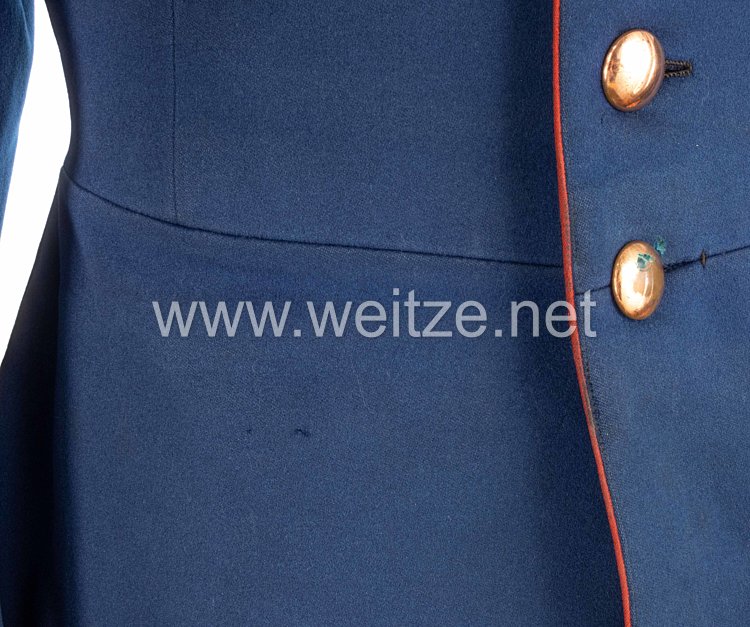
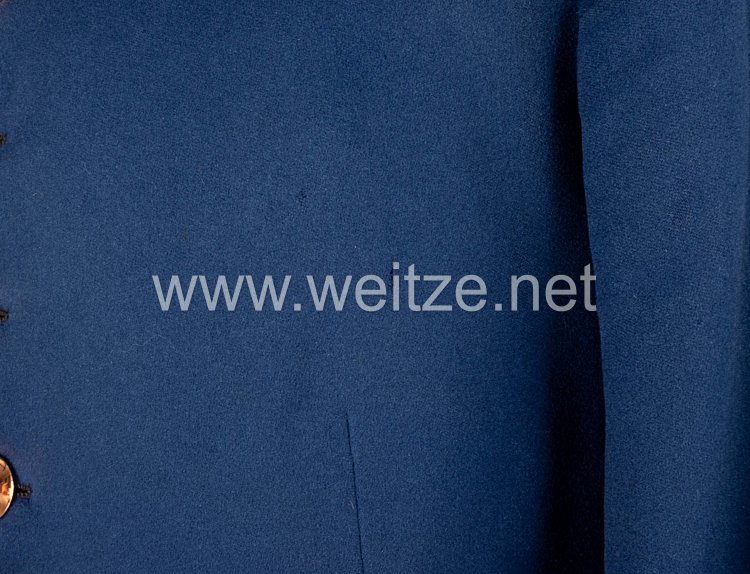
The Waffenrock (tunic) of a lance corporal (Gefreiter) from the Fusilier Regiment von Gersdorff (Kurhessian) No. 80 represents a significant testament to Prussian military history at the turn of the 20th century. This uniform piece combines the rich traditions of Kurhessian military heritage with the strict organizational system of the German Empire.
The Fusilier Regiment von Gersdorff No. 80 was garrisoned in Wiesbaden and Homburg, two important cities in the Prussian administrative district of Wiesbaden. The regiment bore the name of Saxon Field Marshal Gustav Anton von Gersdorff and carried the designation “Kurhessian” in memory of the military traditions of the former Electorate of Hesse, which had been annexed by Prussia in 1866 following the Austro-Prussian War.
The uniform followed the strict Prussian clothing regulations as defined in the Adjustierungsreglements (dress regulations) of the German Army. The dark blue tunic was characteristic of Prussian infantry and traced its origins back to 18th-century traditions. The red facings (collar, cuffs, and shoulder straps) were the traditional insignia of Brandenburg-Prussian infantry and distinguished them from other branches of service.
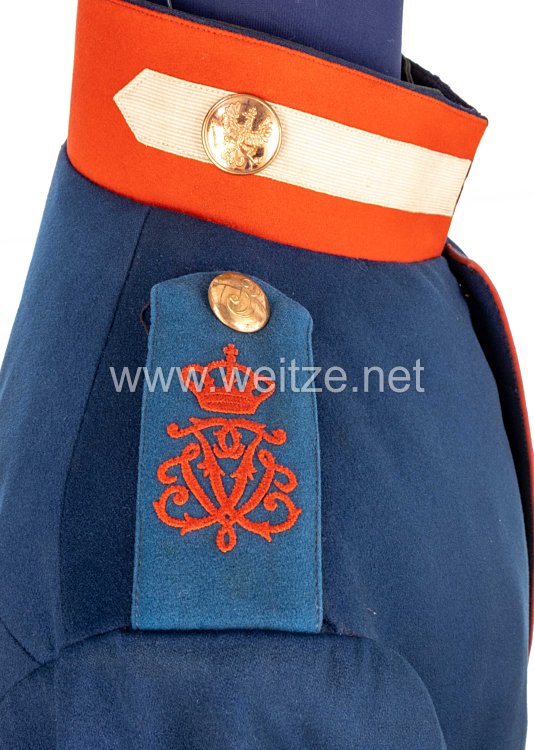
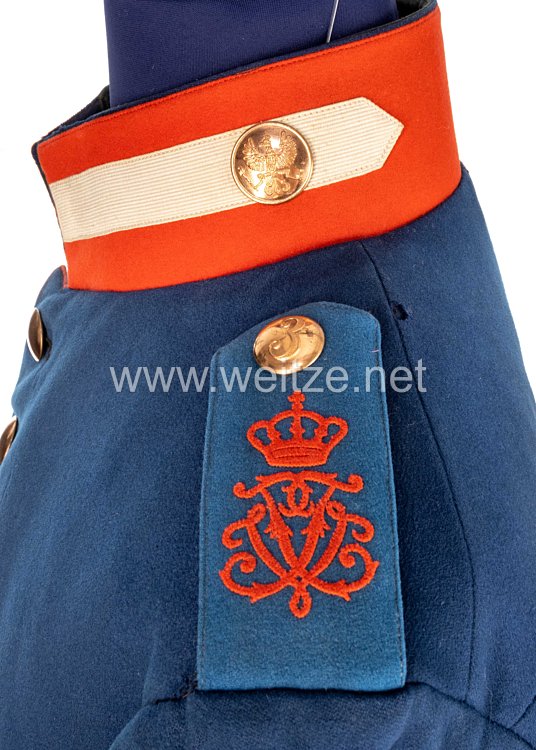
Particularly noteworthy are the white Litzen (braided trim) on the collar and shoulder straps, which served as specific regimental insignia. Such braiding was part of a complex system of regimental identification that allowed a soldier's unit affiliation to be recognized at first glance. The yellow piping on the shoulder straps complemented this identification system.
The shoulder straps bore the red-embroidered cipher “VFF” (von Füsilier-Regiment) and buttons of the 3rd Company. The Prussian system of company designation through different button arrangements was a characteristic feature of military organization. A regiment typically consisted of three battalions of four companies each, with the 3rd Company belonging to the first battalion.
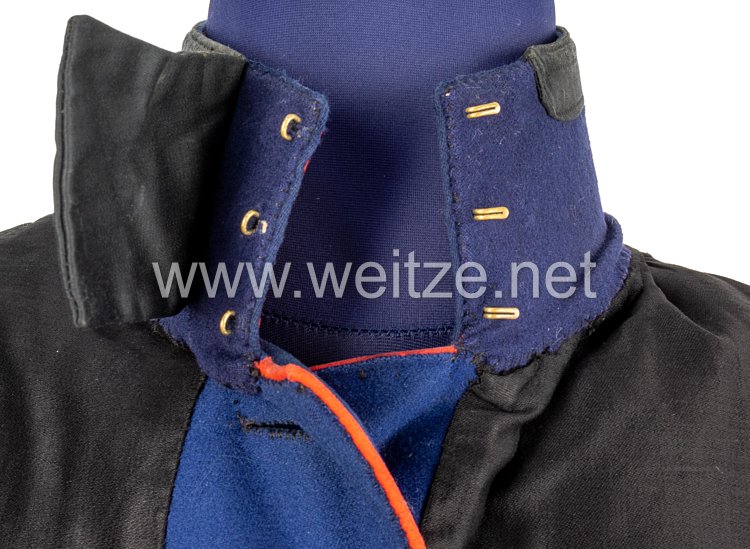
The wearer's rank as Gefreiter is indicated by special buttons on the collar. The Gefreiter was the lowest non-commissioned officer rank, or rather an intermediate position between enlisted men and non-commissioned officers. A soldier typically achieved this rank after one to two years of faithful service and good performance. The Gefreiter already had certain supervisory functions and was often employed in training younger recruits.
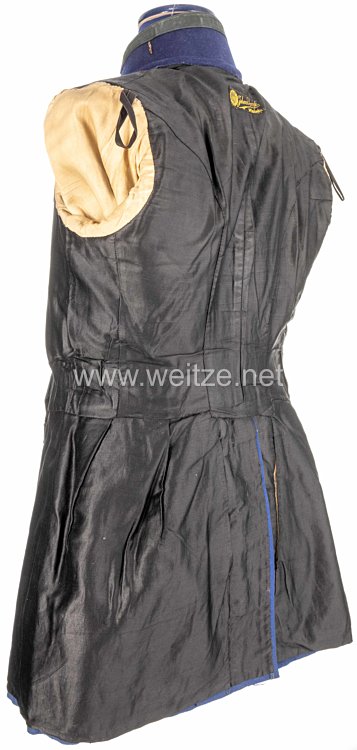
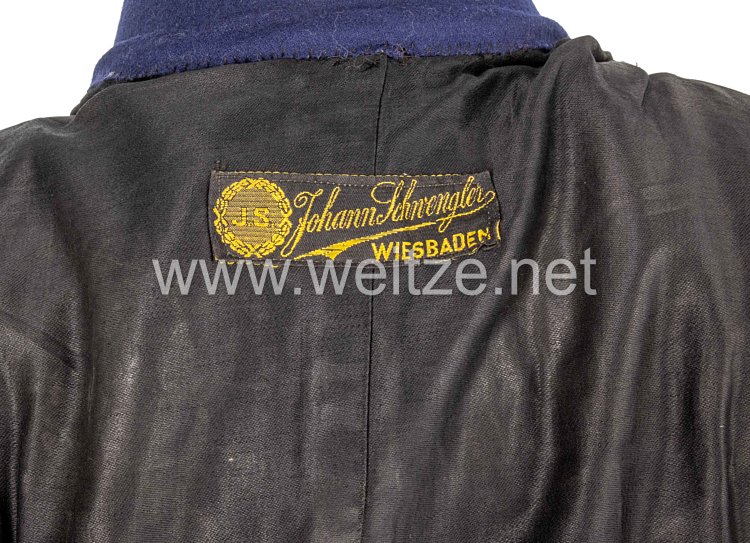
The interior label of the tailor “Johann Schwengler Wiesbaden” refers to the practice that uniform pieces were frequently manufactured or at least altered by civilian tailors in garrison towns. Although there were state clothing depots, soldiers, especially non-commissioned officers and officers, often had their uniforms privately made to achieve better fit and higher quality.
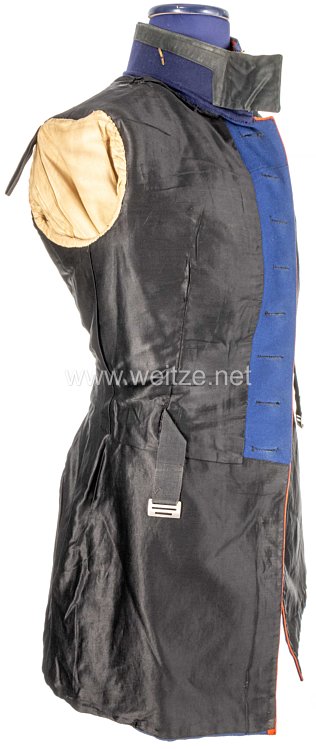
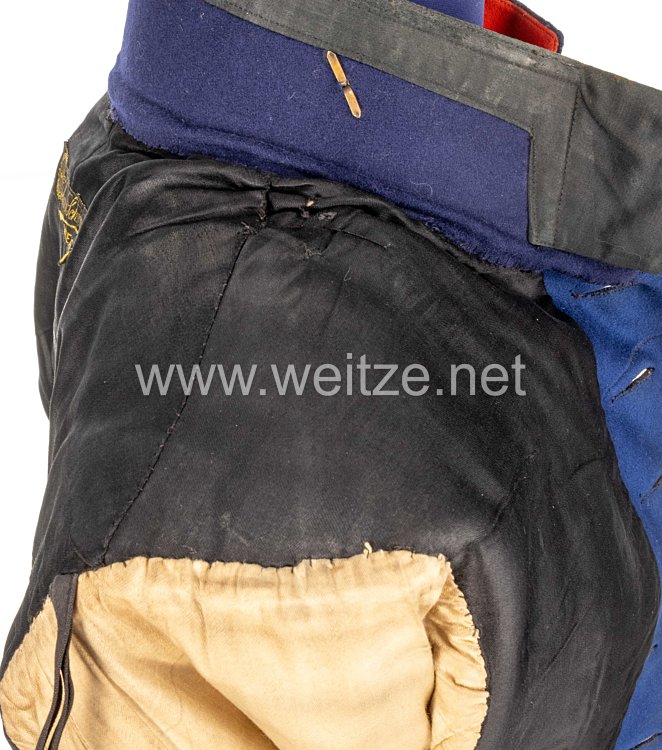
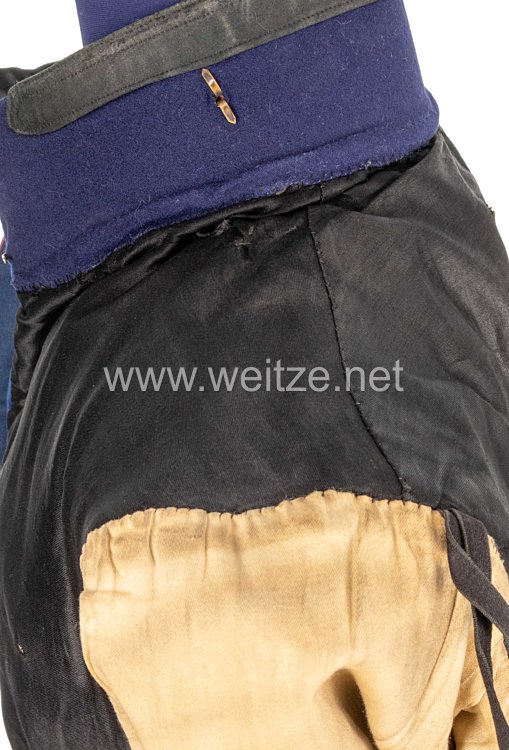
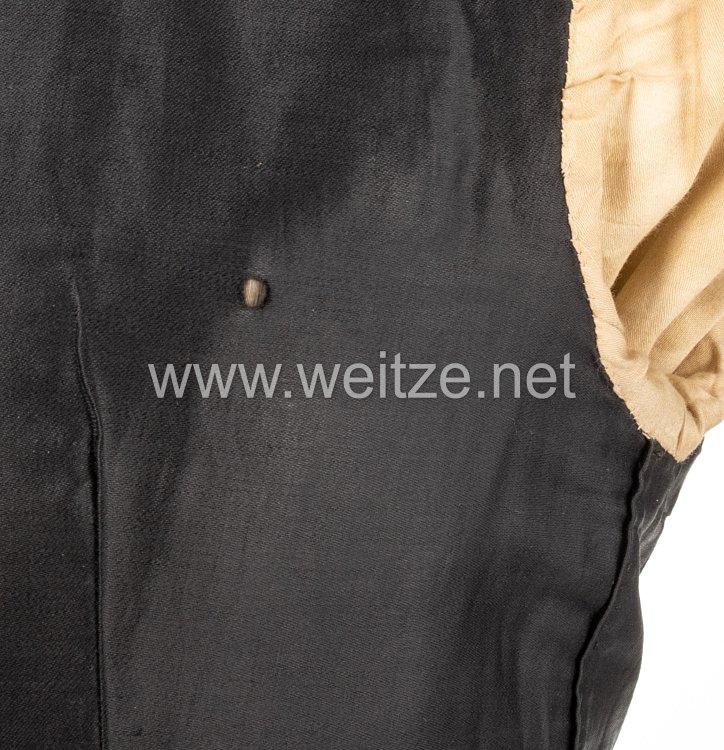
The use of black silk lining indicates a certain quality, although simpler materials were normally used for enlisted ranks. This might suggest that the wearer used this uniform as a dress uniform or that it was a private purchase.
The brass buttons were standard for Prussian infantry. They usually bore the regiment-specific emblem or number. The care of these buttons was part of a soldier's daily duties and an important component of military discipline.
Fusilier Regiment No. 80 belonged to the XVI Army Corps headquartered in Metz (later reorganized) and was established as part of the army reform after 1866. The tradition of fusiliers traced back to light infantry units of the 18th century, originally equipped with shorter rifles called fusils.
Around 1900, when this tunic was made, the German Empire was in the Wilhelmine Era, a time of economic prosperity and military self-confidence. The army enjoyed high social prestige, and the uniform was a visible sign of honor and status.
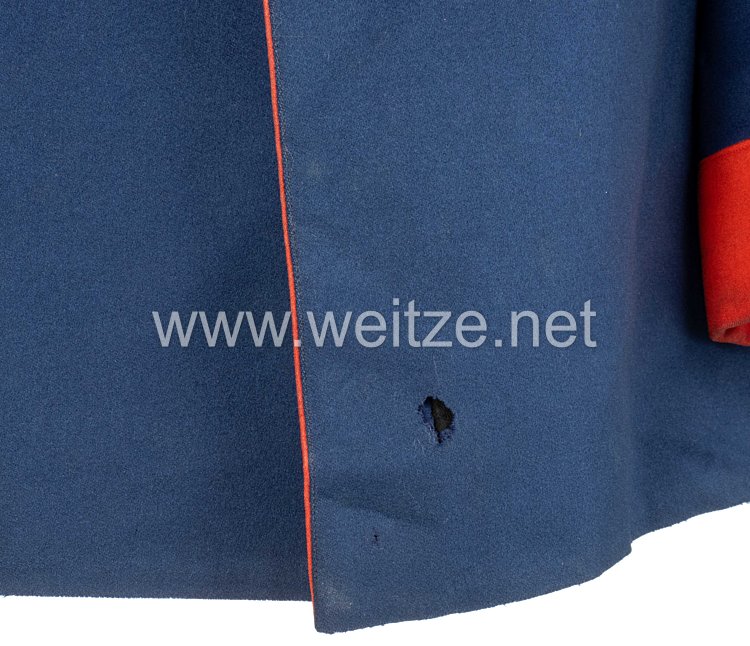
Such uniform pieces are rarely preserved today, as many were continued in use during World War I, subsequently disposed of, or repurposed. The excellent state of preservation of this tunic makes it a particularly valuable historical document that illustrates not only military fashion and heraldry but also the craftsmanship and social significance of the military in the German Empire.