Bavarian WWI Field Gray Pickelhaube Model 1915 for Enlisted Men of the 8th Field Artillery Regiment Prinz Heinrich von Preußen

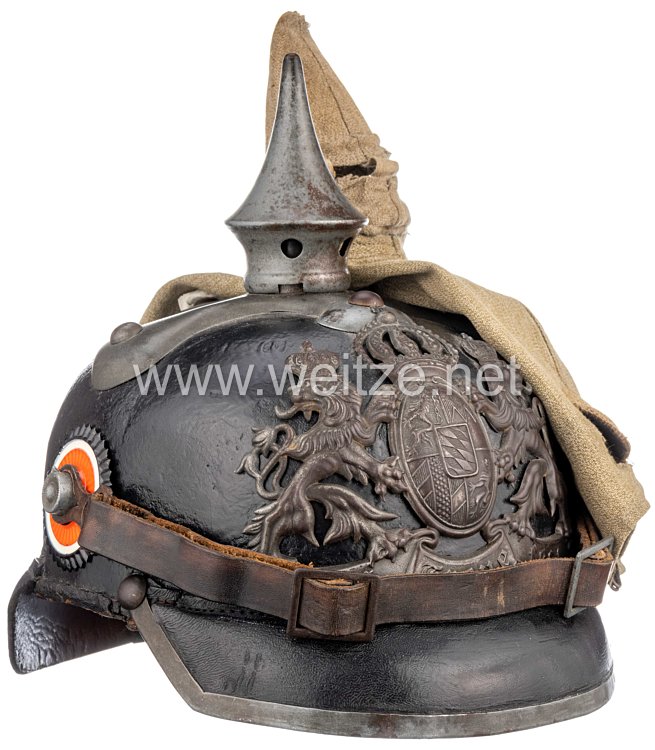
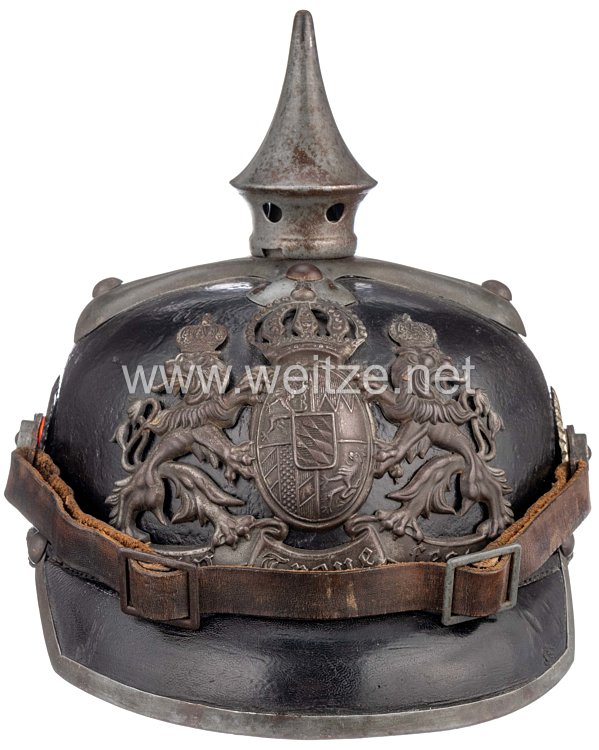
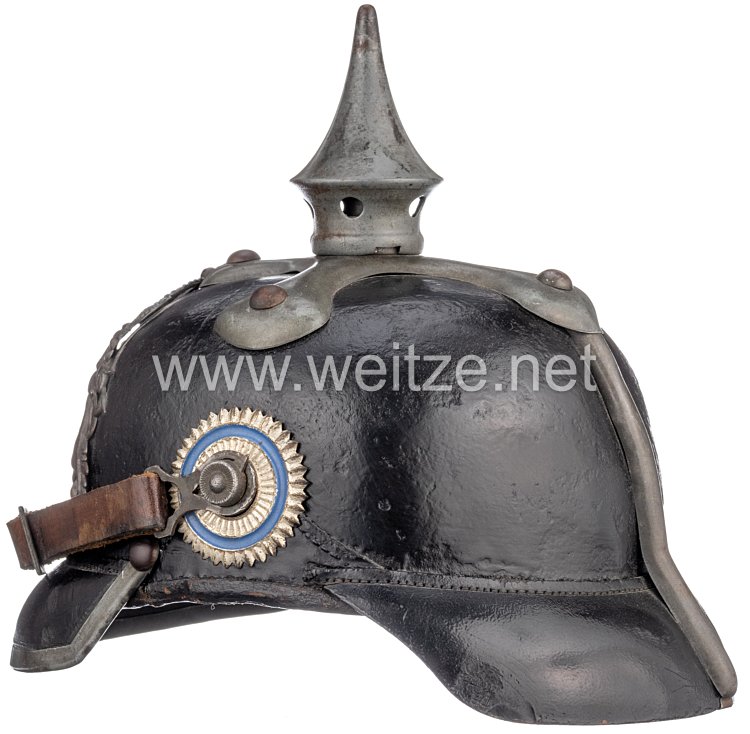
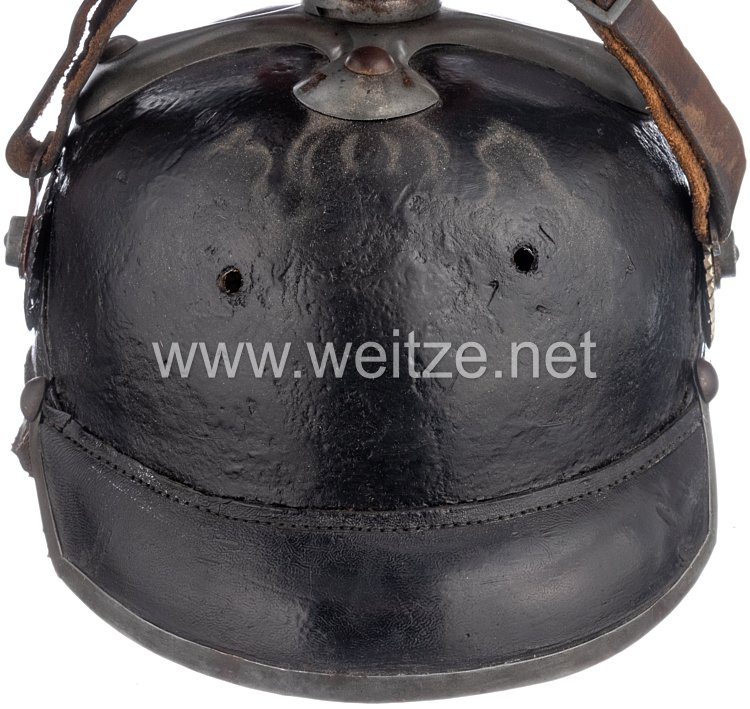
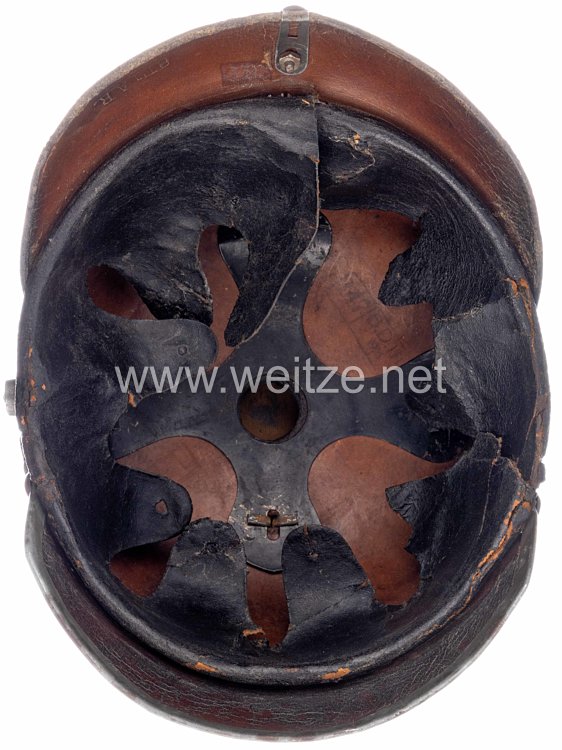
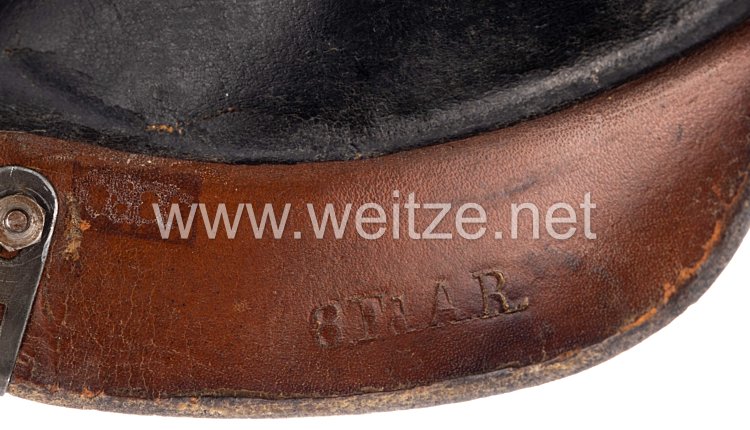
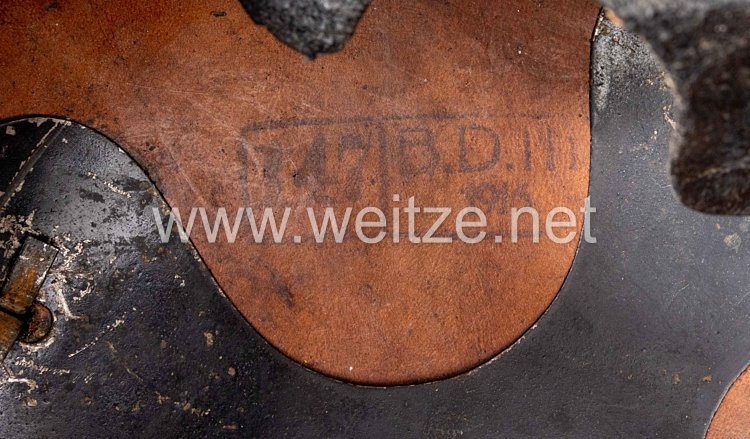
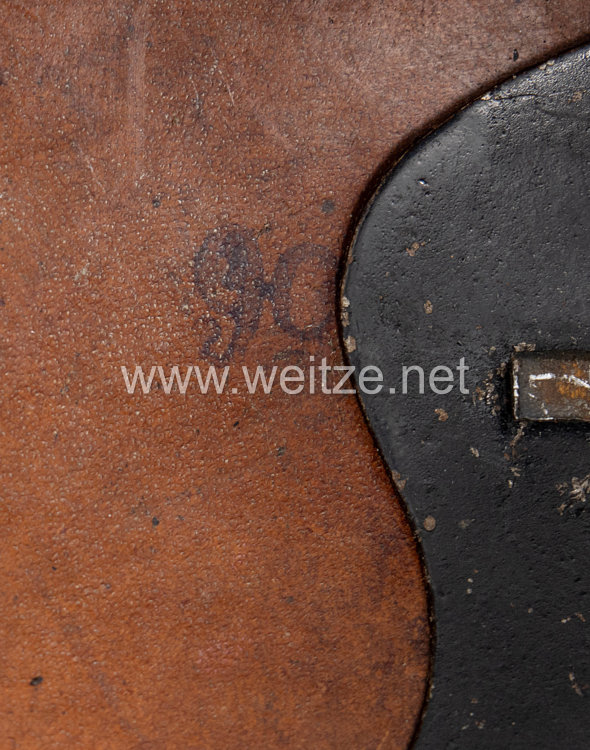
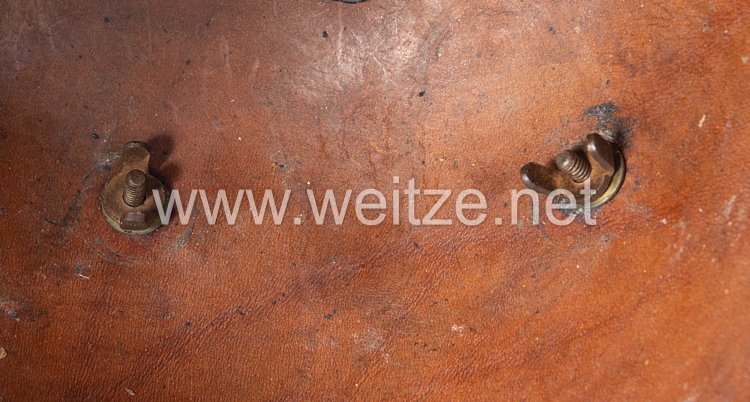
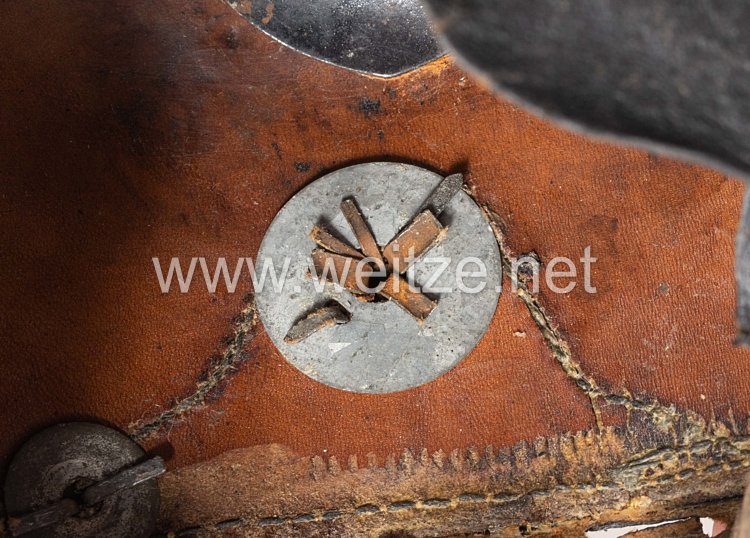
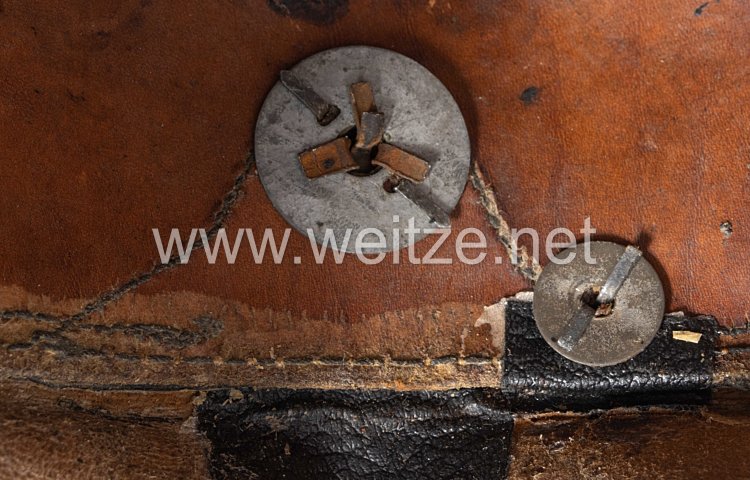
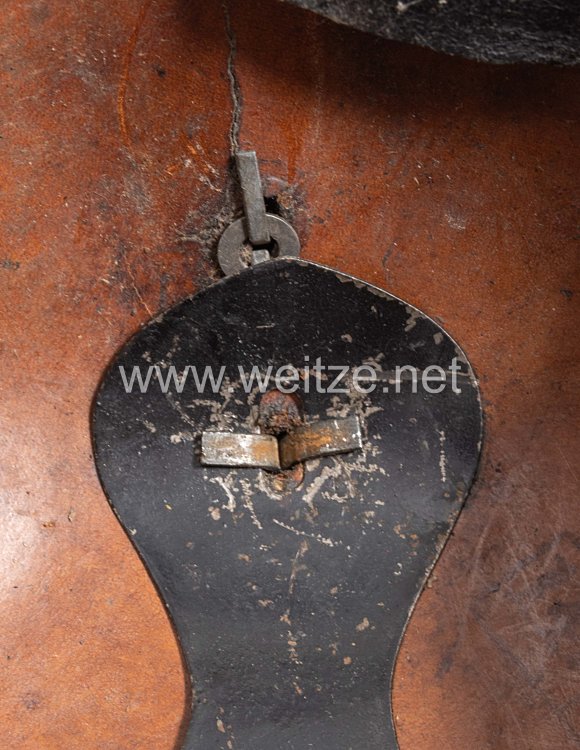
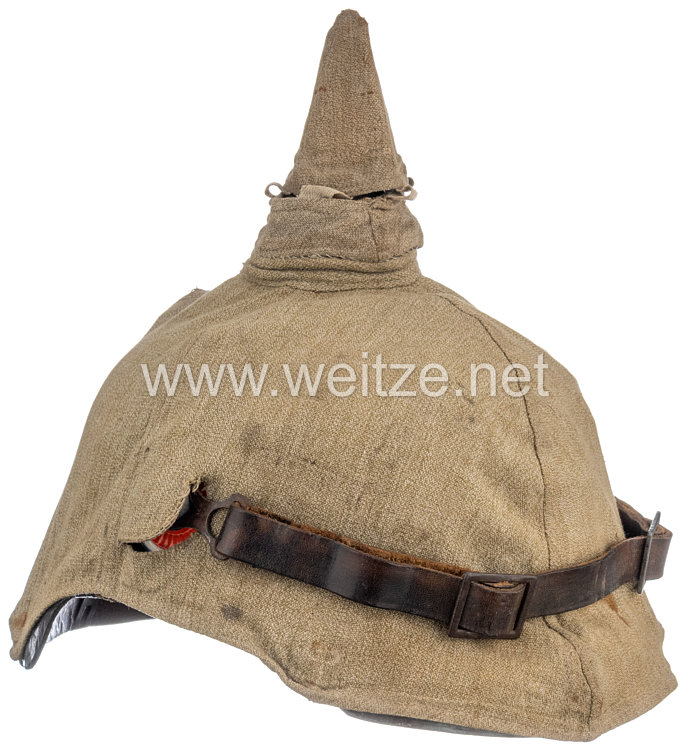
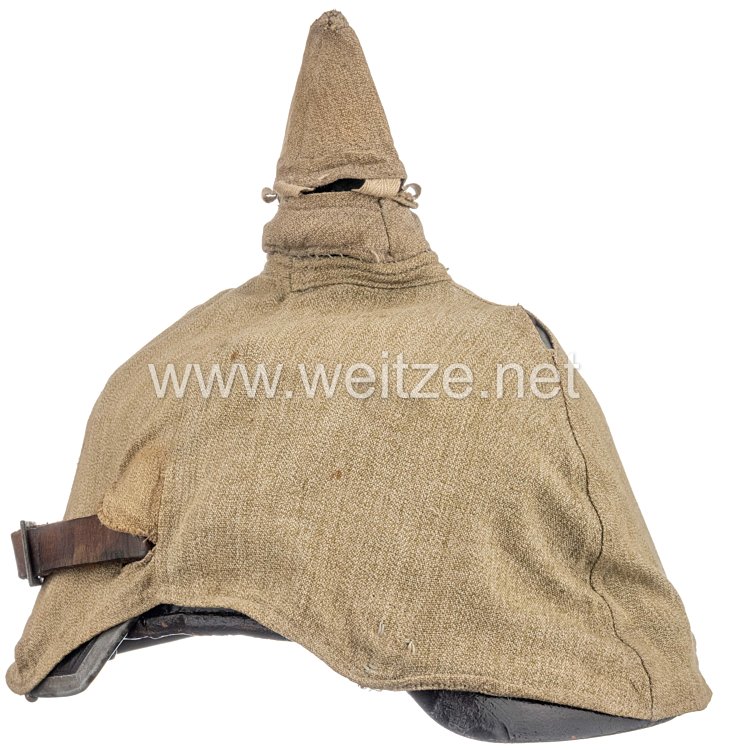
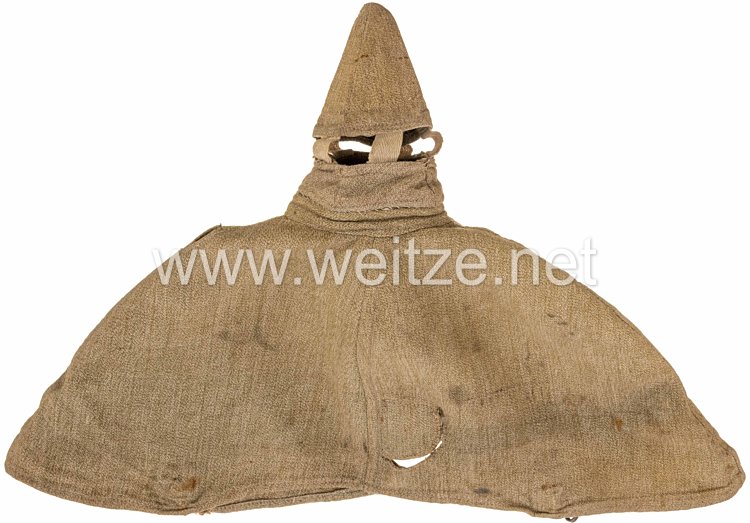
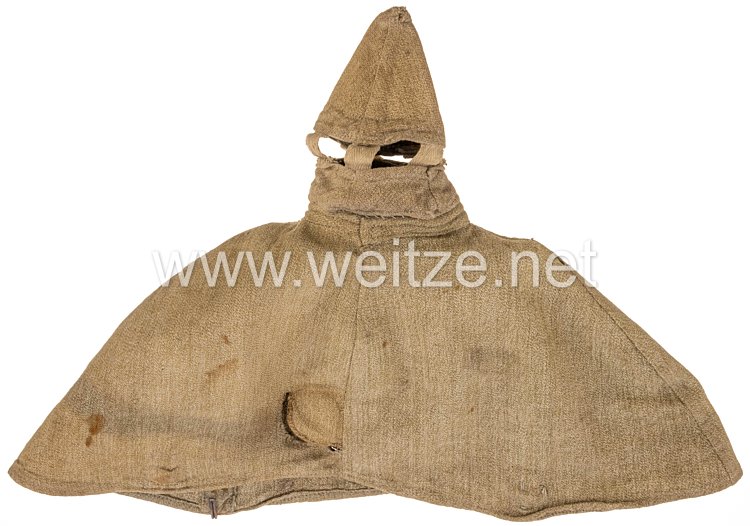
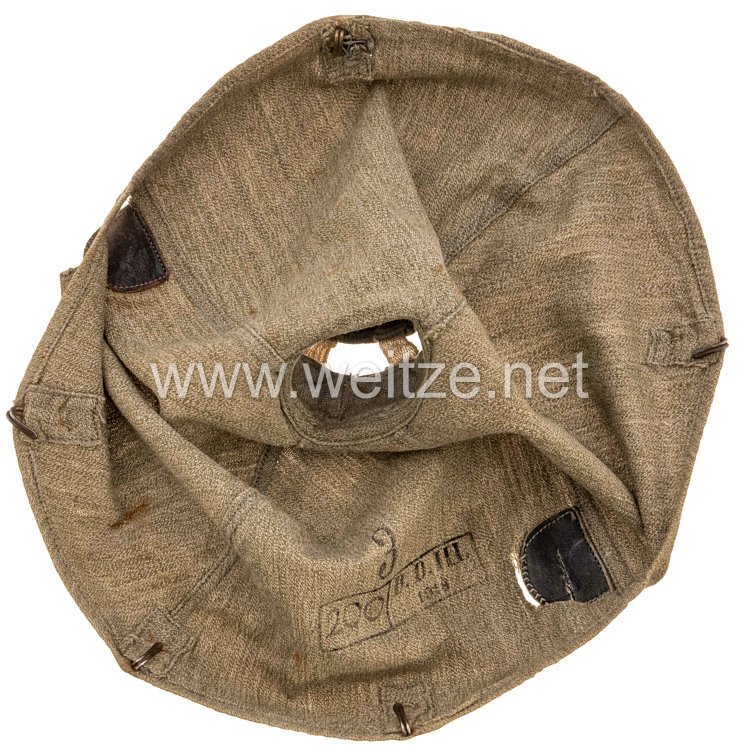
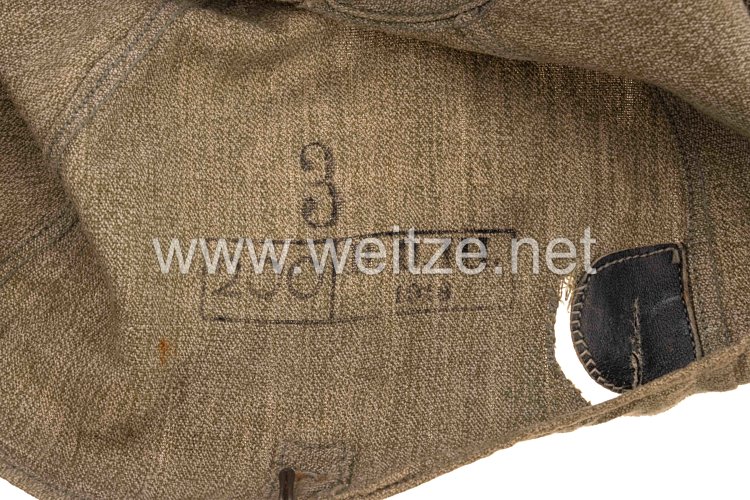
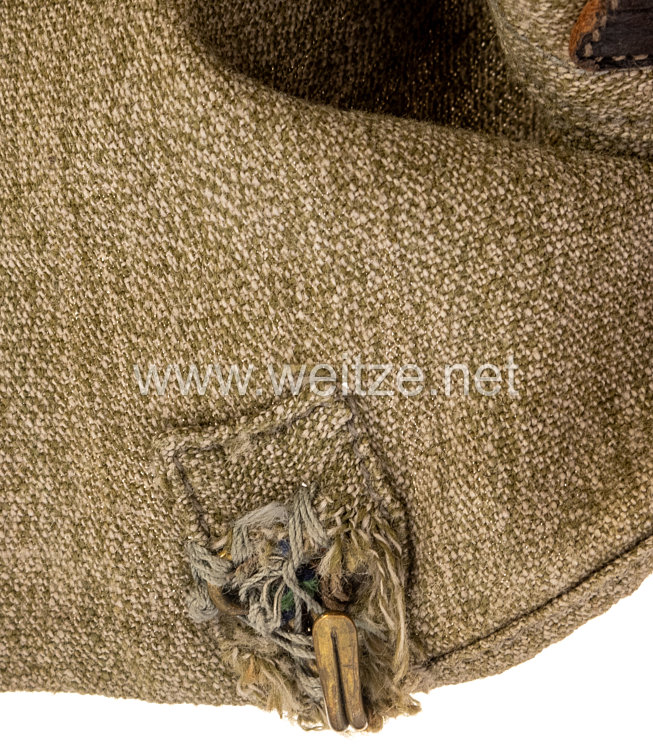
Home garrison Nürnberg. Chamber piece 1916. Leather helmet, complete with all fittings in field gray iron. Large helmet plate, original leather chinstrap, both cockades. Cruciform base, the spike with bayonet lock, removable. Squared front visor. Interior with tabbed leather lining, in the rear visor chamber stamp “8.Fd.A.R.”, in the skull the stamp “147 B.D. III 1916”. With camouflage cover, stamped inside “3 200 B.D.III. 1918”. Size approximately 56. Condition 2.
438776

Bavarian Model 1915 Field-Gray Pickelhaube – Wartime Issue for Other Ranks of the 8th Field Artillery Regiment “Prinz Heinrich von Preußen”

The Pickelhaube, the iconic spiked helmet of the Prussian and German armies, was first adopted by Prussia in 1842–43 and subsequently by Bavaria and the other German states. For decades it served as the defining symbol of German military power. Yet the First World War exposed its fatal shortcomings with devastating clarity: the leather helmet offered only minimal protection against shell fragments and machine gun fire, the conspicuous spike made the wearer a target, and bright metal fittings compromised camouflage in the field. From these hard-won lessons emerged the Model 1915 – the final wartime simplification of the Pickelhaube, designed to address both combat inadequacies and the mounting pressures of wartime production.

This particular helmet is a field-gray M1915 Pickelhaube for enlisted men (Mannschaften), issued to the Royal Bavarian 8th Field Artillery Regiment “Prinz Heinrich von Preußen,” with its home garrison in Nuremberg. The regiment was formed on 1 October 1900 from elements of the 2nd Field Artillery Regiment and received its honorary designation after Prince Heinrich of Prussia, the brother of Kaiser Wilhelm II, on 15 June 1913. Mobilized on 2 August 1914, the regiment served on the Western Front throughout the entirety of the First World War, fighting in Lorraine, the Nancy–Épinal sector, and in static warfare between the Maas (Meuse) and Mosel (Moselle) rivers. It served under the III Royal Bavarian Army Corps, headquartered in Nuremberg, which formed part of the 6th Army.

The Model 1915 – Wartime Simplification

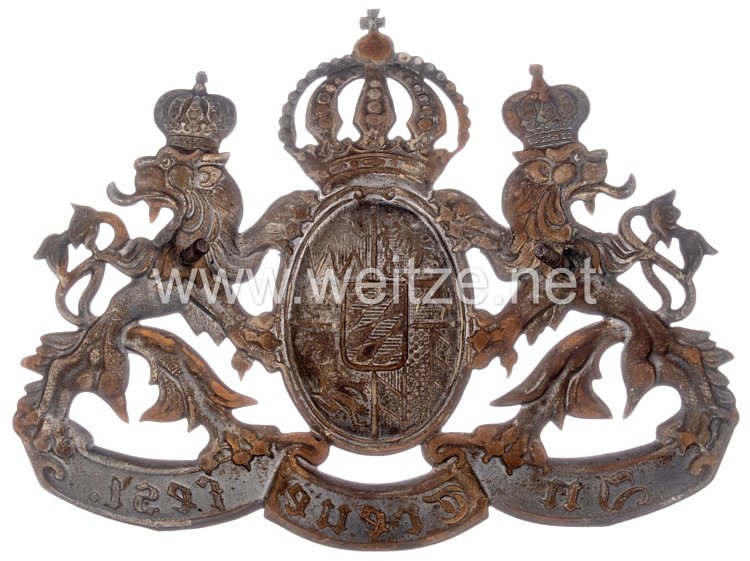
The Model 1915 represented the last wartime simplification of the Pickelhaube, introduced to streamline production and improve field functionality. Its key distinguishing features, compared to earlier patterns such as the M1895 and M1886, were significant: the formerly fixed spike was replaced by a detachable spike with a bayonet-lock mechanism (Bajonettverschluss) – an order of September 1915 mandated the removal of the spike in front-line trenches. Previously bright brass or bronze fittings were replaced by field-gray painted iron fittings, and construction was simplified throughout. This helmet retains its leather body, all fittings in field-gray iron, the large Bavarian helmet plate (Helmwappen), original leather chin strap on button 91, both cockades (national and state), a cross-shaped spike base (Kreuzblatt), and the square front visor (eckiger Vorderschirm) characteristic of the pattern. The interior features a lapped leather lining (gelaschtes Lederfutter).

The markings tell a clear story of military bureaucracy at war. The rear visor is stamped “8.Fd.A.R.”, confirming regimental assignment to the 8th Field Artillery Regiment. Inside the dome, the stamp “147 B.D. III 1916” indicates manufacture or issue through the Bavarian Bekleidungsamt (Clothing Office) III in 1916.

The Camouflage Cover

Camouflage covers (Überzüge) for the Pickelhaube were introduced as early as 1892 and became standard field wear from 1914 onward. The accompanying cover on this helmet bears the internal stamp “3 200 B.D.III. 1918,” indicating that it was produced or issued in the final year of the war. The two-year gap between the helmet’s 1916 date and the cover’s 1918 stamp suggests the sustained use of this equipment through the final years of the conflict.

From Leather to Steel

The Pickelhaube was gradually superseded by the Stahlhelm (steel helmet) beginning in 1916, which offered the ballistic protection that a leather helmet could never provide. Nevertheless, leather helmets remained in use in rear areas and for ceremonial purposes until the war’s end, as the demand for steel helmets consistently outstripped supply. The M1915 thus represents a transitional moment in military history – the final refinement of a nineteenth-century concept before it was overtaken by the realities of modern industrial warfare.

Post-War Fate

Following Germany’s defeat in November 1918, the 8th Field Artillery Regiment returned to Nuremberg on 18 December 1918. Demobilization began on 28 December 1918, and the regiment was dissolved in February 1919. Elements of the unit formed various Freikorps formations. The regiment’s tradition was carried forward in the Reichswehr from 24 August 1921 by the 7th Battery of the 7th (Bavarian) Artillery Regiment in Nuremberg.

As military equipment, the Pickelhaube became obsolete after the First World War, but it endures as one of the most recognizable symbols of Imperial Germany. Ceremonial use continues today in countries such as Sweden, Chile, and Colombia. For the collector, a complete, depot-stamped example such as this – with identifiable regimental markings, intact camouflage cover, and dateable production stamps – constitutes a tangible record of a storied regiment’s service and the twilight of a military tradition inseparable from the Pickelhaube itself.

r