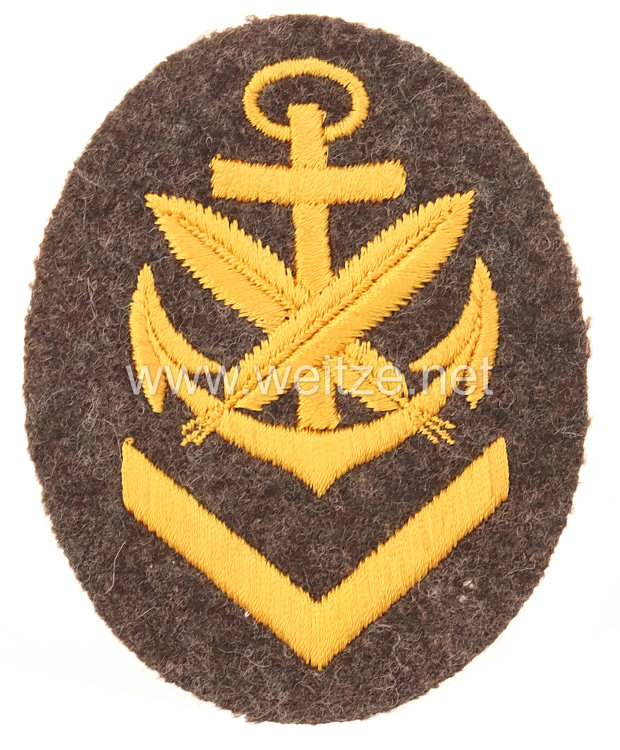
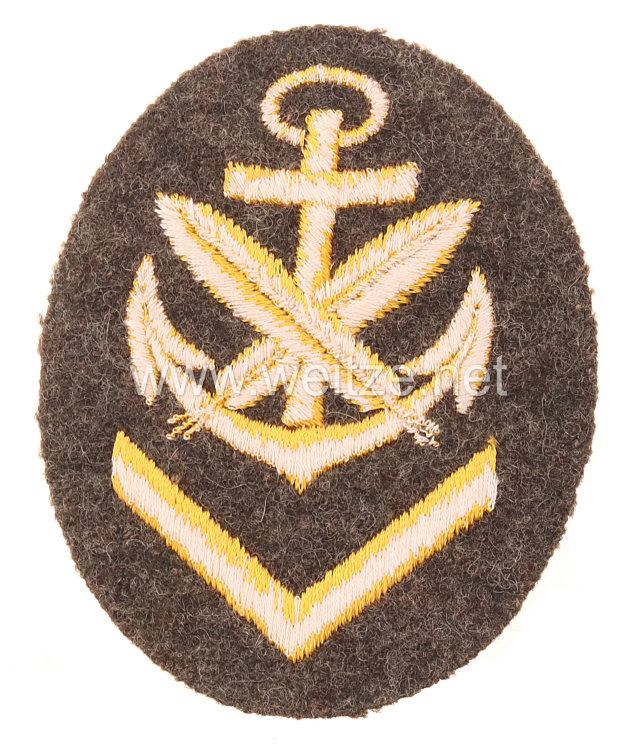
Kriegsmarine Sleeve Insignia Oberschreibermaat for Field-Gray Uniform

Version for coastal artillery and ground units. Machine-embroidered yellow on field-gray. Unissued condition, condition 2+.
444575
225,00

Kriegsmarine Sleeve Insignia Oberschreibermaat for Field-Gray Uniform

The sleeve insignia for Oberschreibermaat of the Kriegsmarine in field-grey version represents an interesting testimony to German naval history during World War II. This special variant was developed for members of the Coastal Artillery and other land-based units of the Kriegsmarine who did not wear the traditional dark blue naval uniform but rather a field-grey uniform.

The Kriegsmarine, as the official designation of the German Navy from 1935 to 1945, developed a complex system of rank insignia and grade identifications. The rank of Oberschreibermaat belonged to the non-commissioned officer ranks with sword knot and designated an experienced administrative petty officer. The Schreibermaate (writer mates) were responsible for administrative and clerical duties, an indispensable component of military organization.

The use of field-grey uniforms in the Kriegsmarine was by no means unusual. While naval personnel at sea and in coastal stations traditionally wore dark blue uniforms, units deployed on land in direct combat roles or in land-based installations received field-grey uniforms. This particularly affected the Naval Coastal Artillery, which was responsible for defending the coasts with heavy guns, as well as various naval infantry units and security troops.

The present sleeve insignia is executed in machine embroidery in yellow color on field-grey background. Machine embroidery was the common manufacturing method for uniform insignia during the war, as it enabled faster and more cost-effective production than hand-embroidered variants. The yellow color corresponded to the Waffenfarbe (branch color) of the administrative career path in the Kriegsmarine, while other career paths were identified by different colors.

The structure of Kriegsmarine rank insignia followed precise regulations set forth in the Anzugsordnung für die Kriegsmarine (Dress Regulations for the Navy). These regulations detailed the appearance, wearing method, and attachment of all uniform components. Sleeve insignia were typically worn on the left upper arm and enabled quick identification of a soldier's rank and function.

The unworn condition of the insignia suggests that it was possibly procured as a spare part but never used, or that it remained unissued in military depots at the end of the war. After the unconditional surrender of the Wehrmacht in May 1945, large quantities of military equipment were no longer issued or used.

The Coastal Artillery of the Kriegsmarine played an important role in German defense strategy. Along the coasts from Norway to the French Atlantic coast, extensive fortifications with heavy naval guns were erected as part of the Atlantic Wall. The crews of these batteries wore field-grey uniforms corresponding to their land-based role.

Collectors and historians today value such uniform insignia as important material witnesses to military history. They provide insights into organizational structure, hierarchies, and the various functions within the armed forces. The good state of preservation makes this specimen particularly valuable for historical research and museum collections.

It is important to emphasize that scholarly engagement with such military-historical objects serves historical reappraisal and understanding of the past. The Kriegsmarine was part of the National Socialist apparatus of power and was involved in the crimes of World War II. The preservation and study of such objects takes place in the context of critical examination of this dark epoch of German history.