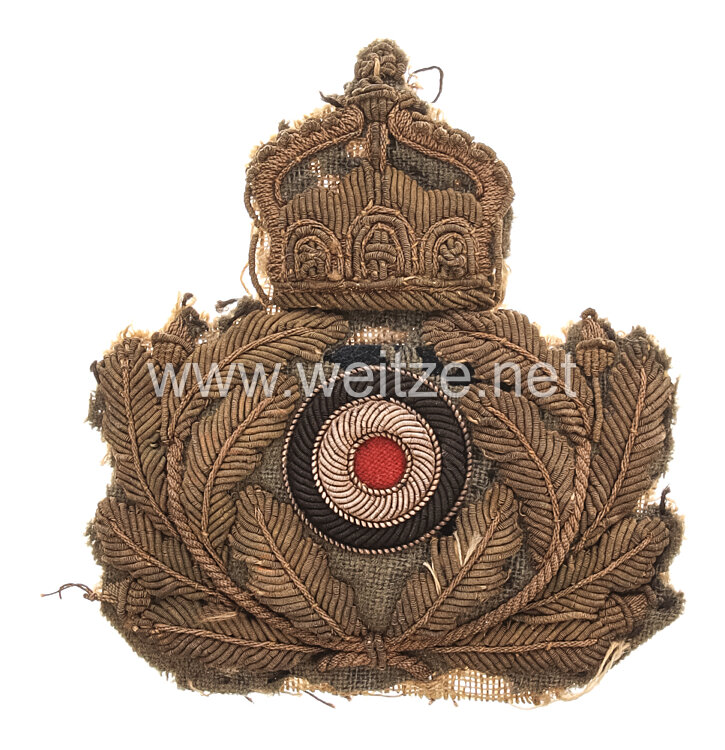
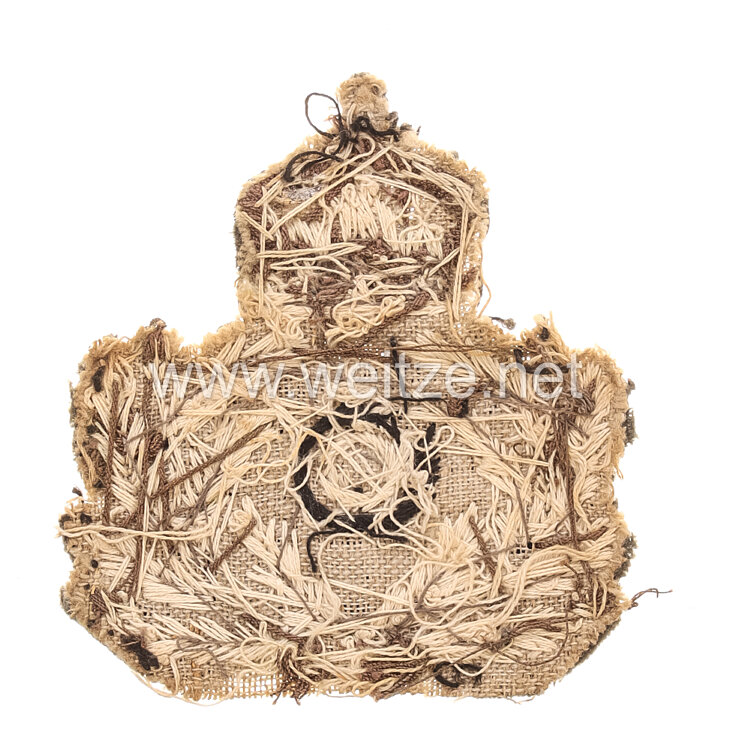
Imperial German Navy World War I Visor Cap Insignia for Officers in the Marinekorps Flandern

Circa 1917. Metal thread hand-embroidered version on dark green background, for the field-gray visor cap! Worn condition, Condition 2. Very rare!
459474
450,00

Imperial German Navy World War I Visor Cap Insignia for Officers in the Marinekorps Flandern

The officer's cap badge of the Imperial German Navy's Flanders Corps represents an extraordinary testament to a unique unit of the First World War. Manufactured around 1917, this hand-embroidered badge exemplifies the singular connection between the German Navy and land operations on the Western Front.

The Marine Corps Flanders (Marinekorps Flandern) was established in 1914 when German naval forces were stationed following the occupation of the Belgian coast. This unit differed fundamentally from conventional naval formations, as it primarily participated in land operations. Naval soldiers and officers were tasked with land warfare, coastal defense, and operating heavy naval artillery on shore. The corps encompassed various units, including naval artillery, naval infantry, and technical formations.

The distinctive feature of this cap badge lies in its metal thread hand-embroidery on dark green backing. This construction differs markedly from standard naval cap badges, which were normally designed for the dark blue naval uniform. The dark green backing indicates adaptation for the field-gray peaked cap, characteristic of German land forces. This modification illustrates the hybrid nature of the Flanders Corps – naval personnel operating in a land warfare context.

Metal thread embroidery was an elaborate craft requiring considerable skill. Officers typically wore such high-quality, handcrafted badges, while enlisted men often received machine-made or simpler versions. The use of metal threads – usually gold or silver-plated wire – gave the badge a characteristic luster and symbolized officer rank.

The Marine Corps Flanders played a significant role in German war strategy. The unit was responsible for defending the U-boat bases at Bruges, Ostend, and Zeebrugge, which were crucial for the German submarine campaign against Allied shipping. Heavy naval guns installed on land could fire deep into British-held territory and posed a constant threat.

From 1917, the probable year of manufacture of this badge, fighting in Flanders intensified considerably. The Third Battle of Flanders, also known as the Battle of Passchendaele, took place from July to November 1917. The Marine Corps was involved in defending German positions and suffered significant casualties.

The rarity of such badges is explained by several factors: First, the Flanders Corps was a comparatively small unit within the entire German armed forces. Second, the production of hand-embroidered officer badges on dark green backing was a specialized manufacture in limited quantities. Third, many personal equipment items did not survive the war's turmoil, particularly when their wearers were killed or items were discarded in the postwar period.

The conversion to field-gray uniform components for naval personnel in land deployment followed practical military considerations. The traditional dark blue naval uniform was unsuitable for trench warfare and offered insufficient camouflage. The adaptation of uniforms and thus also badges to the requirements of the Western Front demonstrates the flexibility and adaptability of German military organization.

The Imperial Navy emblem with anchor and crown remained on these adapted badges, symbolizing continued affiliation with the Navy despite land-based deployments. This visual continuity was important for unit identity and esprit de corps.

After the war, the Marine Corps Flanders was dissolved, and memorabilia from this unit became sought-after collector's items. The historical significance of these badges lies not only in their craftsmanship but also in their testimonial value for a unique military formation that transcended the boundaries between navy and army. These artifacts provide tangible evidence of the German military's organizational innovation and the extraordinary circumstances that led naval personnel to fight in the muddy trenches of Flanders.