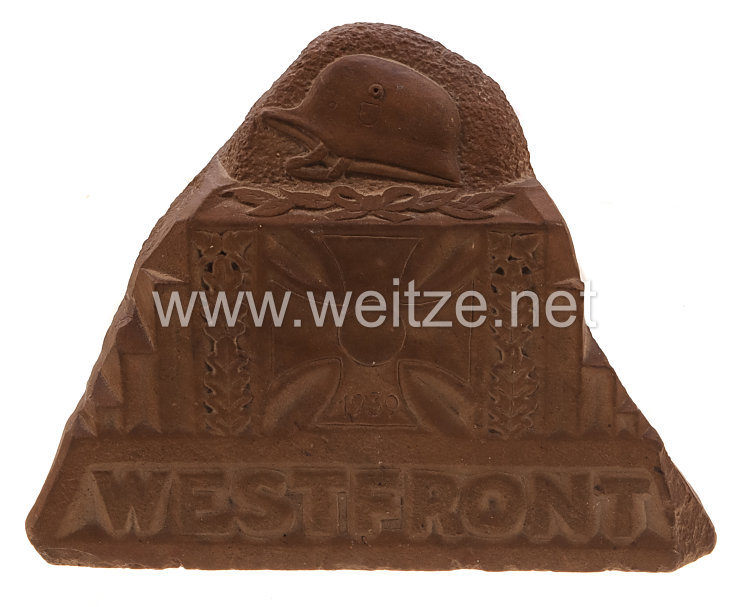
World War II Trench Art in the Style of World War I “Westfront 1939”

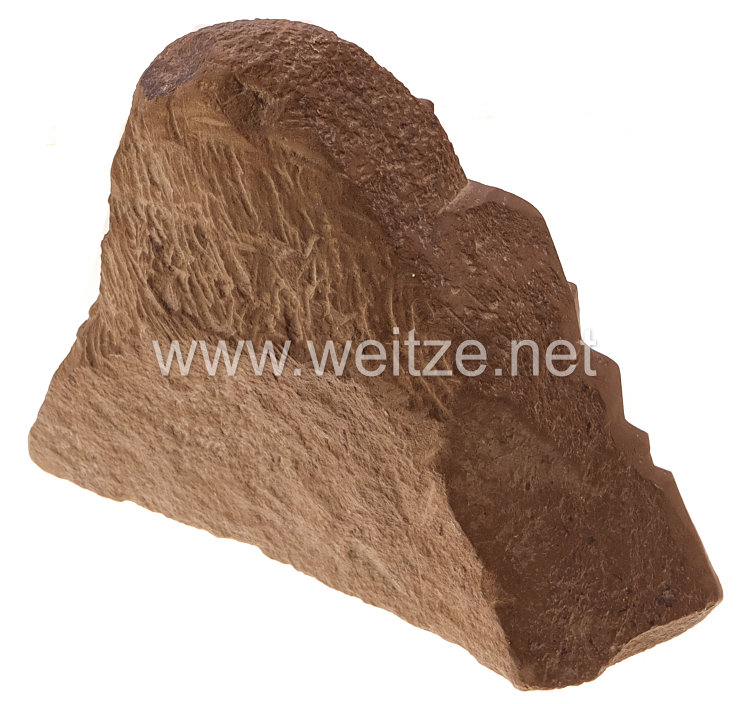
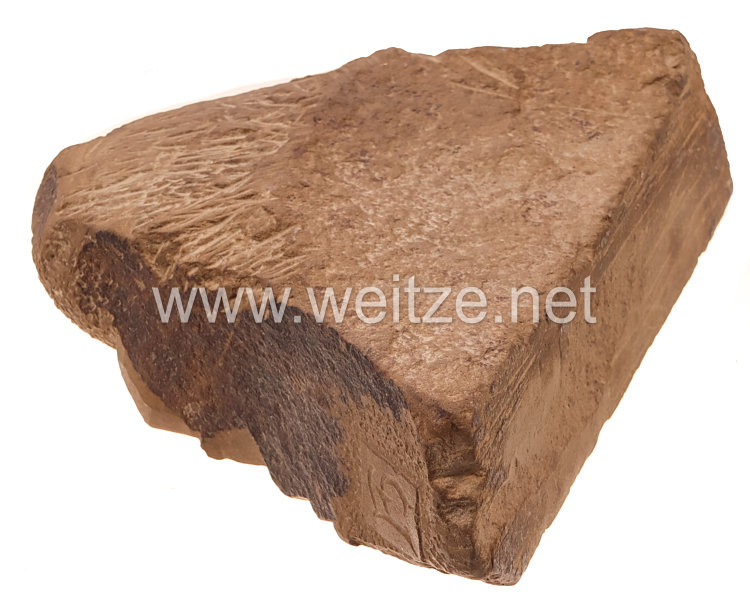
Likely from the period of the “Phoney War”. Approximately 13 cm high stone, front features the Iron Cross “1939”, below the inscription “Westfront”. Weight 1.3 kg. Condition 2.
444874
300,00

World War II Trench Art in the Style of World War I “Westfront 1939”

Trench Art from World War II: Western Front 1939

This stone artifact represents a fascinating connection between two world wars and documents the continuity of soldiers' craftsmanship under extreme wartime conditions. Standing approximately 13 centimeters tall and weighing 1.3 kilograms, this stone displays the Iron Cross with the year 1939 and the inscription “Westfront” (Western Front).

The creation of this object likely dates to the period of the so-called Phoney War or “Sitzkrieg” (Sitting War), which lasted from September 1939 to May 1940. After the German invasion of Poland on September 1, 1939, and the subsequent British and French declarations of war against the German Reich, a peculiar military stagnation prevailed on the Western Front. German troops were positioned along the Westwall (known as the Siegfried Line), while French and British forces remained behind the Maginot Line.

During these months of relative inactivity, when major combat operations were largely absent, soldiers found time for handicraft activities. The tradition of Trench Art, which flourished during World War I, continued into World War II, albeit to a lesser extent. Soldiers created commemorative items, utilitarian objects, and decorative pieces from available materials.

The Iron Cross as a motif had a long tradition in Prussian-German military history. Originally instituted in 1813 by King Friedrich Wilhelm III during the Wars of Liberation, it was reintroduced in 1939 by Adolf Hitler through a decree dated September 1 as a military decoration. The characteristic design featuring the swastika at its center and the year 1939 distinguished this version from its predecessors of 1813, 1870, and 1914.

The inscription “Westfront” holds particular historical significance. It refers to the psychological and strategic reality of German warfare in 1939/40. While the Polish campaign had already concluded, the actual confrontation with the Western powers still lay ahead. The designation “Westfront” deliberately evoked memories of World War I, when this term described the central importance of trench warfare in France and Belgium.

The use of stone as material is remarkable and distinguishes this object from more typical trench art made from metal, particularly shell casings, shrapnel fragments, or aircraft parts. Stone was a locally available material that could be worked with simple tools. Its processing required patience and manual skill, qualities that were abundantly available during the long waiting periods of the Phoney War.

The style described as “in the manner of World War I” indicates a conscious reference to the artistic traditions of the previous generation. Many officers and non-commissioned officers of the Wehrmacht had themselves served in World War I or were familiar with the narratives and artifacts from that period. This continuity manifested itself in the iconography and handicraft techniques of soldiers' art.

The historical classification of this object places it in a phase of the war characterized by expectation and uncertainty. German leadership was planning Fall Gelb (Case Yellow), the attack on France and the Benelux countries, which ultimately began on May 10, 1940. For ordinary soldiers, however, the winter of 1939/40 primarily meant waiting, fortification work, and routine duty.

Such trench art objects served multiple purposes: they were pastimes, artistic expression, comradeship gifts, and mementos. After the war's end, many of these items became historical testimonies documenting the lived reality of soldiers—beyond official war reports and propaganda materials.

The preservation of such objects holds scientific value as they provide insight into the material culture and everyday life of soldiers. They complement historical understanding through their authenticity and personal dimension, which official documents rarely convey.

r