Soviet Union Map Case

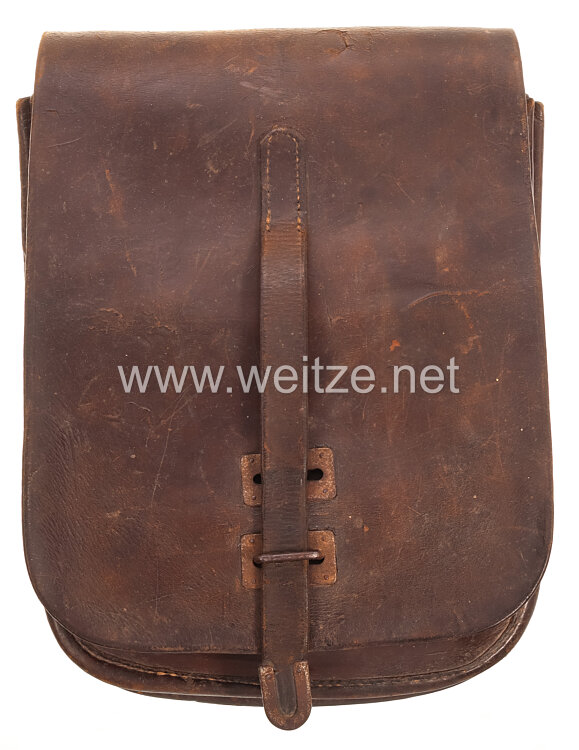
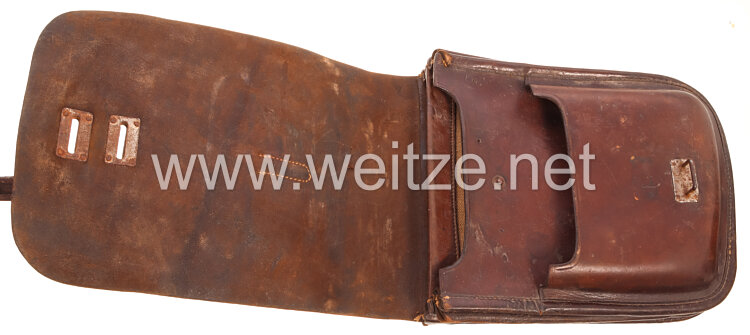
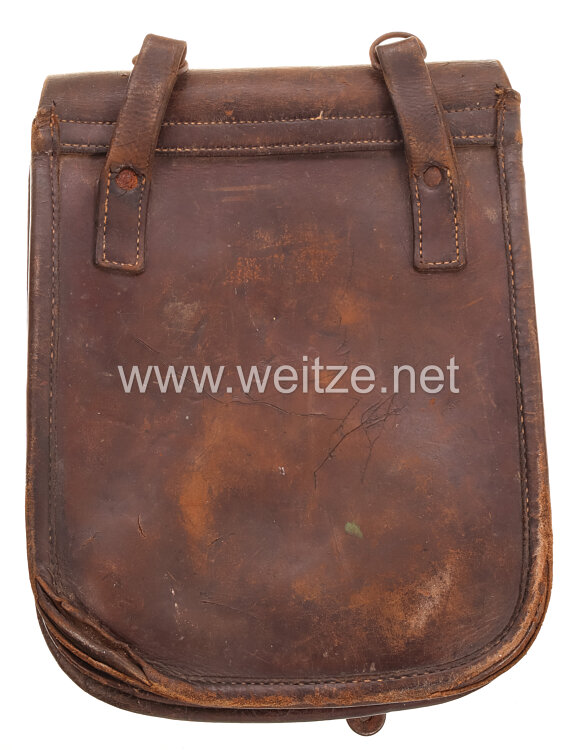
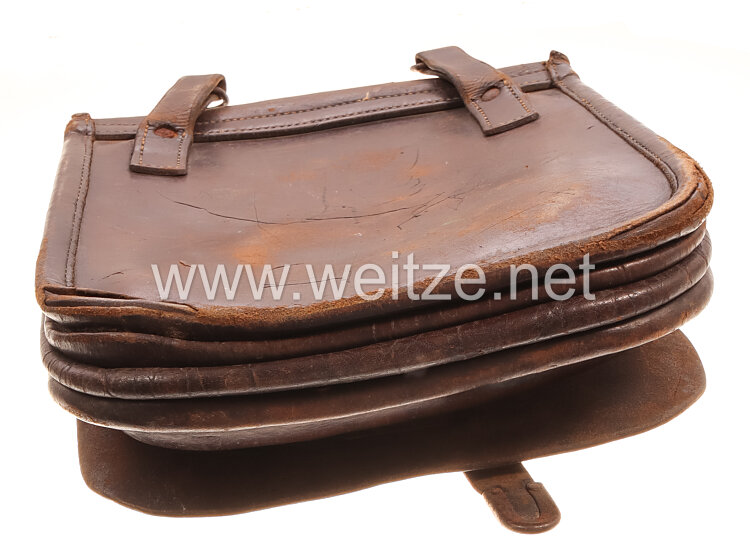
brown leather case, interior with 2 holes, condition 2.
446573
60,00

Soviet Union Map Case

The Soviet map case made of brown leather represents an important piece of equipment used by the Red Army and later Soviet armed forces throughout the 20th century. This functional piece of gear was an indispensable component of the personal equipment issued to officers and non-commissioned officers responsible for navigation and tactical planning.

The development of military map cases in the Soviet Union followed practical considerations and the specific requirements of modern warfare. Following the October Revolution of 1917 and during the Russian Civil War (1918-1922), the young Red Army began developing standardized equipment items. The map case became an essential element of officer equipment, as topographical knowledge and precise navigation were critically important in the vast territories of the Soviet Union.

The material and construction of Soviet map cases reflected available resources and industrial capabilities. Brown leather was the preferred material due to its durability, weather resistance, and relative ease of procurement. Typical construction included a rectangular pouch with a closure flap secured by straps, buttons, or buckles. The mentioned two holes in the interior most likely served to attach the case to a belt or shoulder strap, facilitating transport during military operations.

During World War II (1941-1945), which the Soviet Union termed the Great Patriotic War, map cases were essential for commanders at all levels. From the catastrophic initial months of the German invasion through the decisive battles at Moscow, Stalingrad, and Kursk, to the liberation of Eastern Europe and the capture of Berlin, Soviet officers carried their topographical maps in such cases. Maps were often at scales of 1:50,000 or 1:100,000 and depicted the complex topography of forests, marshes, rivers, and villages that characterized the Eastern European battlefield.

The standardization of equipment was a hallmark of Soviet military organization. The People's Commissariat for Defense and later the Ministry of Defense of the USSR issued detailed regulations concerning uniforms and equipment. These regulations, known as “GOST” (Gosudarstvennyj Standart - State Standard), established specifications for materials, dimensions, and manufacturing processes. Map cases were produced in state factories or by approved contractors according to these strict standards.

After World War II, the map case remained an important component of Soviet military equipment throughout the Cold War. Soviet forces were stationed throughout Eastern Europe, from the Baltic to the Black Sea, and Soviet advisors operated worldwide. The map case accompanied Soviet officers in Korea, Vietnam, Afghanistan, Africa, and the Middle East. Despite technological advances, the paper map with its associated leather case remained relevant until the collapse of the Soviet Union in 1991.

The quality and craftsmanship of Soviet military equipment varied depending on the period of manufacture and production facility. Wartime examples often showed simplified construction due to material shortages and the urgency of mass production. Post-war models typically featured more careful workmanship and better material quality. The condition rating of 2, as indicated for this specimen, suggests a well-preserved piece with only minimal signs of use.

Today, Soviet map cases are sought-after collectibles that offer insight into the military history of the 20th century. They represent an era when, despite the availability of radios and other technical aids, the fundamental skill of map navigation remained indispensable for military leaders. These cases are silent witnesses to countless military operations, tactical planning sessions, and strategic decisions that influenced the course of world history.

For collectors and historians, these artifacts provide tangible connections to the Soviet military experience. Each map case potentially served in training exercises across the vast Soviet territories, in peacetime maneuvers, or in actual combat operations. The brown leather, weathered by time and use, carries with it the legacy of an armed force that played a decisive role in defeating Nazi Germany and shaping the geopolitical landscape of the Cold War era.