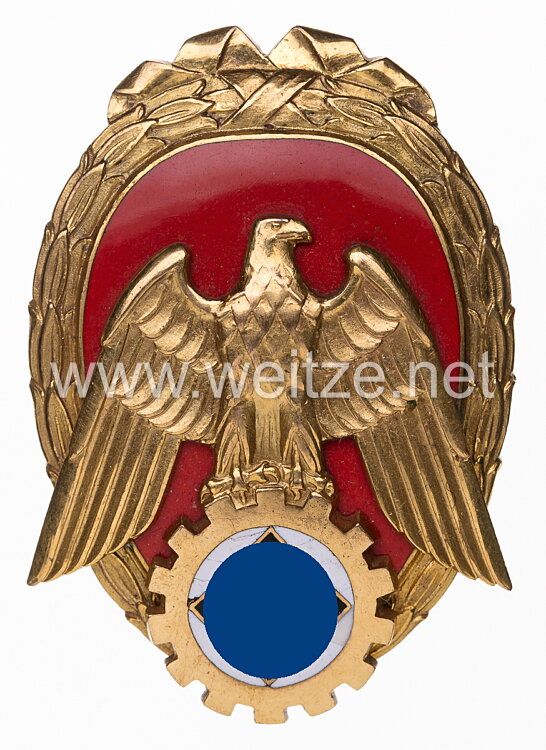
The Ehrenzeichen Pionier der Arbeit (Badge of Honor “Pioneer of Labor”) stands among the highest and rarest decorations of the Third Reich. Created in August 1940 by Adolf Hitler, this decoration was intended to recognize supreme work achievements that were critically significant to German industry and the war economy during World War II.
The award emerged from the Nazi regime's labor ideology under the Deutsche Arbeitsfront (German Labour Front, DAF), the state-controlled labor organization that replaced independent trade unions after 1933. Robert Ley, the leader of the German Labour Front, described the decoration as “the crowning of the achievement system, which should lead to the highest achievements in economic and social terms through the creation of role models in fair competition between enterprises. It is the highest award that can be achieved in this field in the National Socialist state.”
Designed by Professor Klein, the badge was first awarded on August 7, 1940 to Gustav Krupp von Bohlen und Halbach on the occasion of his 70th birthday. This inaugural presentation set the standard for an exceptionally exclusive honor. Between 1940 and 1944, only 19 awards were made, underscoring the extraordinary rarity of this recognition. The award was typically presented annually on May 1st, with occasional exceptions made for birthdays.
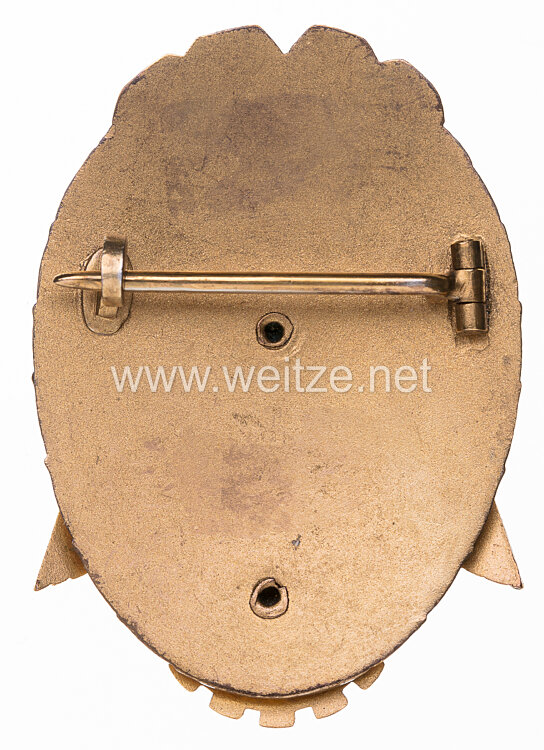
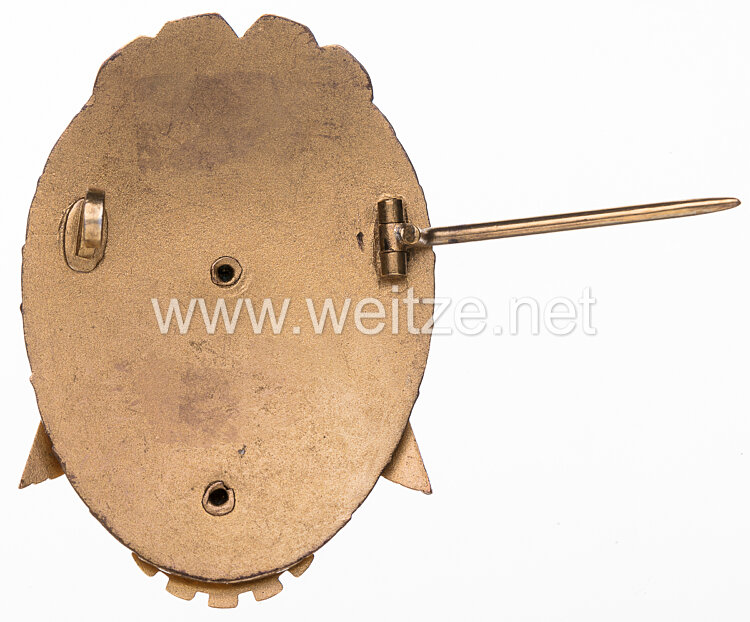
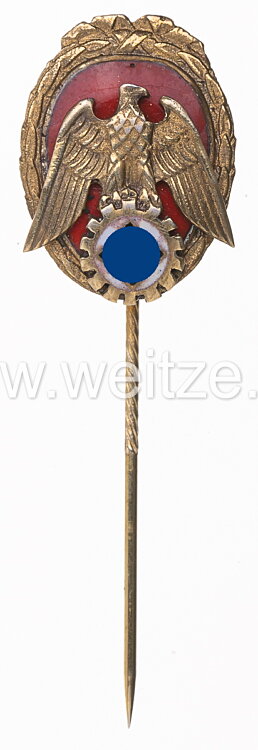
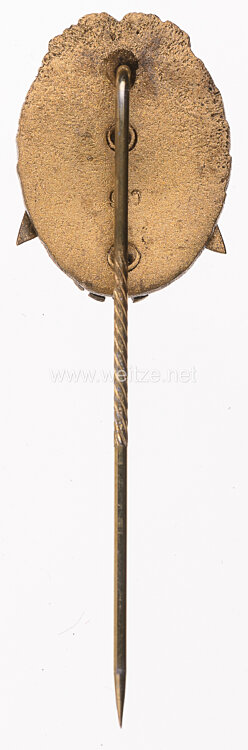
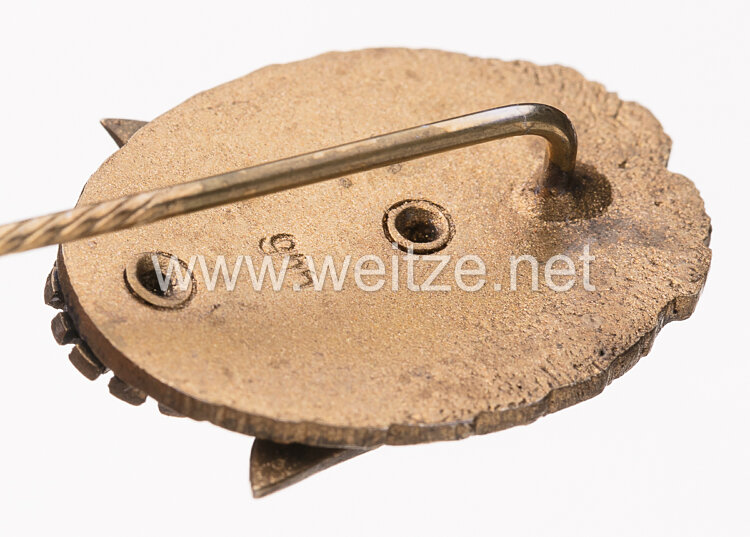
The design of the badge follows a distinctive form: a semi-oval laurel leaf wreath surrounds a red enameled void, overlaid by a German national eagle (Hoheitsadler) in German Labour Front style perched atop a cogwheel, which itself surrounds a white enameled field with a black enameled swastika. The badge was manufactured from bronze, gilded and enameled in red, black, and white. The eagle was doubly hollow-riveted. The full-size badge was worn on a horizontal pin, while a miniature version also existed. This miniature was made of silver with the hallmark “900” (indicating 90% silver purity), gilded with fine enamel work, and worn on a long pin. The badge was presented in a red case with red velvet inlay and white silk lining.
The roster of recipients reads like a who's who of German industry and economics during the war years. Among the honorees were the most significant industrialists and engineers of their time: Willy Messerschmitt, Robert Bosch, Ernst Heinkel, Ferdinand Porsche, and Claudius Dornier – all pioneers of German aviation and automotive industry who made critical contributions to German armaments production. High-ranking ministers including Wilhelm Ohnesorge, Julius Dorpmüller, and Walther Funk also received this distinction. Other recipients included Max Amann, Konrad Grebe, Hermann Röchling, Albert Vögler, Helmut Stein, Ernst Becker, John Schwarzer, Peter Küster, Eugen Wieczorek, and Albert Pietzsch. The final documented award was made on June 28, 1944 to Albert Pietzsch on his 70th birthday.
The decoration was awarded “in the name of the Führer” by Robert Ley at meetings of the Reichsarbeitskammer. Award recommendations were made by the Leader of the German Labour Front. The badge was worn on the left breast pocket below military decorations (if present), but above party badges.
Following the defeat of Nazi Germany in 1945, Nazi awards and decorations were discontinued. The public wear of all Nazi Party awards was banned in Germany after 1945, and display of the swastika was prohibited. The Ehrenzeichen Pionier der Arbeit remains today a rare historical artifact of Nazi labor policy and the wartime economy.