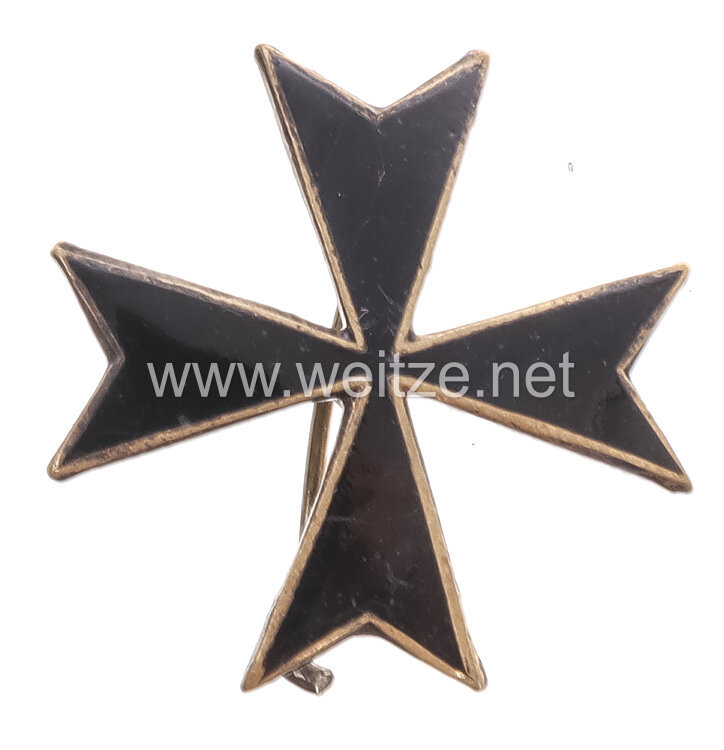
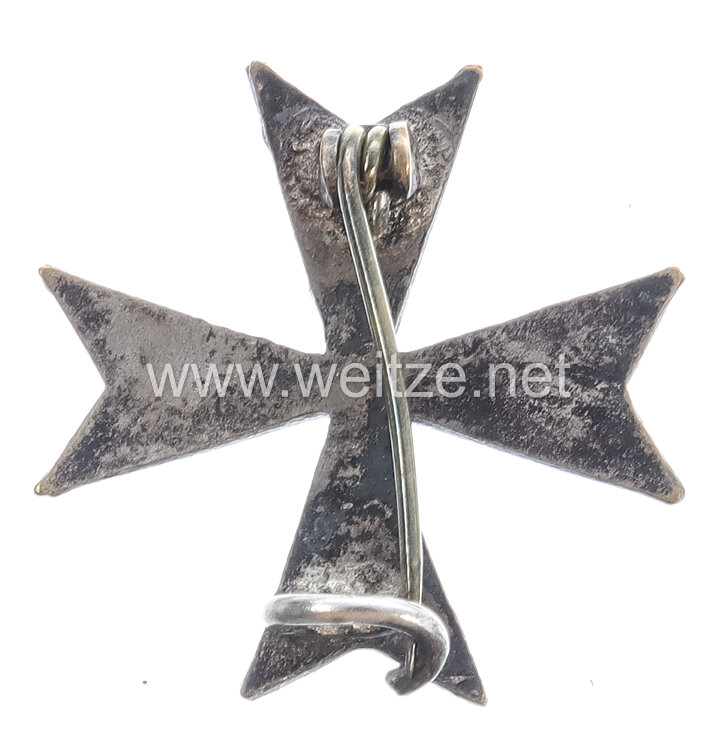
Freikorps Detachement von Randow Teutonic Cross 1st Class / Awaloff Cross 3rd Class

Miniature stickpin cross, 22 mm, silver-plated base metal with black enamel. Condition 2.
462973
150,00

Freikorps Detachement von Randow Teutonic Cross 1st Class / Awaloff Cross 3rd Class

The Freikorps Detachment von Randow Teutonic Cross 1st Class and Awaloff Cross 3rd Class represent significant decorations from the turbulent post-World War I period, when German Freikorps fought in the Baltic States.

After the end of World War I in November 1918, the German Empire collapsed, but a complex military and political situation emerged in the Baltic region. German Freikorps units remained active in the area, fighting against Bolshevik forces. The Detachment von Randow was one such unit, named after its commander, operating during the Baltic campaigns of 1919.

The Awaloff Cross was instituted by Prince Pavel Mikhailovich Awaloff-Bermondt (also known as Bermondt-Awaloff), a Russian officer who commanded an anti-Bolshevik army in the Baltic region in 1919. Awaloff, who united both German and Russian troops under his command, created this decoration to honor those who fought in his forces against the Bolsheviks. The award existed in several classes and was awarded to both German Freikorps fighters and Russian émigrés.

The Teutonic Cross (Deutschritterkreuz) directly references the historical Teutonic Order, whose knights had fought in the Baltic region during the Middle Ages. This symbolic connection was intended to emphasize the continuity of German engagement in the region and provide the fighters with historical legitimation. The cross was awarded in various classes, with the 1st Class being among the higher decorations.

The described miniature with a 22mm diameter is a reduced version of the orders, manufactured for wearing as a pin cross on uniforms or civilian attire. Such miniatures were common, as they could be worn during off-duty hours or at social occasions. The execution in silver-plated base metal with black enameling corresponds to the typical manufacturing method of Freikorps decorations of this period, which were often produced under simple conditions.

The fighting in the Baltic region in 1919 was characterized by particular complexity. German Freikorps, Latvian nationalists, Estonian troops, Russian White Guards, and Bolshevik units fought in changing coalitions. The Reichswehr and the German government had an ambivalent stance toward these activities: on one hand, they were obligated to demobilize under the Treaty of Versailles, while on the other hand, they saw the Freikorps as a bulwark against Bolshevism.

Prince Awaloff attempted in autumn 1919 to conquer Latvia with his West Russian Volunteer Army, which led to conflicts with Latvian national forces and the Allies. In November 1919, his troops were pushed back, and by December 1919, the German Freikorps had to evacuate the Baltic region definitively.

The decorations instituted by Freikorps leaders and allied Russian commanders, such as the Awaloff Cross and the Teutonic Cross, were never officially recognized by the Weimar Republic. They remained private institutions without state legitimation. Nevertheless, they were worn with pride by their recipients and symbolized their participation in the Baltic campaigns.

For collectors and historians, these decorations are today important testimonies of a forgotten episode of German post-war history. They document the activities of the Freikorps, which were later partly integrated into the Reichswehr or played a role in the political development of the Weimar Republic. The condition grade 2 indicates a well-preserved piece with largely intact enameling, which is remarkable for these nearly 105-year-old objects.

The historical significance of these decorations lies not only in their military-historical dimension but also in their role as symbols of the upheavals of the post-war period, the fight against Bolshevism, and the complex national conflicts in the Baltic region that led to the emergence of the modern Baltic states.