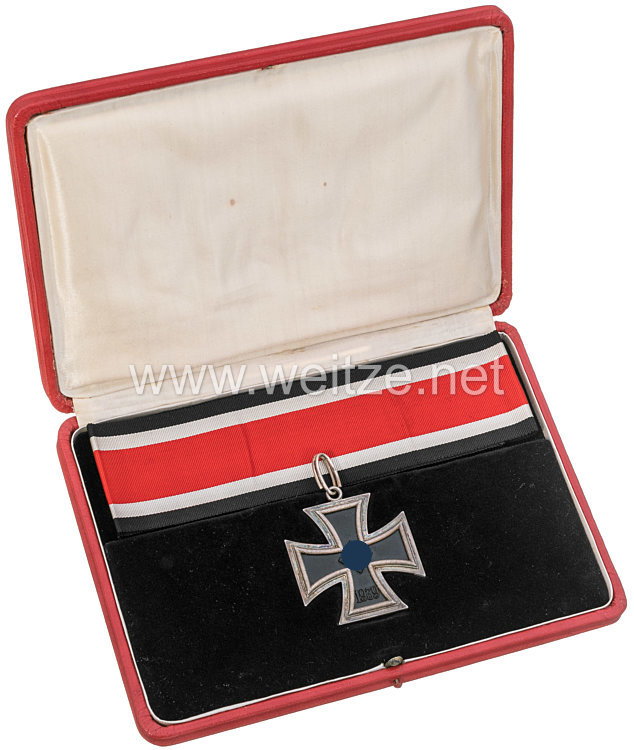
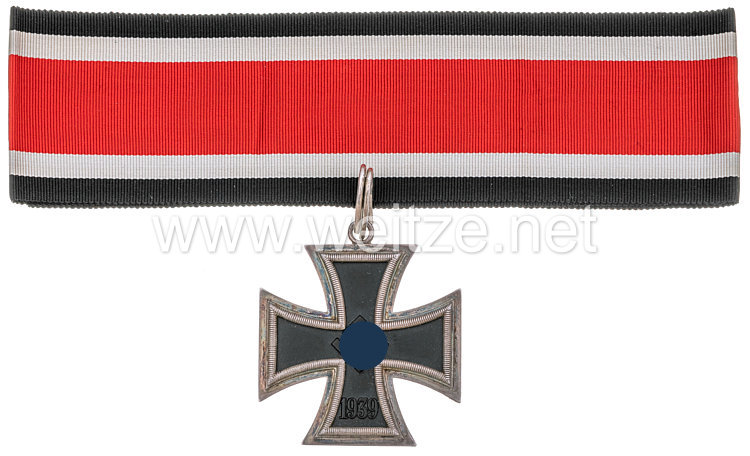
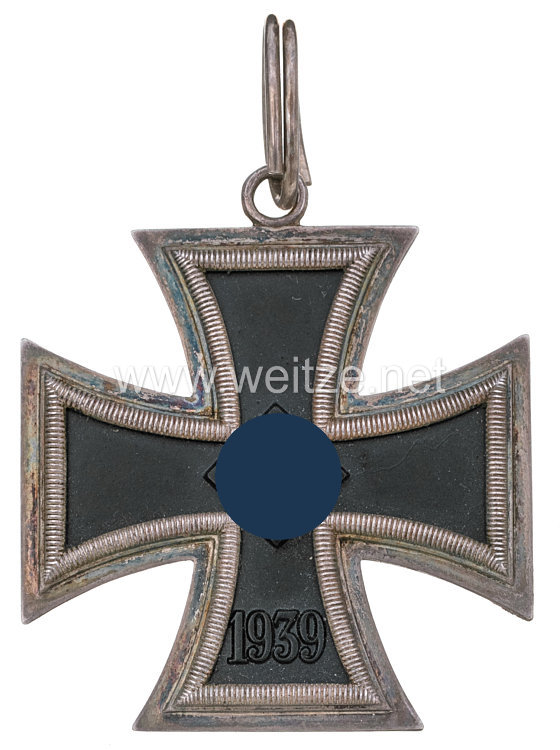
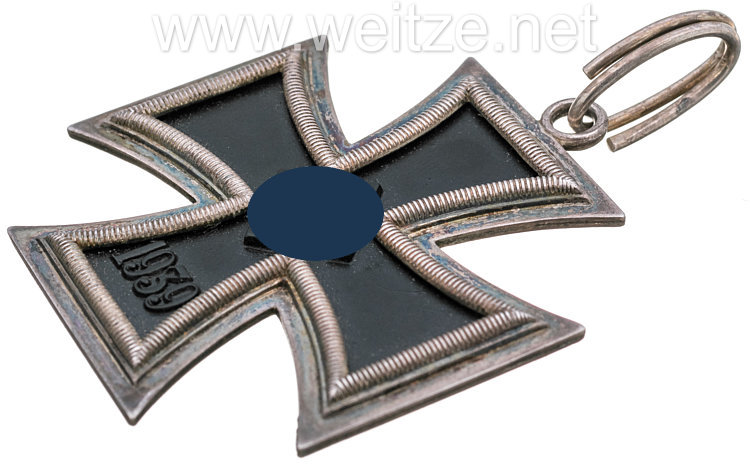
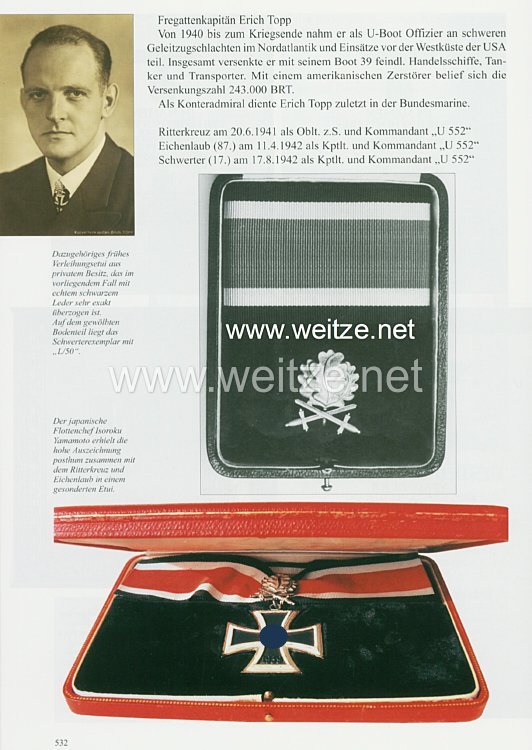
Ritterkreuz des Eisernen Kreuz 1939 im großen roten Präsentationsetui
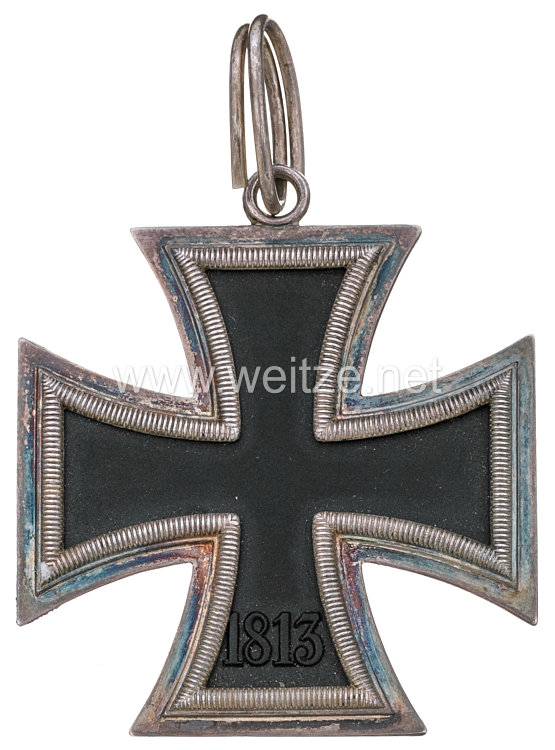
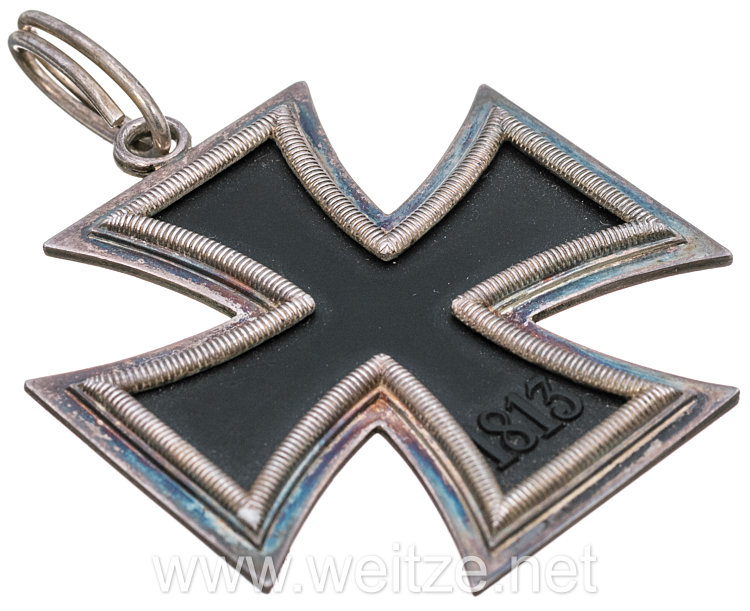
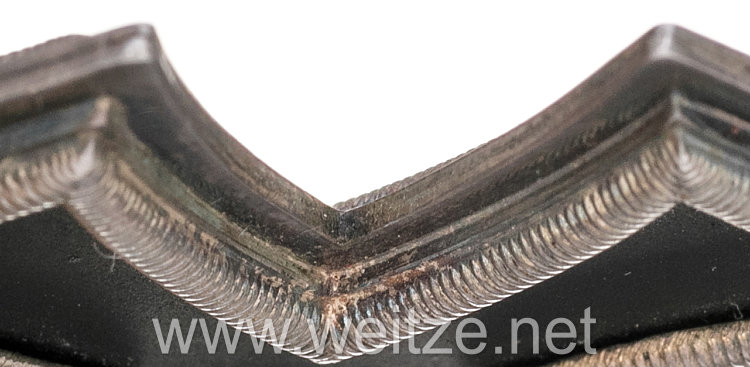
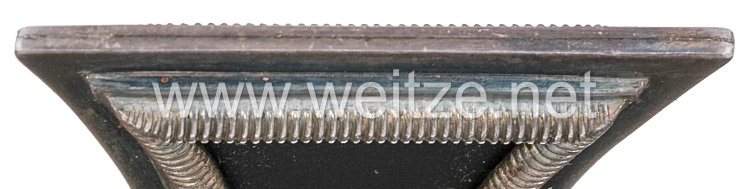
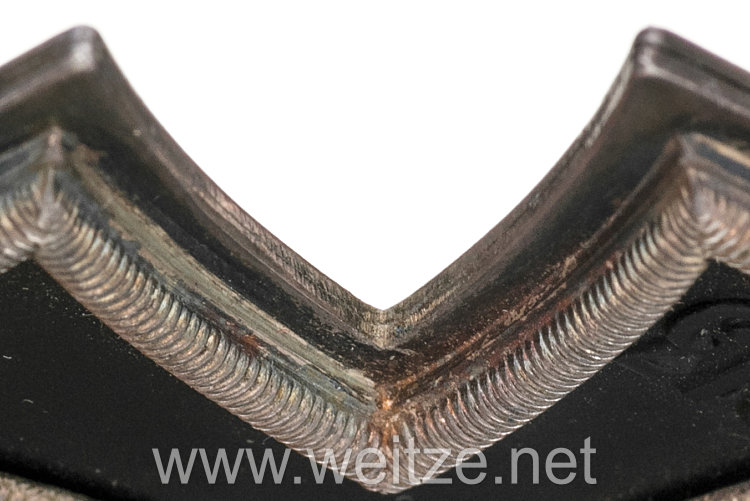
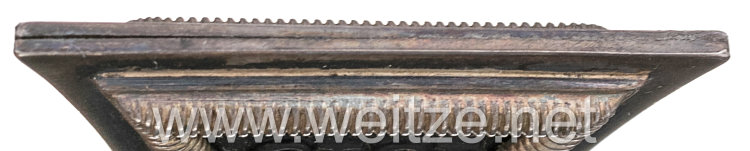
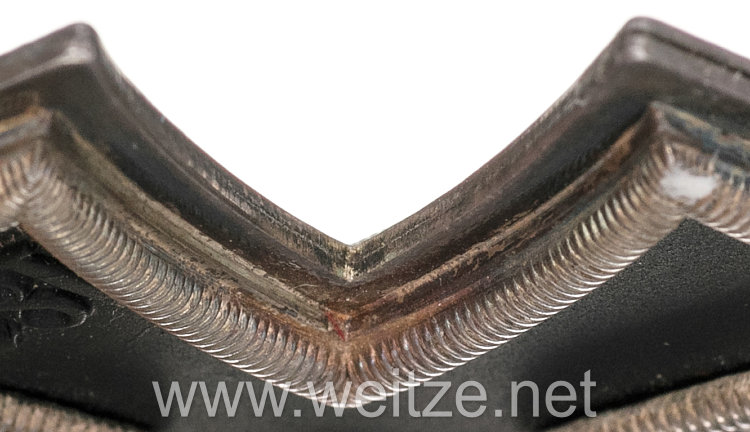
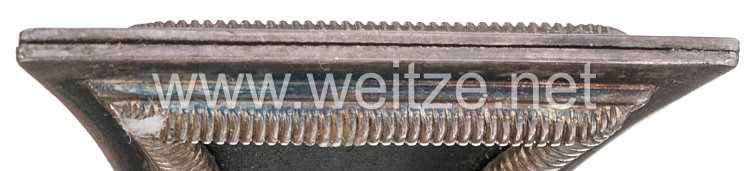
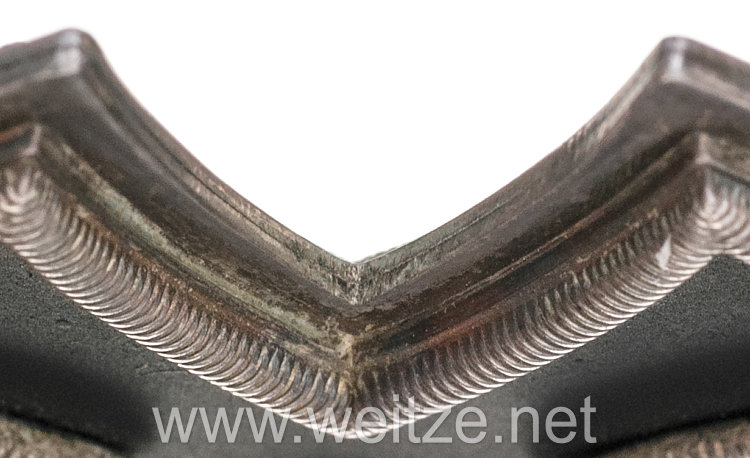
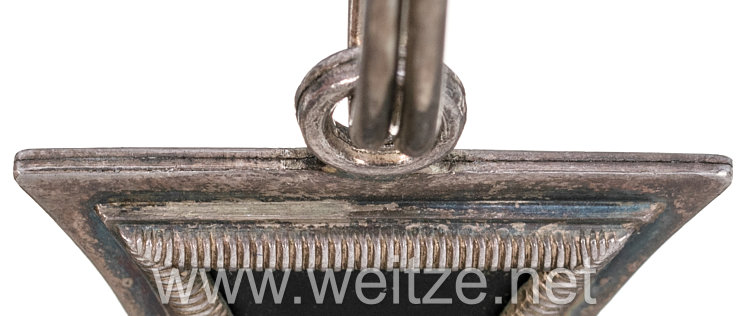
Es handelt sich bei dem Ritterkreuz um die besondere Fertigung der Fa. C. F. Zimmermann Pforzheim. Die Fertigung war identisch mit den Ritterkreuzen der Fa. Godet & Co, Berlin. Der Unterschied ist lediglich die schwarze Lackierung des Eisenkerns. Während die "Godet Stücke" eine matte raue Lackierung haben, war die Lackierung der "Zimmermann Stücke" matt glänzend. Magnetischer Kern mit Silberzarge. Das Kreuz ist unmarkiert. Der Bandring aus Silber, in der besonderen ovalen Ausführung für die Fertigung der Fa. Zimmermann. Komplett am langen Halsbandabschnitt. Ungetragen, mit sehr schöner Patina, Zustand 2+.
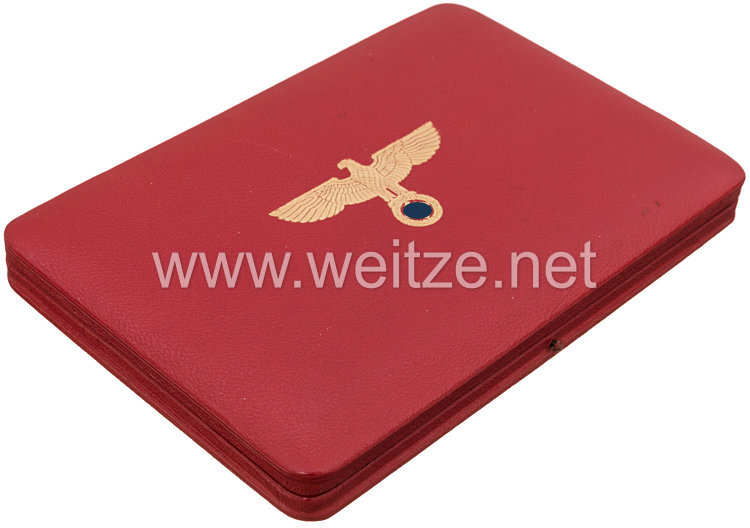
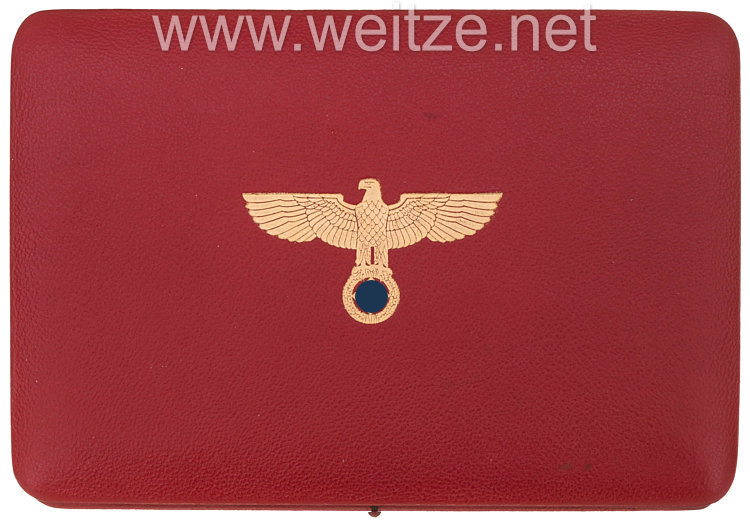
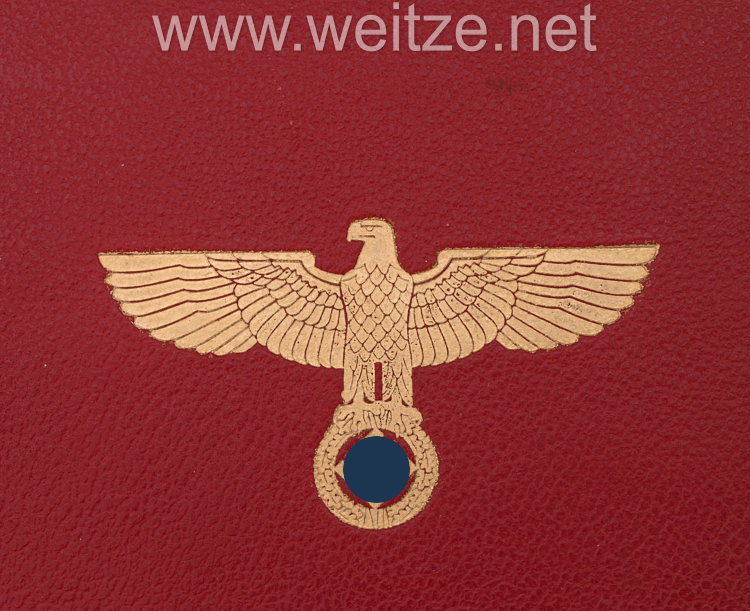
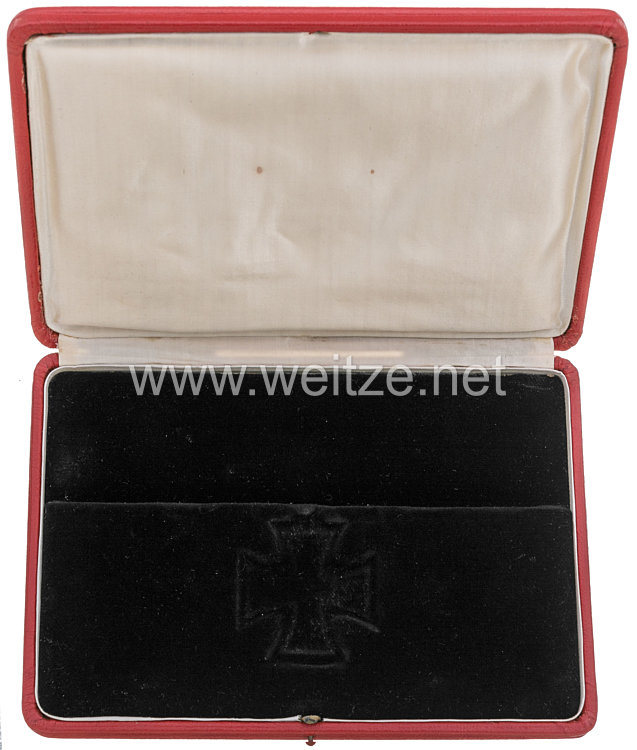
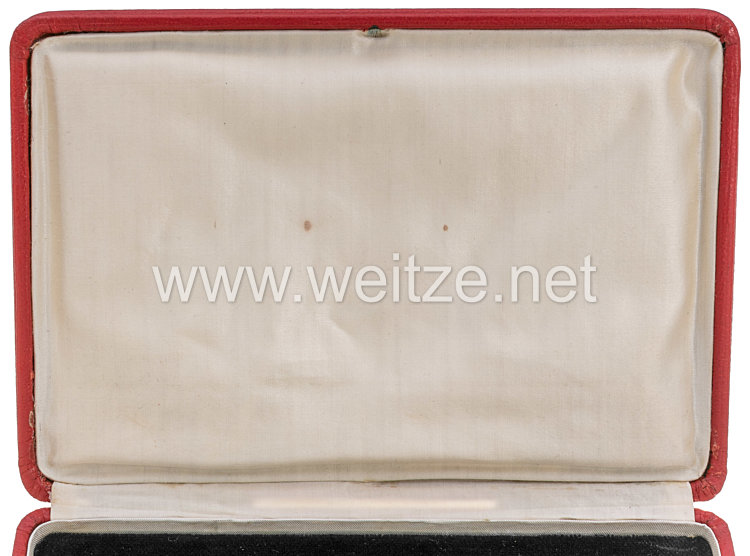
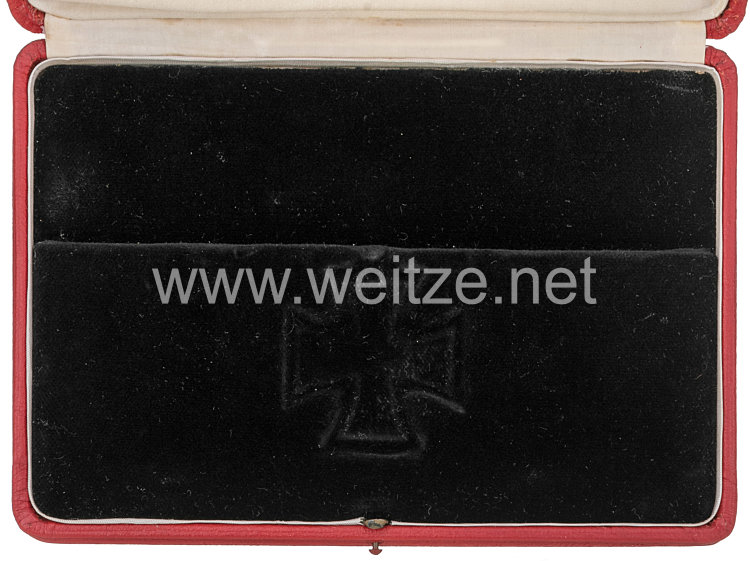
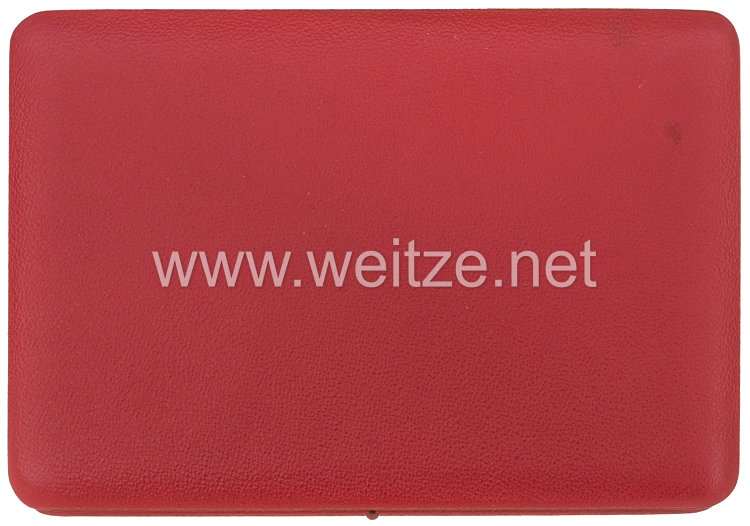
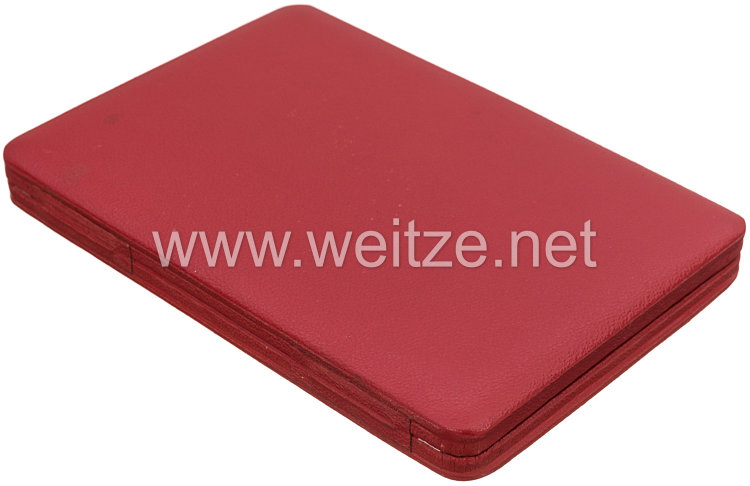
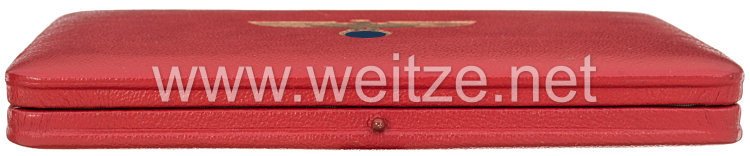
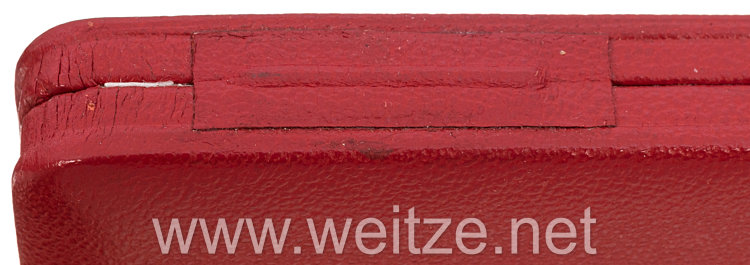
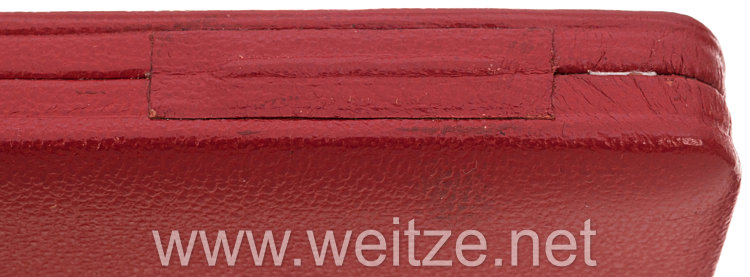
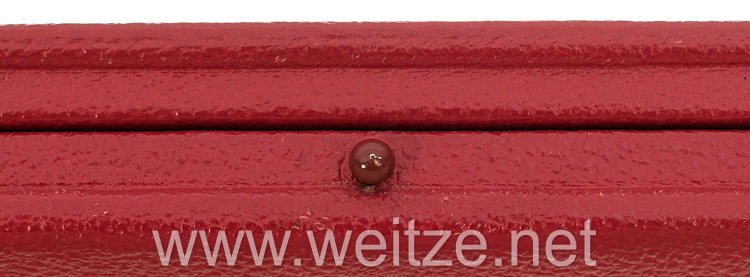
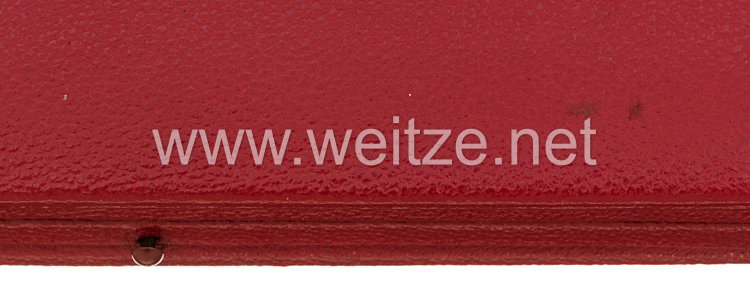
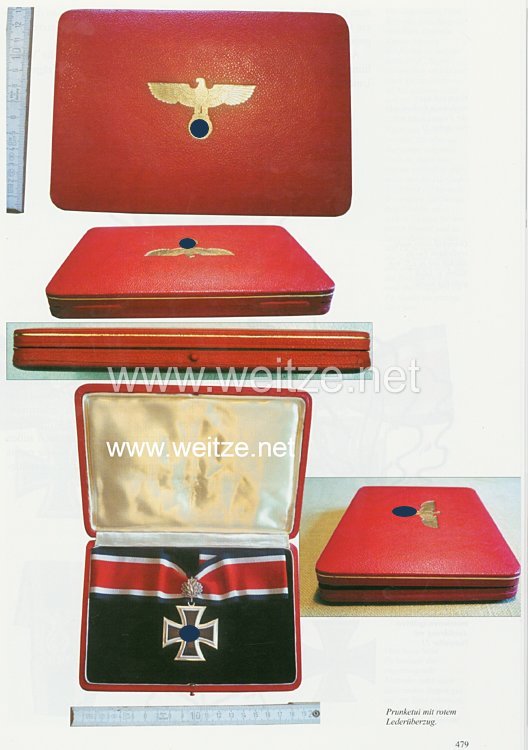
Dazu das große rote Verleihungsetui für ausländische Generale. Das Etui mit rotem Leder bezogen in der gleichen Farbe wie die Ritterkreuzmappen. Auf dem Deckel der in Gold geprägte Hoheitsadler, identisch zu dem Adler auf dem Verleihungsetui zum Großkreuz des Eisernen Kreuzes. Der umlaufende Rand geprägt mit einem Vorsprung auf dem Deckel und der Unterseite, vergleichbar mit den frühen Verleihungsetui für das Eichenlaub mit Schwertern. Vorn der Druckknopf in "Pilzform" rot lackiert, hinten 2 Scharniere mit roter Lederabdeckung, alle Teile magnetisch. Innen schwarzes Samtbett mit der Aussparung für das Ritterkreuz, sowie oben eine Aussparung für das Band zum Ritterkreuz. Der Deckel mit weißem Seidenfutter. Maße des Etuis 19,5 x 13,5 cm, Höhe 20 mm.
Ungetragen, in hervorragendem Zustand.
Es handelt sich bei dem Stück um eine der seltensten und gesuchtesten Varianten des Ritterkreuzes. Die Ritterkreuze in dieser Ausführung mit diesem Etui wurden nur an besonders ausgewählte ausländische Generale vergeben. Im Fachbuch von Harald Geißler ""Das Eiserne Kreuz von seinem Ursprung bis zur Gegenwart" werden auf Seite 479 und 532 vergleichbare Stücke abgebildet.
Dazu das große rote Verleihungsetui für ausländische Generale. Das Etui mit rotem Leder bezogen in der gleichen Farbe wie die Ritterkreuzmappen. Auf dem Deckel der in Gold geprägte Hoheitsadler, identisch zu dem Adler auf dem Verleihungsetui zum Großkreuz des Eisernen Kreuzes. Der umlaufende Rand geprägt mit einem Vorsprung auf dem Deckel und der Unterseite, vergleichbar mit den frühen Verleihungsetui für das Eichenlaub mit Schwertern. Vorn der Druckknopf in "Pilzform" rot lackiert, hinten 2 Scharniere mit roter Lederabdeckung, alle Teile magnetisch. Innen schwarzes Samtbett mit der Aussparung für das Ritterkreuz, sowie oben eine Aussparung für das Band zum Ritterkreuz. Der Deckel mit weißem Seidenfutter. Maße des Etuis 19,5 x 13,5 cm, Höhe 20 mm.
Ungetragen, in hervorragendem Zustand.
Es handelt sich bei dem Stück um eine der seltensten und gesuchtesten Varianten des Ritterkreuzes. Die Ritterkreuze in dieser Ausführung mit diesem Etui wurden nur an besonders ausgewählte ausländische Generale vergeben. Im Fachbuch von Harald Geißler ""Das Eiserne Kreuz von seinem Ursprung bis zur Gegenwart" werden auf Seite 479 und 532 vergleichbare Stücke abgebildet.