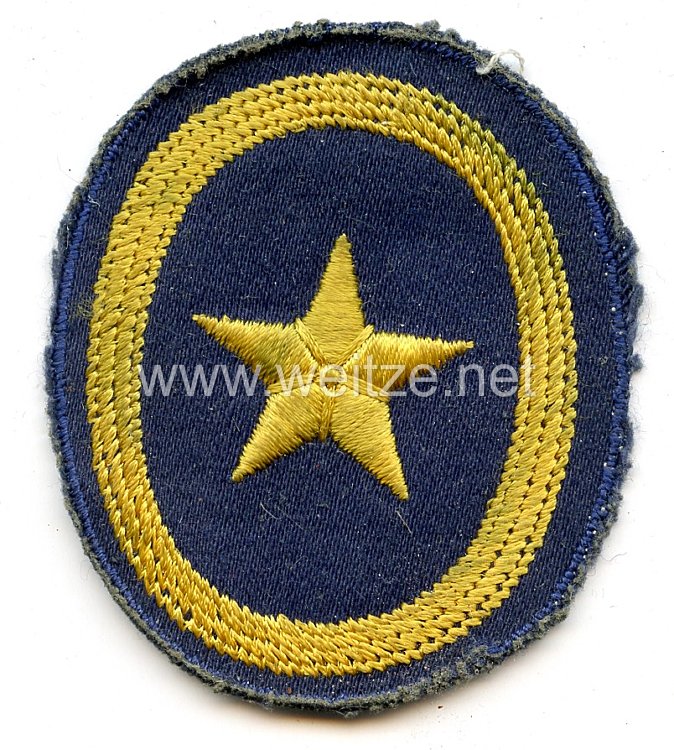
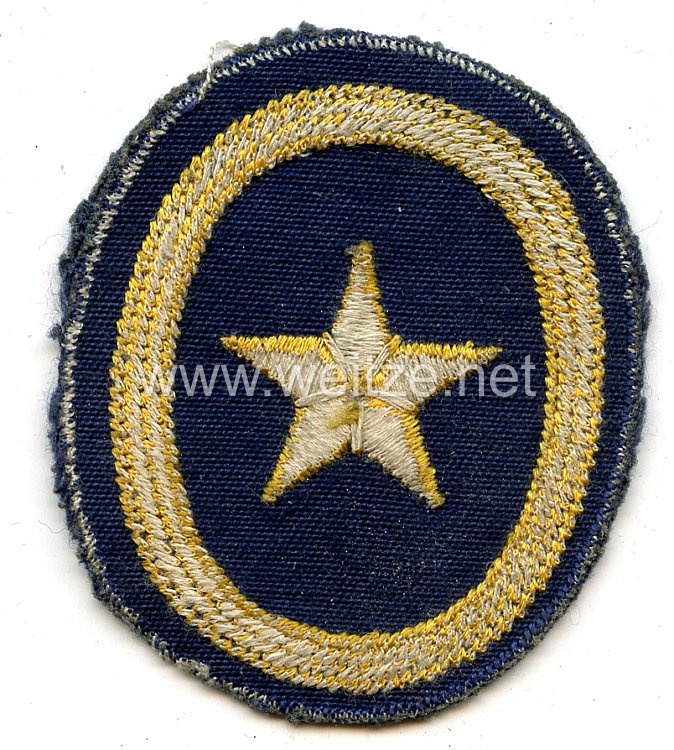
Kriegsmarine Sleeve Insignia Cadets Seaman Career Track

machine embroidered on thin fabric, condition 2.
443272
50,00

Kriegsmarine Sleeve Insignia Cadets Seaman Career Track

The Kriegsmarine sleeve badge for cadets of the seamanship career path represents a significant example of rank insignia and career identification markings of the German Navy during World War II. These badges served to identify officer candidates in their specific training career and were an integral part of the complex uniform system of the German Navy between 1935 and 1945.

The Kriegsmarine, officially established on June 1, 1935, developed a comprehensive system of rank insignia and career identification markings that drew upon both traditional German naval traditions and the specific needs of a modern naval force. Cadets represented the lowest level of officer training and were divided into various career paths, with the seamanship career path representing the classic training for naval officers.

This badge is machine-embroidered on thin fabric, which was typical for the mass production of uniform components during the war years. In contrast to hand-embroidered variants, often used for higher ranks or parade uniforms, the machine production demonstrates the practical orientation of these badges for daily service use.

The officer training in the Kriegsmarine was strictly structured and typically began with several months of basic training. Cadets of the seamanship career path underwent comprehensive nautical and military training on training ships and at naval academies. The Naval Academy Mürwik in Flensburg-Mürwik was the central training facility for naval officers and played a crucial role in officer education.

The sleeve badge was worn at specific positions on the service uniform according to the uniform regulations of the Kriegsmarine. The identification of the career path was of particular importance, as it indicated not only the training status but also the future deployment of the wearer. Besides the seamanship career path, there were other specialized career paths such as engineering, weapons, medical, and administrative careers, each with their own specific badges.

The seamanship career path was considered the most prestigious and traditional officer training in the Navy. Graduates of this career path were intended for navigation, ship command, and tactical deployment of warships. The training included theoretical studies in navigation, seamanship, tactics, and weapons technology, as well as practical experience at sea.

During the course of the war, the Kriegsmarine expanded considerably, leading to an increased need for officer recruits. This is reflected in the production of uniform components, with machine-manufactured badges gaining increasing importance. The quality and execution of such badges varied depending on the time of manufacture and the producing company, with various suppliers working for the Kriegsmarine.

After May 8, 1945, and Germany's capitulation, the Kriegsmarine was dissolved. Its uniforms and badges became historical artifacts that today represent important testimonies for military historical research and collections. The study of such objects provides insights into the organizational structure, hierarchy, and daily life of German naval warfare during World War II.

For collectors and historians, such sleeve badges are of interest because they document the material culture and organizational details of the Kriegsmarine. The condition of such textile militaria is of particular importance, as fabric badges are susceptible to wear, moth damage, and other signs of aging.

The production and distribution of these badges followed established military procurement procedures, with contracts awarded to specialized textile manufacturers. The standardization of designs ensured uniformity across the entire naval service, though variations in quality and materials became more common as the war progressed and resources became scarcer.