Wehrmacht Heer (WH) Officer's Saber by F. W. Höller, Solingen

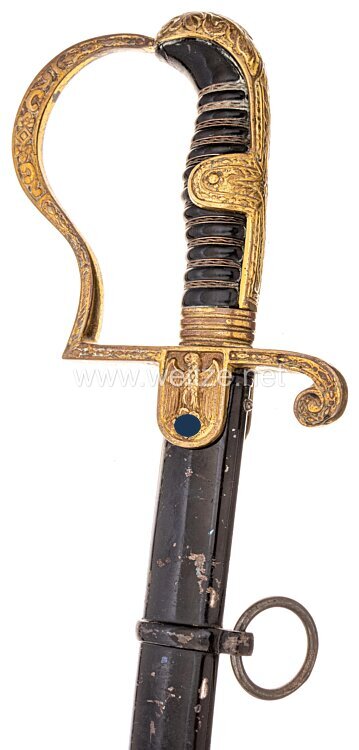
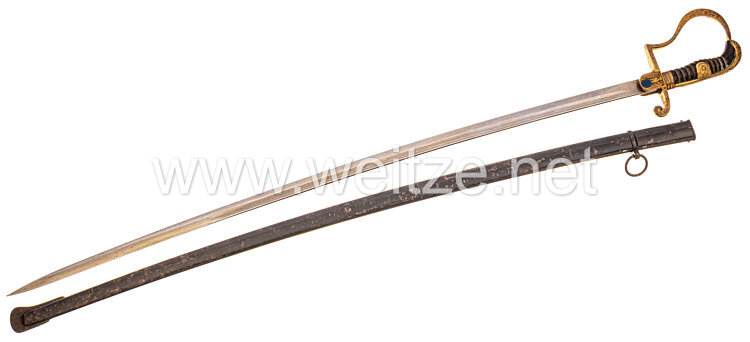
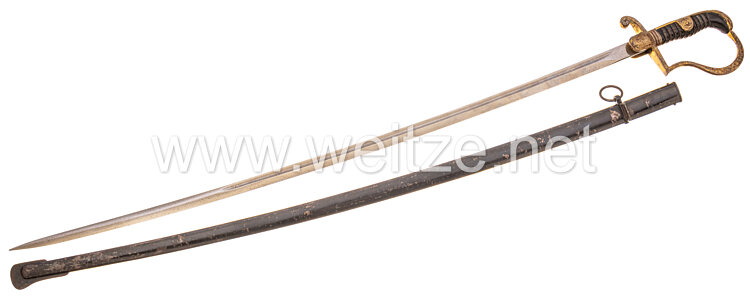
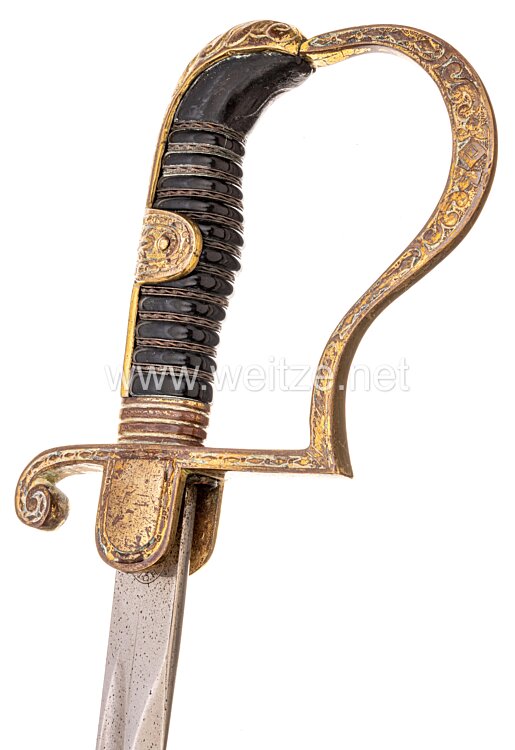
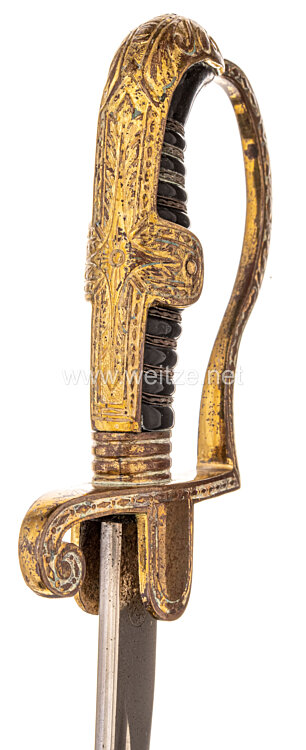
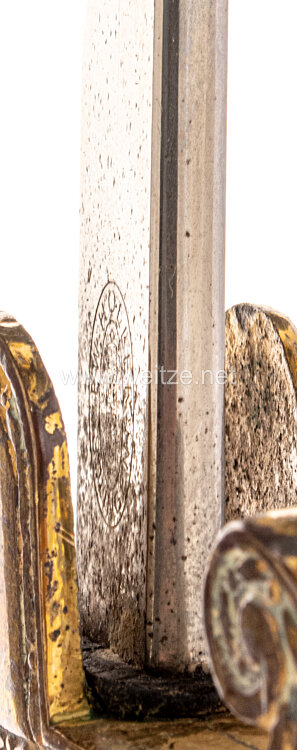
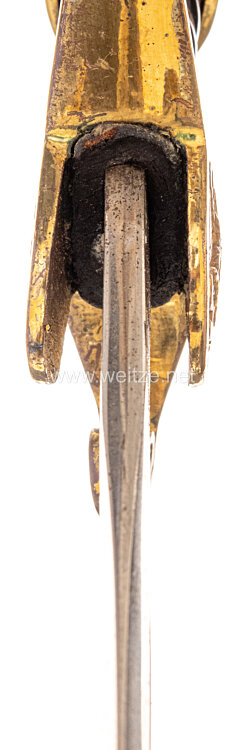
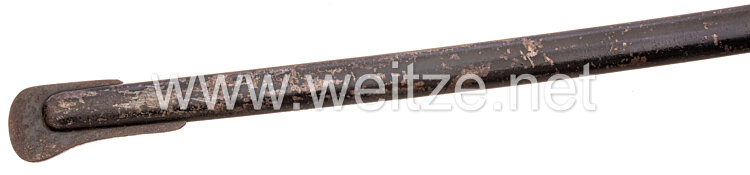
Gold-plated brass hilt, black grip with intact wire wrapping, national eagle with drooping wings on the guard strap, nickel-plated blade, maker “F.W. Höller Solingen”, black lacquered scabbard with approximately 80% of original lacquer. Worn. Condition 2
461571
800,00

Wehrmacht Heer (WH) Officer's Saber by F. W. Höller, Solingen

The Wehrmacht Heer officer's saber represents a significant artifact of military tradition and uniformity within the German armed forces between 1935 and 1945. As part of the official equipment of Army officers, this saber embodied both functional and ceremonial aspects of Third Reich military culture.

With the reintroduction of universal conscription on March 16, 1935, and the associated buildup of the Wehrmacht, regulations for uniforms and equipment were newly established. The Heeresdienstvorschrift (Army Service Regulation) specified exact requirements for officer sabers, which in their basic form drew upon Prussian-German military traditions of the 19th century. The saber was part of the dress uniform and was worn at ceremonial occasions, parades, and official functions.

The example described here was manufactured by the renowned maker F. W. Höller of Solingen. The city of Solingen had established itself as the center of German blade manufacturing since the Middle Ages and housed numerous traditional manufactories in the 20th century. Companies such as Höller, as well as Eickhorn, WKC, and other Solingen firms received contracts to produce officer sabers for the Wehrmacht. These manufacturers were required to maintain strict quality standards and produce their items according to military specifications.

The gilt brass hilt followed the typical design characteristics of the period. The distinctive eagle with drooping wings on the crossguard was the official symbol of the Wehrmacht and distinguished these sabers from earlier imperial models as well as from weapons of other Wehrmacht branches. The black grip with wire wrapping served not only aesthetic purposes but also ensured a secure hold. The nickel-plated blades were machine-ground and polished, with the manufacturer's signature prominently displayed.

The black lacquered steel scabbard was a practical element that protected the blade from weather and corrosion. Unlike earlier saber models with polished metal scabbards, the lacquered surface offered better protection and was easier to maintain. The scabbard featured suspension rings that allowed attachment to the belt or sword knot.

Wehrmacht officer sabers were manufactured in various versions, depending on the rank and branch of the bearer. While the basic form remained the same for all Army officers, there were differences for generals, who sometimes wore more elaborately decorated sabers with gilded fittings. The present example corresponds to the standard type for officers from lieutenant to colonel.

The manufacture of such sabers required considerable craftsmanship. Although industrial production was already advanced, many steps were still performed by hand. Blades were forged from high-quality steel, hardened, and ground. Hilts were cast, chased, and gilded or nickel-plated. Assembly and finishing were carried out by experienced craftsmen.

After 1945, these sabers completely lost their military function. Many were taken by Allied troops as souvenirs, others were destroyed or privately kept. Today they are sought-after collectibles for militaria collectors and historical museums. The condition of a saber, particularly the preservation of gilding, wire wrapping, and scabbard lacquer, significantly determines its historical and collector value.

It is important to emphasize that such objects should today be regarded exclusively as historical documents. They document military traditions, craftsmanship, and material culture of a specific epoch in German history. Their preservation and scholarly documentation serves to understand this period and its military structures.

The preserved condition with approximately 80% of the original lacquer on the scabbard, intact wire wrapping, and signed blade makes this example an authentic witness to Solingen weapons production during the Wehrmacht era. Such sabers enable historians and museums to study and preserve the material culture of the German military in the 20th century.

r