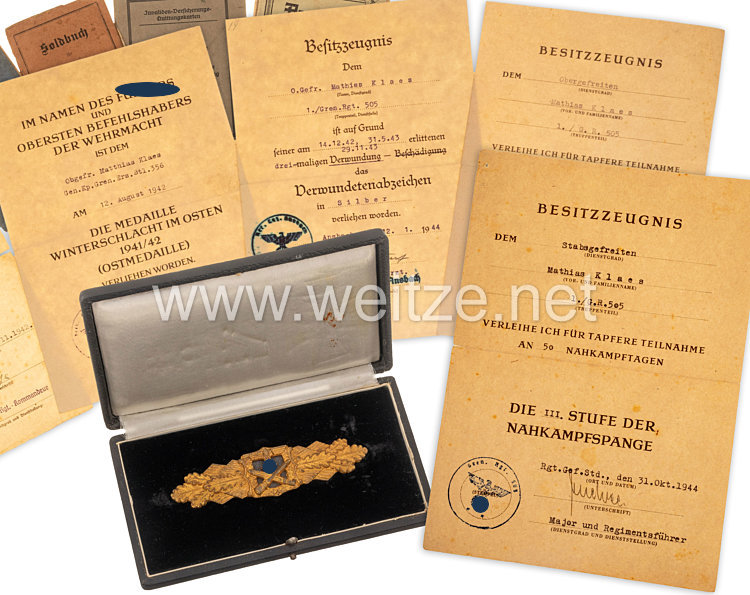
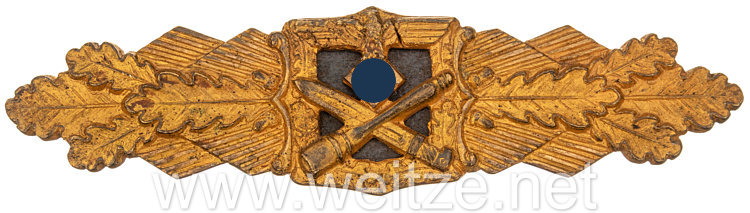
Nahkampfspange in Gold : Nachlass aus dem Besitz von Stabsgefreiten Mathias Klaes, 1./Grenadier-Regiment Nr. 505
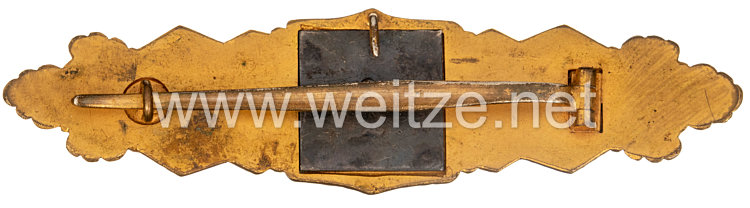
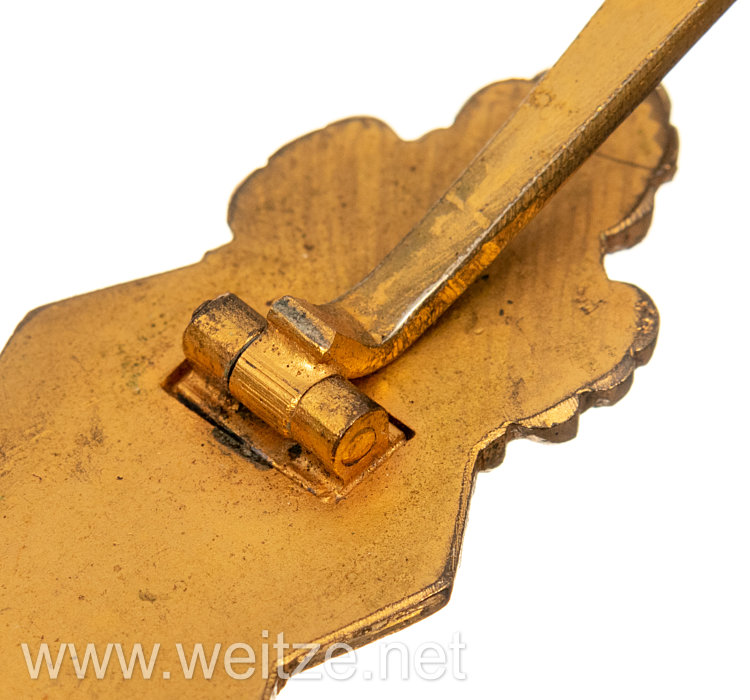
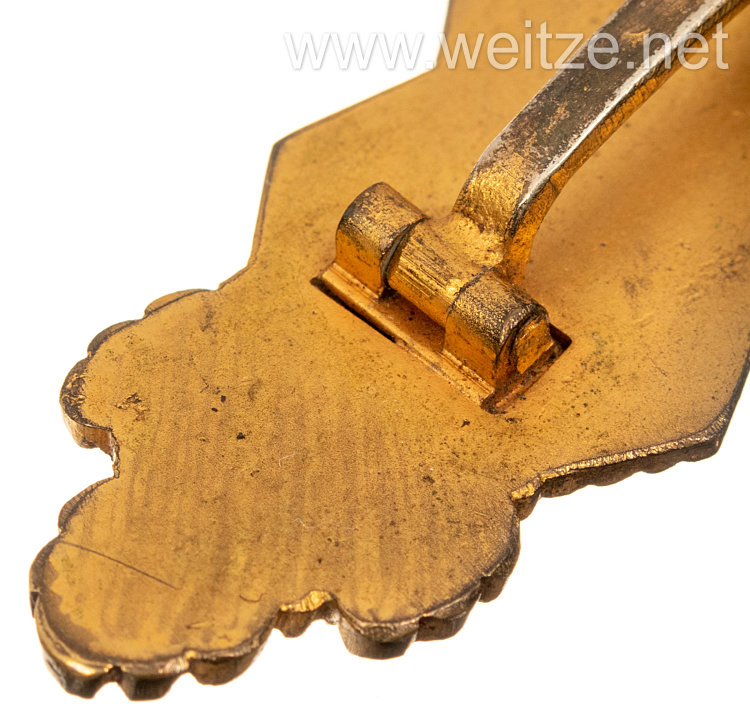
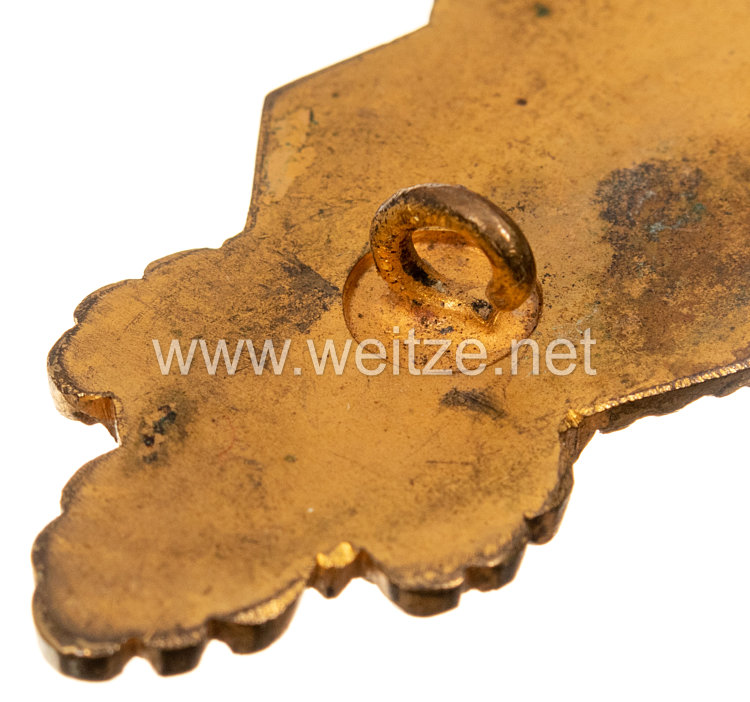
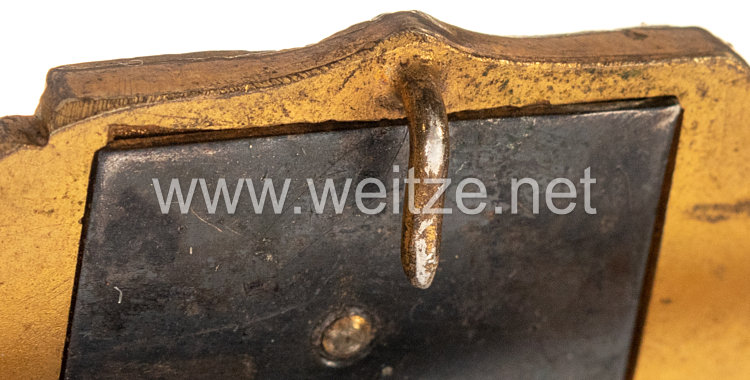
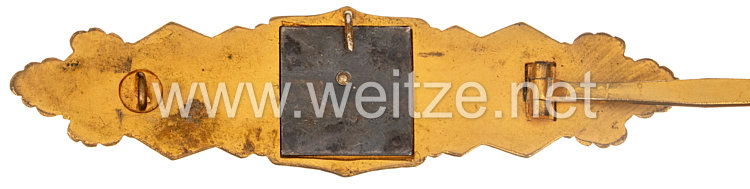
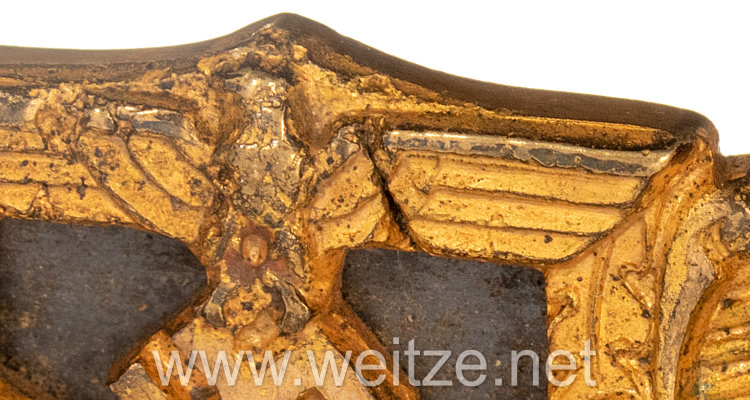
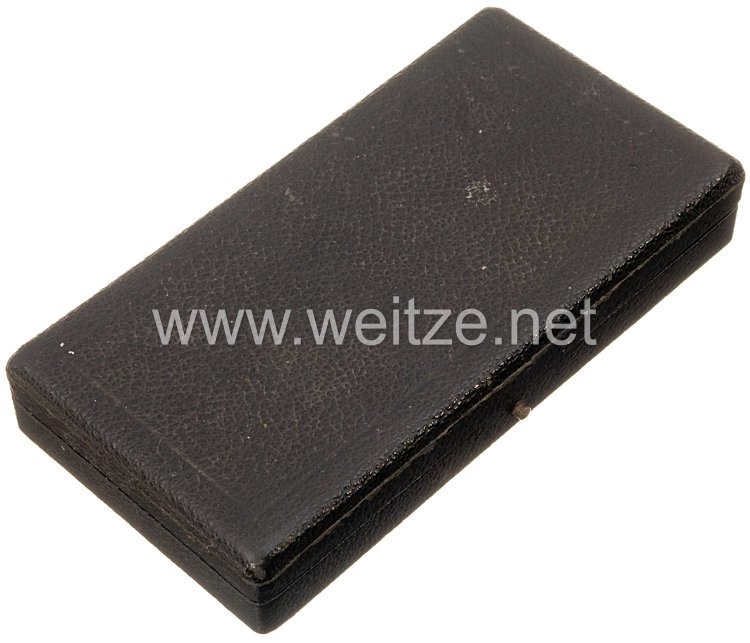
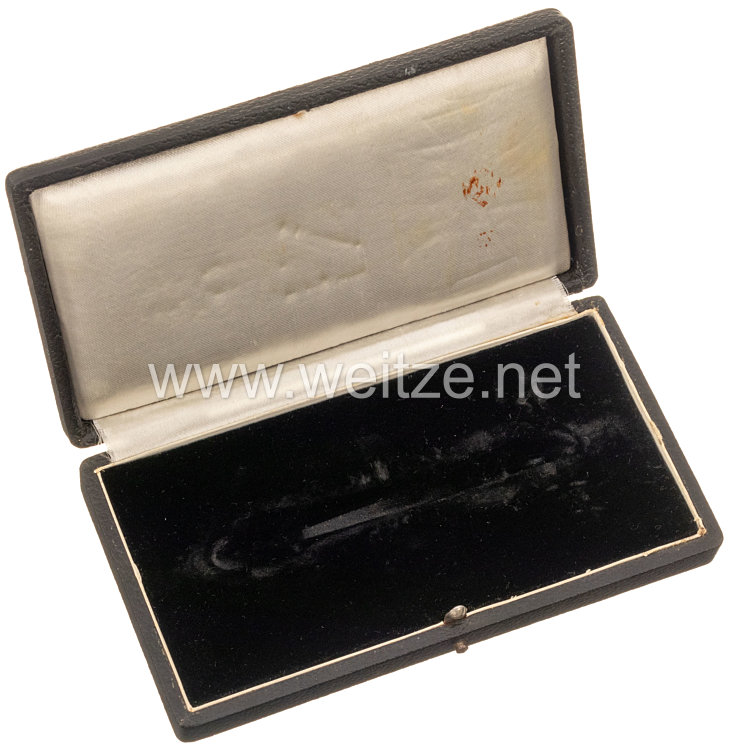
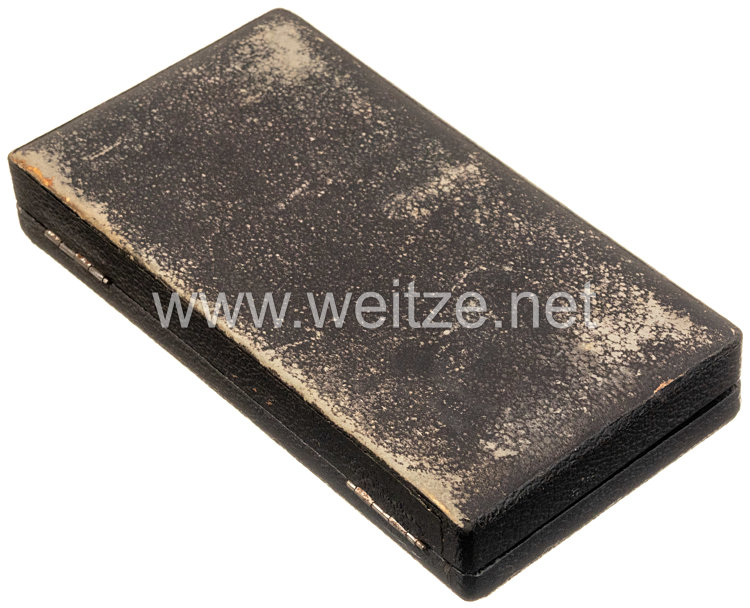
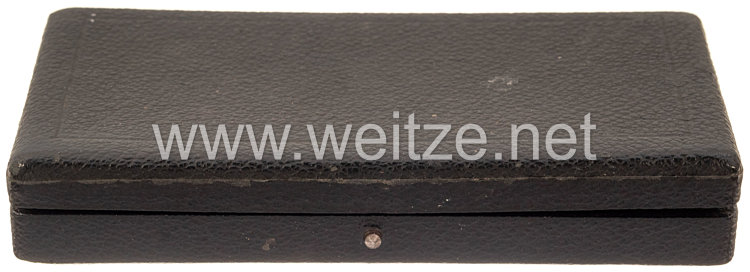
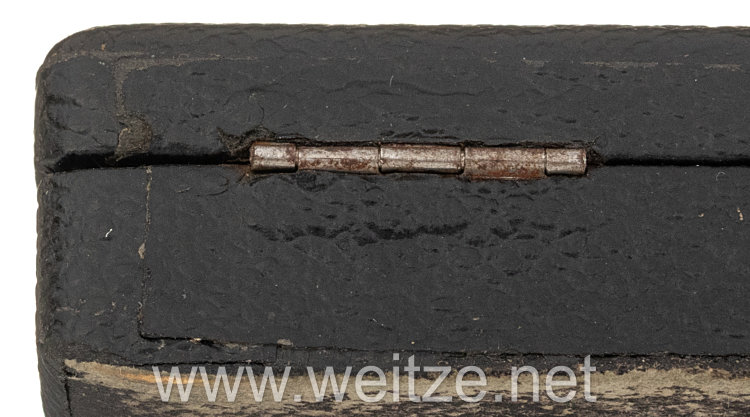
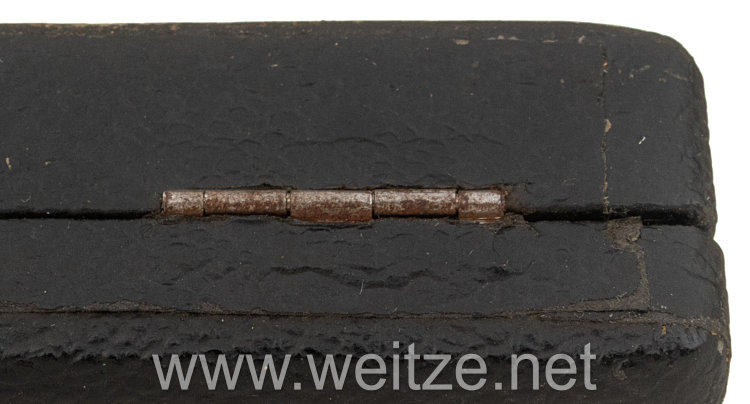
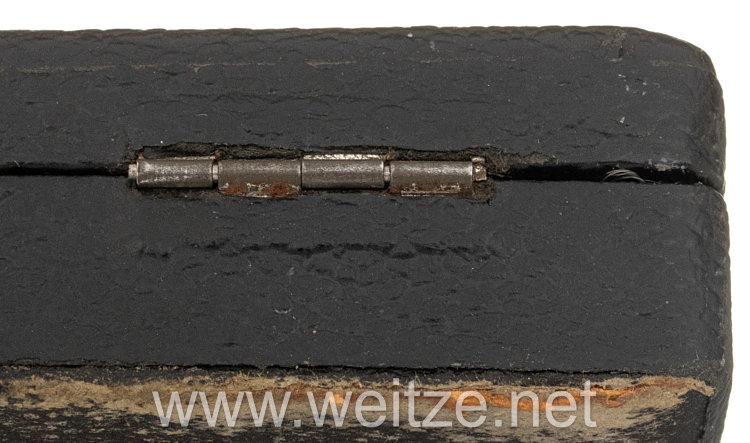
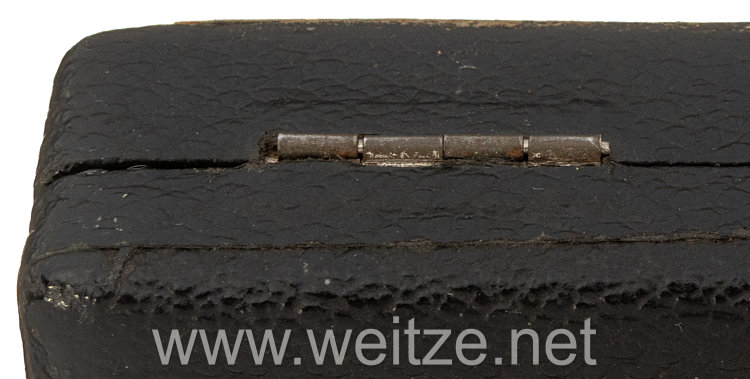
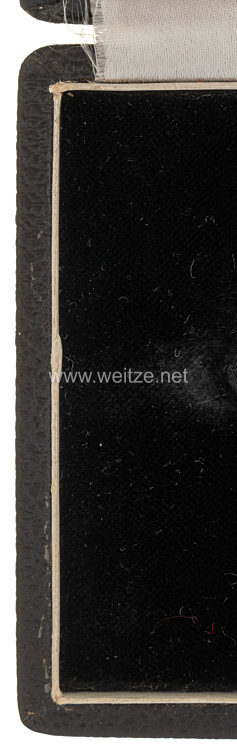
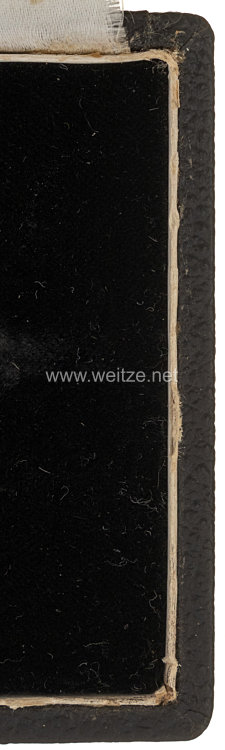
Es handelt sich hierbei um den sogenannten 2. Typ der Fertigung der Fa. C.E. Juncker Berlin. Buntmetall feuervergoldet mit aufpolierten Kanten. Rückseitig mit einer runden Aussparung für den Nadelhaken, breite vergoldete Nadel, brüniertes Eisenplättchen, im Zentrum mit einer kleinen Rundkopfniete befestigt, darüber der Tragehaken. Getragenes Stück in gutem Zustand. Komplett im passenden Verleihungsetui, innen mit schwarzer Samteinlage und weißem Seidenfutter, magnetischer Druckknopf und Scharniere.
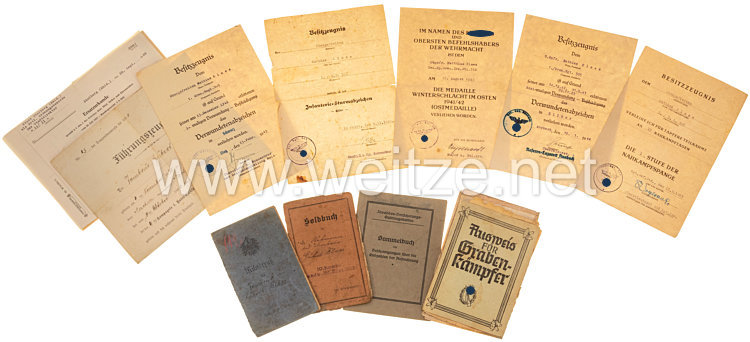
Weiterhin die folgenden Urkunden:
Verleihungsurkunde zur Medaille Winterschlacht im Osten, ausgestellt 12. August 1942.
Besitzzeugnis zum Infanterie-Sturmabzeichen in Silber, ausgestellt 9.11.1942, mit original Unterschrift "Hesse"Oberst z.V. u. Regt.-Kommandeur.
Besitzzeugnis zum Verwundetenabzeichen in Schwarz, ausgestellt 13. Februar 1943.
Besitzzeugnis zur 1. Stufe der Nahkampfspange für 15 Nahkampftage, ausgestellt 16.9.1943 mit original Unterschrift "Vogelsang" Oberstleutnant und Rgt. Kdr..
Besitzzeugnis zum Verwundetenabzeichen in Silber für 3-malige Verwundung, ausgestellt 12.1.1944.
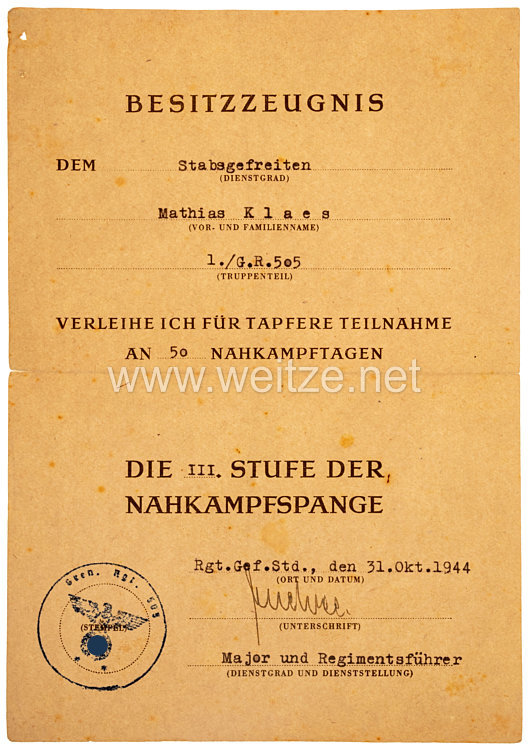
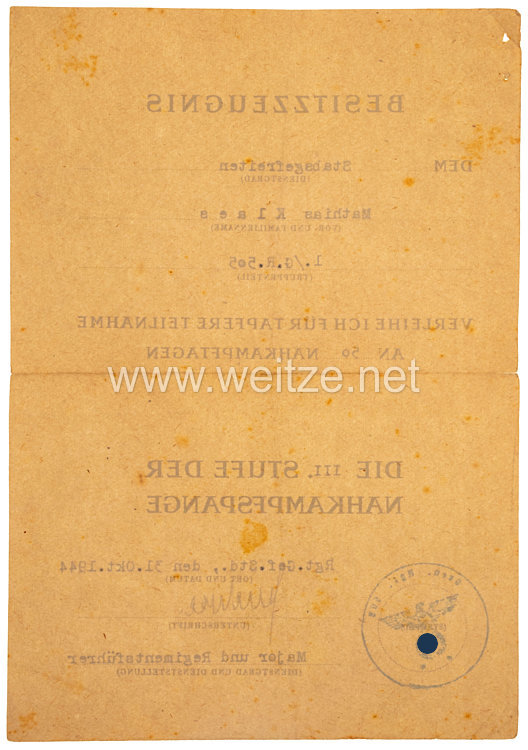
Besitzzeugnis zur III. Stufe der Nahkampfspange für 50 Nahkampftage, ausgestellt 31. Oktober 1944, mit original Unterschrift Major und Regimentsführer.
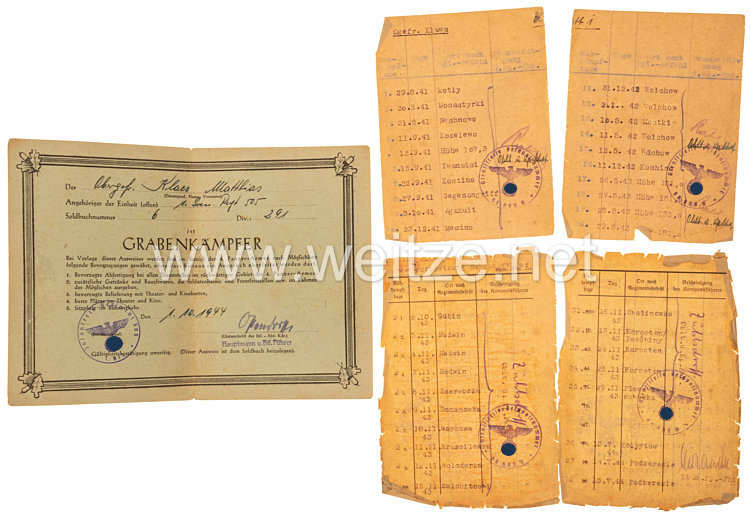
Ausweis für Grabenkämpfer, ausgestellt am 1.10.1944 mit Unterschrift Hauptmann und Btl. Führer des 1. Gren.Rgt. 505.
3 Einlageblätter für das Soldbuch mit insgesamt 57 (!) bestätigten Nahkampftagen aus dem Zeitraum 29.8.1941 bis 18.8.1944, alle Rußlandfeldzug, abgestempelt und bestätigt durch den jeweiligen Kompaniechef bzw. Kompanieführer.
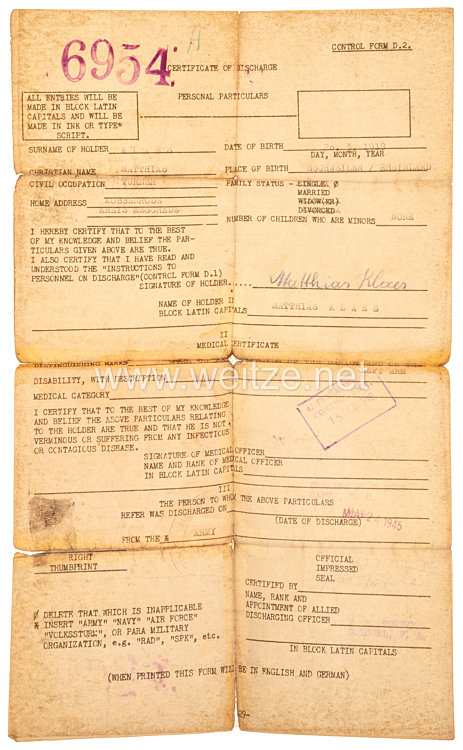
Entlassungsurkunde aus der amerikanischen Kriegsgefangenschaft, datiert 24. Mai 1945.
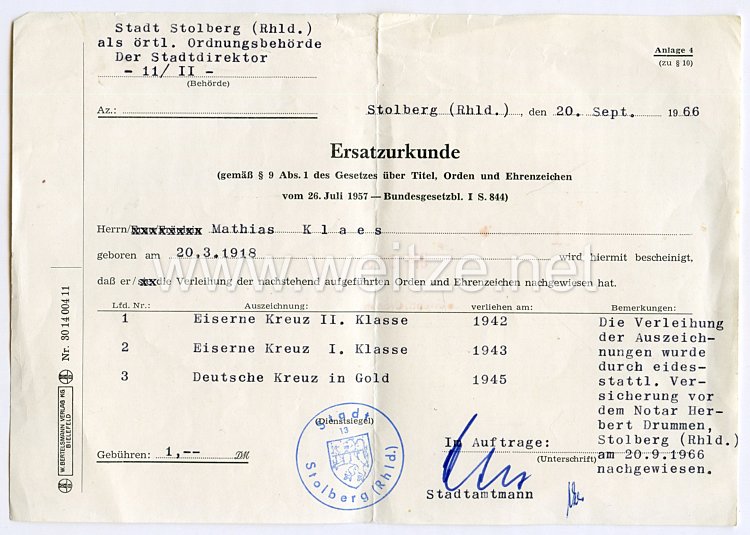
Ersatzurkunde über die Verleihung es Eisernen Kreuz II. Klasse 1942, Eisernes Kreuz I. Klasse 1943, Deutsches Kreuz in Gold 1945, ausgestellt von der Stadt Stolberg, 20. September 1966.
Dienstzeitbescheinigung über die Dienstzeit ab dem 31.10.1944 im 1./Gren.Rgt. 505, ausgestellt vom Bundesarchiv, datiert 21.4.1966, mit Anschreiben.
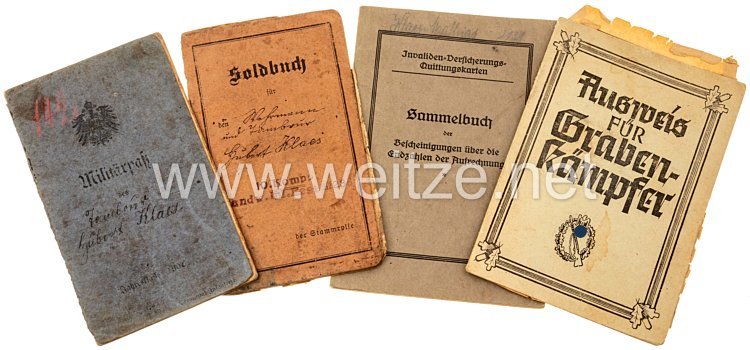
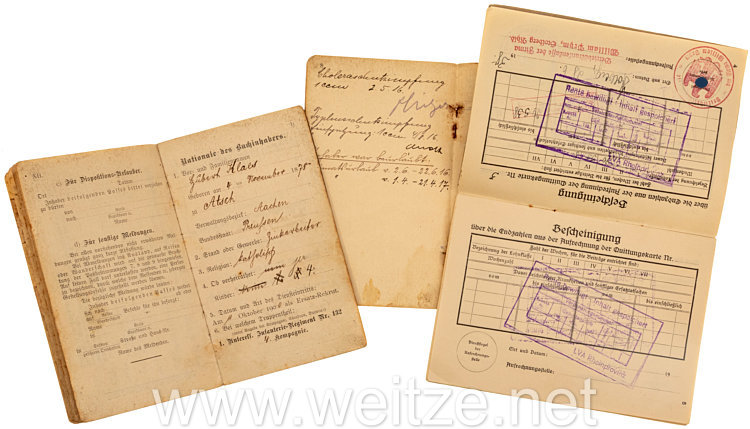
Weiterhin der Militärpaß, Soldbuch und militärisches Führungszeugnis des Vaters aus dem 1. Weltkrieg.
Mathias Klaes, geboren am 20.3.1918 in Eschweiler gehört zu den 619 Trägern der Nahkampfspange in Gold, der wohl höchsten Tapferkeitsauszeichnung des Deutschen Heeres. Klaes wird im Fachbuch von Manfred Dörr "Die Träger der Nahkampfspange in Gold" auf Seite 248 aufgeführt. Klaes gehörte zu den 83 Soldaten, die ihre Nahkampfspangen in Gold am 12.12.1944 durch den Reichsführer-SS H. Himmler im Rathaussaal zu Ulm verliehen bekamen.
Das Infanterie-Regiment 505 wurde aufgestellt am 6. Februar 1940 auf dem Truppenübungsplatz Arys in Ostpreußen. Zusammen mit den ebenfalls aufgestellten Infanterie-Regimentern 504 und 506 gehörte das Infanterie-Regiment 505 zur 291.Infanteriedivision. Mitte Mai 1940 erfolgte der Eisenbahntransport nach Aachen. Von dort marschierte das Regiment über Laon bis zur Aisne südlich von Chamouille. Bei der zweiten Phase des Frankreichfeldzuges mußte das Regiment gegen härtesten Widerstand den Oise-Aisne vorgehen. Trotz schwerer Verluste, der Regimentskommandeur wurde verwundet, ein Bataillonskommandeur wurde getötet, gelang es dem IR 505, einen Brückenkopf am gegenüberliegenden Ufer zu bilden. Nach diesen schweren Kämpfen nahm das Regiment am Vormarsch der Division über Fismus zur Marne teil. Von hier ging es kämpfend über Aube, Seine, Yonne, Loire bis in den Raum Bourges. Nach dem Frankreichfeldzug wurde das Regiment mit der Division nach dem Osten verlegt. Bei Beginn des Rußlandfeldzuges ging das Regiment am linken Flügel des Ostheeres an der Küste entlang vor. Am ersten Vormarschtag wurden 70 km (!) zurückgelegt. Nach dem Marsch durch das Baltikum sowie der Schlacht um Reval drang das Regiment westlich von Peterhof bis an die Ostsee vor. Das Regiment stand tief in der sowjetischen Verteidigungsstellung bei Leningrad, als Befehl zum Halten kam. Im Winter 1941/42 kam es zur Wolchow-Front und nahm dann in der Schlacht im Frühling teil. Das ganze Jahr 1942 war das Regiment mit der Division an der Wolchow-Front stationiert und nahm im November bei den Angriffskämpfen bei Welikije Luki teil. Später stand das Regiment in den schweren Kämpfen bei Nowo Sokolniki und Newel. Zu dieser Zeit hatte das Regiment noch eine Gesamtstärke von 14 Offizieren und 244 Unteroffizieren und Mannschaften. Im Spätsommer 1943 nahm das Regiment im Südabschnitt an der Schlacht um Kiew teil. Von dort ging es über Korosten, Rowno, Pripjetgebiet, Schepetowka, Winniza nach Tschernowitz. Dann folgte die Schlacht um den Hube-Kessel bei Kamenez-Podolsk. 1944 folgten Rückzugskämpfe bis auf die Weichsel, die Abwehr im Berggelände der Lysa-Gora und bei Kielce. Bei Beginn der russischen Großoffensive am 12. Januar 1945 stand das Regiment am Baranow-Brückenkopf und wurde von der Roten Armee bis zum 23. Januar 1945 vollkommen vernichtet.
Weiterhin die folgenden Urkunden:
Verleihungsurkunde zur Medaille Winterschlacht im Osten, ausgestellt 12. August 1942.
Besitzzeugnis zum Infanterie-Sturmabzeichen in Silber, ausgestellt 9.11.1942, mit original Unterschrift "Hesse"Oberst z.V. u. Regt.-Kommandeur.
Besitzzeugnis zum Verwundetenabzeichen in Schwarz, ausgestellt 13. Februar 1943.
Besitzzeugnis zur 1. Stufe der Nahkampfspange für 15 Nahkampftage, ausgestellt 16.9.1943 mit original Unterschrift "Vogelsang" Oberstleutnant und Rgt. Kdr..
Besitzzeugnis zum Verwundetenabzeichen in Silber für 3-malige Verwundung, ausgestellt 12.1.1944.
Besitzzeugnis zur III. Stufe der Nahkampfspange für 50 Nahkampftage, ausgestellt 31. Oktober 1944, mit original Unterschrift Major und Regimentsführer.
Ausweis für Grabenkämpfer, ausgestellt am 1.10.1944 mit Unterschrift Hauptmann und Btl. Führer des 1. Gren.Rgt. 505.
3 Einlageblätter für das Soldbuch mit insgesamt 57 (!) bestätigten Nahkampftagen aus dem Zeitraum 29.8.1941 bis 18.8.1944, alle Rußlandfeldzug, abgestempelt und bestätigt durch den jeweiligen Kompaniechef bzw. Kompanieführer.
Entlassungsurkunde aus der amerikanischen Kriegsgefangenschaft, datiert 24. Mai 1945.
Ersatzurkunde über die Verleihung es Eisernen Kreuz II. Klasse 1942, Eisernes Kreuz I. Klasse 1943, Deutsches Kreuz in Gold 1945, ausgestellt von der Stadt Stolberg, 20. September 1966.
Dienstzeitbescheinigung über die Dienstzeit ab dem 31.10.1944 im 1./Gren.Rgt. 505, ausgestellt vom Bundesarchiv, datiert 21.4.1966, mit Anschreiben.
Weiterhin der Militärpaß, Soldbuch und militärisches Führungszeugnis des Vaters aus dem 1. Weltkrieg.
Mathias Klaes, geboren am 20.3.1918 in Eschweiler gehört zu den 619 Trägern der Nahkampfspange in Gold, der wohl höchsten Tapferkeitsauszeichnung des Deutschen Heeres. Klaes wird im Fachbuch von Manfred Dörr "Die Träger der Nahkampfspange in Gold" auf Seite 248 aufgeführt. Klaes gehörte zu den 83 Soldaten, die ihre Nahkampfspangen in Gold am 12.12.1944 durch den Reichsführer-SS H. Himmler im Rathaussaal zu Ulm verliehen bekamen.
Das Infanterie-Regiment 505 wurde aufgestellt am 6. Februar 1940 auf dem Truppenübungsplatz Arys in Ostpreußen. Zusammen mit den ebenfalls aufgestellten Infanterie-Regimentern 504 und 506 gehörte das Infanterie-Regiment 505 zur 291.Infanteriedivision. Mitte Mai 1940 erfolgte der Eisenbahntransport nach Aachen. Von dort marschierte das Regiment über Laon bis zur Aisne südlich von Chamouille. Bei der zweiten Phase des Frankreichfeldzuges mußte das Regiment gegen härtesten Widerstand den Oise-Aisne vorgehen. Trotz schwerer Verluste, der Regimentskommandeur wurde verwundet, ein Bataillonskommandeur wurde getötet, gelang es dem IR 505, einen Brückenkopf am gegenüberliegenden Ufer zu bilden. Nach diesen schweren Kämpfen nahm das Regiment am Vormarsch der Division über Fismus zur Marne teil. Von hier ging es kämpfend über Aube, Seine, Yonne, Loire bis in den Raum Bourges. Nach dem Frankreichfeldzug wurde das Regiment mit der Division nach dem Osten verlegt. Bei Beginn des Rußlandfeldzuges ging das Regiment am linken Flügel des Ostheeres an der Küste entlang vor. Am ersten Vormarschtag wurden 70 km (!) zurückgelegt. Nach dem Marsch durch das Baltikum sowie der Schlacht um Reval drang das Regiment westlich von Peterhof bis an die Ostsee vor. Das Regiment stand tief in der sowjetischen Verteidigungsstellung bei Leningrad, als Befehl zum Halten kam. Im Winter 1941/42 kam es zur Wolchow-Front und nahm dann in der Schlacht im Frühling teil. Das ganze Jahr 1942 war das Regiment mit der Division an der Wolchow-Front stationiert und nahm im November bei den Angriffskämpfen bei Welikije Luki teil. Später stand das Regiment in den schweren Kämpfen bei Nowo Sokolniki und Newel. Zu dieser Zeit hatte das Regiment noch eine Gesamtstärke von 14 Offizieren und 244 Unteroffizieren und Mannschaften. Im Spätsommer 1943 nahm das Regiment im Südabschnitt an der Schlacht um Kiew teil. Von dort ging es über Korosten, Rowno, Pripjetgebiet, Schepetowka, Winniza nach Tschernowitz. Dann folgte die Schlacht um den Hube-Kessel bei Kamenez-Podolsk. 1944 folgten Rückzugskämpfe bis auf die Weichsel, die Abwehr im Berggelände der Lysa-Gora und bei Kielce. Bei Beginn der russischen Großoffensive am 12. Januar 1945 stand das Regiment am Baranow-Brückenkopf und wurde von der Roten Armee bis zum 23. Januar 1945 vollkommen vernichtet.