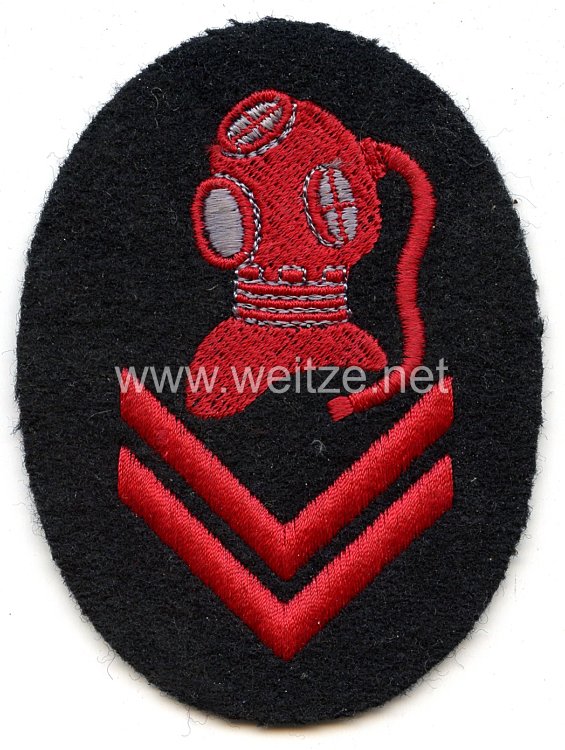
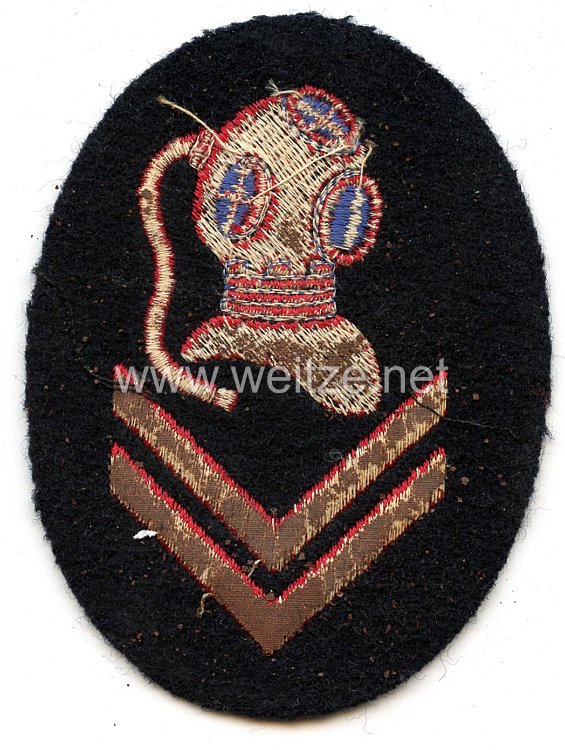
Kriegsmarine Sleeve Insignia for Special Training for Torpedo Divers

For the blue blouse, machine-embroidered. Unworn, condition 2
443271
225,00

Kriegsmarine Sleeve Insignia for Special Training for Torpedo Divers

The Kriegsmarine Sleeve Badge for Special Training in Torpedo Diving represents a rare and highly specialized insignia of the German Kriegsmarine during World War II. This machine-embroidered badge was worn on the blue working blouse and identified naval personnel who had completed intensive and dangerous specialized training in torpedo diving.

The torpedo divers of the Kriegsmarine formed an elite unit within the German Navy. Their primary task consisted of recovering, maintaining, and repairing torpedoes – an activity that required extraordinary technical knowledge and enormous courage. Working with these highly explosive weapons underwater represented one of the most dangerous duties within the Kriegsmarine. The training to become a torpedo diver was correspondingly demanding, and only few naval soldiers received the qualification to wear this badge.

The introduction of special sleeve badges for various specialized fields in the Kriegsmarine occurred as part of a comprehensive system for identifying specializations and qualifications. This tradition had its roots in the Imperial German Navy and was continued in the Reichsmarine of the Weimar Republic. With the renaming to Kriegsmarine in 1935, this system was further expanded and refined.

The present badge was machine-embroidered, which was typical for wartime production. While earlier badges were often manufactured through elaborate handwork, the move was made toward more efficient production methods as the war progressed. Machine embroidery enabled faster and more cost-effective manufacturing while maintaining consistent quality. The badge was intended for wear on the blue blouse, the typical working uniform of the Kriegsmarine, which was used for daily service and practical work.

The torpedo weapon itself played a central role in German naval warfare. Particularly the U-boat arm relied heavily on torpedoes as primary armament. The maintenance, upkeep, and recovery of these complex and dangerous weapons required highly specialized personnel. Torpedo divers were stationed not only at U-boat bases but also at torpedo testing facilities, naval shipyards, and training establishments. Their expertise was indispensable for maintaining the operational readiness of the German naval forces.

The diving training in the Kriegsmarine comprised intensive theoretical and practical units. Candidates had to learn not only the fundamentals of diving but also acquire specific knowledge about the construction, function, and handling of torpedoes. The training included working under extreme conditions, often in poor visibility, strong currents, and at great depths. The physical and psychological demands were immense, and the attrition rate during training was correspondingly high.

The wearing system of sleeve badges in the Kriegsmarine followed strict regulations. The position of the badge on the sleeve was precisely defined, as was the method of attachment. For the blue blouse, badges were typically affixed on the left upper arm. The unworn specimen, as presented here, shows the original quality and execution without the signs of wear that would appear on used pieces through weather, saltwater, and mechanical stress.

The rarity of such specialized badges is explained by several factors: First, the number of trained torpedo divers was limited. Second, many of these badges did not survive the war, as they were either lost with their wearers or destroyed in the postwar period. Third, many uniform items and badges were confiscated by the Allies after the war's end or destroyed by the German soldiers themselves to avoid problems.

Today, such sleeve badges represent important military-historical documents. They testify to the high degree of specialization within the Kriegsmarine and the complexity of maritime warfare. For collectors and historians, they are valuable sources for understanding the organizational structure, training systems, and technical developments in the German Navy during World War II. The unworn condition of this specimen makes it particularly valuable for historical research, as it shows the original execution without later alterations.

The preservation of such artifacts serves not only collecting purposes but also educational ones. They help modern audiences understand the technical sophistication and human challenges faced by naval forces during the war. Each badge tells a story of specialized training, dangerous duty, and the complex hierarchy of skills within a modern navy at war.