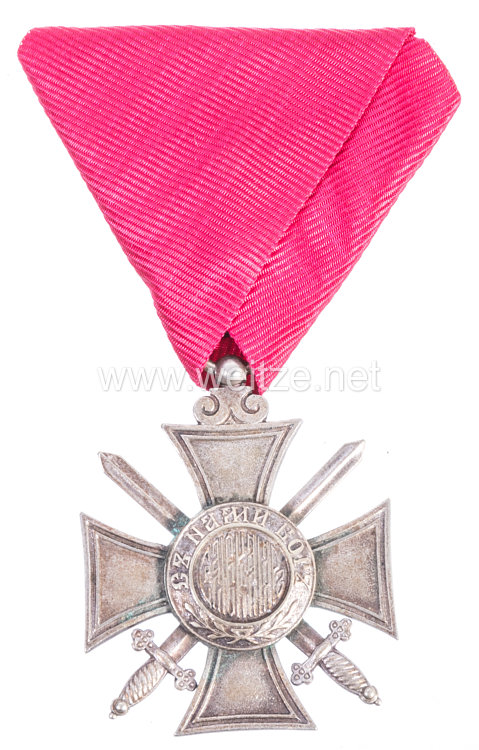
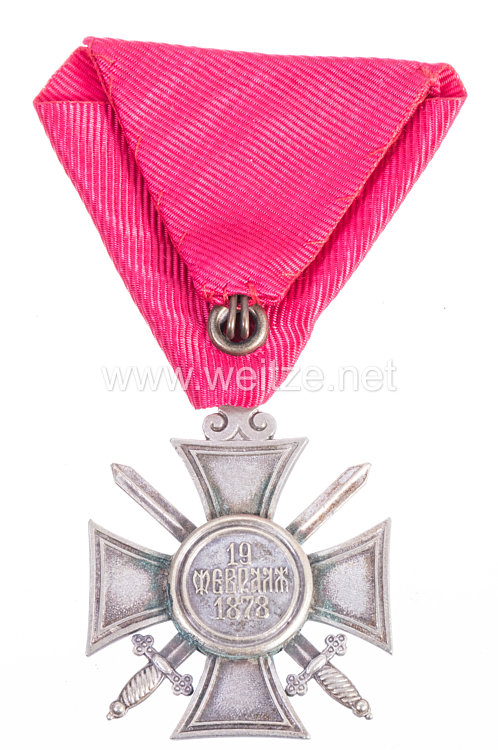
Kingdom of Bulgaria Order of St. Alexander 2nd Model 6th Class with Swords

Silver merit cross, on old triangular ribbon, condition 2.
355471
150,00

Kingdom of Bulgaria Order of St. Alexander 2nd Model 6th Class with Swords

The Order of St. Alexander of the Kingdom of Bulgaria represents one of the most significant decorations of the Bulgarian monarchy and reflects the complex history of Bulgaria in the late 19th and early 20th centuries. This decoration was established in honor of the Bulgarian national hero Alexander I of Battenberg, the first prince of modern Bulgaria (1879-1886).

The order was instituted on December 26, 1881 by Prince Alexander I and was intended to recognize both military and civil merit. After Alexander's abdication in 1886, the order retained his name and continued to be awarded under his successors, particularly under Ferdinand I (1887-1918) and Boris III (1918-1943).

The present example represents the second model of the order, which was introduced following various statutory modifications. The history of the Order of St. Alexander is characterized by several modifications affecting both design and award regulations. The second model differed from the first through refined manufacturing techniques and minor design adjustments that corresponded to the artistic standards of the period.

The VI Class represented the lowest rank within the originally five, later expanded to six classes hierarchy of the order. The class structure followed the usual European system of merit orders: I Class (Grand Cross), II Class (Grand Officer), III Class (Commander), IV Class (Officer), V Class (Knight), and VI Class (Silver Merit Cross). The VI Class was frequently awarded to non-commissioned officers and enlisted ranks who had distinguished themselves through particular bravery or long faithful service.

The version with swords clearly identifies this decoration as a military award. The swords were typically attached between the arms of the cross and signified that the decoration was awarded for merit in combat or during military operations. During the numerous conflicts in which Bulgaria was involved – particularly the Balkan Wars (1912-1913) and World War I (1915-1918) – these orders with swords were awarded in considerable numbers.

The silver merit cross of the VI Class typically consisted of silver-plated metal and displayed the characteristic cross design with the order's insignia. The obverse usually bore the portrait or monogram of the reigning prince or tsar, while the reverse frequently showed the state coat of arms or order motto. The craftsmanship quality of Bulgarian orders was generally high, with both domestic workshops and renowned foreign manufacturers being commissioned.

The mentioned old triangular ribbon is a characteristic feature of Bulgarian orders of this period. The ribbon colors for the Order of St. Alexander consisted of red and white stripes, with the exact arrangement varying according to class and period. The triangular ribbon was used for lower classes and was worn attached to a chest ribbon or on the uniform.

The historical context of the awards is closely linked to Bulgaria's position in the European conflicts of the early 20th century. After regaining independence from the Ottoman Empire in 1878, Bulgaria sought territorial expansion and regional supremacy. The Balkan Wars initially brought considerable territorial gains, which were however partially lost again through defeat in the Second Balkan War of 1913. In World War I, Bulgaria fought on the side of the Central Powers, which after the defeat in 1918 led to substantial territorial losses and reparation payments.

After World War II and the establishment of the communist People's Republic of Bulgaria in 1946, the monarchical orders were officially abolished and replaced by a new system of Soviet-inspired decorations. Holders of old monarchical orders were frequently persecuted or had to hide their decorations.

Today, examples of the Order of St. Alexander are sought-after collector's items that document the military and cultural heritage of the Kingdom of Bulgaria. The condition and authenticity are essential factors for the historical and collector value. Original ribbons, complete insignia, and documented provenance significantly increase the significance of such pieces.

r