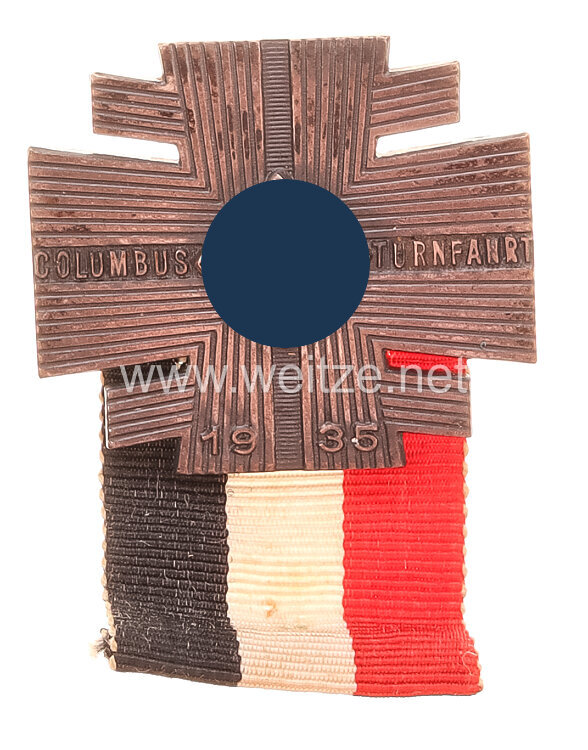
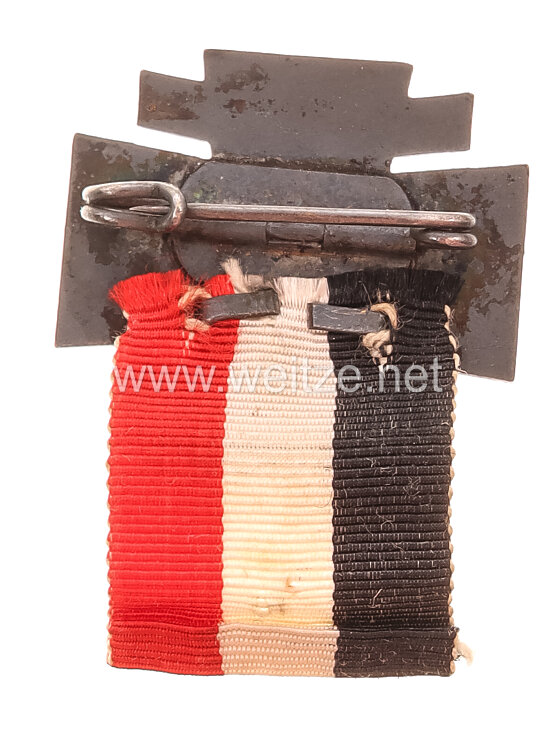
Third Reich - Official Badge for Participants of the North Sea-Baltic Sea Cruise aboard the Lloyd Express Steamer "Columbus" July 21-30, 1935
The official badge for participants of the North-Baltic Sea Gymnastics Cruise aboard the Lloyd express steamer “Columbus” from July 21-30, 1935, represents a fascinating testimony to the maritime propaganda and leisure activities of the Third Reich. This event was organized by the renowned Norddeutscher Lloyd Bremen (North German Lloyd), one of the most significant German shipping companies of the interwar period.
The North German Lloyd, founded in 1857 in Bremen, was one of the world's largest shipping companies until World War II. After the severe losses of World War I, when Germany lost nearly its entire merchant fleet, the shipping company experienced a remarkable resurgence in the 1920s and early 1930s. The “Columbus”, commissioned in 1924, was one of the flagships of this renewal with a tonnage of approximately 32,500 GRT and a length of 241 meters.
The 1935 North-Baltic Sea Gymnastics Cruise seamlessly fit into the concept of the National Socialist “Kraft durch Freude” (Strength through Joy) organization, even though it was formally organized by the North German Lloyd. These pleasure cruises were intended to appeal to various social classes while demonstrating Germany's maritime strength and technological progress. The route through the North and Baltic Seas offered participants the opportunity to experience German and Scandinavian coastal regions.
The badge itself was manufactured from non-ferrous metal, an economical material that nevertheless offered an attractive appearance. The central element features an enameled swastika, the official symbol of the NS state since 1935. The enamel technique enabled permanent and color-intensive design. An attached patriotic flag complemented the badge and underscored its propagandistic character.
Such commemorative badges served multiple purposes: they functioned as personal mementos of the journey, as status symbols, and as subtle propaganda instruments. Participants could demonstrate their allegiance to the regime and their participation in state-sponsored activities by wearing these badges. The pin attachment on the reverse allowed it to be affixed to clothing or uniforms.
The significance of seafaring in National Socialist Germany extended far beyond practical considerations. The Kriegsmarine and merchant marine symbolized the claim to international recognition and the overcoming of the restrictions of the Treaty of Versailles. Passenger ships like the “Columbus” were floating ambassadors of the regime.
The year 1935 marked a key phase of NS rule. In March, general conscription was reintroduced; in September, the Nuremberg Race Laws were proclaimed. The organization of mass events and leisure offerings served to consolidate power and integrate broad segments of the population.
The “Columbus” itself met a tragic fate. At the outbreak of war in 1939, she was at sea and upon return off the American coast in December 1939, was scuttled by her own crew to prevent seizure.
Today, such badges are important historical sources for researching everyday life in the Third Reich. They document the penetration of all areas of life with National Socialist symbolism and the instrumentalization of leisure and tourism for political purposes. The condition 2 (very good) of the described specimen indicates careful preservation, which is not self-evident for such objects.