Wehrmacht Luftwaffe (WL) Sword for Officers
The Luftwaffe Officer's Sword of the Wehrmacht represents a significant chapter in German military history between 1935 and 1945. Following the official establishment of the Luftwaffe on March 1, 1935, under Hermann Göring as an independent branch of the Wehrmacht, a distinct uniform and equipment regulation was introduced that clearly distinguished it from the Army and Navy.
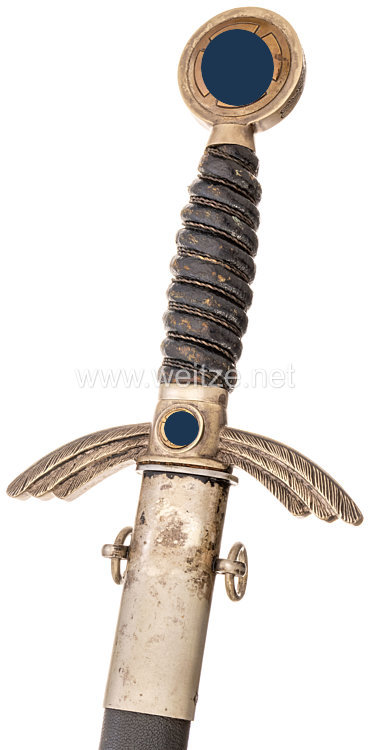
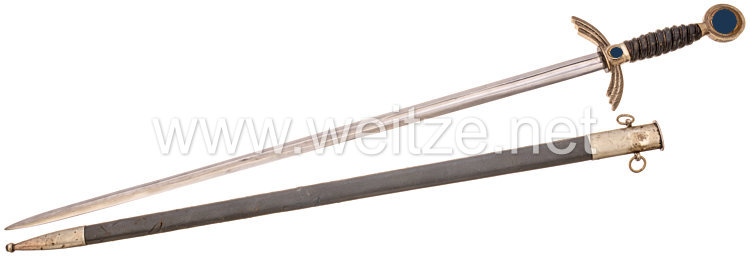
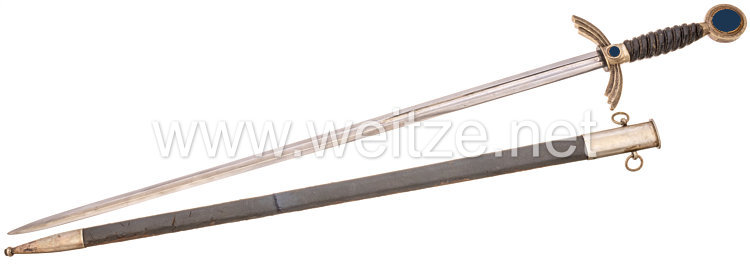
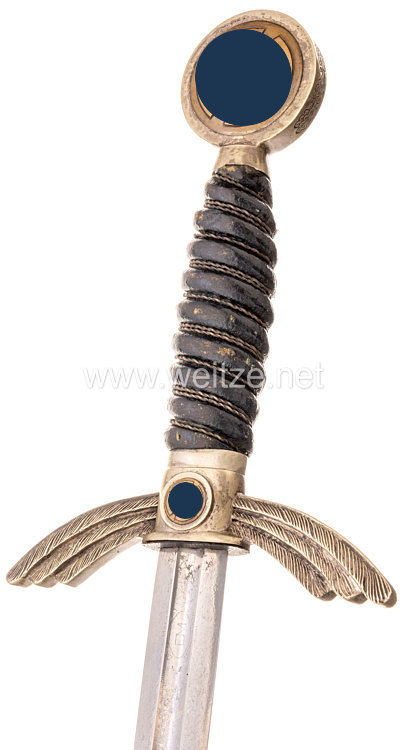
The development of the Luftwaffe officer's sword followed traditional German military standards but received specific features that identified it as a Luftwaffe weapon. The most characteristic element was the sunwheel or swastika in the fittings, often applied in brass-colored execution on nickel-plated or silver-plated metal parts. The blue-gray leather grip wrapping was typical for the Luftwaffe and differed markedly from the black or brown grips of other service branches.
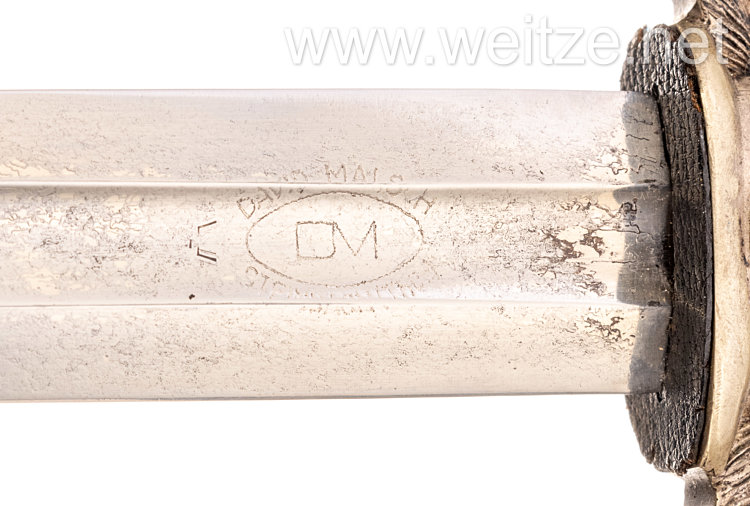
The manufacture of these officer's swords was carried out by numerous civilian contractors commissioned by the Wehrmacht. David Malsch was one of the less frequently encountered manufacturers, making pieces with this marking rarer today. The company belonged to the numerous Solingen blade smiths and weapon manufacturers who produced militaria during the Nazi period. Solingen was and remains the traditional center of German blade manufacturing with a centuries-old tradition.
Wehrmacht quality control was strictly regulated. The Luftwaffe control stamp on the blade confirms that the sword met military acceptance standards and was approved for official service. These stamps were applied by Luftwaffe armory inspectors and guaranteed compliance with prescribed specifications regarding material, workmanship, and dimensions.
The officer's sword served primarily as a parade sword and status symbol. It was worn with full dress uniforms and at official occasions, but not in combat. The tradition of the officer's sword in Germany dated back to the 18th century and symbolized the status and honor of its bearer. During the Weimar Republic, this tradition continued, and the Wehrmacht adopted it with its own modifications.
The technical specifications of the Luftwaffe officer's sword were defined in the Heeresverordnungsblätter (Army Regulation Gazettes). The blade was typically between 80 and 85 centimeters long, double-edged, and slightly curved. The grip consisted of a wooden core with leather wrapping in the characteristic blue-gray color of the Luftwaffe. The fittings - crossguard, grip cap, and often a pommel - were typically nickel-plated, more rarely silver-plated.
The use of nickel fittings instead of silver was common during the war for economic reasons. As the war progressed and material shortages increased, quality standards were sometimes lowered, and later productions often showed simpler workmanship. Pieces with complete nickel alloy and clean execution frequently date from the pre-war or early war period.
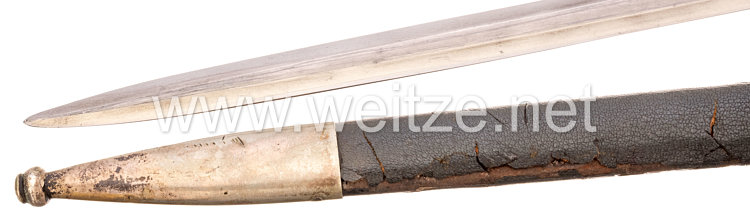
The preservation and condition of these historical objects vary greatly. Typical signs of use include tarnished metal parts, damaged leather wrapping, and blade oxidation. The blue-gray leather covering was particularly susceptible to damage from moisture and mechanical stress. Missing sections and chipping are therefore the rule with worn examples.
After the end of World War II, the production and possession of Wehrmacht insignia in Germany were initially prohibited. Many swords were confiscated by the Allies or destroyed by their owners. In the post-war period, however, a collector's market developed, and today these objects are of scientific and collectible interest as military-historical artifacts.
The historical evaluation of such objects requires a nuanced approach. They are witnesses to a dictatorial era and a criminal regime, but at the same time crafted products and military-historical documents. Their preservation in museums and collections serves historical education and research, while their uncritical glorification must be rejected.
For collectors and historians, the maker's marks and control stamps provide important information about production date, manufacturer, and authenticity. The rarity of certain manufacturers like David Malsch adds to the historical documentation value, as it helps researchers understand the full scope of wartime military production networks.