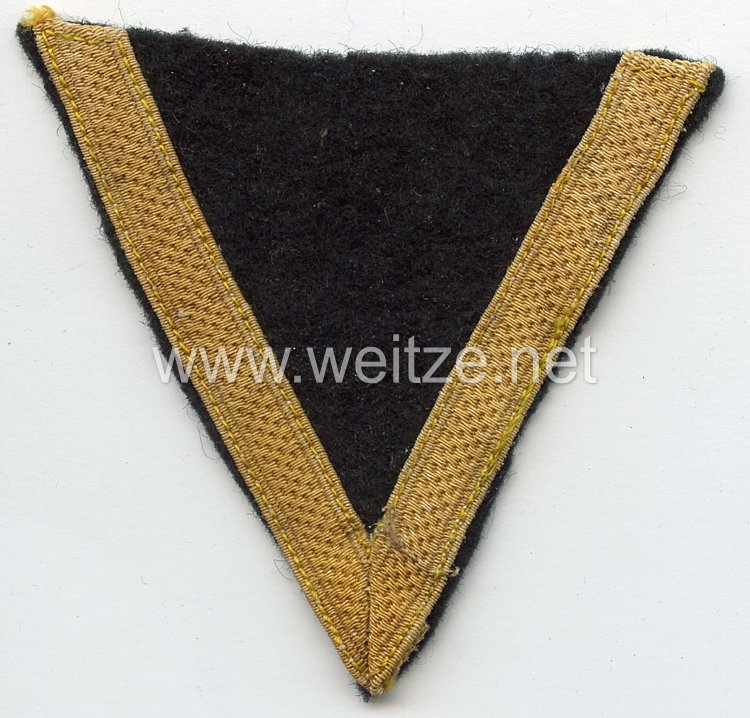
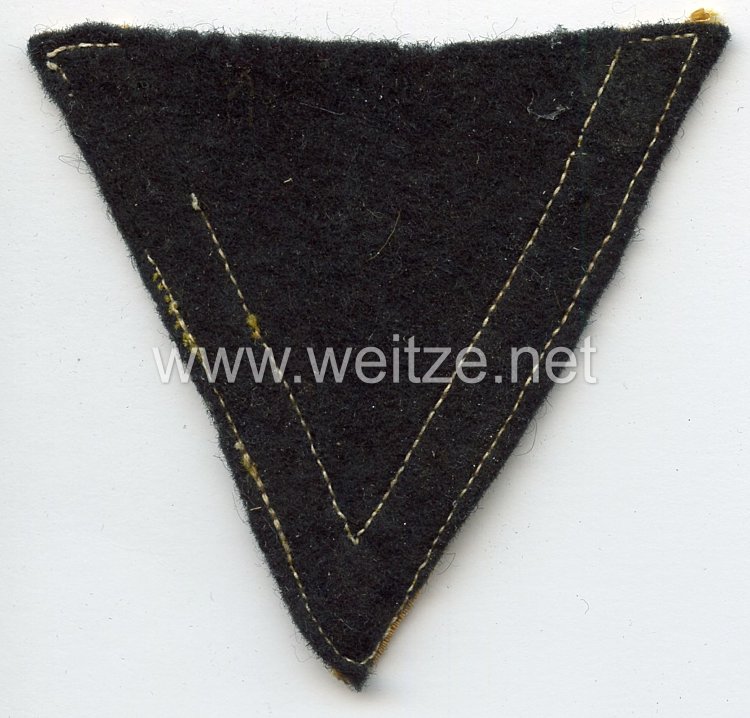
Kriegsmarine Sleeve Insignia Gefreiter Coastal Artillery

Obermatrose until 31.1.1938, for the field-gray uniform, condition 2.
314269
20,00

Kriegsmarine Sleeve Insignia Gefreiter Coastal Artillery

The Kriegsmarine sleeve insignia for Coastal Artillery enlisted personnel represents a fascinating testament to the organizational development of the German Kriegsmarine during the interwar period and the early years of the Third Reich. This specific insignia was used until January 31, 1938, marking a significant transitional phase in the uniform history of the German naval forces.

The Coastal Artillery of the Kriegsmarine formed an essential component of German coastal defense. After World War I and the restrictive provisions of the Treaty of Versailles of 1919, Germany was severely limited in its military development. The Reichsmarine, predecessor of the Kriegsmarine, had to reorganize its structures under these conditions. The Coastal Artillery assumed the strategically important task of defending German ports, naval bases, and coastal sectors against enemy attacks.

The present sleeve insignia was worn on the field-gray uniform, which represents a distinctive feature. While the traditional naval uniform was dark blue, certain units, particularly those with land-based duties such as the Coastal Artillery, wore field-gray uniforms. This underscored their role as a link between Navy and Army and their specific tactical requirements in coastal defense.

The rank designation Obermatrose, valid until January 31, 1938, corresponded to the rank of Gefreiter (Private First Class) in the Army organization. This equivalence was part of a complex system of rank designations that changed several times during the 1930s. With the renaming of the Reichsmarine to Kriegsmarine on June 1, 1935, and the general rearmament under the Nazi regime, the rank structures were also revised and standardized.

The reform of February 1, 1938 brought substantial changes to the Kriegsmarine's rank system. The alignment of rank designations was intended to improve cooperation between different branches of service and to unify the military system. After this date, new insignia and designations were introduced, making the present piece a time document of a specific historical period.

The production and design of such sleeve insignia followed precise regulations set forth in the Kriegsmarine's uniform directives. The insignia were typically manufactured by hand or machine on fabric backing, using various materials such as wool, cotton, or artificial silk. Quality and execution could vary depending on the manufacturer and production period.

The importance of Coastal Artillery grew with the increasing threat from naval and later air attacks. The batteries were armed with various calibers, from medium guns to heavy coastal cannons capable of engaging potential attackers at long range. The crews of these installations required specialized training in both artillery and naval-specific areas.

Such sleeve insignia served not only to identify rank and affiliation but also contributed to identity formation and esprit de corps. They enabled immediate recognition of military hierarchy and the specific function of a soldier within the organization. For collectors and historians today, these insignia offer valuable insights into the organization, hierarchy, and development of German armed forces of this era.

The preservation of such historical objects in good condition allows us to study and preserve the material culture of the Kriegsmarine. They serve as physical connections to a complex and significant period of German and European history and help us better understand the structures and daily life of soldiers of that time.

The study of these insignia and their regulations provides researchers with important information about the administrative and organizational changes that characterized the German military in the 1930s. Each modification in design, material, or usage regulations reflected broader strategic, political, or practical considerations that shaped the development of the German armed forces during this transformative period.