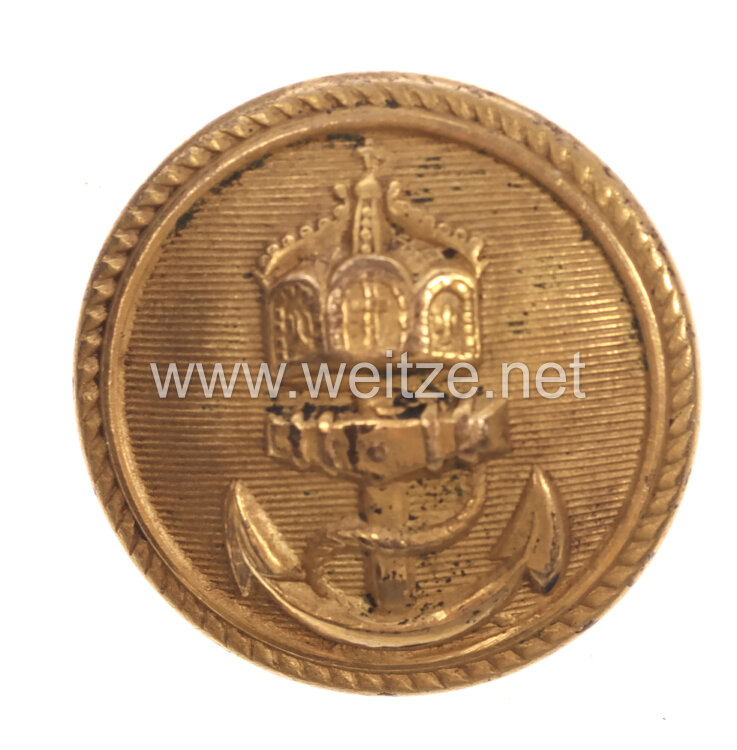
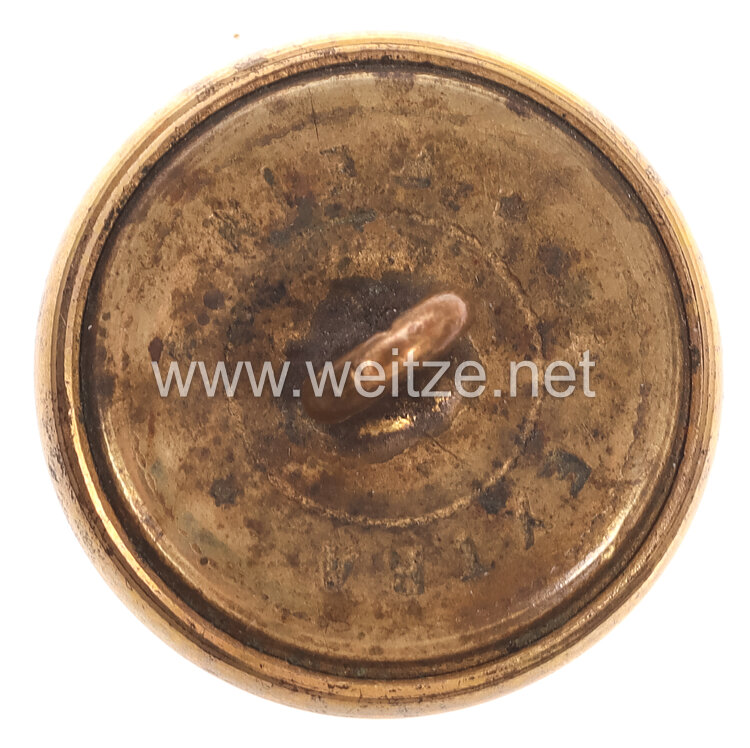
Imperial German Navy Officer's Button

gilt finish circa 1910, 20 mm, lightly worn, condition 2.
460869
20,00

Imperial German Navy Officer's Button

This Imperial German Navy Officer's Button in gilt finish represents a fascinating testament to German naval history during the Wilhelmine era. This particular button, measuring 20 mm in diameter and dating from around 1910, embodies the splendor and attention to detail characteristic of Imperial armed forces uniform components.

The Kaiserliche Marine (Imperial Navy), officially established in 1871 following German unification, experienced unprecedented expansion under Kaiser Wilhelm II. The so-called naval arms race, driven primarily by Grand Admiral Alfred von Tirpitz and manifested in the Fleet Acts of 1898 and 1900, aimed to make Germany the world's second-largest naval power after Great Britain. In this context, the external appearances of the Navy, including uniforms, gained considerable significance.

Officers' uniform buttons differed fundamentally from those of enlisted ranks. While enlisted personnel wore buttons made of simple materials, officers' buttons were manufactured in gilt or silvered finishes. The gilding was typically achieved through fire-gilding or galvanic processes, with the latter increasingly employed from the turn of the century. This distinction was not merely aesthetic but served to provide immediate visual identification of rank differences.

The motif on Imperial Navy officers' buttons typically displayed the Imperial Eagle or an anchor with crown, surrounded by an oak leaf wreath. This symbolism combined Prussian-German tradition with maritime orientation. The 20 mm diameter corresponds to contemporary regulations for certain uniform parts and positions on the uniform. The Uniform Regulations of the Imperial Navy precisely specified which button sizes were to be used at which locations on various uniform types.

Around 1910, the production period of this specimen, the Imperial Navy was at the peak of its peacetime strength. The fleet comprised modern Dreadnought battleships, cruisers, and torpedo boats. The officer corps had grown accordingly and included various career paths: sea officers, engineering officers, medical officers, and other specializations. Each of these branches had specific uniform regulations, with buttons representing a unifying element.

The manufacture of such uniform buttons was carried out by specialized workshops, often functioning as Court Suppliers. Well-known producers included firms in Berlin, Hamburg, and Kiel. Quality control was strict, as uniform components had to comply with official regulations. Officers procured their uniforms and equipment at their own expense, which explains the high-quality workmanship.

The light wear condition of this button indicates actual use, which is historically valuable as it documents authentic utilization. Buttons were worn on various uniform types: the Full Dress Uniform (gala uniform), the Undress Uniform (service dress), and various duty uniforms. The number and position of buttons varied according to uniform type and could also provide clues about specific rank.

Following the end of World War I and the abdication of Kaiser Wilhelm II in November 1918, the era of the Imperial Navy also ended. The Reichsmarine of the Weimar Republic introduced new uniform regulations, rendering Imperial buttons historical relics. Many officers preserved their old uniform items as mementos, explaining the survival of such objects to the present day.

From a collector's perspective, Imperial Navy officers' buttons are today sought-after military historical objects. They document not only uniform history but also craft traditions and the societal significance of the Navy in the German Empire. Condition, manufacturing technique, and provenance are decisive factors for the historical and collectible importance of such pieces.

These buttons serve as tangible links to a pivotal period in European history, representing the ambitions and pageantry of an empire that sought to project power across the world's oceans. Each button tells a story of the officers who wore them, the ships they served on, and the complex geopolitical dynamics of the pre-World War I era.

r