Kriegsmarine Sleeve Insignia Career Path Boatswain's Mate
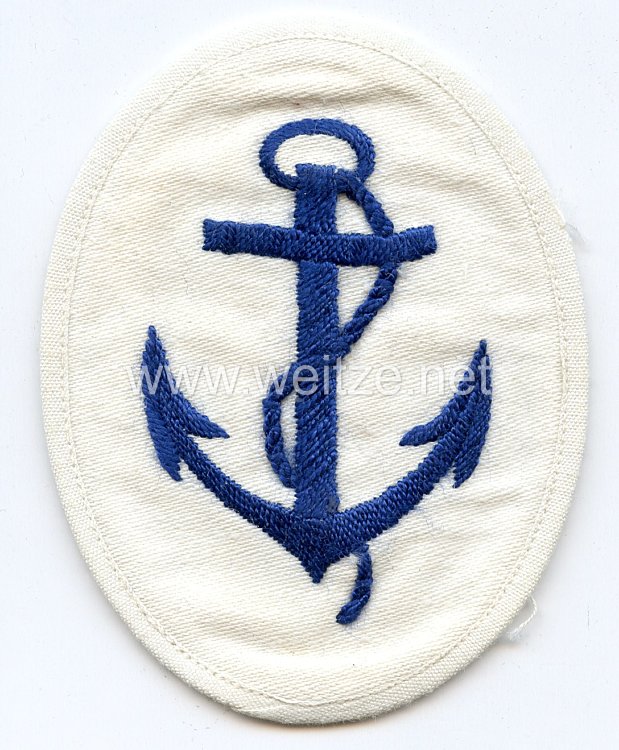
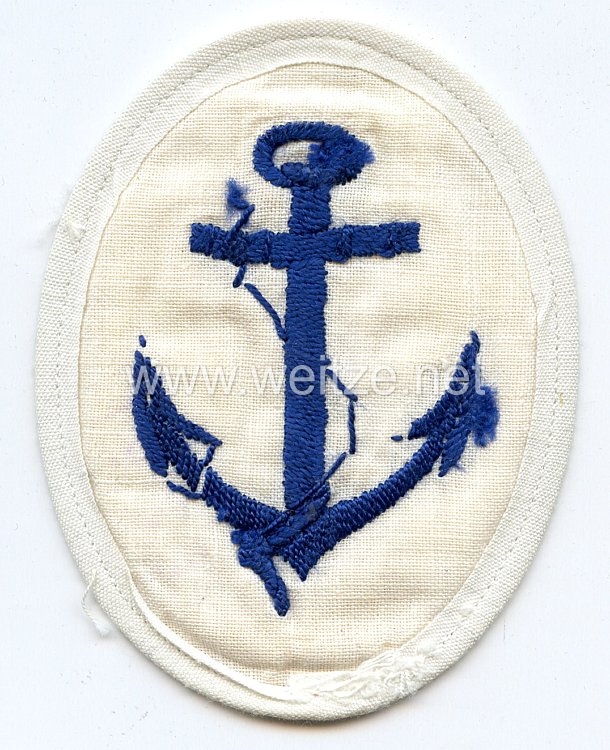
The Kriegsmarine sleeve badge for the career rank of Bootsmannsmaat represents a significant element of the German Kriegsmarine's uniform system during World War II. This hand-embroidered badge for the white blouse embodies the careful hierarchy and rank structure established in the German Navy between 1935 and 1945.
Historical Context and Introduction
Following the Nazi seizure of power in 1933 and the official reintroduction of universal conscription on March 16, 1935, the Reichsmarine was renamed Kriegsmarine. This restructuring was accompanied by a comprehensive reorganization of the rank system and uniform regulations. The Kriegsmarine developed a complex system of badges and insignia to clearly identify the various career paths, ranks, and specializations of its crews.
The Rank of Bootsmannsmaat
The Bootsmannsmaat belonged to the non-commissioned officer level of the Kriegsmarine and was part of the so-called Portepee-Unteroffizier group. This rank was part of the Seaman Career Path (Seemannische Laufbahn), one of the four main career paths in the Kriegsmarine, alongside the technical, administrative, and medical branches. The Bootsmannsmaat stood between the rank of Obergefreiter (Senior Lance Corporal) and Bootsmann (Boatswain) and was typically responsible for training junior sailors and conducting seamanship work aboard ship.
Design and Manner of Wearing
Kriegsmarine sleeve badges were worn on both upper arms of the uniform and varied according to the type of uniform. For the white summer blouse, worn during warm months and in tropical deployment areas, the badges were executed in dark colors. The hand-embroidered version was particularly common among non-commissioned officers, as it offered higher quality and greater durability than printed or machine-made variants.
The badge for the Bootsmannsmaat typically consisted of an anchor as the basic symbol, supplemented by specific rank markings. The seaman career path was fundamentally symbolized by the anchor, while the technical branch used a gear wheel, the administrative branch used Gothic lettering, and the medical branch used the Rod of Asclepius.
Manufacturing Methods and Materials
Hand-embroidered badges were produced by specialized military effects factories or by private tailors. The embroidery was usually done with artificial silk thread or cotton yarn on a backing fabric, which was then sewn onto the uniform. The quality of the embroidery work could vary considerably, depending on the manufacturer and whether it was an official depot issue or a private procurement.
For the white uniform, the motifs were executed in dark navy blue or black to create a clear contrast with the light fabric. The back of the badge was often reinforced with a stabilizing fabric to prevent the embroidery from showing through and damaging the uniform fabric.
Uniform Regulations and Wearing Instructions
The precise regulations for wearing sleeve badges were detailed in the Kriegsmarine dress regulations (Anzugsbestimmungen). These rulebooks specified exactly where the badges were to be placed, what size they should be, and in which situations which uniform variant was to be worn. The white blouse with corresponding badges was primarily a summer uniform and was worn during the warmer months or on special occasions.
Significance in Military Daily Life
Sleeve badges fulfilled an important function in military daily life. They enabled immediate identification of a sailor's rank and career path, which was essential for the chain of command and daily ship organization. On often crowded ships with crews of several hundred men, quick visual recognition of authorities and responsibilities was of great importance.
Collector Value and Historical Significance
Today, originally preserved Kriegsmarine sleeve badges are sought-after collector's items. Their historical significance lies in their function as material witnesses to German naval history. Hand-embroidered variants are particularly valued due to their more elaborate production and often better preservation. The condition of such an object is crucial for its documentary and museum value.