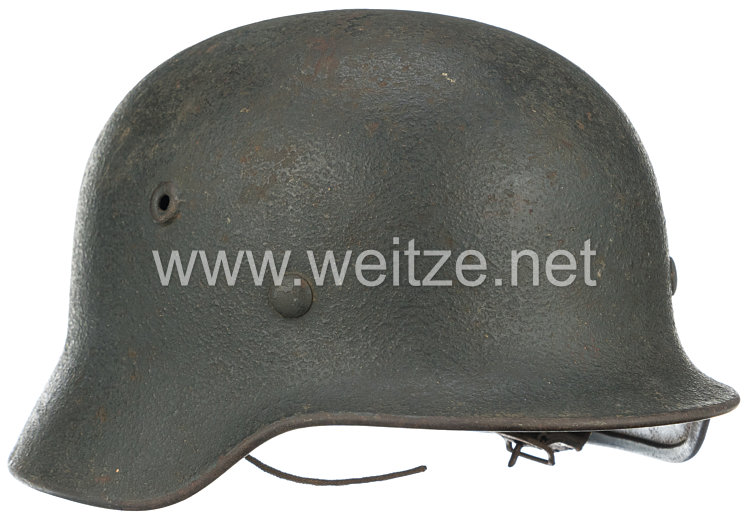
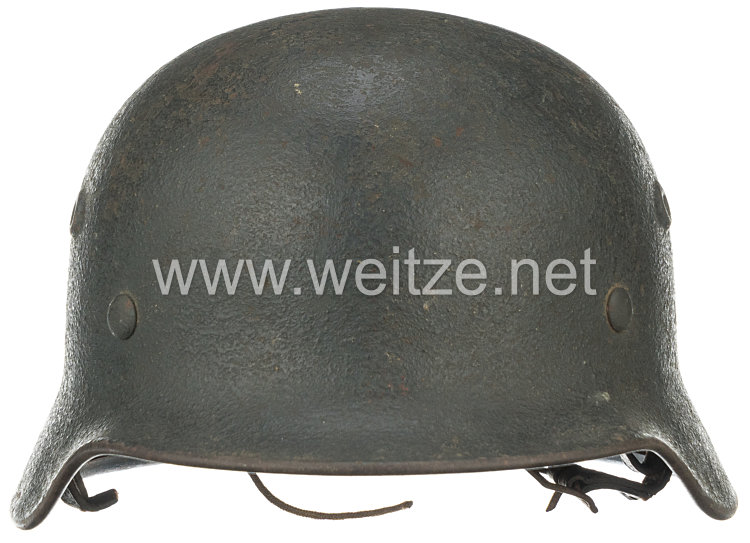
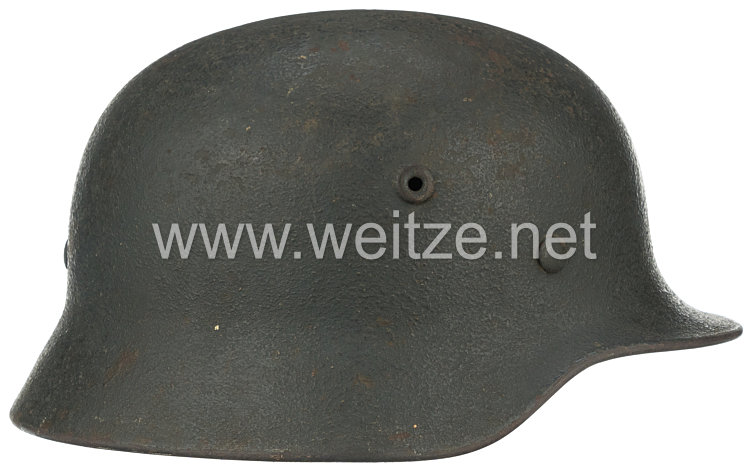
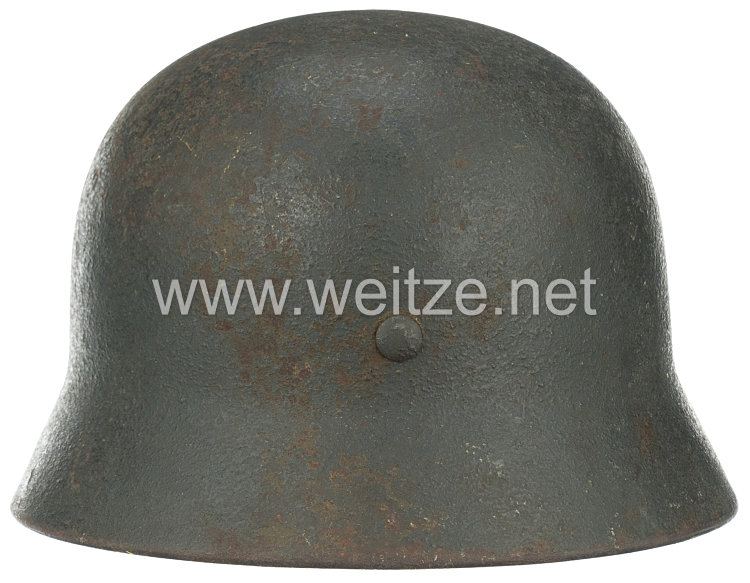
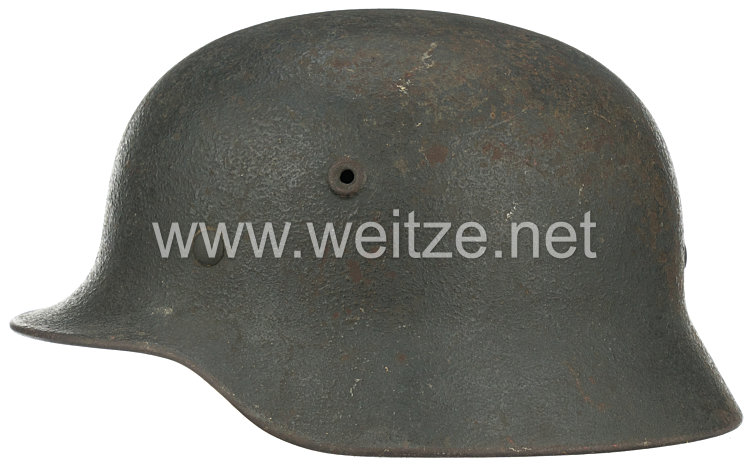
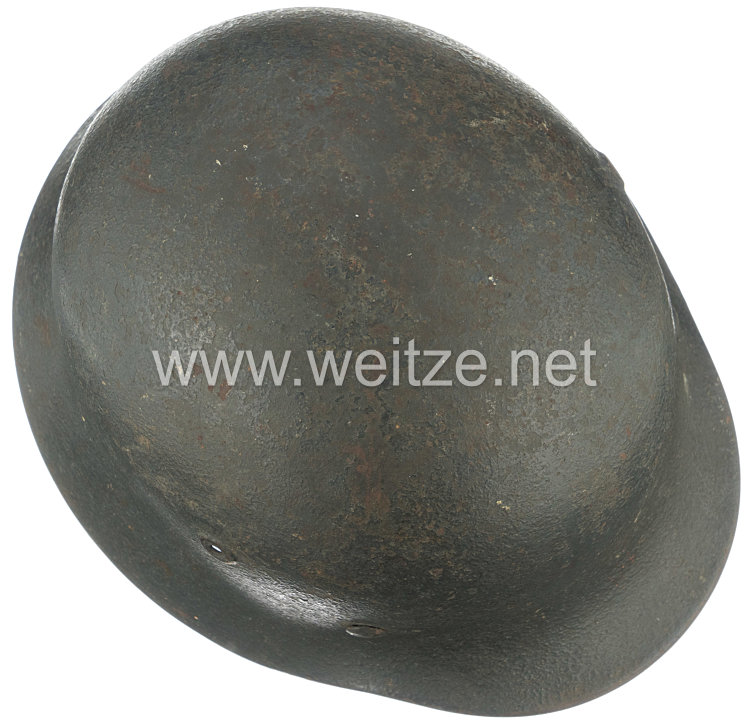
Luftwaffe Steel Helmet M40 with Camouflage Paint

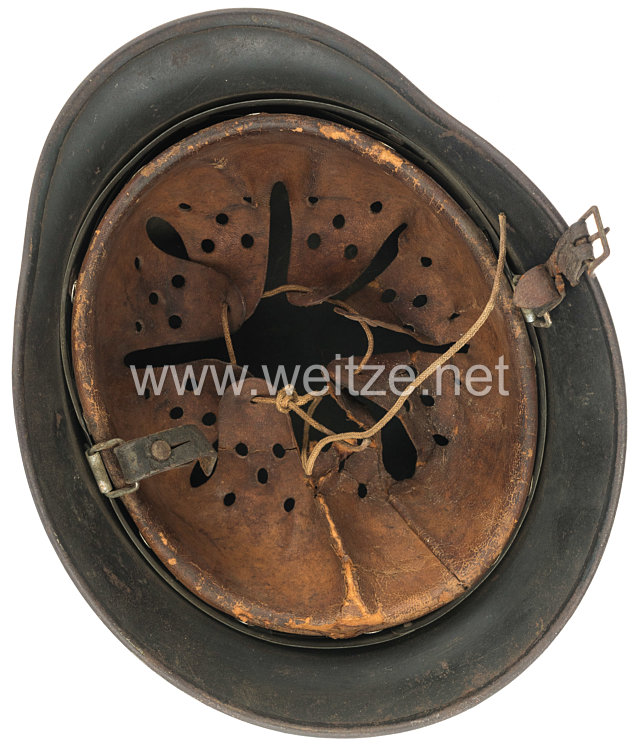
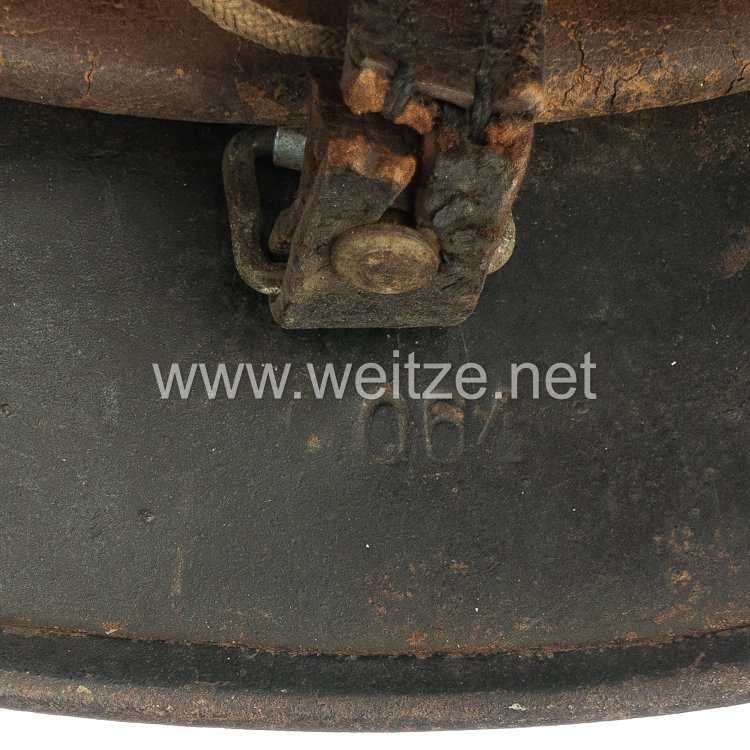
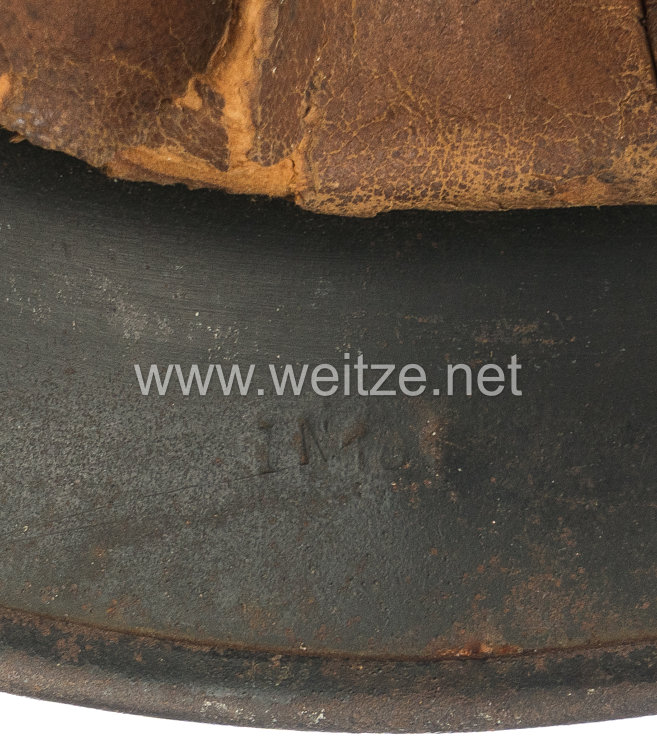
, blue-gray paint approximately 80% remaining. The helmet shell is stamped on the side with Q64 and at the rear with “DN181”. With damaged leather liner on the metal ring, chinstrap missing. Size: 56. Condition 2.
447167
950,00

Luftwaffe Steel Helmet M40 with Camouflage Paint

This Luftwaffe Steel Helmet M40 with its characteristic splinter camouflage pattern represents an important developmental stage in German helmet production during World War II. This helmet embodies both the technological adaptations of the wartime economy and the tactical requirements of the Wehrmacht's air force units.

The Model 40 was introduced in 1940 as a rationalized version of the previous M35 helmet. The most significant change consisted of simplifying the production process: the elaborately manufactured ventilation lugs of the M35 were replaced by simpler stamped and rolled lugs. This measure enabled faster and more cost-effective production while maintaining protective effectiveness. The helmet shell itself retained the proven shape of the M35, which had been established as standard since 1935.

The Q64 stamp on the helmet shell identifies the manufacturer. German armaments factories used manufacturer codes during the war to coordinate production and, for security reasons, to conceal the actual company names. The additional marking DN181 at the rear indicates a specific batch number or production identifier used for quality control and logistics.

The size 56 corresponds to a head circumference of 56 centimeters and was one of the standard sizes in which German steel helmets were produced. The German system typically used sizes from 60 to 68, with smaller sizes like this 56 being less common and possibly manufactured for special purposes or smaller wearers.

Particularly noteworthy is the blue-gray paint with splinter camouflage, approximately 80 percent of which remains intact. The splinter camouflage, also known as geometric camouflage, was increasingly employed from around 1940/41. This camouflage method was based on the recognition that hard, geometric patterns more effectively broke up a helmet's contours under various lighting conditions and distances than single-color finishes. The blue-gray base color was typical for Luftwaffe helmets and differed from the field-gray or dark green tones used by the Army and Waffen-SS.

The Luftwaffe, as the youngest branch of the Wehrmacht, had developed its own equipment standards. Luftwaffe helmets were distinguished not only by their characteristic coloring but also originally bore specific insignia: the national eagle emblem (eagle with swastika) on the right side and the national colors shield in black-white-red on the left side. These emblems were initially made of metal, later painted or applied as decals for cost reasons.

The liner band inside the helmet served to hold the leather liner, which provided comfort to the wearer and helped absorb impacts. The damaged leather liner mentioned here is a typical sign of wear from use and decades of storage. The missing chinstrap is common with historical helmets, as these were made of organic material and subject to decomposition or were lost over time.

Production numbers of German steel helmets during World War II were enormous. Several million examples of the M35, M40, and later M42 models were manufactured. Production was distributed across numerous factories, ensuring the supply of this vital protective equipment to the Wehrmacht. As the war progressed, further simplifications were implemented, eventually leading to the Model 42, which eliminated even the rolled ventilation lugs.

The preserved condition of this helmet with 80 percent of its paint remaining is remarkable for a piece of military equipment over 80 years old. Many of these helmets were taken as souvenirs by civilians or occupation forces after the war, repurposed, or scrapped. The condition rating 2 indicates a well-preserved collector's item that, despite combat-related or storage-related wear, has retained its essential features and much of its original surface.

Today, such helmets are important historical artifacts providing insight into the material culture, production techniques, and military requirements of the era. They serve in museums and collections as tangible witnesses to a dark period of history and remind us of the millions of people who lost their lives in this devastating conflict.