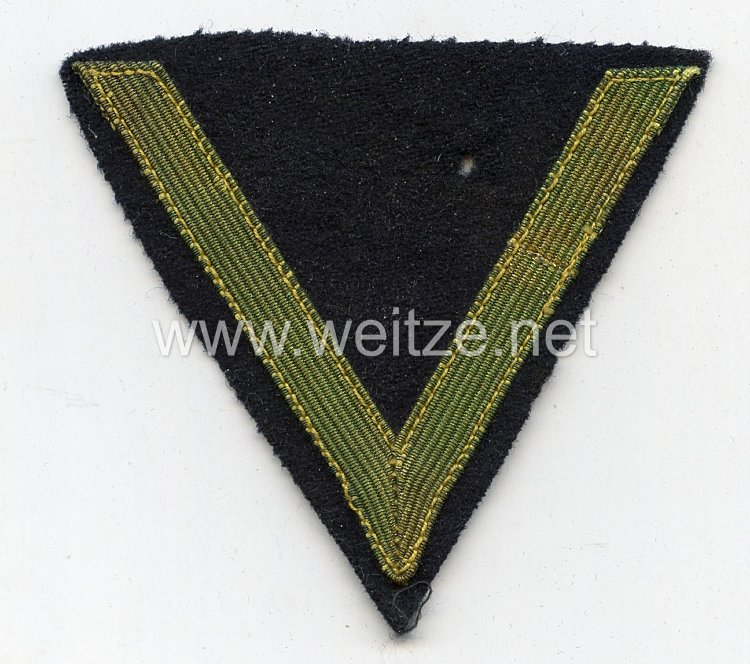
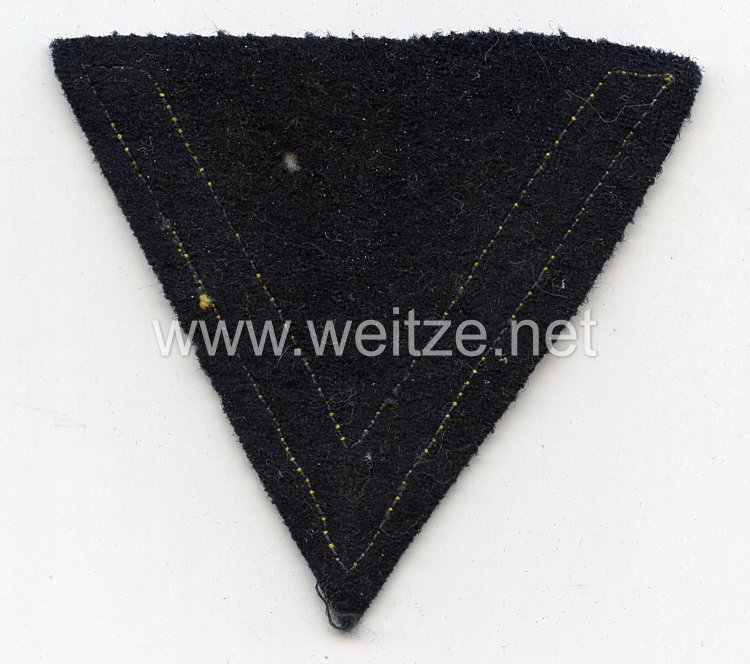
Kriegsmarine Sleeve Insignia Rank Gefreiter (Able Seaman)

Obermatrose until 31.1.1938, for the blue shirt, metal thread, condition 2.
432367
25,00

Kriegsmarine Sleeve Insignia Rank Gefreiter (Able Seaman)

The sleeve insignia for the rank of Gefreiter of the Kriegsmarine represents a significant chapter in the history of German naval uniforms during the National Socialist era. This particular badge, which until January 31, 1938, designated the rank of Obermatrose, embodies the organizational changes and rank structures within the German Kriegsmarine during the 1930s.

The Kriegsmarine was officially established on June 1, 1935, replacing the Reichsmarine of the Weimar Republic. This reorganization brought comprehensive reforms to uniform regulations and the rank system. The introduction of new rank insignia was part of efforts to modernize the navy while simultaneously connecting to the traditions of the Imperial German Navy.

The sleeve insignia described here was worn on the blue shirt, which was part of the daily service uniform for enlisted ranks. The use of metal thread in manufacturing these badges was characteristic of the quality and workmanship of Kriegsmarine uniforms. The metal thread, often made from silver-colored material, was sewn onto the dark blue uniform fabric and formed the distinctive chevrons or angles that identified the respective rank.

Until January 31, 1938, this rank designated the Obermatrose, the second enlisted rank in the Kriegsmarine hierarchy. The Obermatrose ranked above the simple sailor (Matrose) and below the Gefreiter. This rank designation had its roots in the Imperial Navy and was initially retained in the Kriegsmarine. However, with the reform of February 1, 1938, a significant change occurred in the Wehrmacht's rank system, which also affected the Kriegsmarine. From that date forward, the designation was standardized, and the former Obermatrose received the designation Gefreiter, analogous to the corresponding ranks in the Army and Air Force.

This standardization was part of the National Socialist leadership's efforts to more closely integrate the three branches of the Wehrmacht – Army, Air Force, and Navy – and establish a coherent rank system. Despite this alignment, the Kriegsmarine retained its distinctive uniform traditions and insignia, which differed significantly from those of the other branches.

The production and procurement of such sleeve insignia was carried out by authorized manufacturers who had to meet the strict quality standards of the Kriegsmarine. The badges were either factory-sewn onto uniforms or attached by naval units themselves. The craftsmanship quality varied depending on the manufacturer and production period, with early examples often showing higher quality workmanship than later wartime productions.

The blue shirt on which these insignia were worn was an essential component of the naval uniform. It differed significantly from the field-gray uniforms of the Army and the blue uniforms of the Air Force. The traditional naval dress with its characteristic blue reflected centuries-old maritime tradition and gave the Kriegsmarine an unmistakable visual identity.

The condition 2 indicated for this specimen suggests a well-preserved piece with minor signs of wear. In the grading scale of military antiques, this typically designates an object that was worn but shows no significant damage. Such states of preservation are of particular interest to collectors and historians as they represent authentic testimonies of the period.

From a historical perspective, these sleeve insignia are important material sources for understanding the organizational structure and everyday reality of the Kriegsmarine. They document not only the rank hierarchy but also the craftsmanship standards, procurement channels, and the importance of visual hierarchy within the military organization. The change in rank designation in 1938 also reflects the political and organizational developments of the Wehrmacht in the pre-war period.

For collectors of military historical objects, such early sleeve insignia represent particularly sought-after pieces, as they document a relatively short period of use and represent the transitional phase between the Reichsmarine tradition and full integration into the Wehrmacht system.

r