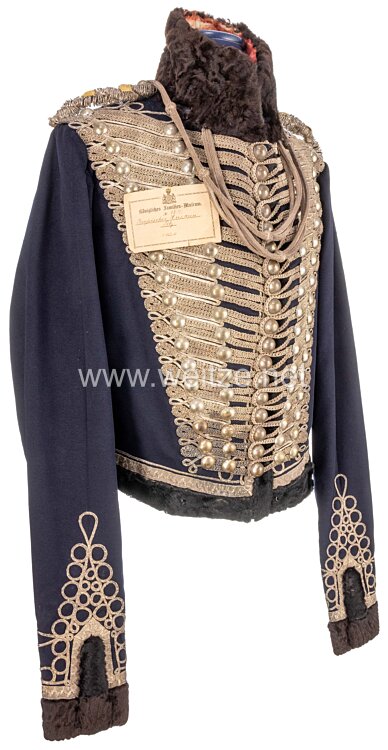
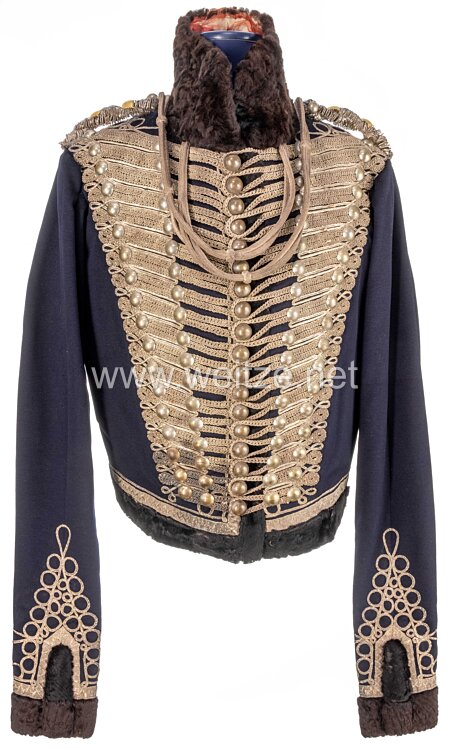
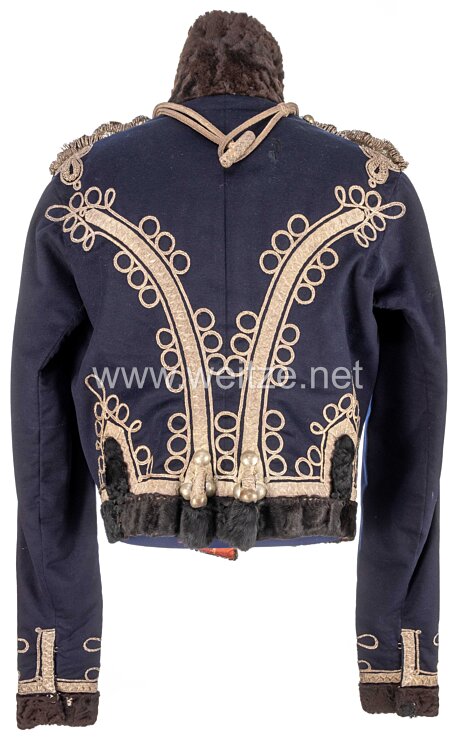
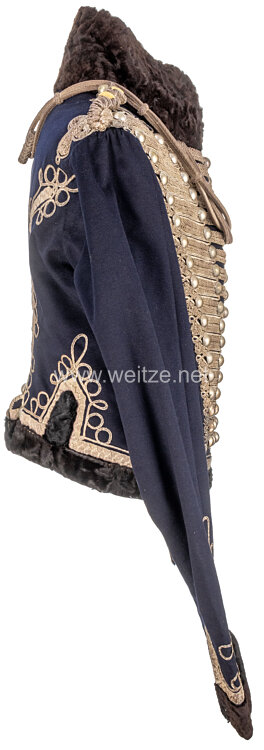
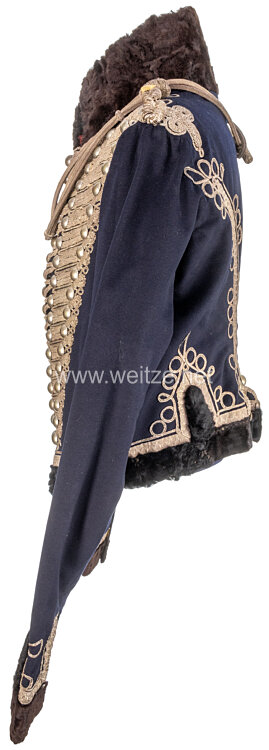
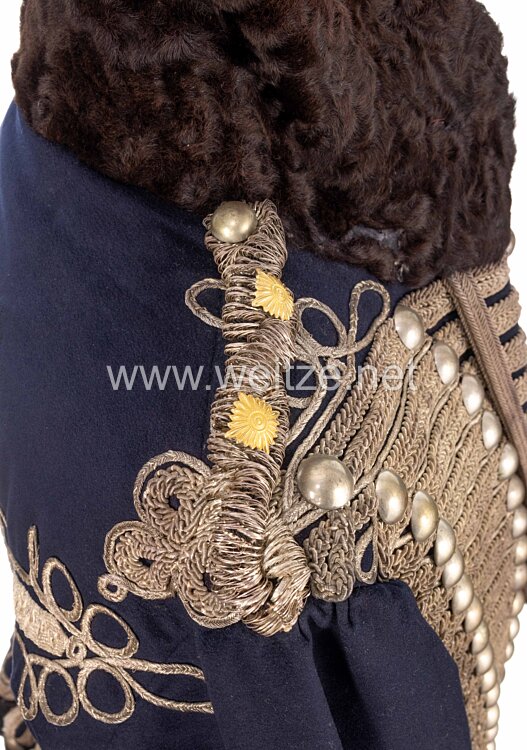
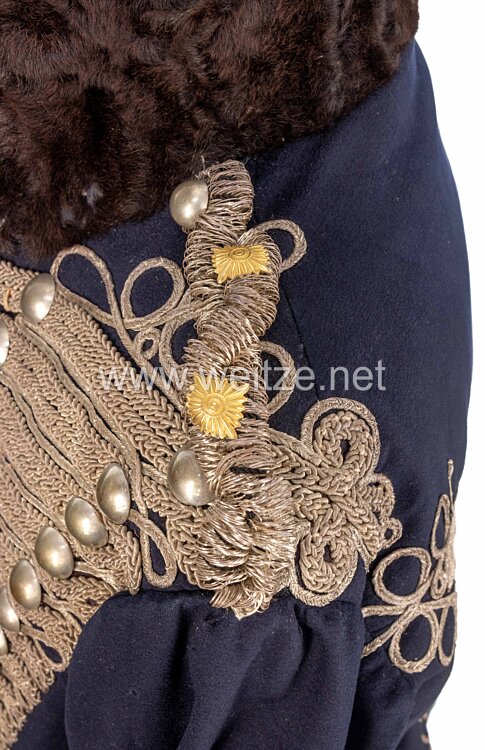
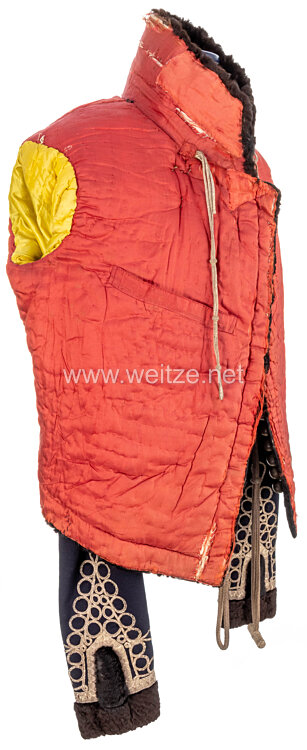
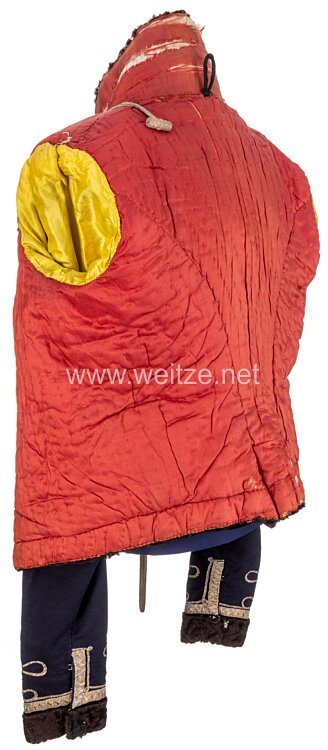
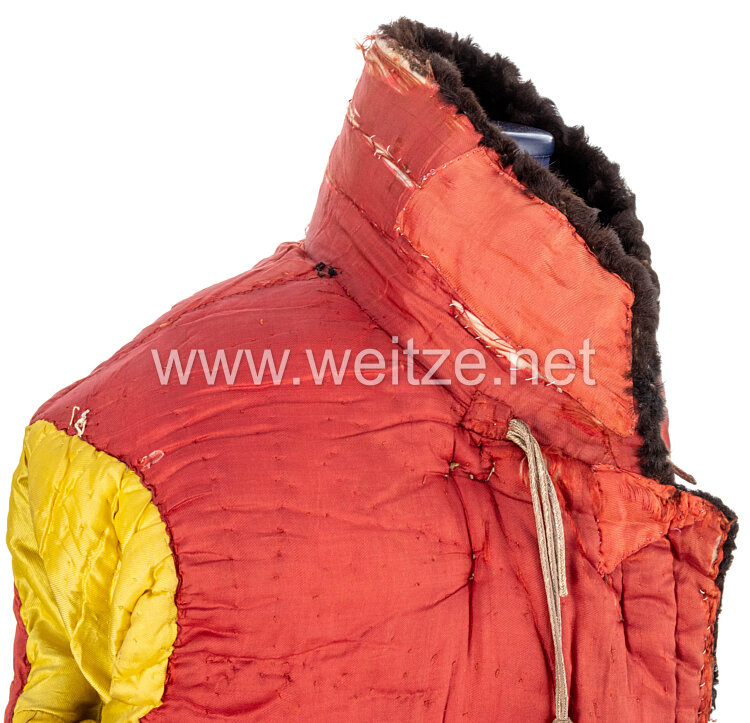
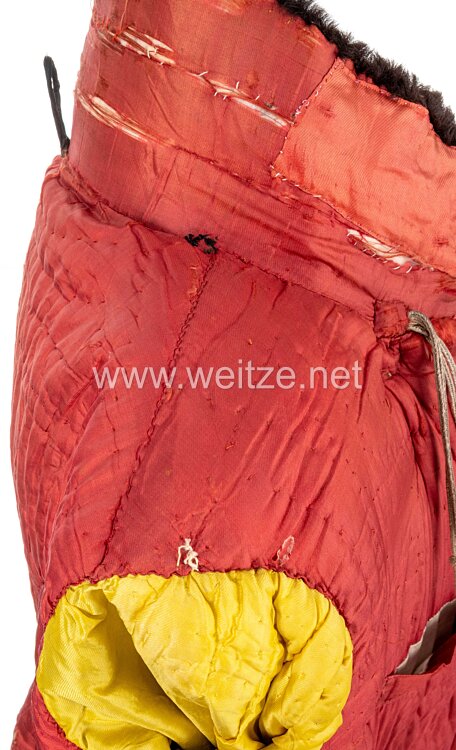
Königreich Preußen Dolman aus dem persönlichen Besitz König Ernst August I. von Hannover als Oberst und Regimentschef des 3. Brandenburgischen Husaren-Regiments
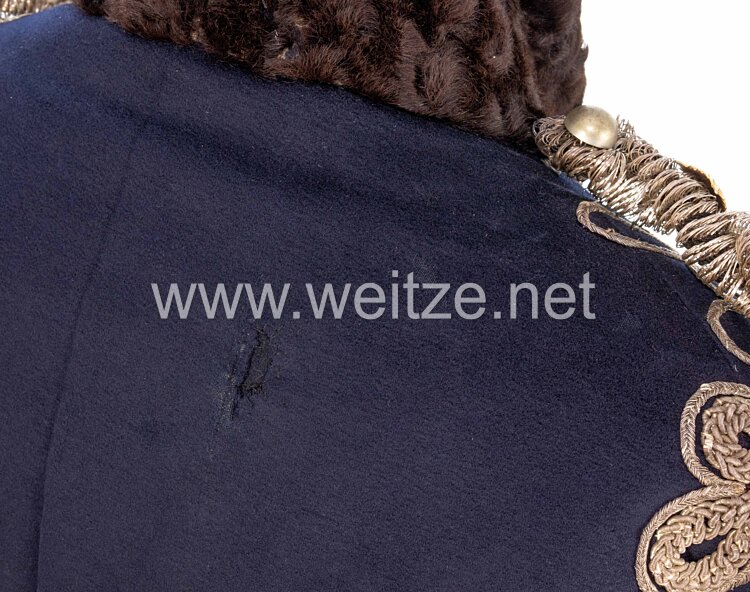
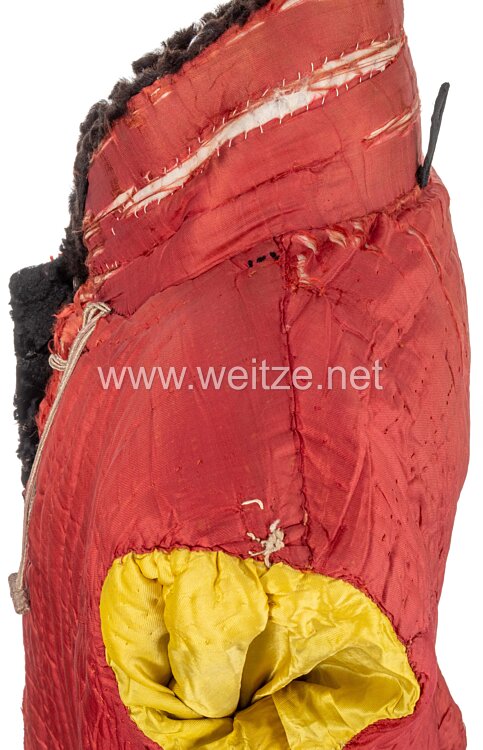
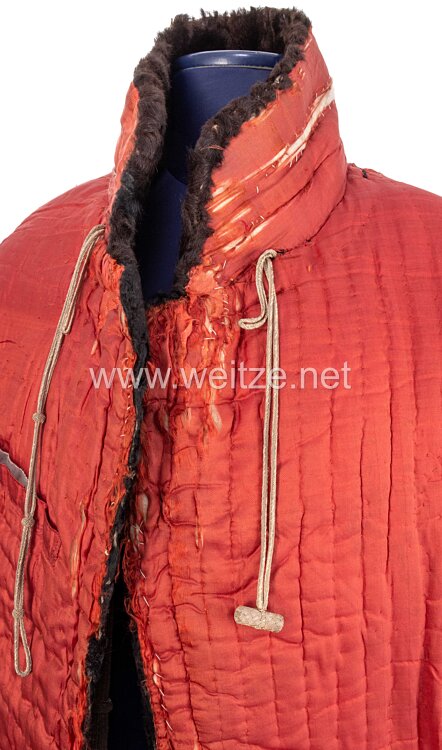
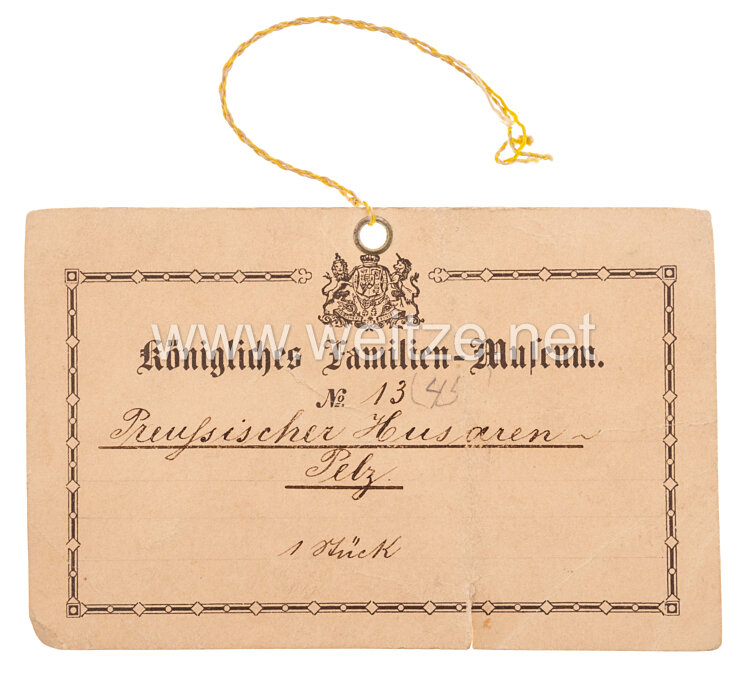
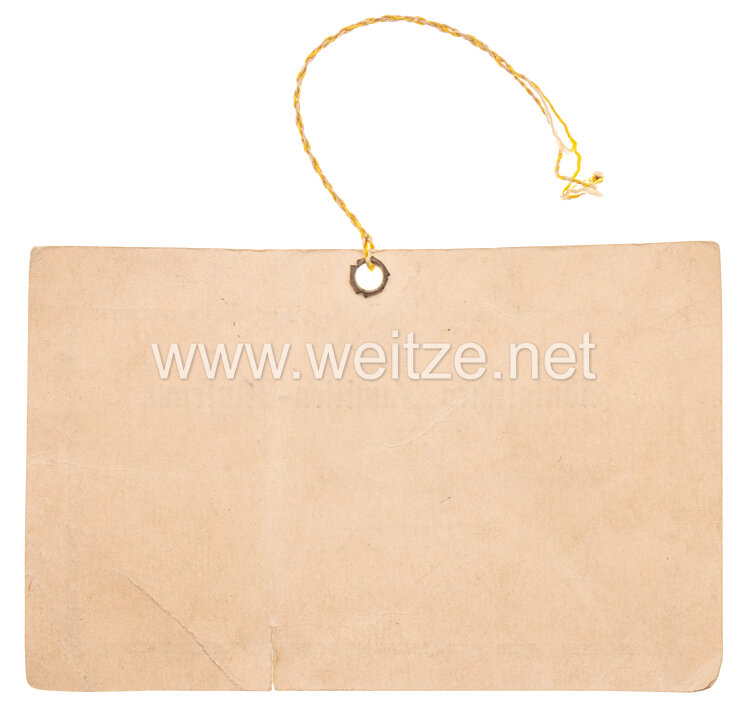
Um 1840. Der Dolman aus feinem blauen Stoff mit braunem und schwarzem Fellbesatz, vorne die reiche echt silberne Verschnürung, fünf Reihen silberfarbener Knöpfe, die mittlere Reihe als Kugeln ausgeführt, an Ärmeln, Saum und Rücken silberne Tressen, auf den Schultern die silbernen Raupen mit je zwei goldenen Rangsternen. Innen mit hellroten/purpurnem Seidenfutter. Das Futter im Nackenbereich mit Tragespuren. Anbei das Etikett des «königliches Familien-Museum(s)» im Schloss Marienburg. Sehr schön erhalten. Zustand 2.
Ein Objekt von historischer und musealer Bedeutung!
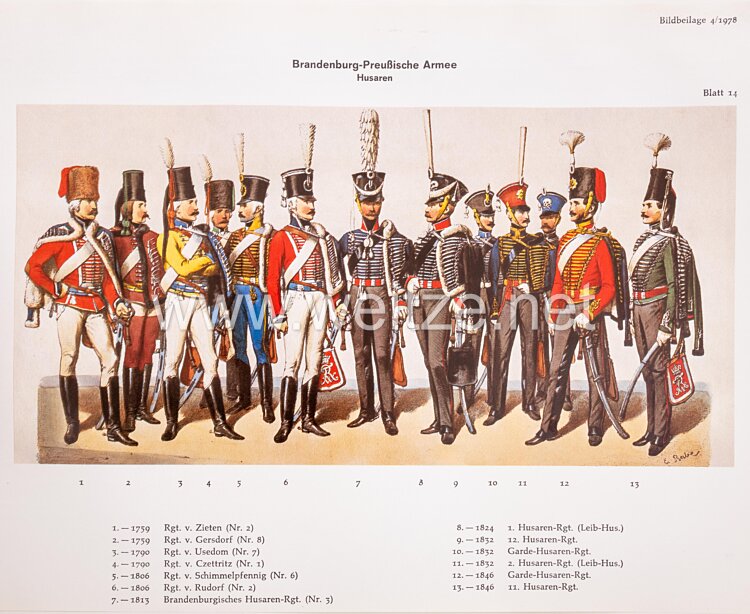
Der Herzog von Cumberland und spätere König von Hannover Ernst August I. (1771*, 1851†) war von 1823 - 1851 Chef des 3. Brandenburgischen Husaren-Regiments (von 1889-1919 "Husaren-Regiment von Zieten (Brandenburgisches) Nr. 3" benannt) mit Standort in Rathenow. Sein Sohn König Georg V. von Hannover von 1851-1878 wurde ebenfalls Chef des Regiments. Sein Enkel Ernst August III., der Herzog von Braunschweig und Lüneburg, wurde in dieser Tradition 1913 zum Chef der 4. Eskadron des Regiments ernannt.
2005 wurde das Stück auf der Sotheby's Auktion versteigert und gelangte von dort in eine private Sammlung.
Eine Uniformdarstellung finden Sie hier: https://www.deutsche-digitale-bibliothek.de/item/TVFGMMGCKD26JS7D32DRIK5LJAGC275X
Ein Objekt von historischer und musealer Bedeutung!
Der Herzog von Cumberland und spätere König von Hannover Ernst August I. (1771*, 1851†) war von 1823 - 1851 Chef des 3. Brandenburgischen Husaren-Regiments (von 1889-1919 "Husaren-Regiment von Zieten (Brandenburgisches) Nr. 3" benannt) mit Standort in Rathenow. Sein Sohn König Georg V. von Hannover von 1851-1878 wurde ebenfalls Chef des Regiments. Sein Enkel Ernst August III., der Herzog von Braunschweig und Lüneburg, wurde in dieser Tradition 1913 zum Chef der 4. Eskadron des Regiments ernannt.
2005 wurde das Stück auf der Sotheby's Auktion versteigert und gelangte von dort in eine private Sammlung.
Eine Uniformdarstellung finden Sie hier: https://www.deutsche-digitale-bibliothek.de/item/TVFGMMGCKD26JS7D32DRIK5LJAGC275X