XI. Olympic Games 1936 Kiel Sailing Competitions - Commemorative Tile

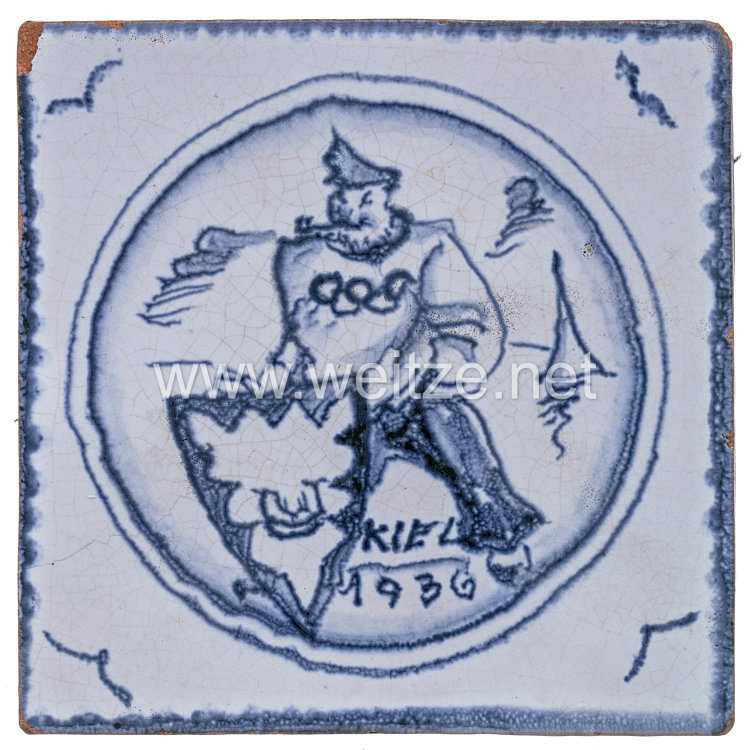
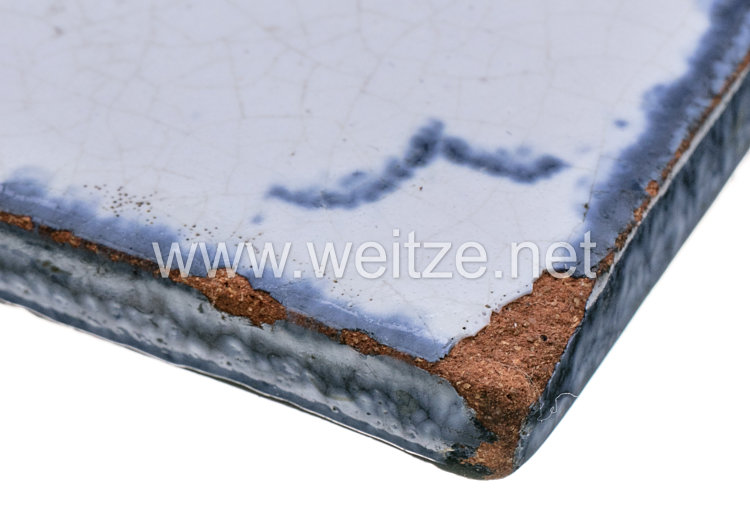
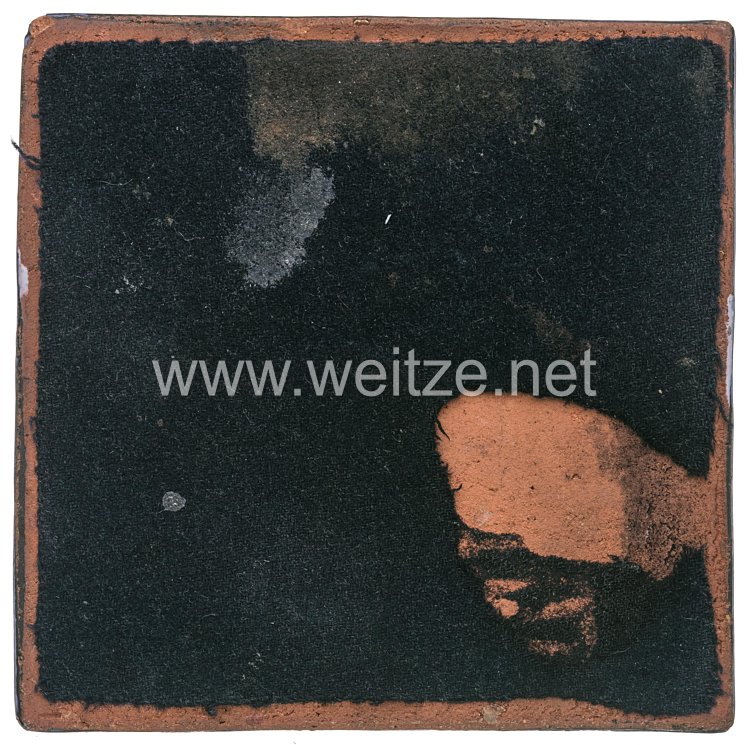
12.5 x 12.5 cm, ceramic tile glazed on sides and top, depicted is a sailor wearing a sweater with the Olympic Rings and holding a shield with the coat of arms of Kiel, below Kiel 1936, fabric backing on bottom, condition 2.
315666
175,00

XI. Olympic Games 1936 Kiel Sailing Competitions - Commemorative Tile

The 1936 Summer Olympics in Berlin remain among the most controversial sporting events in history. While track and field and other competitions took place in Berlin, the sailing events were held in Kiel, the traditional German naval city on the Baltic Sea. This ceramic tile represents a fascinating testimony of that era and the Nazi regime's efforts to instrumentalize the Olympic Games for propagandistic purposes.

The XI Olympic Games took place from August 1-16, 1936, with the sailing competitions held from August 4-12 in the Kiel Fjord. Kiel was a natural choice as a venue: the city had a centuries-old maritime tradition, had been home to the Imperial Navy, and housed important naval facilities. The Kiel Week, a major sailing regatta since 1882, had established the city internationally as a sailing center.

The Nazi regime under Adolf Hitler used the Olympic Games as an opportunity to present Germany as a modern, peaceful nation while simultaneously demonstrating the supposed superiority of the “Aryan race.” For the Kiel sailing competitions, this meant extensive preparations: the city was spruced up, new harbor facilities were created, and accommodations for international guests were provided. The Olympic Village in Kiel-Schilksee was specially built for the participating sailors.

Commemorative items like this ceramic tile were produced as souvenirs and mementos, both for participants and for visitors and locals. The depiction shows a sailor wearing a sweater bearing the characteristic Olympic Rings - the international symbol of the Olympic Movement, designed by Pierre de Coubertin. The sailor holds the coat of arms of the city of Kiel, which traditionally shows a silver ship on a red background, a symbol of the city's deep connection to the sea.

The artistic design of such commemorative pieces often followed the style of the time, combining elements of Art Deco with a certain monumental simplification. The glazed ceramic tile measuring 12.5 x 12.5 cm was a typical souvenir format, well-suited as wall decoration or collector's item. The production of such ceramic works had a long tradition in Germany, and various manufacturers produced Olympic memorabilia in large quantities.

The sailing competitions in Kiel involved 26 nations with approximately 260 athletes in total. Competitions were held in various boat classes, including the Olympic Dinghy, the Star class, the 6-Meter class, and the 8-Meter class. The German team achieved considerable success, which was exploited propagandistically by the regime, although international sailors from many countries also won medals.

The historical assessment of the 1936 Olympic Games is complex. On one hand, they were a significant sporting event with impressive athletic achievements - one thinks of Jesse Owens and his four gold medals. On the other hand, they served the Nazi regime as a gigantic propaganda event. The regime temporarily moderated its anti-Semitic policy in public to avoid international criticism, but resumed it with intensified brutality immediately after the Games.

Objects like this tile raise important questions about the material culture of National Socialism and how to handle such historical artifacts. They are neither pure sports memorabilia nor exclusively Nazi propaganda objects, but exist in a complex intermediate space. For historians and collectors, they are valuable sources that provide insights into everyday culture, the propaganda machinery, and the regime's self-representation.

After World War II, the handling of 1936 Olympic memorabilia was controversially discussed. While some advocated for their destruction, the view increasingly prevailed that such objects should be preserved as historical testimonies to demonstrate the mechanisms of totalitarian propaganda to future generations. Today, such pieces are found in museums, archives, and private collections, where they are presented and interpreted in the context of contemporary history.

The city of Kiel itself has found a reflective approach to this heritage. While the maritime and sporting tradition is honored, the instrumentalization by the Nazi regime is simultaneously critically addressed. The culture of remembrance has evolved from initial repression to a differentiated historical reappraisal that acknowledges both athletic achievement and political abuse.