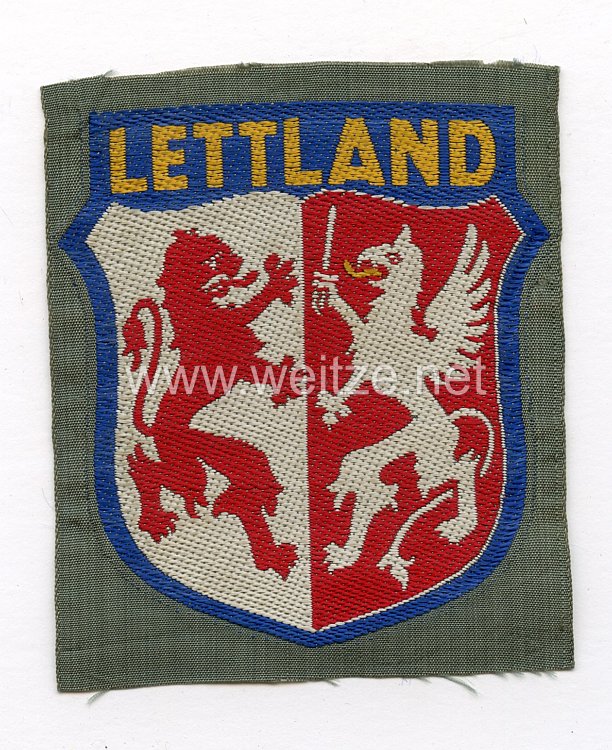
Wehrmacht Heer Sleeve Shield for Volunteers from Latvia

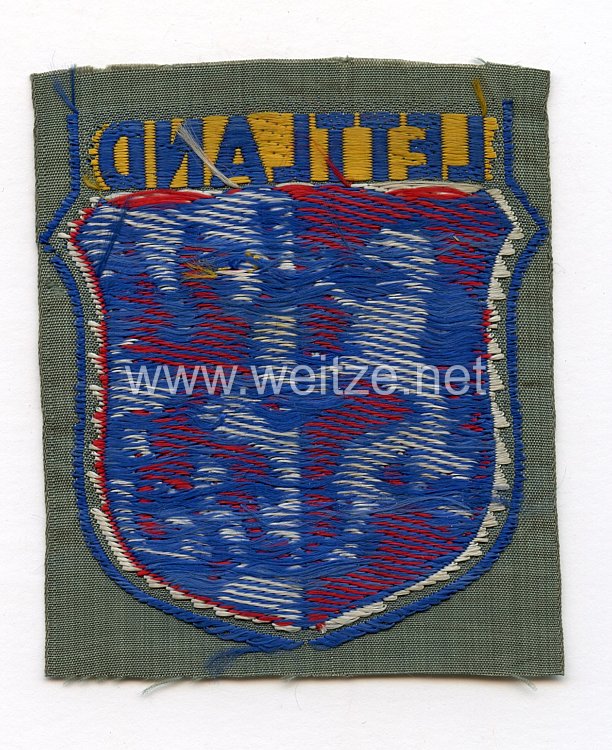
BeVo woven execution. Unworn, condition 2-. Extremely rare.
305966
1.400,00

Wehrmacht Heer Sleeve Shield for Volunteers from Latvia

The Wehrmacht sleeve shield for Latvian volunteers represents a significant testimony to the complex history of foreign volunteer formations in service of the Third Reich during World War II. These badges, manufactured using Bevo weaving technique, embody the ambivalent historical reality of collaboration and national resistance against Soviet occupation in the Baltic states.

The Latvian Legion, officially designated as the 15th and 19th Waffen-Grenadier Divisions of the SS, was established from 1943 onwards. The recruitment of Latvian volunteers began in spring 1943, after the German Wehrmacht urgently needed personnel reinforcements following the defeats at Stalingrad and in the Caucasus. For many Latvians, service in German formations represented an opportunity to fight against Soviet rule, which had occupied Latvia between 1940 and 1941 and exercised terror.

The Bevo weaving technique, named after the company Bandfabrik Ewald Vorsteher from Wuppertal-Barmen, was the preferred manufacturing method for Wehrmacht and SS insignia. This technique enabled the production of high-quality, colorfast, and durable fabric badges with fine details. Latvian sleeve shields typically displayed the colors of the Latvian national flag – red and white – often in the form of a heraldic shield with emblematic elements.

The historical context of Latvian units in the German military is extremely complex. Latvia had been occupied and annexed by the Soviet Union in June 1940, followed by deportations and political purges by the NKVD. An estimated 35,000 Latvians were deported or murdered in 1940-1941. When German troops invaded as part of Operation Barbarossa in summer 1941, they were initially regarded by parts of the population as liberators.

However, the formation of the Latvian Legion occurred under German military constraints. Although officially designated as “volunteers,” there were various forms of recruitment, from genuine voluntarism to administrative pressure. The Nuremberg Trials later determined that the Baltic Waffen-SS units should be evaluated differently from German SS formations, as they arose primarily from military necessities and anti-Soviet motives.

The sleeve shields were worn on the right upper arm of the uniform according to Wehrmacht service regulations. They served to identify the national origin of foreign volunteers within the German armed forces. The wearing of such insignia was strictly regulated and required official authorization.

The 15th Waffen-Grenadier Division of the SS (Latvian No. 1) was formed in spring 1943, the 19th Waffen-Grenadier Division of the SS (Latvian No. 2) followed in 1944. These units fought mainly on the Eastern Front, particularly in the defense of the Courland Pocket in 1944-1945. Approximately 115,000 to 150,000 Latvians served in German formations during the war.

The historical assessment of these units remains controversial. In Latvia, Legion veterans are partly viewed as fighters for national independence, while international perspectives critically evaluate the collaboration with the Nazi regime. However, the Latvian Legion was not involved in Holocaust crimes, which distinguishes it from other collaborationist units.

Such sleeve shields in unworn condition are today extremely rare. Most were worn during the war and were lost or destroyed after the war's end. Unworn examples in very good condition mostly originate from undelivered stocks or depots. Today they possess considerable military-historical and collector value as documents of this complex period.

The study of such militaria objects is important for understanding recruitment practices, military organization, and the visual culture of World War II. They document the internationalization of the German armed forces in the late phase of the war and the tragic dilemmas of occupied nations between different totalitarian systems.