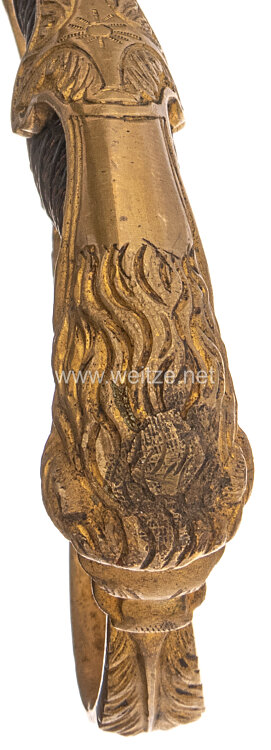
Reichswehr Artillery Officer's Saber
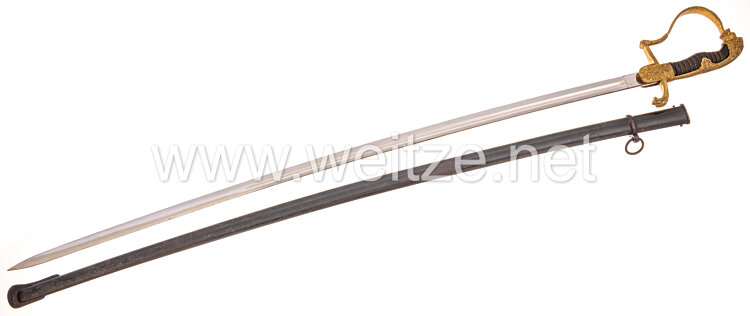
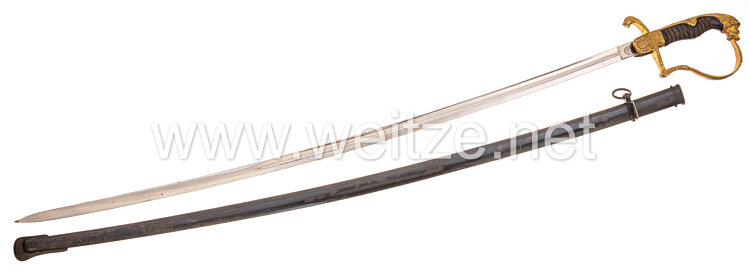
Blade length approximately 800mm
Overall length approximately 980mm
The Reichswehr Artillery Officer's Saber represents an important transitional period in German military history between the end of World War I and the Nazi seizure of power. This weapon embodies the military tradition of the Reichswehr, the German armed forces from 1919 to 1935, which had to operate under the strict provisions of the Treaty of Versailles.
Following Germany's defeat in World War I, the German army was drastically restricted by the Versailles Peace Treaty. The Reichswehr, officially founded on March 23, 1921, was limited to a maximum of 100,000 men, including 4,000 officers. Despite these restrictions, the Reichswehr deliberately preserved the military traditions of the Imperial era, including ceremonial edged weapons for officers.
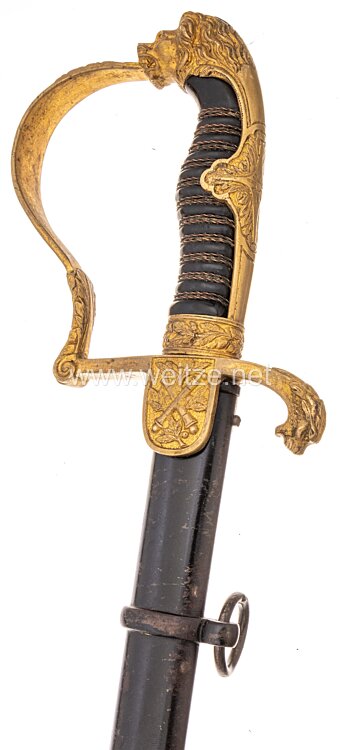
The Artillery played a special role in the Reichswehr, as its technical expertise and organization were seen as the foundation for possible future rearmament. The artillery officer's saber differed from sabers of other branches through specific details, particularly the crossed cannon barrels on the guard, which represented the traditional symbol of the artillery.
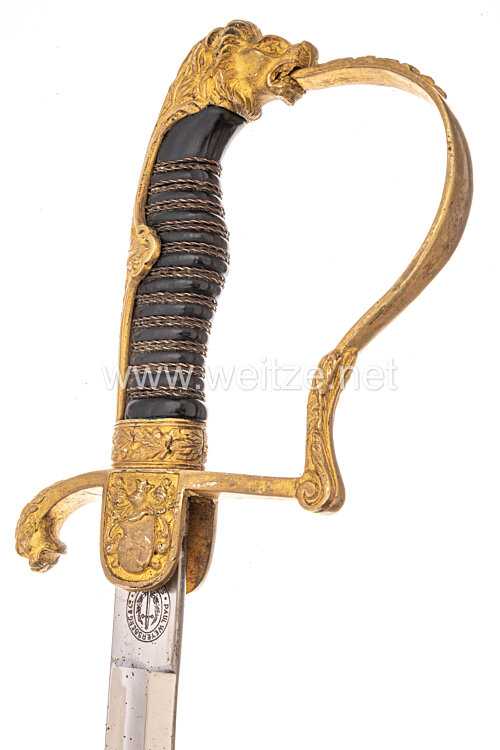
The manufacturer Paul Weyersberg & Co. of Solingen was among the most renowned German blade smiths. The company, which could trace its roots back to the 18th century, had supplied the Prussian and later German army with high-quality edged weapons for decades. The Solingen blade industry was world-famous for its exceptional quality, and Weyersberg was among the leading manufacturers of military edged weapons.
The brass hilt with lion's head followed established German military traditions. The lion symbolized courage and strength and was a common motif on German officer sabers since the 19th century. The gilding of the hilt emphasized the wearer's status as an officer and served ceremonial purposes at parades and official occasions.
The slightly curved blade with a length of approximately 800 mm corresponded to standard specifications for officer sabers of this era. This form was a compromise between the traditional cavalry saber shape and the requirements of a modern, increasingly motorized army. The saber in the Reichswehr era was primarily a badge of rank and ceremonial object, less a practical combat weapon.
The black plastic grip with wire wrapping was typical of the Reichswehr period. Unlike the more elaborate ivory or mother-of-pearl grips of earlier epochs, the practical plastic grip reflected the economic constraints of the Weimar Republic. The wire wrapping ensured a secure grip while being durable and cost-effective.
The black steel scabbard was characteristic of German military edged weapons of this period. The black lacquer finish served both corrosion protection and aesthetic purposes, contrasting with the bright or chrome-plated scabbards of other armies. The steel scabbard was robust and designed for practical military use.
The Reichswehr period (1919-1935) was characterized by the attempt to maintain professional military standards under extremely restrictive conditions. Reichswehr officers were carefully selected and intensively trained, as numerical restrictions forced a concentration on quality over quantity. The officer's saber was part of the uniform and was worn at official occasions, parades, and ceremonial functions.
With the Nazi seizure of power in 1933 and the official renaming of the Reichswehr to Wehrmacht in 1935, this era ended. Many Reichswehr officers and their equipment were transferred to the new Wehrmacht, with new uniform regulations and equipment items being gradually introduced.
Today, authentic Reichswehr officer sabers are sought-after collector's items that document an important, though often overlooked, period of German military history. They represent the continuity of military traditions in a time of political and social upheaval and are important testimonies to efforts to maintain professional military standards under adverse circumstances.