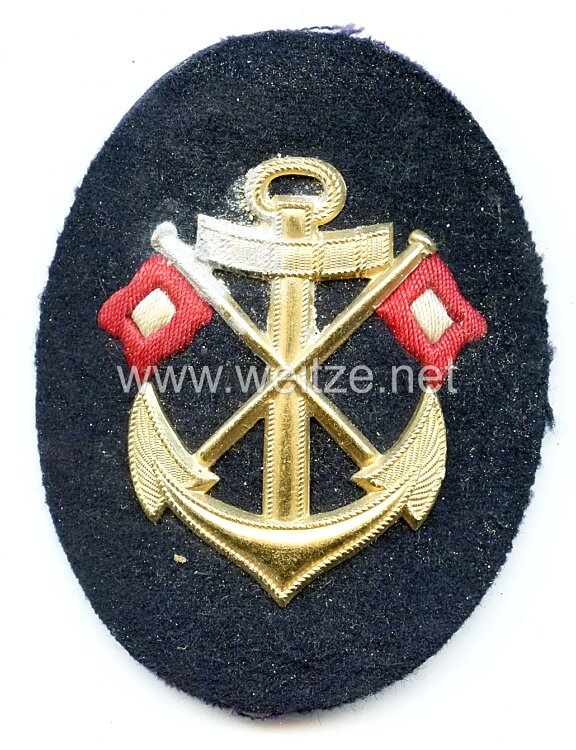
Kriegsmarine Sleeve Insignia for a Signalmaat (Petty Officer Signalman)
The Kriegsmarine sleeve badge for a Signalmaat (Signal Petty Officer) represents an important aspect of the rank insignia system of the German Navy during World War II. This metal version was specifically designed for the blue parade uniform and demonstrates the complex hierarchy and specialization within the German naval forces between 1935 and 1945.
The Kriegsmarine was officially established on June 1, 1935, after Nazi Germany openly rejected the restrictions of the Treaty of Versailles. With the Anglo-German Naval Agreement of June 18, 1935, the systematic construction of a modern German naval fleet began. The introduction of a uniform and clearly structured system of insignia was of central importance for the organization and discipline of the force.
The Signalmaat belonged to the group of non-commissioned officers and specialized in maritime communications. His duties included communication through flag signals, Morse code, signal lamps, and later radio-technical procedures. In the hierarchical structure of the Kriegsmarine, the Maat ranked between enlisted personnel and higher non-commissioned officers. The Signalmaat held a particularly responsible position, as the precise and rapid transmission of orders and information often determined the success of tactical operations.
The metal construction of this sleeve badge clearly distinguishes it from the embroidered variants used for daily service. Metal badges were exclusively used for parade uniforms and special occasions. The blue parade jacket, for which this badge was intended, was worn at official ceremonies, receptions, and other representative events. The metal manufacture gave the badge special value and symbolized the wearer's importance at formal occasions.
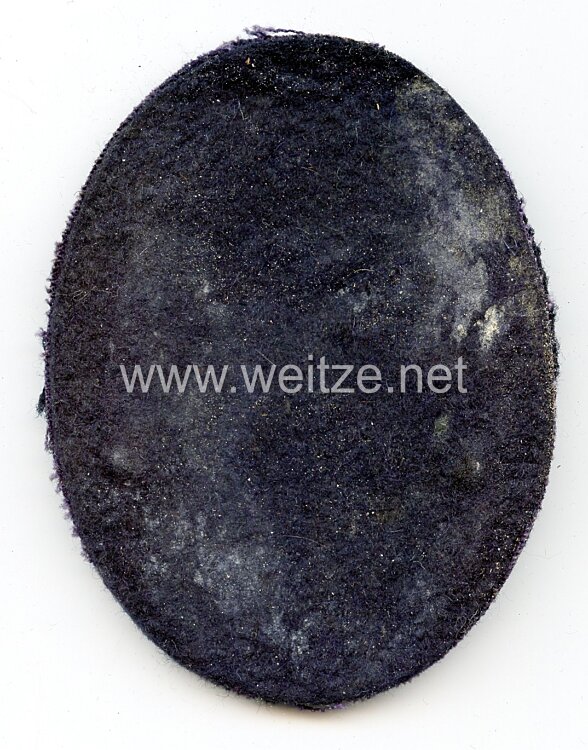
The backing plate is a characteristic feature of these metal badges. It served to cover the sharp edges of the attachment pins while simultaneously protecting the valuable uniform material from damage. This constructional detail demonstrates the care with which the Kriegsmarine's uniform regulations were developed.
The design of sleeve badges followed the Kriegsmarine Clothing Regulations, which were detailed in various service regulations. The number of chevrons and the arrangement of specialist badges were precisely defined. The Maat typically wore one or more chevrons on the upper arm, supplemented by the respective career badge that identified his specialization as a signalman. This specialist badge usually displayed two crossed signal flags.
The oxidation of the present piece is a natural aging process for metal badges of this period. Most of these badges were manufactured from non-ferrous metal alloys, frequently from nickel silver or brass with various surface treatments. Over the decades, chemical reactions form a patina that today serves as evidence of authenticity and age.
The historical context of these badges is inseparably linked with the history of the German Kriegsmarine in World War II. Signal petty officers played an important role aboard all ship types – from small fast boats to large battleships such as the Bismarck or the Tirpitz. On U-boats as well, specially trained radio operators and signalmen were indispensable for communication with U-boat command and other units.
After the war's end in 1945, the Kriegsmarine was dissolved, and its uniforms and badges became historical relics. Today, such pieces are important testimonies to military history and are preserved by collectors, museums, and historians. They document not only the technical and organizational structure of a historical armed force but also the craftsmanship of contemporary manufacturers and the significance of rank and specialization in the military context.
The preservation and scientific documentation of such objects is important for historical research and education. They enable subsequent generations to understand the material culture and organizational structures of this period without glorifying the underlying ideology.