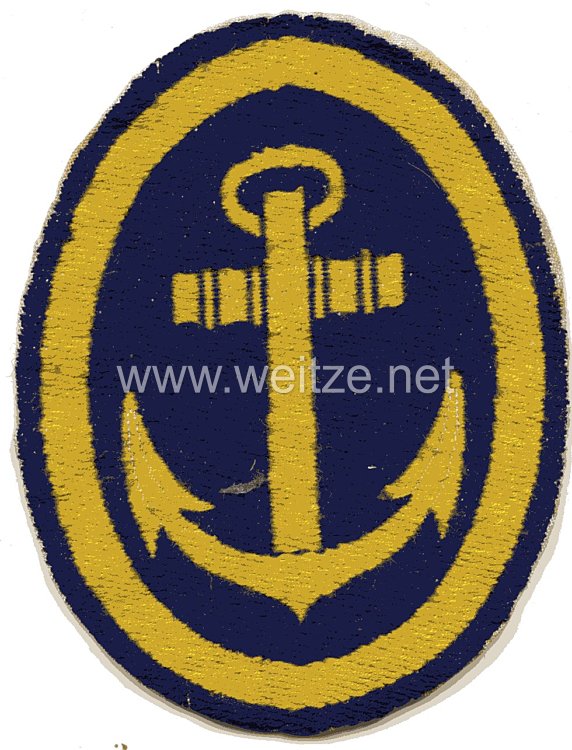
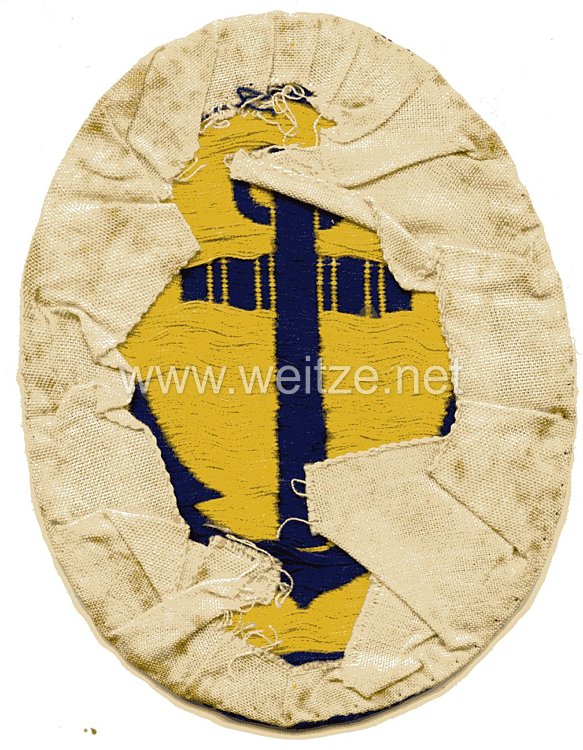
Kriegsmarine Sports Uniform Badge for Officers

Woven construction with gold border around the perimeter. Lightly worn, Condition 2.
440266
30,00

Kriegsmarine Sports Uniform Badge for Officers

The Kriegsmarine Sports Uniform Badge for Officers represents a fascinating aspect of Third Reich military regalia. This specialized badge was worn by officers of the German Kriegsmarine and formed an integral part of the Navy's sports attire during the period from 1935 to 1945.

The Kriegsmarine, officially established on June 1, 1935, through the Defense Law, replaced the Reichsmarine of the Weimar Republic. This reorganization brought a complete overhaul of uniform regulations, including specialized clothing for various occasions and activities. The sports uniform was part of this differentiated uniform system and was to be worn during physical exercises, sporting events, and military training.

The woven execution of this badge demonstrates the high craftsmanship quality designated for Kriegsmarine officers. Unlike embroidered or machine-made variants for enlisted ranks, officer badges frequently employed finer weaving techniques. The surrounding gold border was a characteristic feature denoting officer rank, clearly distinguishing these badges from those of non-commissioned officers and enlisted men.

Kriegsmarine uniform regulations were detailed in the Anzugordnungen (dress regulations), which were regularly updated. These documents precisely governed when and how certain uniform components were to be worn. The sports uniform typically consisted of a white or blue sports jacket with matching trousers and was worn during various athletic activities that were part of military training.

The badge itself typically displayed maritime symbols such as anchors, eagles, or other insignia that indicated membership in the Kriegsmarine. Placement on the sports uniform was precisely prescribed and followed strict military dress code protocols. Officers were required to display their rank distinctions visibly even during athletic activities.

The manufacture of such badges was carried out by specialized manufacturers authorized by the Kriegsmarine. Companies such as BEVO (Bandfabrik Ewald Vorsteher) in Wuppertal were renowned for their high-quality woven military insignia. Quality control was stringent, and only products meeting military standards were permitted for use.

The condition described as “lightly worn” indicates that this specimen was actually used in service. Many officers possessed multiple sports uniforms and corresponding badges, as physical fitness held high importance in military training. The Kriegsmarine placed great emphasis on the physical conditioning of its officers, making sports and training a regular part of daily service life.

Following the collapse of the Third Reich in May 1945, the Kriegsmarine was dissolved. Many uniform components and badges were destroyed, confiscated, or taken as souvenirs. This makes preserved specimens important historical documents that provide insight into the material culture of the German military of that era.

Today, such badges are subjects of military historical research and collecting. They help historians understand the complex uniform regulations and social hierarchy within the Kriegsmarine. The different quality grades and executions reflect the strict rank order that characterized military life.

The gold border specifically signified the officer corps, a deliberate visual distinction that reinforced the hierarchical structure of the naval service. This attention to detail in even athletic wear demonstrates the thoroughness with which the Kriegsmarine approached all aspects of military appearance and discipline.

r