Combined Pilot and Observer Badge - FLL

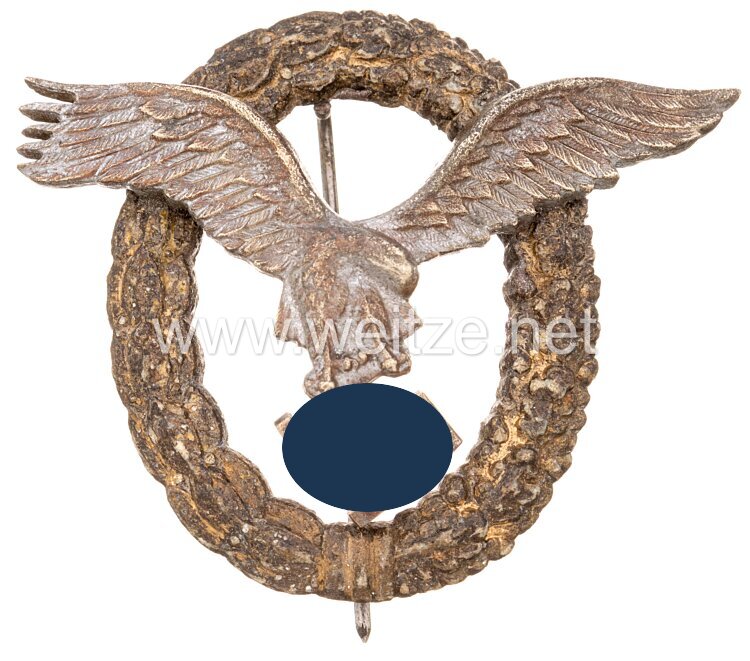
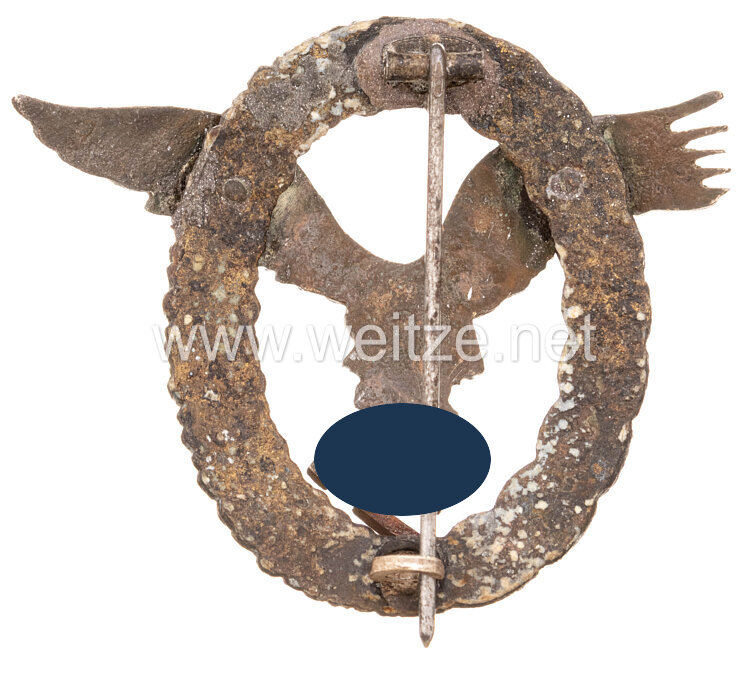
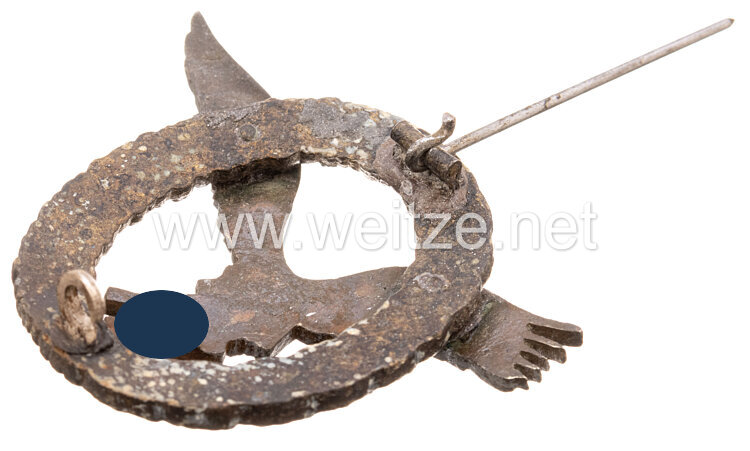
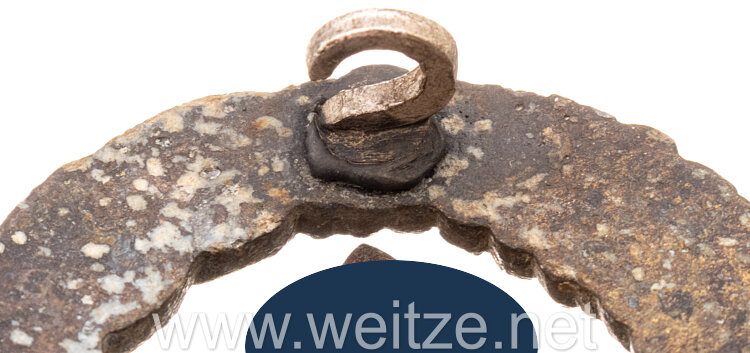
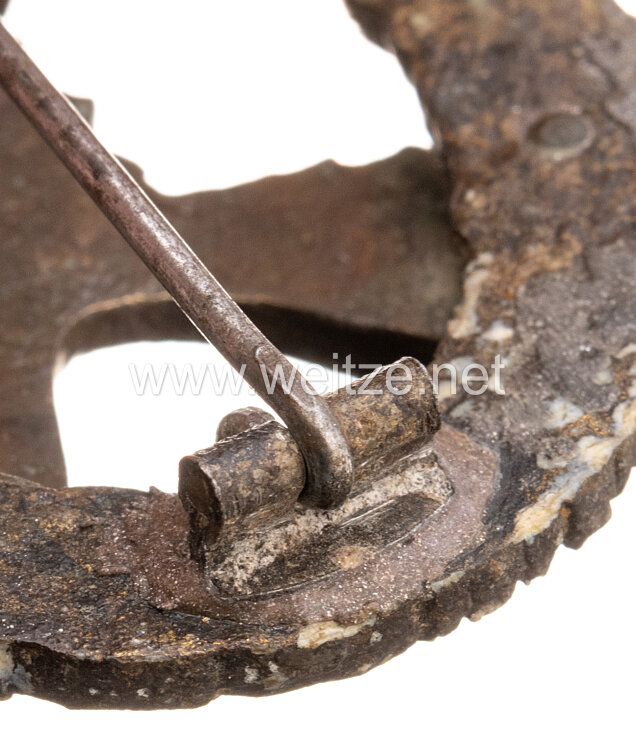
Cleaned ground-recovered artifact, wreath of zinc with gilding still visible, eagle of non-ferrous metal with traces of silver plating.
455866
650,00

Combined Pilot and Observer Badge - FLL

The Combined Pilot and Observer Badge represents one of the most significant decorations of the German air forces during World War I. This particular version bears the designation FLL, indicating the manufacturer Friedrich Linden, Lüdenscheid, one of the renowned producers of military decorations during this era.

The introduction of this badge occurred through the Supreme Cabinet Order (AKO) of January 27, 1914, when King Wilhelm II of Württemberg established the award. Unlike other German federal states that introduced separate badges for pilots and observers, the Kingdom of Württemberg chose a combined badge that honored both functions. This reflected the practical reality that many aircraft crew members performed both roles, and the close cooperation between pilot and observer was essential for success.

The present specimen is a cleaned ground find, meaning it was recovered and conserved after decades in the soil. The zinc wreath still shows traces of the original gilding, while the non-ferrous metal eagle displays remnants of silvering. This combination of materials was typical for the production of such badges: the laurel wreath was frequently made of zinc and gilded, while the central eagle was crafted from higher-quality non-ferrous metal (often tombac or bronze) and silvered.

The design followed the classic pattern of Württemberg aviation badges: a leftward-facing eagle with outstretched wings, surrounded by an oval laurel wreath. The Württemberg eagle differed in details from the Prussian and Bavarian variants, reflecting the federal structure of the German Empire. The badge was typically worn on the left breast of the uniform and represented a significant decoration that was only awarded after successful training and proven competence.

The awarding practice was strictly regulated. Candidates had to complete comprehensive theoretical and practical training that required both technical understanding and flying skills. For observers, additional training in navigation, map reading, and reconnaissance techniques was necessary. Military aviation was still in its infancy during this period, and the bearers of such badges belonged to the elite of the armed forces.

The manufacturer Friedrich Linden from Lüdenscheid was one of the established producers of militaria in the German Empire. Lüdenscheid had made a name for itself as a center of metalworking, and numerous companies there supplied the armed forces with orders, badges, and military equipment. The manufacturer's mark FLL is found on various decorations from this period and stands for a certain quality of workmanship.

The condition as a ground find gives this specimen a special historical dimension. Such finds often come from former battlefields, training grounds, or garrison locations. The fact that traces of the original gilding and silvering are still visible after cleaning testifies to the original quality of manufacture. Zinc was a common material during the war, as more valuable metals were increasingly needed for war-essential purposes.

Military aviation of World War I developed rapidly from a reconnaissance weapon to an independent combat arm. Initially, aircraft served primarily for scouting enemy positions, but air combat between opposing machines quickly emerged. Bombers and fighter aircraft were developed, and the role of aircraft crews became increasingly important. The flight badge symbolized not only technical competence but also courage and commitment in a new, dangerous dimension of warfare.

Today, such ground finds represent important testimonies of military history. They document the material culture of the time, production techniques, and the history of individual units and persons. For collectors and historians, they offer insights into an era of profound technological and social change, in which aviation evolved from a curiosity to a decisive military factor.

r