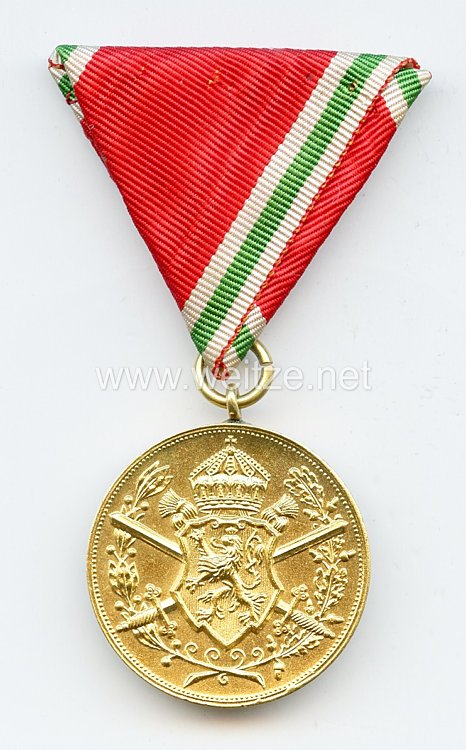
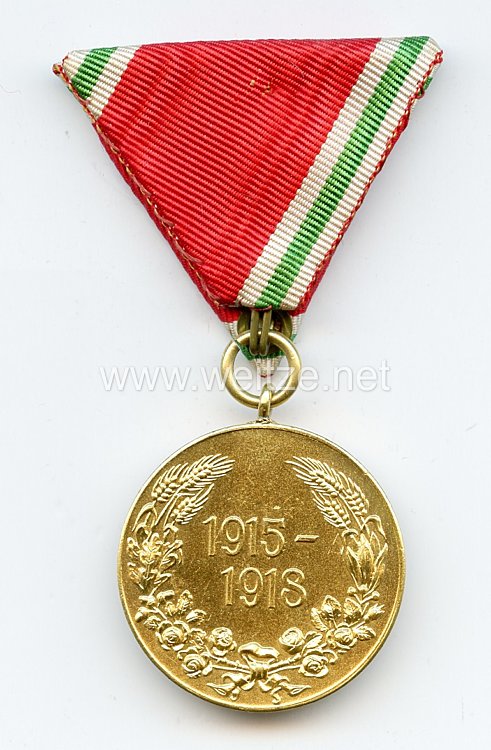
Bulgaria War Commemorative Medal 1915 - 1918

on triangular ribbon, condition 2.
444366
25,00

Bulgaria War Commemorative Medal 1915 - 1918

The Bulgarian War Commemorative Medal 1915-1918 represents a significant testimony to Bulgarian military history during the First World War. This decoration was instituted by the Kingdom of Bulgaria to honor the participation of Bulgarian forces in the First World War and preserve the memory of this devastating conflict.

Bulgaria entered the First World War on October 14, 1915, on the side of the Central Powers, after receiving territorial promises regarding Macedonia. This decision was significantly influenced by Bulgaria's defeat in the Second Balkan War of 1913, during which the country lost considerable territories to Serbia, Greece, and Romania. The Bulgarian leadership under Tsar Ferdinand I hoped to reverse these losses through alliance with Germany and Austria-Hungary.

Bulgarian forces fought primarily on the Balkan theater of the war. They participated in several significant operations, including the successful offensive against Serbia in autumn 1915, which led to Serbia's occupation. Bulgarian troops also fought against Romanian forces after Romania's entry into the war in 1916, and from 1916 onward faced Allied forces under French and British command at the Salonika Front.

The War Commemorative Medal was instituted after the war's end by royal decree to provide all members of the Bulgarian armed forces with a memorial of their war service. The medal was intended for both combatants and non-combatants who had served the Kingdom during the period 1915-1918.

The distinctive triangular ribbon of the medal is a special characteristic of Bulgarian military decorations from this era. The ribbon's colors traditionally reflected Bulgarian national colors and differed from the ribbons of other contemporary decorations. This triangular suspension was typical of Bulgarian commemorative and war medals from the monarchical period.

The design of such commemorative medals followed the heraldic and numismatic traditions of the Bulgarian royal house of Saxe-Coburg-Gotha. Typically, these decorations displayed royal symbols, coats of arms, or inscriptions referring to the war period. The medals were manufactured from various metals, with bronze and iron being the most common materials, conditioned by metal shortages during and after the war.

The First World War ended for Bulgaria with the Armistice of Salonika on September 29, 1918, after Allied troops broke through the Bulgarian front. Bulgaria was thus the first of the Central Powers to capitulate. The subsequent Treaty of Neuilly-sur-Seine of November 27, 1919, imposed harsh peace conditions on Bulgaria: territorial losses, reparation payments, and military restrictions.

For Bulgarian soldiers, the war meant enormous sacrifices. Of approximately 1.2 million mobilized soldiers, an estimated 87,000 to 100,000 died, and more than 150,000 were wounded. These losses had profound effects on Bulgarian society and shaped the interwar period.

The War Commemorative Medal acquired special significance for veterans after 1918. In a time of economic hardship and political instability, it served as a symbol of shared experience and endurance. Veterans' organizations played an important role in Bulgarian politics during the interwar period.

From a collector's perspective, Bulgarian militaria from the First World War are today of considerable historical interest. The preservation of such medals in various conditions enables historians and collectors to study the material culture of this era. The indicated condition 2 suggests, according to common numismatic classification, a well-preserved piece with minor signs of wear.

These decorations are important historical sources for understanding the Bulgarian perspective on the First World War. They document not only military history but also the manner in which the Kingdom of Bulgaria memorialized its war participation and honored its veterans. In contemporary research, such objects are increasingly viewed as part of the transnational history of the First World War, extending beyond dominant Western European narratives.

r