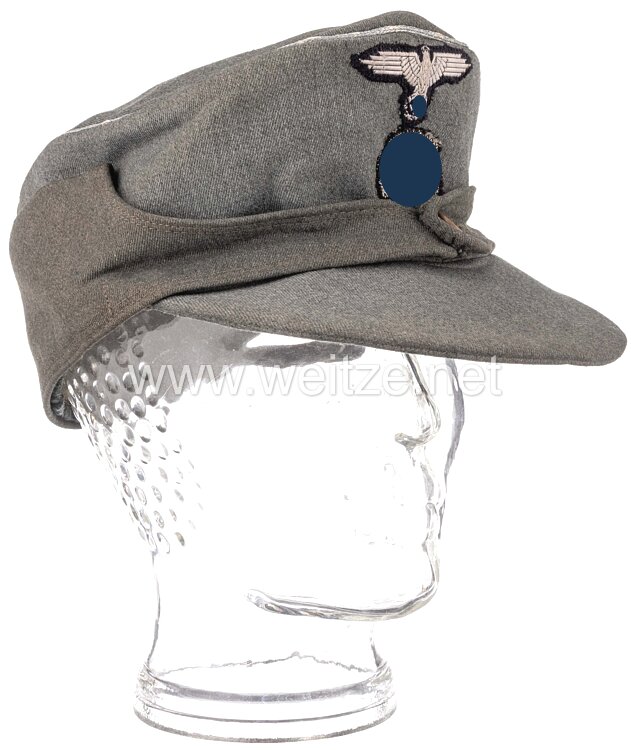
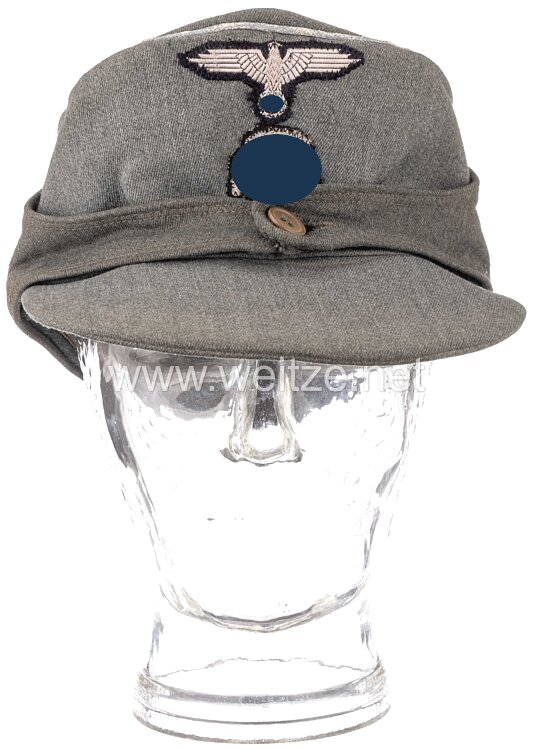
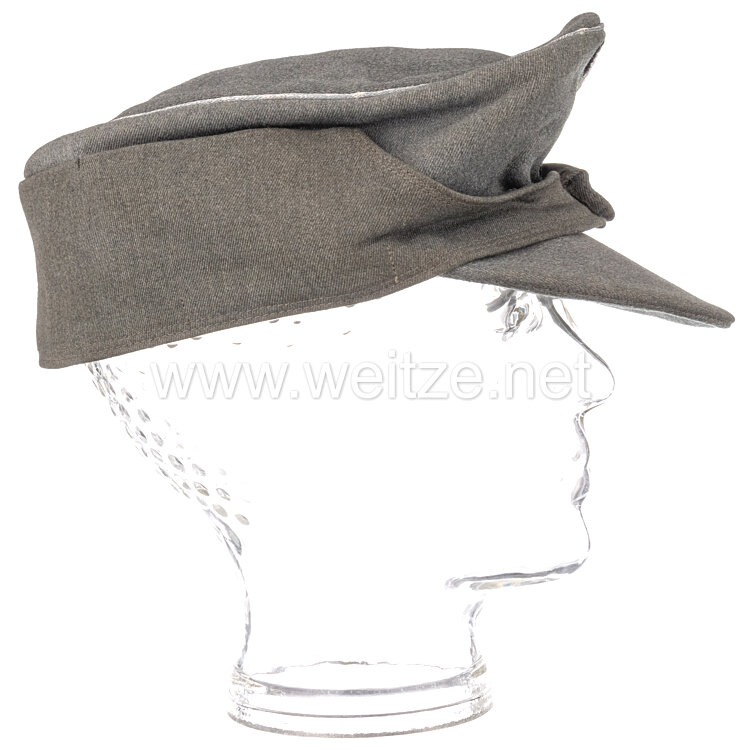
Waffen-SS M43 Field Cap for Officers

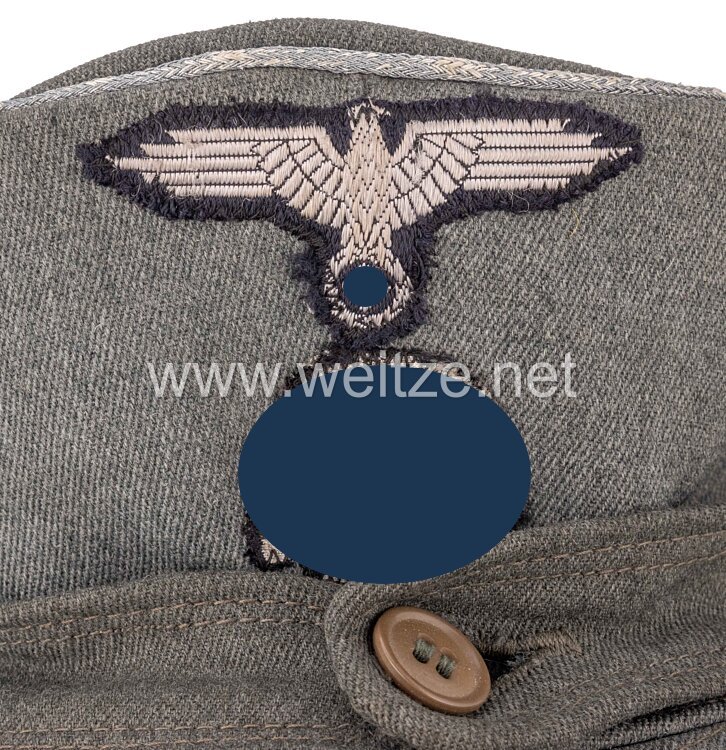
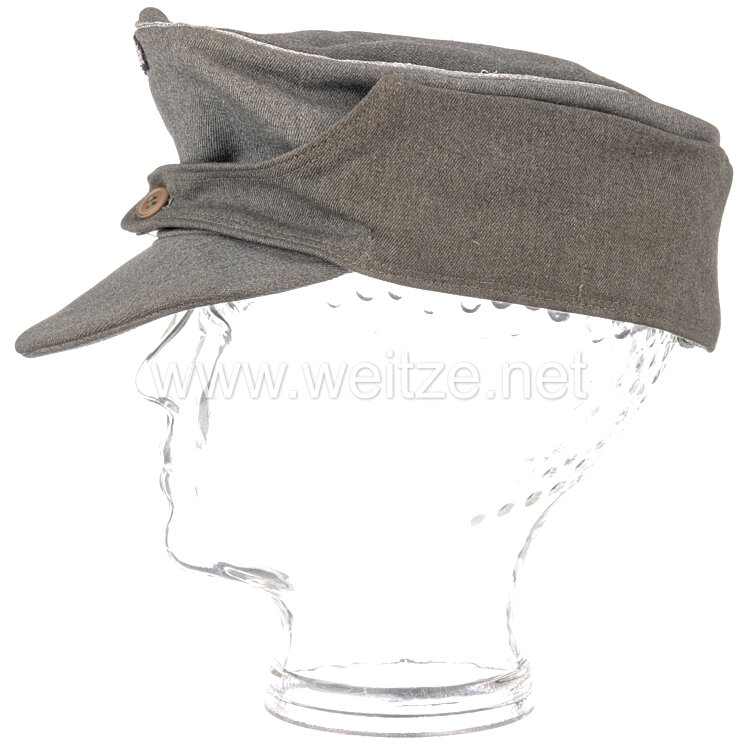
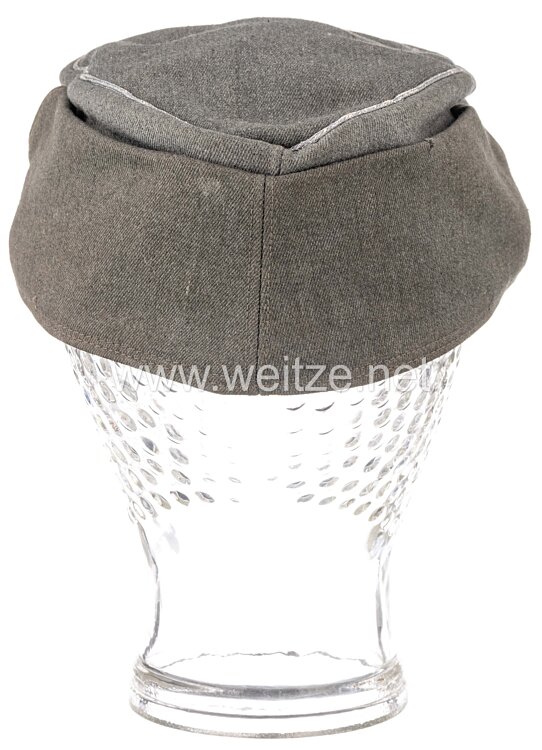
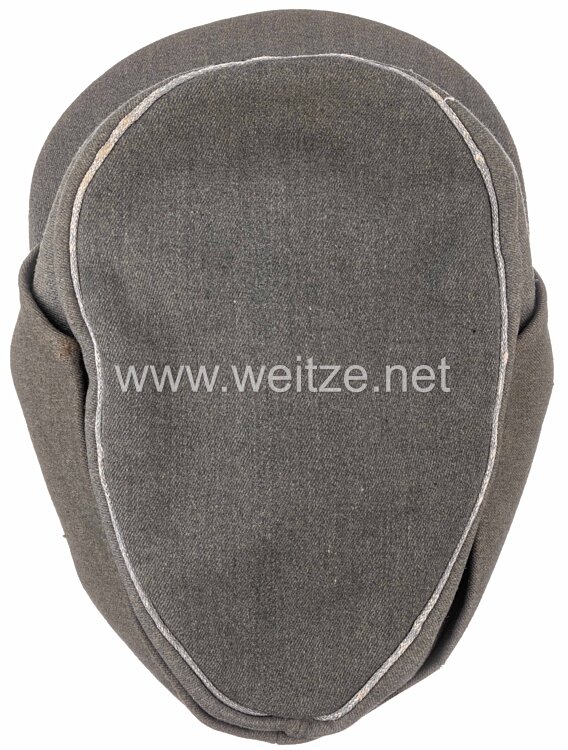
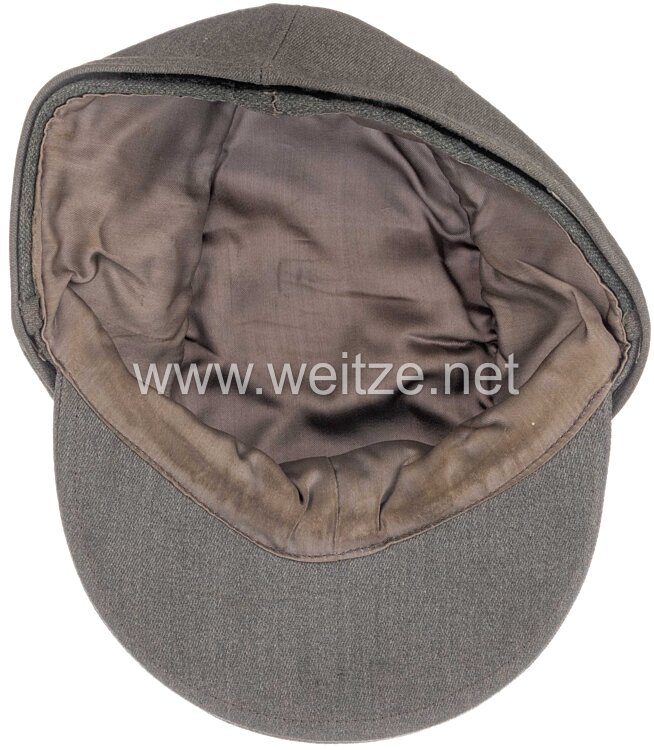
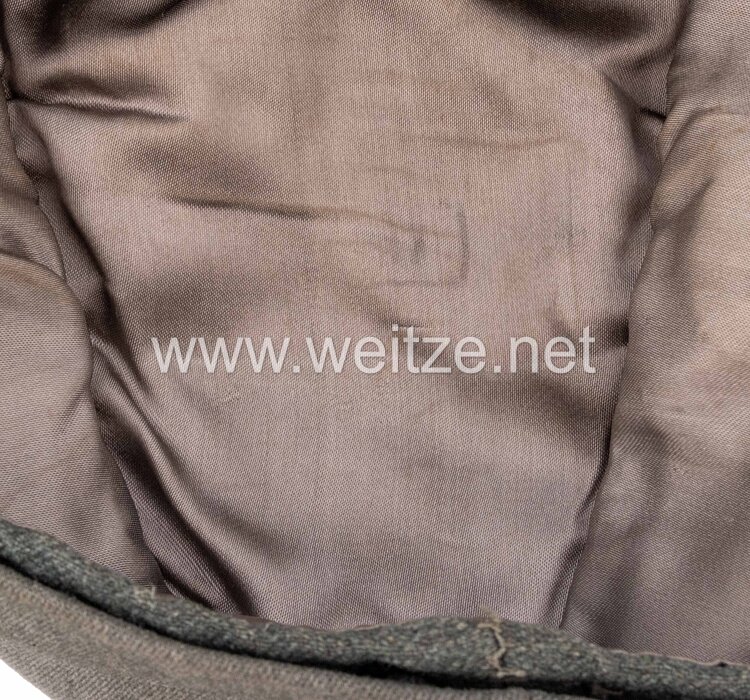
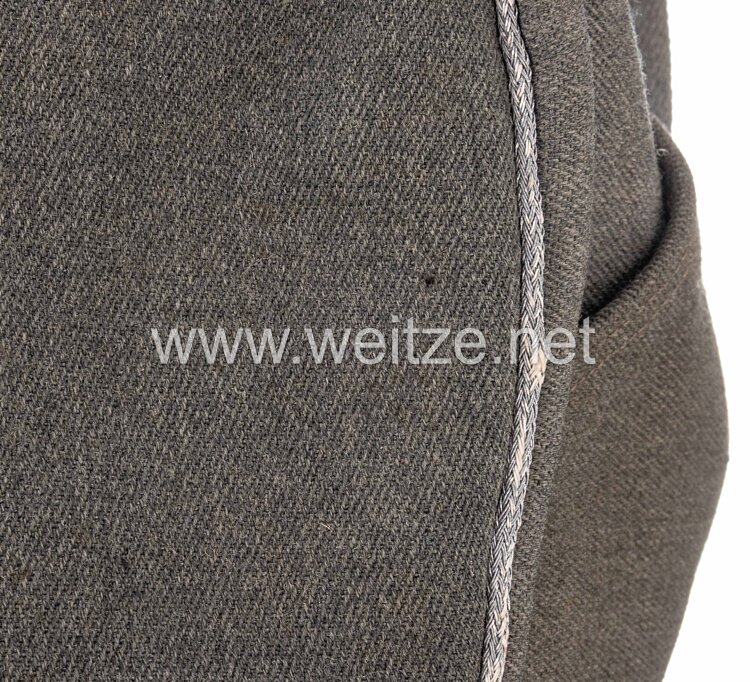
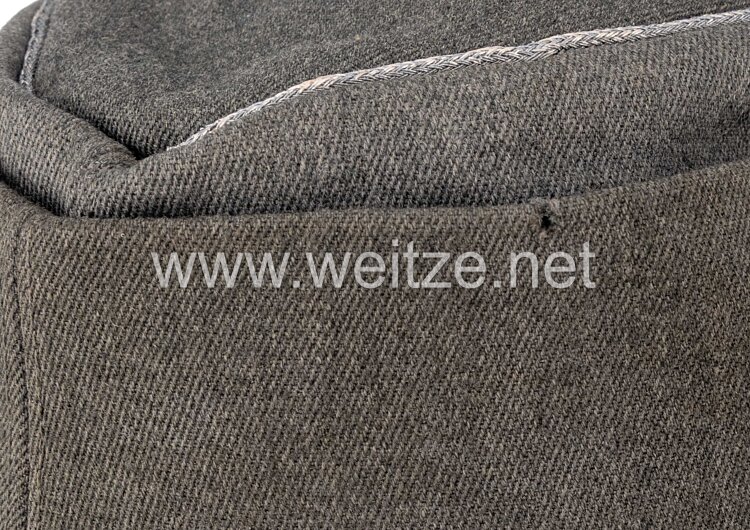
This is a typical production from circa 1943/44. Manufactured from Italian captured cloth, complete with Bevo-woven cap eagle and death's head insignia, both machine-sewn. Trimmed throughout with silver piping, front features 1 horn button. Interior lined with field-gray silk, size stamp barely visible, probably “57”.
Worn piece in untouched original condition, all insignia originally sewn!
Very rare, one of the few originals.
454665
6.500,00

Waffen-SS M43 Field Cap for Officers

The Einheitsfeldmütze M 43 (Model 43 Field Cap) of the Waffen-SS with officer's piping represents a significant document of German military history during World War II. This headgear was introduced as part of the standardization and rationalization of Wehrmacht uniforms and marked a turning point in German military clothing.

The introduction of the Model 43 occurred through a decree dated May 1, 1943, which encompassed a fundamental reform of the German armed forces' field uniform. In light of increasing material shortages and the necessity for more cost-effective production, the previous peaked cap (Feldmütze M 38) was replaced by the more practical and resource-efficient field cap. This new headgear was intended for all ranks and differed only in the quality of materials and type of piping.

The officer's piping in silver was reserved for officers, senior non-commissioned officers with sword knot privileges, and officials of officer rank. This continuous silver cord represented the essential rank insignia and enabled immediate identification of the wearer as leadership personnel. Enlisted men and non-commissioned officers without sword knot privileges wore caps without this piping.

The present example displays characteristic features of production from the years 1943/44. Particularly noteworthy is the use of Italian captured cloth. Following Italy's armistice with the Allies in September 1943 and the subsequent German occupation of large parts of the country, considerable quantities of uniform fabrics and other military materials were confiscated. These captured fabrics often exhibited slightly different coloring or texture but were used to stretch scarce German resources.

The Bevo-woven insignia represented a technical innovation of that period. The company Bevo (Bandfabrik Ewald Vorsteher) in Wuppertal had developed a special weaving process in which the insignia were manufactured directly as woven fabric. This enabled mass production of high-quality badges that were more durable and precise than embroidered variants. The cap eagle (also called breast eagle) and the death's head were machine-sewn, which was typical for industrial manufacturing of that era.

The death's head symbol held special significance in the SS and had been used since the organization's founding. It was intended to symbolize the readiness for unconditional commitment. In the Waffen-SS, the death's head was attached to the field cap above the eagle, while the Wehrmacht used a cockade system.

The horn button on the front was another detail designed to save material. While earlier uniforms often used metal buttons, increasingly horn, wood, or plastic were employed. The field-gray silk lining indicates manufacture for leaders, as simple enlisted ranks' caps were often equipped with simpler cotton lining.

The size marking “57” corresponds to a head circumference of 57 centimeters. These size stamps were typically applied inside the headgear and followed standardized German sizing systems.

The rarity of such original pieces is explained by several factors: Many uniform items were destroyed, repurposed, or lost through the turmoil of the post-war period. Additionally, the production period of this specific variant with Italian captured cloth was relatively short. The Waffen-SS field cap with officer's piping from this period therefore represents a rare contemporary historical document.

From a historical perspective, this object documents the increasing material shortage of the German Reich from 1943 onward, the improvisational solutions of the war economy, and the Wehrmacht's standardization efforts. It is important to emphasize that such objects today must be regarded exclusively as historical documents of a criminal period in German history and serve scientific research and museum documentation.