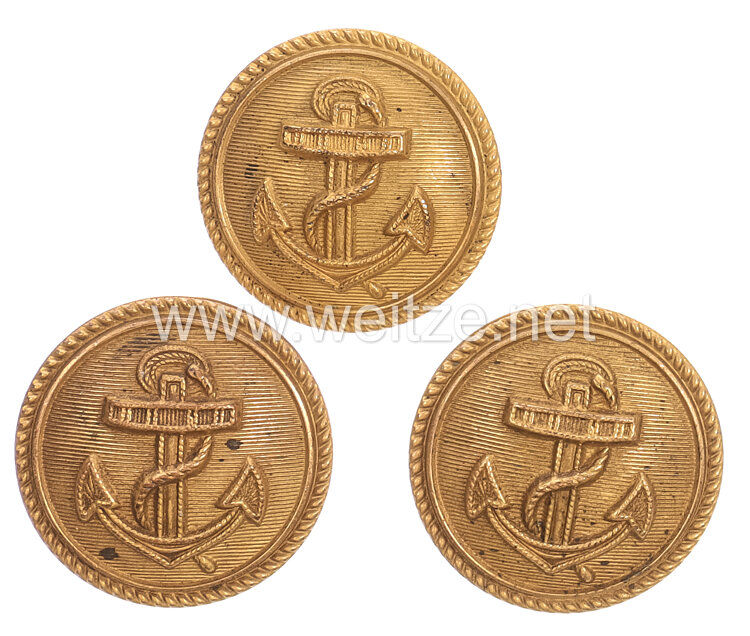
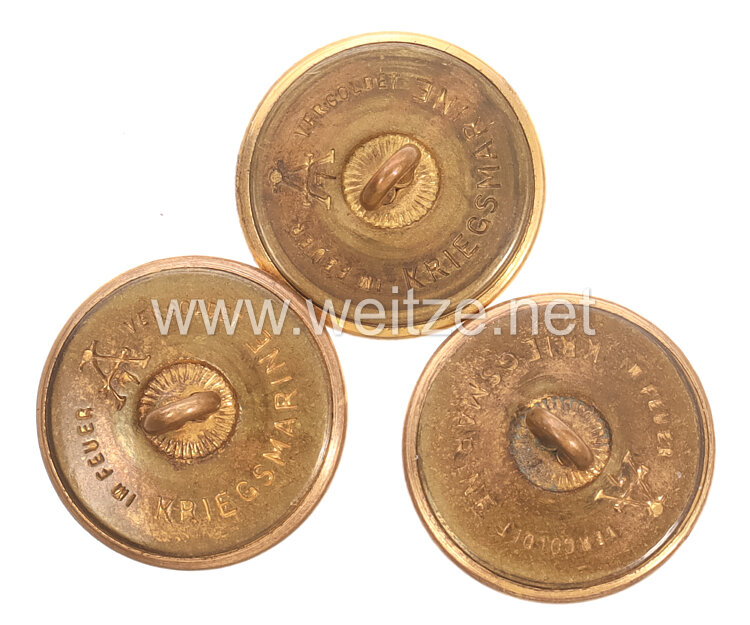
Kriegsmarine 3 Uniform Buttons

Non-ferrous metal, reverse stamped “Kriegsmarine”, identical manufacturer, 26 mm, condition 2.
460865
30,00

Kriegsmarine 3 Uniform Buttons

Kriegsmarine Uniform Buttons: Symbols of German Naval Warfare 1935-1945

The three uniform buttons made of non-ferrous metal with a diameter of 26 mm and the rear stamping “Kriegsmarine” represent an important aspect of military uniform equipment in National Socialist Germany. These seemingly inconspicuous objects were an integral part of the service clothing of the German naval forces during World War II.

Origins and Organization of the Kriegsmarine

The Kriegsmarine was officially founded on May 21, 1935, as the successor to the Reichsmarine, when National Socialist Germany openly proclaimed rearmament and rejected the restrictions of the Treaty of Versailles. Under the leadership of Grand Admiral Erich Raeder and later Karl Dönitz, the Kriegsmarine developed into a significant naval force that existed until the capitulation in May 1945.

The uniform regulations of the Kriegsmarine were meticulously laid down in various dress codes and clothing regulations. These regulations determined not only the cut and color of uniforms but also the exact specifications for buttons, badges, and other equipment items.

Technical Aspects and Manufacturing

The uniform buttons were typically manufactured from non-ferrous metal, an alloy consisting mainly of copper and, depending on availability, mixed with zinc, tin, or other metals. The choice of non-ferrous metal was both practical and economical: the material was corrosion-resistant to saltwater and moisture, which was of particular importance for the navy, and at the same time more cost-effective than precious metals.

The diameter of 26 mm corresponds to the standard size for uniform buttons on jackets and coats of the Kriegsmarine. The rear stamp “Kriegsmarine” served for clear identification and assignment to this branch of service. Various manufacturers produced these buttons on behalf of the Wehrmacht, with each manufacturer additionally applying its own marking.

Usage and Wearing

These buttons were used on various uniform pieces of the Kriegsmarine, including the Bordjakke (working uniform), the Überzieher (overcoat), and other service uniforms. The number and arrangement of buttons were precisely prescribed and varied depending on the uniform piece and the wearer's rank.

Officers generally wore gilded or specially treated buttons, while enlisted personnel and non-commissioned officers used the standard non-ferrous metal buttons described here. The front of the buttons typically displayed the sovereign emblem of the Kriegsmarine, consisting of an eagle with outstretched wings over an anchor or a swastika.

Collector and Research Value

Today, such uniform buttons are important study objects for military historians and collectors. They allow conclusions about production methods, material usage in different war phases, and the organization of military supply systems. The manufacturer markings help with dating and authentication of uniform pieces.

The fact that the three present buttons come from the identical manufacturer suggests that they originally belonged together to a single uniform piece. The stated condition 2 (according to the usual collector classification from 1-6, where 1 is mint condition) indicates well-preserved pieces with slight signs of use.

Historical Context and Significance

The Kriegsmarine played a central role in German warfare, particularly through the U-boat arm in the Atlantic. Over 40,000 members of the Kriegsmarine lost their lives during the war, the highest loss rate of all German service branches as a percentage of total strength.

These uniform buttons are silent witnesses to a tragic epoch of history. They remind us of the young men who wore these uniforms, independent of the political evaluation of the regime they served. For historical research, such objects offer valuable insights into the material culture of World War II and help to paint a more complete picture of this time.

The preservation and scientific documentation of such militaria is important for future generations to understand history and learn from it.