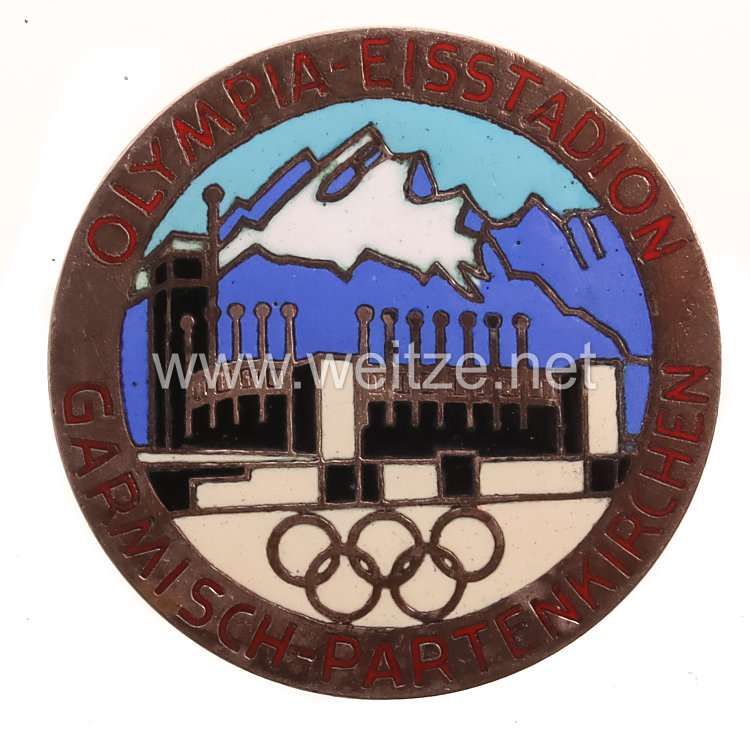
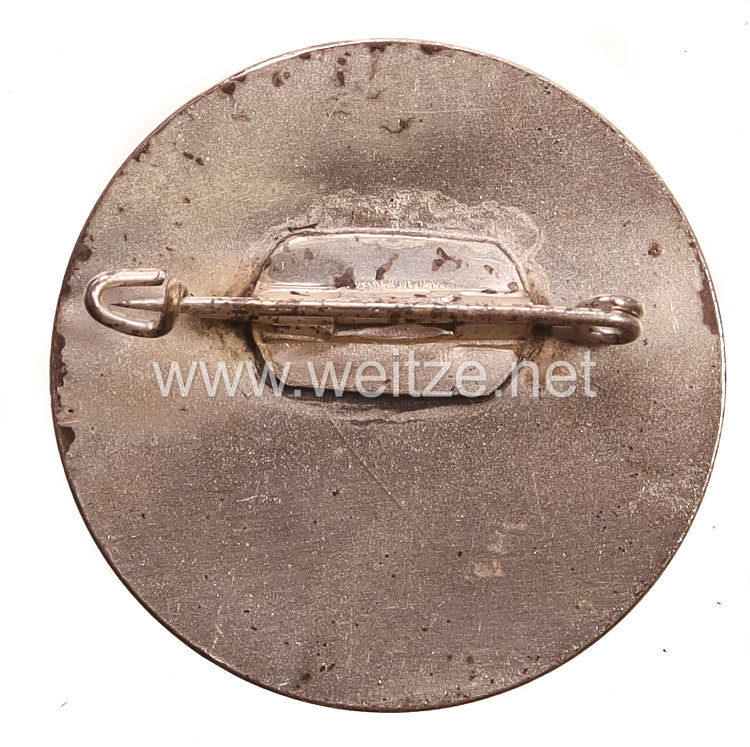
IV Olympic Winter Games 1936 “Olympia-Eisstadion Garmisch-Partenkirchen” - Official Visitor's Badge

color enameled, with pin, condition 2.
436865
250,00

IV Olympic Winter Games 1936 “Olympia-Eisstadion Garmisch-Partenkirchen” - Official Visitor's Badge

The official visitor badge of the IV Olympic Winter Games 1936 in Garmisch-Partenkirchen represents a significant chapter in Olympic history while standing in the complex context of political developments in Nazi Germany. These color-enameled pins were issued specifically to visitors of the Olympic Ice Stadium and document the first Winter Olympics held under the NS regime.

The IV Olympic Winter Games took place from February 6-16, 1936, in the Bavarian Alps, just a few months before the more famous Summer Games in Berlin. Garmisch-Partenkirchen, two originally separate communities merged in 1935, provided the ideal alpine setting for the winter competitions. The newly constructed ice stadium was one of the most modern of its time, accommodating over 10,000 spectators. The Games featured 646 athletes from 28 nations, representing considerable international participation for that era.

These visitor badges served multiple purposes: they functioned as access credentials to specific venues, particularly the ice stadium where ice hockey and figure skating competitions were held. Simultaneously, they were souvenirs and mementos for visitors of this historic event. The color enameling was typical of the high-quality manufacturing techniques of the 1930s and was meant to underscore the significance of the Games.

The Nazi regime extensively utilized both the Winter and Summer Games of 1936 for propaganda purposes. The Winter Games in Garmisch-Partenkirchen were the first major international test for the regime to present itself as a peace-loving, modern nation. The organization was meticulously planned, and infrastructure was massively expanded. However, antisemitic signs in the town were temporarily removed during the Games to avoid international criticism.

The enameling technique used in these badges was a widespread method in the 1930s for producing high-quality pins and medals. The process required specialized craftsmanship: a metal base was coated with powdered glass and fired at high temperatures, creating a smooth, colored, and durable surface. The coloring of these Olympic badges typically reflected the Olympic colors and often contained motifs such as the Olympic rings, alpine landscapes, or winter sports symbols.

From a collector's historical perspective, these badges are significant contemporary witnesses today. They document not only the sporting event itself but also the political instrumentalization of sports in the Third Reich. The condition is typically evaluated on a scale from 1 (mint) to 6 (heavily damaged); a condition 2 means the badge shows slight signs of use but is still very well preserved.

The Olympic Ice Stadium itself was an architectural masterpiece of its time. It was built specifically for the Games and featured modern facilities that met international standards. The facility continued to be used after the Games and remained an important sports center in the region.

The sporting highlights of the 1936 Winter Games included the ice hockey competition, where Great Britain surprisingly won the gold medal, as well as outstanding performances in figure skating by Norwegian Sonja Henie, who won her third Olympic gold medal. Germany itself placed second in the medal count behind Norway.

These visitor badges are today part of a broader collecting field encompassing Olympic memorabilia and NS-era history. They are valued equally by sports historians, Olympic collectors, and militaria enthusiasts, with the historical context significantly increasing their significance. The authenticity of such pieces can be verified through manufacturing characteristics, materials, and documented comparison examples.

r